

News
Ikechukwu Nnamani Emerges AfriTECH Man of the Year


Engineer Ikechukwu Nnamani, the chief executive officer, Digital Realty Nigeria, has been crowned the Africa Tech Alliance Forum (AfriTECH) Man of the year.

Engr. Ikechukwu Nnamani is the Chief Executive Officer of Digital Realty Nigeria.
“When we look around, we see different people making their contributions to the African ICT sector. We know Africa is going to be Africa if we harness our technological values and go up the value chain.
“One man has stood up for his inspiration, for his motivation and for making us believe with a vision and strategy that Africqa can achieve this,” said Chike Onwuegbuchi, co-founder, TechCastle Foundation, the organisers of AfriTECH forum, while presenting the award to the recipient.
For over 16 years under his leadership the Digital Realty datacenter in Lagos (formally Medallion Data Centres Limited) is rated the most interconnected facility in the West African sub-region being the number one peering point for the region and boosting all submarine cables in the region, long distance providers, metro fiber providers, mobile services providers, fixed services providers, OTT providers, Internet Exchange, VAS providers, and global Tier1 service providers, amongst others.
Over 68% of all internet traffic exchanged at the Nigeria Internet Exchange takes place at Digital Realty’s datacenter in Lagos, Nigeria.
Digital Realty has recently completed its ultra-modern 1MW IT Load state of the art datacenter called LOS2 in Victoria Island, Lagos, Nigeria.
The LOS2 datacenter seats on the same campus as the Digital Realty LOS1 datacenter. Customers in LOS2 will enjoy seamless connectivity to the existing telecom ecosystem in LOS1.
LOS1 and LOS2 is already seamlessly connected through diverse fiber routes to the Medallion LKK1 infrastructure (The PFE Module for 2AFRICA Submarine Cable) which Digital Realty has recently delivered to the 2AFRICA Consortium in Lagos, and also the LKK2 datacenter, a new 1.7MW IT Load datacenter that Digital Realty is currently building to support the 2AFRICA Submarine Cable in Mopo Ibeju part of Lagos state.
Plan for implementation of the Hyperscale LOS3 datacenter in Victoria Island is at advanced stage also.
Engr. Nnamani has also promoted the establishment of telecom infrastructure in several African countries including Ghana, Togo, Liberia, Sierra Leone, Ivory Coast, Senegal, Kenya, Uganda, Botswana, and Angola amongst others.
Digital Realty Nigeria CEO has won over 50 national and international awards for his contribution to the growth of telecoms and ICT industry both personally and companies he is affiliated with.
He was recently awarded the 2023 TIA Datacenter Lifetime Achievement Award at the 2023 Tech Innovation Award, 2023 Most Innovative Datacenter Personality of the Year at the Titans of Tech Award, 2023 Datacenter ICON Award at the 7th African Digital Economy Awards, the 2023 AfriTech Alliance Man of the Year, the 2022 ICT Man of the Year, as well as the Entrepreneur Personality of the Year at the Africa Digital Awards (ADA), the 2021 Outstanding Promoter of ICT for National Development Award at the Titans of Tech Hall of Fame Awards. In 2020 he was inducted into the Nigeria@60 ICT Hall of Fame by TechTV.
He was named the 2020 ICT Personality of the Year by Communications Week and was also awarded the ICT Entrepreneur of the Decade by Nigerian NewsDirect.
Engr. Nnamani holds a bachelor’s degree in mechanical engineering from the University of Nigeria, Nsukka and a master’s degree in mechanical engineering from Tennessee State University, Nashville, USA.



The UK Government has announced the appointment of Mr Peter Vowles as the next British High Commissioner to the Federal Republic of Nigeria.

Mr Vowles succeeds Dr Richard Montgomery CMG and is expected to take up his post in Abuja in September 2026. Dr Montgomery remains in post until that time.
Mr Vowles brings extensive diplomatic and development experience to the role, having served as His Majesty’s Ambassador to Zimbabwe from 2023 to 2026 and previously as Ambassador to Myanmar from 2021 to 2022.
He has held senior leadership positions across the FCDO and its predecessor department DFID, including as Transformation Director and Director for Asia, Caribbean and Overseas Territories.
Earlier in his career, Mr Vowles worked in international development across South Asia, Central Africa and East Africa, including postings in Bangladesh, India, the Democratic Republic of Congo and Kenya. He began his career in Zimbabwe, where he worked in education and development.
Peter Vowles said: “I am honoured to be appointed as British High Commissioner to Nigeria. Nigeria is a country of immense importance to the United Kingdom, and I look forward to working closely with Nigerian partners to strengthen our relationship across trade, development and security.”

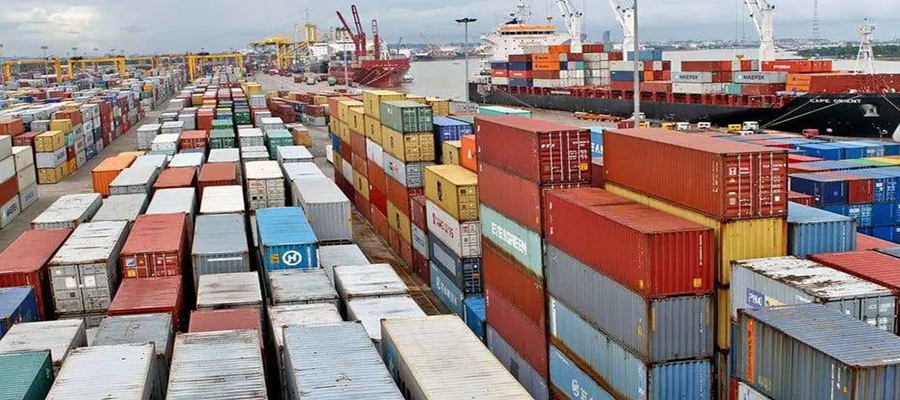
World Bank has ranked the Apapa and Tin Can Island Port complexes in Lagos among the world’s 20 most improved ports in its 2025 Container Port Performance Index (CPPI), released in June 2026.

The ranking places both ports in the “Top 20 Port Improvement Since 2020” category, reflecting significant gains in operational efficiency and vessel turnaround time.
The CPPI is a global benchmark used to assess the efficiency of container ports based on factors such as cargo handling speed, ship turnaround time and overall logistics performance.
According to the report, the improvement highlights ongoing reforms and modernization efforts within Nigeria’s maritime sector.
The Managing Director of the Nigerian Ports Authority (NPA), Mr Abubakar Dantsoho, attributed the recognition to ongoing policy reforms and infrastructure upgrades in the sector.
He said the development reflects the impact of economic policies of President Bola Tinubu and the support of the Minister of Marine and Blue Economy, Mr Adegboyega Oyetola.
“With the investor-friendly policies of President Bola Ahmed Tinubu providing the impetus for increased investment to drive our port infrastructure and equipment modernisation programme, coupled with the unflinching support of the Honourable Minister of Marine and Blue Economy, Adegboyega Oyetola, we have all it takes to further enhance trade facilitation, improve competitiveness and boost the national economy,” he said.
The NPA said the recognition is expected to strengthen investor confidence in Nigeria’s maritime sector and enhance the country’s position as a regional trade and logistics hub.
It noted that improvements in port operations are already contributing to increased efficiency in cargo movement and reduced delays at key terminals.
The authority also pointed to ongoing efforts to modernise port infrastructure and expand digital systems aimed at improving service delivery.
Earlier in February 2026, the NPA said the federal government had intensified efforts to position Nigeria as a leading maritime destination through port rehabilitation and modernization projects.
It also highlighted public-private partnership initiatives, including developments at the Lekki Deep Sea Port, as part of broader reforms aimed at improving efficiency and attracting investment.
The CPPI ranking is expected to further boost Nigeria’s maritime profile and encourage additional investment in the sector.
As digital payment adoption continues to grow across Nigeria and emerging markets, the next phase will depend not just on innovation, but on the strength, reliability, and trustworthiness of the infrastructure behind it.

While the ecosystem has made clear progress in recent years, trust remains a critical issue for users, businesses, and operators alike. Questions around resilience, security, interoperability and transaction reliability continue to shape how the market evolves and how confidently digital payments can scale.
These issues will be central to the deliberations at Digital Pay Expo 2026, where fintech leaders, payment operators, and other ecosystem stakeholders will gather under the theme, “Seamless Digital: Fostering Pan-African Market Expansion in the Era of AI.”
PalmPay’s participation reflects its continued commitment to building trusted and scalable payment infrastructure, while contributing to the broader industry efforts to strengthen systems, standards, and partnerships needed to support long-term ecosystem growth.
Speaking ahead of the event, Olorunfemi Hanson, Head of Marketing and Communications at PalmPay Nigeria, said: “As the financial services ecosystem continues to grow, trust and reliability become even more important.
“The industry’s next phase will be shaped not only by innovation, but by the strength of the infrastructure supporting it. Digital Pay Expo provides an important platform to address the resilience, interoperability, and trust issues that will shape the future of digital payments growth across Africa.”
The event, scheduled to be held from the 17th to the 18th of June, 2026, will feature Chika Nwosu, Managing Director of PalmPay Nigeria, alongside other distinguished guests, including the Director-General, Payment System Management Department (PSMD), Central Bank of Nigeria. The event will examine how the industry can balance innovation, regulation, and scalability while strengthening trust across the digital payments value chain.
For PalmPay, this event reinforces its role in supporting a more resilient, secure and scalable payments ecosystem for Nigeria and emerging markets more broadly.

Nigeria Launches FreeTV Nationwide

NIPOST Plans Digital Postcodes for Every Building in Nigeria

Enugu to Host The Gathering on 100 as MTN-Backed Youth Movement Expands Across Nigeria

Prof. Dzidonu Urges Universities to Produce Deep Thinkers for AI Age

FG Debunks Claims of Plans to Introduce Telecoms, Fuel Taxes

CBN Extends PoS Geo-Fencing Enforcement Deadline to August 2026

NCC Drafts New Rules for Virtual Mobile Operators

London Strengthens Global Investment Ties with Africa @ First Ever London-Africa Business Summit

FG Targets Alleged N3tn Capital Flight, Opens Airtime Credit Market to Nigerian Fintechs

Easybuy Partners WAWUAfrica to Upskill 10 Million Youths and Women, Boosting Nigeria’s Economic and Financial Inclusion




 E-Financial2 days ago
CBN Orders Banks, Fintechs to Host Payment Data Locally

 E-Business2 days ago
Galaxy Backbone @ 20, Pledges Nationwide Connectivity, Data Sovereignty

 Telecom1 day ago
MTN Foundation Commits N32Bn in Projects across Nigeria

 E-Financial2 days ago
Analysts Warn of Growing “Crowded Trade” in Foreign Exchange Markets

 Telecom2 days ago
Nigeria Innovation Summit 2026 Set to Convene West Africa’s Brightest Minds to Shape the Future of Innovation

 News2 days ago
PalmPay Joins Industry Leaders @ Digital Pay Expo 2026

 E-Financial2 days ago
ACAMB Kicks-off 30th Anniversary Celebration With Tree Planting Initiative

 Telecom2 days ago
UK Bans TikTok, Instagram, Facebook for Under-16s in Landmark Crackdown