

General News
AFEX Launches FETC Product on New Digital Trading Platform

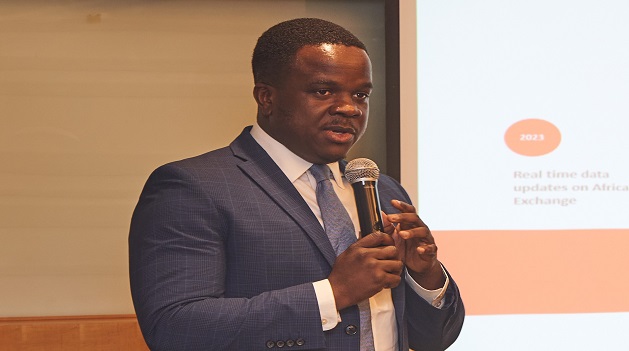
Africa’s commodities player, AFEX, has launched Africa Exchange, a digital platform for trading commodities. The platform follows AFEX’s first foray into digital commodities trading with the launch of ComX in 2020.

This new trading platform further transforms the commodities space in Africa by enabling commodities market players to meet and interact both in the physical and financial markets. Data and information crucial to decision-making are readily available on the platform, offering a comprehensive and informed trading experience.
Africa Exchange provides a structured marketplace duly regulated by Nigeria’s Securities and Exchange Commission (SEC), ensuring that users can participate in various trade or investment opportunities.
Africa Exchange will replace ComX, which has served over 80,000 investors in Nigeria and facilitated trades worth over USD 200 million since it was launched in 2020. The transition further bolsters AFEX’s mission of facilitating wealth creation for a new generation of Africans by providing them with alternative investment options to enrich their existing portfolios.

Additionally, AFEX aims to enhance intra-African trade by strengthening commodities trading within Africa and supporting the African Continental Free Trade Agreement’s (AFCFTA) mission to improve regional trade integration to boost economic development and food security across the continent.
Presently, only 14.4% of Africa’s exports come from trade between African countries. However, the AfCFTA could increase intra-African trade by approximately 33% and reduce the continent’s trade deficit by 51%, according to the United Nations Conference on Trade and Development (UNCTAD).
In line with the United Nations Sustainable Development Goals (SDGs) 1, 2, 5, 8, and 12, the launch of Africa Exchange is a significant milestone towards achieving the AfCFTA. The platform promotes fair market prices that help farmers earn more and increase food production. It also enables investors to diversify their portfolios while supporting the financing of the food ecosystem.
Commenting on the launch, Akinyinka Akintunde, CEO and President of AFEX Nigeria, said: “As a team, we are excited and proud to launch Africa Exchange as another step in building the digital infrastructure to facilitate trade across Africa. With this launch, our goal is to boost the commodities market in Africa and allow more investors to participate with all the information that they need at their fingertips”.
He continues, “Commodities have been high-performing assets in recent years; in 2021, commodities were the third highest performing asset class, averaging about 37.1% in returns, while stocks averaged about 36.9%.
The commodities market has grown in sophistication over the years with the likes of commodity brokers and other institutional players making their mark and creating opportunities for trading. With Africa Exchange, we are opening the African commodities ecosystem to more investors and players.
Through the platform, users can directly trade physical commodities or invest in commodity-backed financial instruments.”
Alongside the platform launch, AFEX is also reintroducing its innovative Fair Trade ETC (FETC) product. The FETC is a commodity bundle in one contract designed to provide investors with exposure to the market in a way that maximizes the risk-return balance of the underlying commodities.
The instrument has a maturity period of 270 days and historically significant returns, with both tranches in 2022 returning 31% and 20%, respectively. The FETC is set to open on the Africa Exchange platform on the 1st of December at a unit price of just N1000, and for the first time in the product’s history, it will be tradeable within the tenor period, after a 120-day hold.
Funto Olasemo, Vice President, Financial Markets at AFEX, said, ‘For the last 8 months, we have been focused on improving our core infrastructure and delivering a better digital interface for commodities trading and investment on the continent. We have continued to also pursue product innovation, and the new tranche of our FETC product is a great example of that.”
“The FETC has been a hugely successful product since we introduced it in 2020, and we have structured a tradeable component into this tranche, giving investors even more freedom as they build wealth. The team is excited that we are facilitating wealth creation for a new generation of Africans by providing them with alternative investment options to enrich their portfolios.”
AFEX is committed to improving intra-African trade. To achieve this goal, the company has been bullish in pursuing its strategic Pan-African expansion plan since expanding into Kenya and Uganda in 2021 and 2022.
AFEX is set to expand to six other African countries within the next few years with the aim of promoting efficient trade in commodities across the continent while supporting the objectives of the AFCFTA to boost regional trade integration.



Chinonso Akujobi, former staff of Access Bank in Lagos, has been remanded in Ikoyi prison after she was arraigned on a five-count charge bordering on stealing to the tune of N294.5m.

Akujobi who is being prosecuted by the Economic and Financial Crimes Commission (EFCC) was arraigned before Justice I.O. Ijelu of the State High Court sitting in Ikeja, Lagos.
EFCC alleged that Akujobi stole the money between January and December 2025 while under the employment of Access Bank Plc.
As stated in one the charges, the defendant stole the money through unauthorized payments from the general ledger of Access Bank to her account number 0036668871 with the name Chinonso A., Uchechi A. and Florence A., thereby committing an offence of stealing, contrary to Section 280 and punishable under Section 287 of the Criminal Law of Lagos State, 2015.
The defendant pleaded “not guilty“ to the charges when they were read to her.
In view of this, S.M.Yabo, prosecution counsel, asked the court for a trial date and also prayed for the remand of the defendant in a Correctional centre.
Justice Ijelu, thereafter, adjourned the case till October 8, 2026, for the hearing of the bail application and the commencement of trial.
The Judge also ordered that the defendant be remanded in the Ikoyi correctional Centre.

The Nigerian Safety Investigation Bureau (NSIB) says the flight captain of the VMO Aero aircraft that landed on a roadway near Asaba Airport in Delta State told investigators that the observer pilot mistakenly identified the paved road as the runway before touchdown.

The bureau disclosed this in a preliminary report released on Thursday on the June 10 incident, which prompted the Nigeria Civil Aviation Authority (NCAA) to ground the private jet.
The aircraft had seven people on board, including the pilot-in-command (PIC), second-in-command (SIC), an observer pilot, a cabin crew member and three passengers.
According to the report, the aircraft was cleared by Air Traffic Control (ATC) to approach Runway 11 at Asaba Airport after the crew requested a right orbit.
The crew initially discontinued the approach, executed a missed approach and repositioned for a second landing attempt.
NSIB said the crew reported that the aircraft’s navigation systems indicated it was correctly established on the published RNAV Runway 11 approach.
“The PIC and SIC reported that the observer pilot identified the paved surface ahead as the runway,” the report stated.
However, the observer pilot gave investigators a different version of events.
According to NSIB, he said the aircraft remained inside cloud until late in the approach and that the Ground Proximity Warning System (GPWS) repeatedly issued “TERRAIN, TERRAIN, PULL UP” alerts.
He also said he observed a telecommunications mast directly ahead and instructed the flight captain to abandon the approach and climb immediately.
The bureau further disclosed that a cabin crew member reported that one of the passengers became concerned after overhearing discussions among the pilots and asked whether one of them was undergoing training. The passenger was reportedly reassured that all three pilots on board were experienced captains.
NSIB said no abnormal events were reported in the cabin before touchdown.
The aircraft eventually landed at about 8:57 a.m. on an under-construction paved roadway near Asaba Airport instead of the designated runway.
The bureau said its investigation into the incident is ongoing, while the preliminary report highlights conflicting accounts among the cockpit crew over the circumstances that led to the erroneous landing.


European Union has warned Meta Platforms Inc. that it could face a significant financial penalty unless it changes what regulators describe as the “addictive design” features of Facebook and Instagram.

The European Commission issued the warning in preliminary findings released on Friday, saying Meta had failed to sufficiently address risks posed by its platforms, particularly to children and vulnerable users.
The Commission said features such as infinite scrolling, personalised content recommendations and automatic video playback were designed in ways that encouraged excessive engagement with the platforms.
EU Executive Vice-President for Tech Sovereignty, Security and Democracy, Henna Virkkunen, said protecting the physical and mental well-being of European citizens should be a priority for social media companies.
The Commission said Meta should consider introducing design changes, including disabling autoplay and infinite scrolling by default, providing effective screen-time reminders and adjusting recommendation systems to reduce the focus on maximising user engagement.
The findings were issued under the European Union’s Digital Services Act (DSA), which sets obligations for major online platforms to address risks associated with their services.
Meta, however, rejected the Commission’s conclusions, saying it disagreed with the findings but would continue engaging with European regulators.
The company said it had already implemented measures aimed at protecting younger users, including Teen Accounts that allow parents to manage screen time limits and restrict access during night hours.
The EU said its investigation, which began in 2024, found that existing time-management tools on Facebook and Instagram could easily be bypassed, while parental controls required technical knowledge that limited their effectiveness.
Regulators also expressed concerns over children’s nighttime use of the platforms and the possibility that features such as Reels and Stories could encourage compulsive behaviour.
If the Commission’s preliminary findings are confirmed, Meta could face a fine of up to six per cent of its annual global revenue under the DSA.
The warning comes as the EU steps up efforts to strengthen online safety measures for children, with an expert panel established by European Commission President Ursula von der Leyen expected to present recommendations on protecting minors online.
Several EU member states, including France, have also supported discussions on restricting social media access for children, following Australia’s decision to ban users under 16 from accessing social media platforms.
Meanwhile, the Commission is continuing a separate investigation into whether Meta’s recommendation algorithms create “rabbit hole” effects by directing users towards increasingly extreme content.

Police Busts Syndicate Who Allegedly Stole N3Bn from Financial Institution

MTN Accelerates Network Expansion to Meet Surging Telecom Demand

Court Remands Akujobi, Ex Access over alleged Theft of N294.5m

TeKnowledge, Equinix Partner to Advance Nigerian Digital Infrastructure

NSIB Faults Runway Identification, Reveals Cockpit Disagreement in Asaba Jet Incident

NASENI Moves to Digitize CCB’s 5m Assets Declaration and Operations

Mobile Internet Gender Gap Widest in Africa – GSMA

Nigeria Launches FreeTV Nationwide

CANAL+ Partners Samsung to Pre-Load DStv Stream on New Samsung TVs In Nigeria, Other African Countries

Lebara Nigeria Launches Lebara Play, Africa’s First Telecom-Owned Micro-Drama Platform




 Telecom2 days ago
NCC Seeks Cost-Based Pricing Framework for Ducts

 E-Financial2 days ago
CBN Warns against Rejection of N100 Banknotes

 Telecom1 day ago
Fixed Wired Internet Market Lags as Mobile Gains Ground

 News2 days ago
Flutterwave Secures Circle Ventures Investment to Deepen USDC Payment

 Telecom2 days ago
Meta Introduces Muse Image With Advanced AI Image Editing Across WhatsApp and Instagram

 News2 days ago
How EFCC Turned Recovered Loot Into School Supplies for Thousands of Nigerian Students

 E-Financial2 days ago
BVN Enrollments Hit 69.55m- NIBSS

 News1 day ago
Study Reveals How Moniepoint is Powering Nigeria’s $11Bn Food Service Sector