

Telecom
Maida Excited at Nigeria’s Success at World Radio Communications Conference 2023

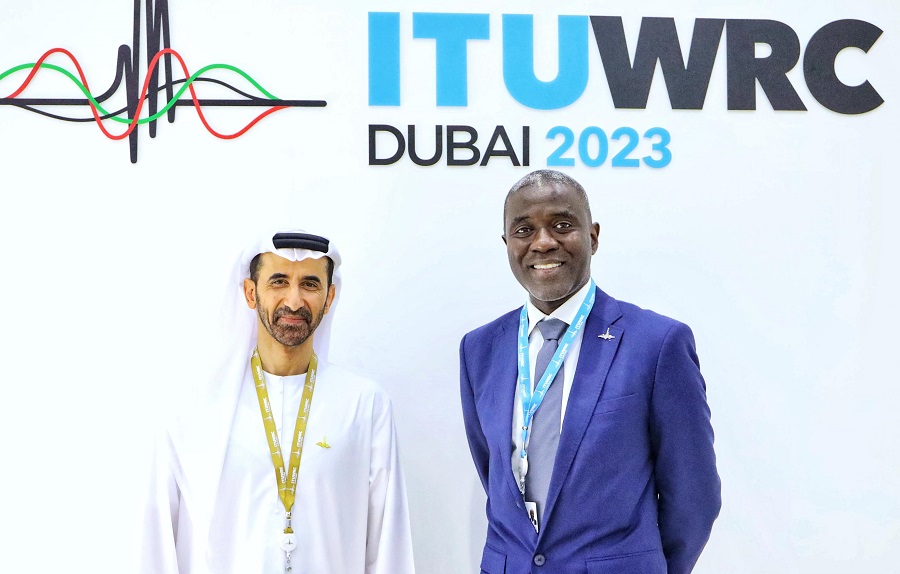
Nigerian Communications Commission’s top management is excited about Nigeria’s impressive performance at the ongoing International Telecommunications Union (ITU)’s World Radio Communications (WRC) Conference 2023, holding in Dubai, United Arab Emirates, where two Nigerians were elected into leadership positions, while some other delegates from the Commission were elected into Working Groups.

Executive Vice Chairman of the Commission, Dr. Aminu Maida, speaking on the sidelines of WRC 2023 in Dubai, announced that the Director of Spectrum Administration at NCC, Engineer Abraham Oshadami, has been elected Vice Chairman of the ITU’s Radiocommunication Advisory Group (RAG); while the Acting General Manager and Project Manager, Navigation Project Office, Nigerian Communications Satellite Limited, Dr. Lasisi Salami Lawal was elected Vice Chairman of the ITU-R Study Group Four (Satellite Services). Some other members of the NCC delegation were elected into WRC 2023 Working Groups.
While congratulating the successful delegates, Maida commended the Honourable Minister of Communications, Innovation and Digital Economy, Dr. Bosun Tijani, who led Nigeria’s delegation to WRC 2023, for “providing guidance, leadership, encouragement and support to the Nigerian delegation at the conference.”
The WRC Conference brings together the global community to agree on the use of the world’s finite spectrum resources, the electromagnetic waves that provide connectivity for our day-to-day technologies.
Maida expressed delight at the outcome of the elections, stating that roles of the Nigerian elected delegates would enhance Nigeria’s global standing in the telecom space, as well as ensure that the country’s interests and goals are more aptly aligned with global best practices.

“I am excited about the election of two of our colleagues, Engr. Oshadami and Dr. Lawal as Vice Chairs of the Key Study Groups. It is an honour for the Nigerian Communications Commission and the Nigeria Communications Satellite Limited to have produced these two intellectuals as global radiocommunication leaders.
“Their positions will also ensure that our interests and goals aptly align with global best practices, especially as we work towards attaining the target set by the National Broadband Plan,” he said.
He further charged them to live up to the huge expectations that the global radiocommunication community has placed on them by electing them into the roles.
He also reflected deeply on the presence of the Honourable Minister at the event as a major booster for the delegation and a strong indication of the Federal Government’s commitment to the delegation’s participation at the WRC-23.
The NCC boss also used his presence at the event to engage with the leadership of the ITU, as well as other leaders in the global telecom industry.
He held meetings with the Secretary General of the ITU, Mrs. Doreen Borden-Martin, as well as the Secretary General of the African Telecommunications Union (ATU), Mr. John Omo, during which he shared his vision and priorities for the Commission, as well as potential areas of collaboration and increased Nigerian participation in the two unions.
Maida also met with directors at the ITU, including the Director of Telecommunication Development Bureau (BDT), Dr.Cosmas Zavazava; Director of the Radiocommunication Bureau (BR) Mr. Mario Maniewicz and the Director of the Telecommunication Standardisation Bureau (TSB), Mr. Seizo Onoe,
One of the meetings was also with his UAE counterpart – the Director General of the Telecommunications and Digital Government Regulatory Authority (TDRA), H. E. Engineer Majed Sultan Al Mesmar, where they shared their perspectives on effective regulation.


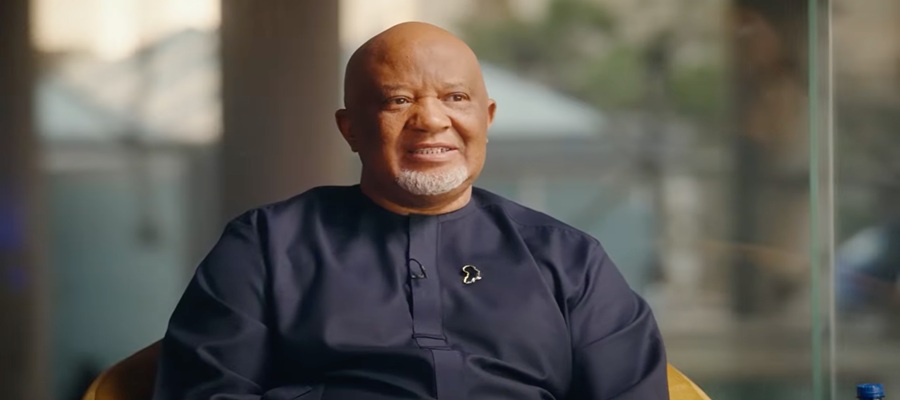
In an insightful assessment of governance standards across the continent, Mcebisi Jonas, chairman of MTN Group, has warned that Africa’s long-term economic redemption rests entirely on the independence and resilience of its core public institutions.

Speaking during the MTN’s The Y’ello Chair vodcast that debuted on August 2, 2026, the corporate titan asserted that fragile governance frameworks continue to destroy economic inclusion and starve the region of critical investments.
Jonas emphasised that building a sustainable economy requires deliberate structural effort rather than mere political promises.
According to him, Africa must consciously protect its public bodies from political interference if it ever hopes to build a globally competitive ecosystem.
Expressing deep worry over institutional decay, Jonas remarked, “You need to hardwire democracy, you need to hardwire economic growth, you need to hardwire economic inclusion. Institutions are central in that process… Once you rubbish your institutions, the country goes down the tube.”
Drawing on his own nation’s historical struggles, Jonas noted how South Africa narrowly averted a total systemic breakdown by protecting its judicial boundaries, though he cautioned that vigilance remains non-negotiable.
He observed that the ultimate test of any healthy democracy is whether a government can humbly submit to the rule of law. “There are few countries in the continent where [the] government goes to court and loses a case,” Jonas lamented, pinpointing judicial autonomy and impartial electoral commissions as the non-negotiable benchmarks of true institutional health.
Hard economic data strongly validates Jonas’s thesis. According to UNCTAD’s World Investment Report, foreign direct investment (FDI) into Africa rebounded to $97 billion in 2024, raising the continent’s share of global inflows from 4% to 6%, driven largely by 36% of global pro-investment policy reforms originating from the continent.
However, experts stress that such capital flows remain highly volatile and tend to flee at the slightest sign of political instability or judicial compromise.
Tying institutional integrity directly to investor confidence, Jonas noted that capital is fundamentally cowardly – it flows only to destinations where credibility is guaranteed by law rather than whim.
As fiscal headwinds worsen across developing economies, Jonas warned African governments against taking shortcuts or manipulating tax policies at the expense of structural credibility, emphasising that a country’s economic survival depends on predictable, independent institutions.

The 12th edition of the eWorld Forum will hold on Thursday, September 24, 2026, at the Oriental Hotel, Victoria Island, Lagos, under the theme: “The GSM Digital Milestones: 25 Years On.”

Since its inauguration in 2010, the eWorld Forum has grown into one of Nigeria’s leading platforms for dialogue on information and communications technology (ICT), bringing together policymakers, regulators, telecommunications operators, technology companies, investors, academics and other industry stakeholders to discuss the future of the country’s digital economy.
The 2026 edition coincides with the 25th anniversary of Nigeria’s GSM revolution, which began with the commercial rollout of GSM services in August 2001. Over the past two and a half decades, mobile telecommunications have transformed virtually every sector of the economy, reshaping communication, commerce, banking, education, healthcare, governance, entertainment and social interaction while accelerating digital inclusion and economic growth.
The forum will provide an opportunity for stakeholders to reflect on the industry’s achievements over the last 25 years, examine current challenges, and chart the path forward in key areas such as broadband expansion, artificial intelligence, fintech, digital infrastructure, cybersecurity, spectrum management and Nigeria’s evolving digital economy.
A major highlight of the event will be the public launch of two books authored by veteran ICT journalist, Publisher of eWorldnews and Convener of the eWorld Forum, Aaron Ukodie.
The first book, Nigeria’s GSM Revolution at 25: The Hall of Digital Pioneers and Players, has been specially published to commemorate the silver jubilee of GSM in Nigeria. The publication chronicles the remarkable evolution of the nation’s telecommunications industry and documents the vision, policies, investments, innovations and contributions of the pioneers, regulators, operators, institutions, companies and individuals whose collective efforts transformed Nigeria into one of Africa’s largest telecommunications and digital markets.
The book serves as a follow-up to Ukodie’s earlier publication, Nigerian Drivers of Digital Prosperity: The Trajectory of the Digital Evolution, Sector Analysis and Players’ Contribution, further preserving the history of Nigeria’s digital transformation.
The second publication, The Pilgrim Trail, is a deeply personal memoir that recounts the author’s life journey, professional experiences, Christian faith and reflections on God’s sustaining grace. The memoir also documents Ukodie’s recovery from the stroke he suffered in 2023 and how, despite prolonged physiotherapy and physical limitations affecting his right hand and right leg, he successfully completed both books. The work stands as a powerful testimony of resilience, perseverance, hope and unwavering faith.
Speaking ahead of the event, Ukodie said: “I am grateful for the opportunity to document both the history of Nigeria’s GSM revolution and my personal journey in The Pilgrim Trail.
“These books preserve important history while bearing testimony to God’s grace and faithfulness in my life. I look forward to sharing them with the public at the forum.”
Although both books will be officially launched during the forum, The Pilgrim Trail is already available for pre-launch orders.
According to the organisers, eWorld Forum 2026 is expected to be a landmark gathering that will celebrate one of Nigeria’s greatest technological success stories while preserving the history of the country’s digital transformation for future generations.
The forum will also honour the institutions, organisations and individuals whose pioneering efforts laid the foundation for Nigeria’s GSM revolution and continue to drive innovation across the nation’s digital ecosystem.

By Justice Winner
Nigeria’s startup ecosystem has entered a new era. Venture capital is no longer chasing bold ideas alone; investors are increasingly looking for businesses that combine innovation with sound governance, operational discipline, and long-term sustainability. As Nigeria reclaims its position as Africa’s leading destination for venture capital, founders must recognise that fundraising is no longer driven solely by product-market fit or revenue growth. Strategic communication has become a competitive advantage.

The collapse of once-promising startups despite raising millions of dollars demonstrates an important lesson: funding can accelerate growth, but reputation, trust, and transparency determine longevity. Investors now evaluate leadership credibility, governance standards, regulatory preparedness, and market positioning alongside financial performance.
Here are five strategic communication moves every startup should implement to improve investor confidence and strengthen enterprise value.
1. Build Trust Before You Need Capital
Investor relationships begin long before a fundraising round. Startups that consistently communicate their vision, milestones, customer impact, and business progress build familiarity and confidence within the investment community.
Rather than disappearing between funding announcements, founders should establish a regular cadence of updates through media engagements, company announcements, newsletters, and thought leadership. Consistent visibility demonstrates momentum, reduces uncertainty, and helps investors understand the long-term trajectory of the business.
Trust compounds over time, making fundraising conversations significantly easier when capital is eventually required.
2. Position Founders as Industry Thought Leaders
Increasingly, investors back founders as much as they back products.
Founders who contribute meaningfully to conversations around regulation, technology, financial inclusion, climate innovation, healthcare, or digital infrastructure establish themselves as credible industry leaders rather than startup operators chasing funding.
Strategic media interviews, opinion articles, conference speaking engagements, podcasts, and executive profiling help build authority. This visibility often places founders on the radar of venture capital firms long before formal introductions are made.
Strong executive visibility also reassures investors that company leadership can effectively represent the business during partnerships, regulatory engagements, and future expansion.
3. Communicate Governance as Clearly as Growth
One of the biggest lessons from recent startup failures is that rapid growth without strong governance creates significant investor risk.
Strategic communication should extend beyond customer acquisition and product launches. Founders should proactively communicate governance improvements, compliance initiatives, board appointments, internal controls, cybersecurity measures, and risk management practices.
Institutional investors increasingly evaluate operational maturity before deploying capital. Demonstrating transparency around governance signals that the company is built for sustainable growth rather than short-term expansion.
Clear governance messaging transforms compliance from a back-office function into an investor confidence strategy.
4. Own Your Narrative Before Others Do
Every startup has a story. The question is whether the company tells it first.
Without deliberate communication, external stakeholders—including competitors, critics, or market speculation—often define public perception. During periods of economic uncertainty, this can significantly influence customer confidence and investor sentiment.
A strategic communications plan should clearly articulate what problem the startup solves, why it matters, how the business creates measurable impact, and what differentiates it within the market.
Narrative ownership also becomes essential during difficult periods. Whether facing product challenges, regulatory changes, fundraising delays, or broader market volatility, startups that communicate openly and consistently are far more likely to preserve stakeholder trust than those that remain silent.
5. Showcase Impact, Not Just Investment
Funding announcements generate headlines, but sustained investor interest comes from demonstrating measurable impact.
Startups should regularly communicate meaningful business metrics, customer success stories, operational milestones, employment generation, market expansion, technology innovation, and contributions to national development.
Nigeria’s most attractive ventures increasingly solve structural challenges—from financial inclusion and agricultural distribution to clean energy and logistics. Communicating this broader economic impact positions startups as long-term infrastructure builders rather than short-term technology companies.
Investors increasingly seek businesses capable of generating sustainable value while contributing to broader economic transformation. The stronger the evidence of impact, the stronger the investment case.
Nigeria’s venture capital ecosystem continues to mature despite global economic headwinds. Improved foreign exchange stability, progressive policies such as the Nigerian Startup Act, increasing sector diversification, and stronger institutional participation have reinforced the country’s position as Africa’s leading innovation hub. However, capital is becoming more selective.
For today’s founders, strategic communication is no longer a marketing exercise—it is a business function that directly influences investor confidence, corporate reputation, partnerships, customer trust, and ultimately valuation. Companies that invest early in building credibility, communicating transparently, and positioning themselves as trusted market leaders will be better equipped to attract long-term capital and navigate future market cycles.
In an increasingly competitive investment landscape, startups that communicate strategically will not simply raise capital—they will command stronger valuations, build more resilient brands, and shape the next chapter of Nigeria’s innovation economy.
By Justice Winner, Senior Account Manager, IVI PR

NBC Files Fresh Appeal against Judgment Barring it from Imposing Fines on Broadcast Stations

Nigerians Lost N25.85Bn to Digital Payment Fraud in 2025 –CBN

NRS Announces 30 Percent Tax on Corporate Crypto Income

Kaspersky Identifies Cyberespionage as a Growing Threat Across Africa, Others

PalmPay’s Transaction Guard Gives Users More Control, As Fraud Tactics Evolve

NRC, Ponzi Scheme Collapses Resulting Loss of Billions of Naira

From Scarcity to Scale: What Africa Can Learn from India’s Agricultural Transformation

EFCC Busts NIS Visa Overstay Racket, Uncovers N700m in an Account

BON Establishes Six Ad Hoc Committees to Modernize Broadcasting

Tokenization, Blockchain Technology will Transform Financial Institutions – IMF




 News1 day ago
Atte, Nigerian Develops AI Algorithm for Hair Transplants

 E-Financial1 day ago
CBN Exposes over 13,000 BVNs Tied to Fraud as Banks Tighten Security

 E-Financial1 day ago
FCT Court Awards Ex-Customers N15m against Stanbic IBTC over Data Privacy Breach

 News1 day ago
FG to Abolish Subsidies in Power Sector in 2027 – Minister

 General News1 day ago
Dare Tackles Onaiyekan over Criticism of Tinubu, Says Economic is Working

 General News1 day ago
SERAP Asks Tinubu to Probe Alleged N6.79Bn Missing Police Funds, Firearms

 General News1 day ago
Lenacapavir, HIV Injectable Drug Offers Pregnant, Lactating Mothers 100 Percent Protection – Study

 Telecom1 day ago
Starbase Technologies Introduces Yolly, a Reward-Based Social Entertainment Platform