

Telecom
NASENI, Delta-2 Partners Ink $21.7m Projects Agreements

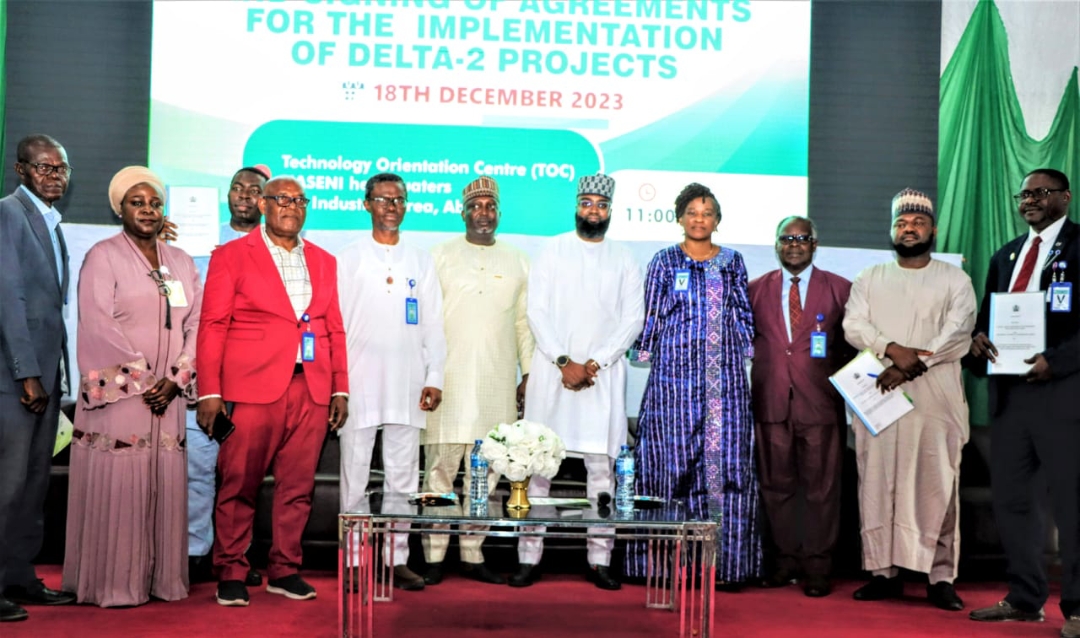
National Agency for Science and Engineering Infrastructure (NASENI) has signed an agreement worth $21.7 million with eleven firms in Nigeria as beneficiaries for take-off of the Delta-2 Projects, being the outcome of the bilateral collaboration between the federal government of Nigeria and the Czech Republic.

5th from Right: The Executive Vice Chairman and Chief Executive Officer of National Agency for Science and Engineering Infrastructure (NASENI), Mr. Khalil Suleiman Halilu; the Chairman, Presidential Implementation Committee on Technology Transfer and Information Exchange, Dr. Mohammed Dahiru and beneficiaries of the Delta-2 projects after the signing of implementation agreements at NASENI HQ in Abuja on Monday, December 18,2023.
The Nigerian beneficiary companies are expected to come up with various products and services to be injected into the Nigeria economy. The Delta-2 Programme is being implemented by the Presidential Implementation Committee on Technology Transfer/Information Exchange (PICTT), NASENI as implementing Agency for Nigeria, working in partnership with the Technology Agency of the Czech Republic (TA CR).
In his welcome address on Monday, December 18, 2023 at the Agency’s headquarters, the Executive Vice Chairman and Chief Executive Officer (EVC/CEO) of NASENI, Mr Khalil Suleiman Halilu, said the Delta 2 programme, which was launched in 2022, designed with the aim of funding and enabling research, development and innovation projects in Agriculture, Mining, and General Manufacturing for small and medium enterprises (SMEs).
With $21.7 million set aside to finance the selected projects, TA CR will contribute $11.7 million while NASENI will contribute $10 million as counterpart fund. The bilateral cooperation between Nigeria and the Czech Republic began on 15th May, 2014.
Mr. Halilu emphasized that the Delta-2 Programme was yet another manifestation of NASENI’s commitment to fulfilling its mandate of transforming Nigeria’s technology and innovation landscape, through sustained focus on its 3Cs principles of Collaboration, Creation and Commercialization.
“Ultimately, our goal is not just to produce prototypes and models, but to ensure that the outcomes of the partnership are taken to market; that they are available commercially for consumers and end-users to benefit from, knowing that the real value of technology lies in market usefulness and application, our vision in the new NASENI that we are building is to create values and to be relevant in the market”.

The EVC/CEO reiterated that for every single kobo that NASENI will invest into this phase of the Delta-2 program, to develop new projects and products, the Agency will realize almost six naira (N6) in commercial returns, in addition to job creation opportunities, capacity building and technology transfer.
“That is what NASENI stands for: leveraging technology and talent to deliver returns that benefit Nigeria on multiple levels,”. Halilu said while congratulating the selected beneficiaries of the projects, urged them not to take this massive opportunity for granted as the funds would be deployed with a sense of service and responsibility.
According to the Chairman, Presidential Implementation Committee (PIC) on Technology Transfer/Information Exchange on Delta 2 Projects, Dr. Dahiru Mohammed, he said the program was launched on 18th May, 2022 with 285 proposals received from various companies registered in Nigeria.
He stated that the evaluation of the proposals was carried out diligently by members of the Assessment Committee who were selected from the Nigerian Academy of Science, Nigerian Academy of Engineering (as research experts) and the Nigeria-Czech Republic Trade and Investment Council (NCTIC).
The process was well coordinated by experts in both fields of research and business and ably assisted by the PIC secretariat. “It is noteworthy that the distribution of the beneficiaries of the awards spans across the country, having all zones represented. “The funds are ready and we eagerly look forward to start implementation in January 2024. The funding of the projects is scheduled to last between 12 to 36 months,” Dahiru added.
He further said the idea behind the Delta-2 projects was to yield patents, pilot plants, proven technologies, software, certified methodologies, processes and specialized maps, and databases, among others, which is expected that the outcomes of the various projects will have a direct and immediate positive impact on the average Nigerian farmers, miners and MSME operators.
The resulting technologies from these collaborations will be transferred and domesticated in Nigeria through NASENI and other research institutions and private companies.
At the event, separate goodwill messages came from the Minister of Science and Technology, Chief Uche Nnaji; Chairman, Senate Committee on NASENI, Chief Ezenwa Francis Onyewuchi; Chairman, Senate Committee on Science and Technology, Alhaji Aminu Iya Abbas and the Chairman, House Committee on NASENI, Honourable Taofiq A. Abimbola, who reassured the Agency of better enabling laws and collaborating partnership for better productivity.
In a related development, NASENI signed memorandum of understanding (MoU) for production license for the establishment of Coal-based fertilizers in Nigeria with PT Saputra Global Harvest.
The agreement with SAPUTRA covers three key areas. Halilu said, “Food Security is one of the priority areas on the Renewed Hope agenda of President Bola Ahmed Tinubu.
“The President is determined to build a Nigeria that is not only able to feed itself in an affordable manner, but also one that is able to produce surplus food for export.”
Others are: the supply of machinery and equipment that will enable us produce coal-based fertilizer for use in Nigeria; the capacity development component, which is the training of Nigerian personnel on the use and maintenance of these equipment; and the licensing that gives Nigeria the permission to produce the coal-based fertilizer according to the prevailing standards of quality already established by Saputra.
The agreement is building on the initial MoU signed between NASENI and Saputra in September 2022, as part of steps to strengthen the bilateral relationship between Nigeria and Indonesia, while also supporting the development of Nigeria’s agricultural sector.



MENXTT TECH NG, a Lagos-based technology company, has launched an initiative to make quality Dell laptops more affordable for Nigerians through flexible payment plans and extended warranty support.

The company said the initiative was aimed at helping students, entrepreneurs, professionals and small businesses acquire reliable computing devices despite rising technology costs.
According to the company, customers can now purchase premium pre-owned Dell Latitude, Dell Precision and Dell Inspiron laptops at competitive prices, with selected models available under staggered payment arrangements.
The laptops, it said, are designed to meet the needs of users ranging from students and office workers to architects, engineers, software developers, graphic designers and video editors.
Speaking on the initiative, the Co-Founder of MENXTT TECH NG, Mr Anthony Emeka Nwosu, said access to quality technology should not be limited by financial constraints.
“A laptop is no longer a luxury; it is an essential tool for education, business and career development.
“Unfortunately, many people are forced to settle for unreliable devices because of the high cost of new laptops.
“At MENXTT TECH NG, we want to bridge that gap by providing durable Dell business laptops at affordable prices, backed by a full one-year warranty and flexible payment plans.
“We want every student, entrepreneur, freelancer and business owner to have access to technology that helps them succeed,” he said.
Nwosu explained that every laptop undergoes comprehensive testing before delivery and comes with a one-year warranty, an original charger, a complimentary laptop bag, Windows 11 operating system and Microsoft Office Suite pre-installed.
He added that the company, an authorised Bitdefender Antivirus reseller in Nigeria, also installs genuine Bitdefender security software on every system to protect customers against cyber threats.
According to him, customers requiring additional productivity tools can also have licensed Foxit PDF software installed on their devices.
Nwosu said the flexible payment option was introduced in response to prevailing economic realities, enabling customers to spread payments over an agreed period.
He noted that the arrangement would make it easier for students, startups and growing businesses to acquire quality computers without placing excessive pressure on their finances.
Beyond laptop sales, the company provides information technology consultancy, computer repairs, software licensing, cybersecurity solutions and digital transformation services to organisations across Nigeria.
He reaffirmed the company’s commitment to supporting Nigeria’s digital economy by making dependable computing devices and enterprise technology solutions more accessible to individuals and businesses.
According to him, the initiative reflects MENXTT TECH NG’s vision of combining affordability, quality products and professional after-sales support to help more Nigerians participate in the country’s expanding digital ecosystem. (NAN)
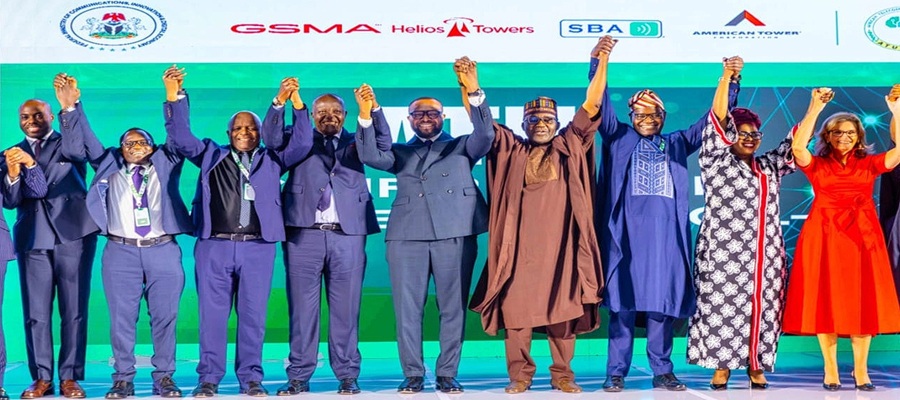
African ministers responsible for Information and Communication Technology (ICT) have adopted the 2026 Abuja Declaration on Meaningful Connectivity for Africa, committing member states to accelerate internet access in rural, remote and underserved communities across the continent.

The declaration was adopted at the Seventh Ordinary Session of the Conference of Plenipotentiaries of the African Telecommunications Union (ATU), held in Abuja.
The agreement seeks to address Africa’s widening digital divide by promoting policies and investments that will improve digital infrastructure, stimulate demand for internet services and ensure equitable access to digital opportunities.
In a statement endorsed by the participating member states, the ministers noted that Africa continues to lag behind other regions of the world in internet connectivity despite rapid global digital expansion.
The declaration, signed by Nigeria’s Minister of Communications, Innovation and Digital Economy, Dr Bosun Tijani, who assumed the role of Chairperson of the conference, highlighted the urgency of expanding digital inclusion across the continent.
According to the statement, global internet usage has reached about 68 per cent, rising to as much as 94 per cent in high-income countries, while internet penetration in Africa remains slightly above 38 per cent, the lowest among all regions of the International Telecommunication Union (ITU).
The ministers expressed concern that the disparity continues to limit socio-economic development, innovation, education, healthcare delivery and access to digital public services for millions of Africans.
They agreed that closing the connectivity gap, particularly in underserved communities, should become a continental priority requiring coordinated action by governments, regulators, development partners and the private sector.
The declaration establishes a framework centred on expanding digital infrastructure, increasing broadband adoption, stimulating demand for digital services and promoting equitable access to connectivity.
It also encourages member states to implement policies that will improve affordability, strengthen digital skills and create an enabling environment for sustainable investment in telecommunications infrastructure.
“Affirming that closing Africa’s connectivity and usage gap, particularly in rural, remote and underserved communities, is an urgent continental priority,” the declaration stated.
The conference further called on international development partners, industry stakeholders and civil society organisations to align their investments and programmes with the African Union’s Agenda 2063 and the Digital Transformation Strategy for Africa.
The ministers expressed optimism that stronger regional collaboration would accelerate digital transformation, foster inclusive economic growth and ensure that more Africans benefit from opportunities created by the digital economy.


Clydestone Ghana Plc has filed a writ of summons and statement of claim against MTN Ghana, MTN Group Limited and Mobile Money Fintech Limited, alleging unauthorized use of its intellectual property.

The company announced the court action at the Ghana Stock Exchange, confirming proceedings in the Commercial Division of the High Court of Ghana.
The case relates to work commissioned in 2007 that Clydestone alleges was later used without authorisation or compensation.
Clydestone said the claim involves proprietary intellectual property, confidential commercial information and operational methodology developed during the engagement. The company is seeking declarations, damages and equitable remedies.
In a statement, Clydestone said MTN Ghana engaged it in 2007 to develop a commercial and operational framework for a mobile money business.
“The work was developed and delivered by the company’s founder and Group CEO, Paul Jacquaye, and included a full mobile money ecosystem covering the commercial model, operational architecture, implementation methodology and business case.”
Clydestone said the work was commissioned on the understanding that a non-disclosure agreement and memorandum of understanding would be signed.
It alleges these agreements were not finalised despite repeated requests.
The company further alleges MTN Ghana later used its proprietary work and methodology without authorisation or compensation, including in MTN Mobile Money Ghana and other markets.
Clydestone said the alleged use has continued since the launch of MTN Mobile Money Ghana in 2009.
“The wrongful use of that work has been ongoing since 2009. What has changed is the availability of independently verifiable information that documents its scale and commercial significance,” the company said.
It cited the GSMA State of the Industry Report on Mobile Money 2026 and MTN Ghana’s 2025 annual report as evidence of the platform’s scale.
According to Clydestone, the reports show approximately 19.3 million active users and annual revenue of about GHS 6.0 billion ($516m).
The company said it reviewed its records following these publications and concluded there were sufficient grounds to initiate legal proceedings.
It added that it has received no payment or acknowledgement for the work since December 2007, and that pre-action correspondence in 2026 received no substantive response.
“The Board of Directors has unanimously authorised the commencement of these proceedings,” the company said.
Jacquaye said: “This case is about accountability for commissioned intellectual property.
“When independent publications in 2025 and 2026 revealed the scale of the mobile money business, we reviewed all documentation relating to the original engagement and concluded these proceedings were necessary.”
MTN Group Limited, named as a defendant, had not commented at the time of publication.

EFCC Arraigns 4 over Alleged $5.3m Fraud Scheme

CBN Orders N19Bn Refunds to Customers as Complaints Rise

Access Bank Debunks Shutdown Report, Vows Action against Perpetrators

Oye, AERE Raises Alarm as 8m MSMEs Collapse in 18 Months

Kaspersky Uncovers Cyber Threats Defining the First Half of 2026 in Nigeria, Others

NRC, Ponzi Scheme Collapses Resulting Loss of Billions of Naira

EFCC Busts NIS Visa Overstay Racket, Uncovers N700m in an Account

From Scarcity to Scale: What Africa Can Learn from India’s Agricultural Transformation

Tokenization, Blockchain Technology will Transform Financial Institutions – IMF

BON Establishes Six Ad Hoc Committees to Modernize Broadcasting




 Telecom2 days ago
Fact-Check: Elon Musk’s “Tesla Pi Phone” is Internet Rumor

 E-Financial2 days ago
Malpass, Ex World Bank Chief Raises Alarm over Nigeria’s Secretive Debt Structures

 Telecom2 days ago
How and Why Apps Deplete Data – ALTON

 E-Financial2 days ago
S&P Global Acquires Agusto & Co. to Strengthen Credit Ratings Across Africa

 News2 days ago
CIBN, ACAMB Push for Financial Inclusion, Women Empowerment

 Telecom2 days ago
Galaxy Backbone Soft Launches Government Service Portal to Simplify Access to Public Services

 E-Business2 days ago
NDPC Directs DCPMIs to Register with Agency or Face Legal Consequences

 Broadcasting2 days ago
Africa Prudential Posts N1.59bn Profit in H1 2026, Reaffirms Digital Growth Strategy