

News
How West Africa is Building Resilience against Climate Change


By Obinna Uche, Sales Director, Power Systems Division at Schneider Electric Anglophone West Africa
According to the report Climate Change and Security in West Africa published by the Stockholm International Peace Research Institute (SIPRI), changing climate conditions in West Africa are impacting natural resource availability, biodiversity and agricultural productivity. The report projects that the region will experience unprecedented change in temperatures and rainfall in the next 10 to 20 years.

UK, London, digital composite of trees and office buildings in London financial district
Already, West Africa experiencing an alarming rise in temperatures, with some areas recording highs of 42-43 degrees Celsius. This surge in temperature is accompanied by prolonged droughts which for example pose significant challenges to those countries that rely on hydropower generation as part of their energy posture.
Unfortunately, this vulnerability extends beyond power generation, many Western African countries’ power infrastructures simply don’t have the resilience against extreme weather conditions such as storms, already grappling with aged and compromised infrastructure.
During rainy seasons, Nigeria often (pre-emptively) shuts down its grid operations to prevent any additional damage to its already fragile infrastructure. Again, this re-emphasises the urgent need for infrastructural development in the region.
Addressing climate change with renewable energy

The good news is West Africa is proactively responding to climate challenges by implementing renewable energy solutions. Investments in renewable energy are gaining momentum, supported by substantial funding. USAID, for example, is supporting the third cycle of the Economic Community of West African States (ECOWAS) EREF (ECOWAS Renewable Energy Fund) programme, which was launched in 2019 and is currently being implemented in six West African countries.
The programme catalyses investment in energy by facilitating access to finance for renewable energy projects, with a specific focus on clean energy mini grids (CEMGs). This surge in investment aligns with the region’s commitment to reducing the carbon footprint and promoting climate sustainability.
The continued integration of wind and solar energy also serves a stabilising force, particularly in times when hydropower generation is compromised by fluctuating and extreme weather patterns. Gas engines and turbines are also seeing increased uptake, providing consistent energy supply during rainy season which impact solar supply.
Emerging role players
There is growing interest in green hydrogen as a potential solution. While not yet widely adopted, the exploration of green hydrogen technologies demonstrates a commitment to innovative solutions aligned with long-term sustainability goals.
As a global energy management company, Schneider Electric is also assisting the region in its strides to establish a sustainable more resilient energy infrastructure. For one, our goal is to ensure that energy capacity is optimally utilised, from generation to distribution to end user.
This includes providing intelligent monitoring solutions that contribute toward efficient power management and distribution, ultimately leading to cost savings as well as increased investor confidence.
Whist West Africa still has numerous obstacles to overcome, it is undoubtedly encouraging to experience the region’s commitment to sustainability which speaks volumes of its resilience and the proactive steps it is taking to striking a balance between climate change and stable energy provision.


Mobility technology company, Moove has raised $250 million in a Series C funding round at a valuation of $2.1 billion, reaching unicorn status.

The startup will deploy the fresh capital to build out autonomous vehicle infrastructure, expand fleet ownership, construct robotics-focused “Nests” for charging and maintenance, and grow its autonomous workforce from 150 to 500 by year-end.
The company plans to enter additional global markets, reflecting a strategy to build the operational infrastructure required for large-scale autonomous transportation rather than simply supplying vehicles.
Led by Mubadala Investment Company and co-led by Woven Capital, Toyota’s Growth Fund, and Ion Pacific, the round also included new investors BlueCrest Capital Management, Sona Asset Management and The Raptor Group, alongside existing backers BlackRock, MUFG, Franklin Templeton and Uber.
“Autonomous mobility is becoming an infrastructure race requiring fleets, charging systems, maintenance, data infrastructure and continuous city-level operations,” said Ladi Delano, co-founder, co-CEO and advisory board chairman of Moove.
Founded in Lagos in 2020, Moove has grown into a global mobility platform employing about 3,300 people across 29 cities in 13 countries, operating approximately 42,000 vehicles and reaching $420 million in annualised recurring revenue.
It has expanded organically and through acquisitions, including Kovi in Brazil and Tokyo Taxi in Japan. Moove also operates autonomous vehicle fleets in partnership with Waymo in Phoenix and Miami, with London expected to join its footprint.
The $2.1 billion valuation places Moove among Africa’s small group of tech unicorns, alongside Flutterwave, OPay, Moniepoint, Andela, Chipper Cash, Wave, Tyme, MNT-Halan and Interswitch.
The $250 million round is the largest single funding deal announced by an African startup this year, though EV mobility firm Spiro raised $270 million cumulatively across two separate rounds.


The World Bank Group has announced the 31-month debarments of United Aviation Services Limited (UNASEL), a transportation services company based in Nigeria, and Air Vice Marshal Alkali Mamu, its owner and president, “in connection with fraudulent practices under the Enhancing Niger Northeastern Connectivity Project,” according to a press release issued by the multilateral development bank.

The statement said that the project aims to enhance connectivity and road safety along the Zinder-Agadez Road section and improve access to basic socioeconomic infrastructure for selected communities in that road section.
However, according to the statement: “UNASEL and Mr. Mamu presented false experience documents in a prequalification application to qualify for a contract under the project. This was a fraudulent practice under the World Bank’s sanctions framework.”
“The debarments make UNASEL and Mr. Mamu ineligible to participate in projects and operations financed by Bank Group institutions. The debarments are part of two settlement agreements under which UNASEL and Mr. Mamu admit culpability for the underlying sanctionable practices,” it added.
The statement further said: “Per the Bank Group Sanctioning Guidelines, the settlement agreements provide for a reduced period of debarment in light of UNASEL and Mr. Mamu’s cooperation.
As a condition for release from sanction under the terms of the settlement agreements, UNASEL and Mr. Mamu commit to developing and implementing integrity compliance measures that reflect the relevant principles set out in the Bank Group Integrity Compliance Guidelines, and Mr. Mamu further agrees to complete corporate ethics training.
UNASEL and Mr. Mamu also commit to continue to fully cooperate with the Bank Group’s Integrity Vice Presidency.
“The debarments of UNA SEL and Mr. Mamu qualify for cross-debarment by other multilateral development banks under the Agreement for Mutual Enforcement of Debarment Decisions that was signed on April 9, 2010.”
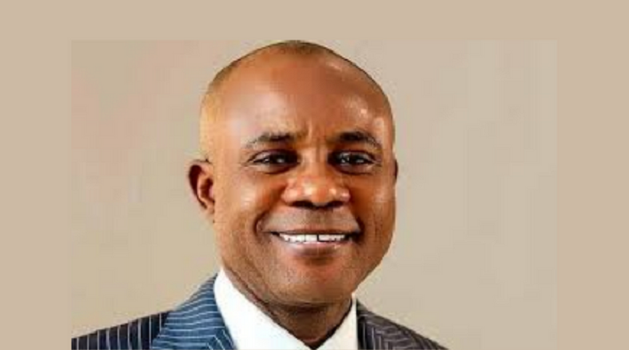
Governor Peter Mbah of Enugu State, has approved the allocation of a parcel of land in Enugu, the state capital, for the establishment of a state-of-the-art Digital Fabrication Centre by the Industrial Training Fund.

Mbah announced this while receiving a delegation from the Industrial Training Fund on a courtesy visit to the Government House, Enugu.
The ITF disclosed this on Friday in a statement signed by its Director of Press and Public Relations, Thomas Ngor.
According to the statement, Mbah described the proposed project as timely and aligned with his administration’s vision of transforming Enugu into a leading destination for investment, innovation and technology-driven industrial development.
He noted that the future of economic prosperity lies in deliberate investments in human capital and emerging technologies, adding that the state has continued to create an enabling environment for innovation, enterprise and sustainable growth.
The governor explained that his administration has made technical education compulsory in the state’s basic education system, with emphasis on digital literacy, robotics and mechatronics to prepare learners for the future of work.
According to him, many traditional trades are now driven by digital technologies, making it imperative to equip young people with relevant technical competencies that will enable them to compete globally and contribute meaningfully to economic development.
Governor Mbah further disclosed that his administration has built smart schools across the state, equipped with robotics centres, mechatronics laboratories and other modern learning facilities, to prepare youths for the evolving global economy.
He noted that artificial intelligence is expected to contribute about $20tn to the global economy in the coming years.
He therefore stressed that the state must be intentional about upskilling its citizens, adding that the establishment of the ITF Digital Fabrication Centre will significantly strengthen the state’s drive to build a knowledge-based economy, foster innovation, promote local manufacturing and create employment opportunities for its growing youthful population.
Earlier, Afiz Ogun, the Director-General of the ITF, who led the delegation, said that upon his appointment by President Bola Tinubu, he was mandated to upskill Nigerian artisans to international standards.
He explained that the Fund subsequently repositioned its technical and vocational skills development efforts through strategic initiatives, including the Skill-Up Artisans Programme, which is designed to train, certify and license Nigerian artisans to international standards.
Ogun disclosed that the Fund had already established a Digital Fabrication Centre in Ikeja, Lagos, with the capacity to produce more than 400 different products. He therefore requested the allocation of land in Enugu State to establish a similar centre with the same production capacity.
According to him, the initiative is aimed at promoting industrialisation, reducing dependence on imports and preparing Nigerians for opportunities in the Fourth Industrial Revolution.
He also reaffirmed the Fund’s readiness to enter into public-private partnerships that will transform Nigeria’s artisanal ecosystem.
Ogun further noted that digital technologies, including artificial intelligence, robotics and computer-aided manufacturing, are rapidly transforming the global economy, making it imperative for Nigeria to deliberately invest in upskilling its workforce to remain globally competitive.
The ITF delegation was later conducted on a guided tour of facilities at one of the smart schools established by the Enugu State Government.

Affordable, Flexible Streaming Platforms May Kill PAYtv – Report

FG Suspends NAICOM’s N680m Insurance Recapitalisation Fees

FG Taps Indian, Chinese Technologies to Tackle $2.5Bn in Food Losses

MTN Nigeria Clocks 25, Connects over 90m People

Subscribers to Seek Legal Redress if Poor Quality of Service Continue in September

EFCC Busts NIS Visa Overstay Racket, Uncovers N700m in an Account

Fact-Check: Elon Musk’s “Tesla Pi Phone” is Internet Rumor

NBC Tasks Broadcasting Stations over 2028 DSO Global Deadline

NBC Scraps Annual Digital Access Fee on DSO

Glo Sponsored African Voices to Feature Netflix’s “The Polygamist” Stars




 Telecom1 day ago
MTN Alerts Subscribers over Fake 25GB Anniversary MTN Data Giveaway

 E-Business1 day ago
X Replaces Revenue Sharing wit New Creator Rewards Programme

 E-Financial1 day ago
Interswitch, Temenos Commit to Advancing Nigeria’s Digital Banking Technology

 General News1 day ago
Fake Agency: ICPC Indicts NITDA, Others over Inadequate Due Diligence

 General News1 day ago
UNESCO Taps Oguamanam,Nigerian Scholar to Advisory Body on Science, Tech Ethics

 E-Financial1 day ago
FG Spent N3.1 Trillion on Domestic Debt Servicing in Q1- DMO

 General News1 day ago
Tax Reform Built on Taxing Prosperity, Not Poverty– Adedeji

 Broadcasting1 day ago
Awba-Ofemili Unveils 2026 Health Campaign, Offers Free Medical Screening