

Telecom
Africa Data Centres Unveils ADC Channel Programme


Africa Data Centres, a division of the Cassava Technologies group, is excited to announce the launch of its exclusive channel partner programme, ADC Channel.

This programme is designed to establish colocation and ecosystem partnerships, empowering members to expand their product portfolio & offerings alongside their market presence including an expanded data centre footprint.
ADC Channel presents a unique opportunity for global carriers, Internet Service Providers (ISPs), system integrators, Data Centres, Mobile Network, Content Developer, telecommunications companies, network infrastructure operators, hyperscalers and others to deliver state-of-the-art, sustainable and cost-effective digital solutions to their clients.
The primary objective of ADC Channel is to foster collaboration amongst partners, facilitating the delivery of optimised solutions and comprehensive support to clients. Partners enrolled in ADC Channel will benefit from a flexible approach that accommodates various partnership and go-to-market (GTM) models.
Finhai Munzara, CFO of Africa Data Centres, emphasises that the benefits of the ADC Channel programme extend to all types of partners.
“Our facilities are designed with the needs of hyper-scale, wholesale & enterprise clients in mind, catering to their technical, operational and commercial requirements. Whether it’s greenfield projects, built-to-suit facilities, powered shells, dedicated halls, or hybrid colocation, we offer flexible, scalable and sustainable solutions that suit partners of every kind.
He elaborates on the advantages of becoming an Africa Data Centres Partner.
Firstly, clients gain an additional product offering & footprint to augment their existing portfolio, enabling them to offer bundled solutions. This not only enhances their current revenue streams but also positions them for further growth & retention with both existing and future customers.
Africa Data Centres has also developed ADC Marketplace, a pioneering platform designed to empower partners and customers across the continent.
This innovative marketplace provides a dynamic space for partners to showcase their services and for customers to explore offerings, fostering collaboration and visibility within the African tech community. Offering unmatched connectivity and growth opportunities, the ADC Marketplace stands as the ultimate platform for African enterprise organisations and tech companies seeking to thrive in today’s digital landscape.
Partners stand to benefit from reduced churn, as colocation is inherently a ‘sticky’ product with minimal price erosion. By offering best-of-breed colocation services from Africa’s leading data centre provider, partners can differentiate themselves from competitors.
Partners will also enjoy seamless access to data centre experts, continuous commercial and technical support, and regular, complimentary training for their sales and product teams.
Furthermore, partners face no financial risk, as participation in the channel programme requires no investment and entails no capital expenditures for building data centres.
Partners can also leverage flexibility in setting their selling prices and receive significant upfront discounts, further bolstering their competitive advantage. Exclusive benefits include competitive pricing, dedicated sales & Presales Teams, Remote Hands support and access to joint marketing resources & activities, enabling partners to thrive in the marketplace.
Munzara emphasised that ADC Channel programme epitomises Africa Data Centres’ commitment to fostering collaborative growth and innovation. “It serves as a platform for clients to enrich their product portfolios and seamlessly extend their business across diverse ecosystems with openness and transparency.” Africa Data Centres warmly invites partners to embark on this transformative journey towards shaping the future of digital connectivity in Africa.
“The programme prioritises mutual growth, leveraging Africa Data Centres’ profound industry expertise and extensive infrastructure,” Munzara concluded.



Indian government has asked Meta Platforms to suspend the rollout of WhatsApp’s proposed username feature in the country over fears that it could fuel online fraud, impersonation and phishing attacks.

The directive, issued by the Ministry of Electronics and Information Technology (MeitY), comes days after WhatsApp announced plans to introduce usernames globally, allowing users to connect without sharing their phone numbers in a move aimed at enhancing privacy.
India, WhatsApp’s largest market with more than 500 million users, expressed concern that the feature could make it easier for cybercriminals to impersonate individuals and organisations, particularly among users with limited digital literacy.
According to media reports, the ministry, in a letter to Meta, warned that the feature could increase incidents of online fraud, phishing, digital arrest scams and identity theft.
A senior government official was quoted as saying that malicious actors could claim usernames resembling those of legitimate individuals and use them to deceive unsuspecting users.
The ministry has reportedly asked Meta not to launch the feature in India until consultations with the government are concluded and the company provides satisfactory explanations on the safeguards built into the system. Authorities have also asked WhatsApp to respond to the concerns within three days.
Responding to the concerns, Meta said the username feature had not yet gone live in India and stressed that multiple security measures had been incorporated to prevent abuse.
The company said usernames for high-profile public figures and verified organisations had already been reserved to prevent impersonation.
Meta added that users would still require a phone number to register for WhatsApp and that the platform had introduced several layers of protection, including limits on messaging unknown users, restrictions on repeated attempts to guess usernames, and systems to detect and remove impersonation and scam-related activities.
The latest development comes as India intensifies efforts to combat cybercrime amid a sharp rise in digital fraud cases across the country.
Government data indicate that financial losses from cyber fraud have risen significantly in recent years, prompting closer scrutiny of digital platforms and their security features.
WhatsApp’s introduction of usernames ostensibly to increase privacy for users so they don’t have to swap phone numbers – could backfire if hackers turn usernames into a new avenue for privacy attacks.

This is according to two experts, who both note that usernames will be fair game for hackers, while also being accessible to governmental agencies and advertisers, upending WhatsApp’s key to success: conversations and calls are end-to-end encrypted by default.
WhatsApp has always stated that its encryption “ensures that only you and the person you are communicating with can read or listen to them, preventing anyone in between – including WhatsApp, Meta, or cyber criminals – from accessing your data”.
Over the weekend, the messaging app said it was introducing usernames so that users provide these as contact details instead of phone numbers, which it calls “a major privacy feature”. It is encouraging users to “reserve your username now, before the feature launches later this year”.
“Sometimes you just want to chat without handing over your digits,” WhatsApp says, noting that a phone number is personal and tied to many parts of a user’s life.
The Facebook and Instagram owner says: “This is also true for group conversations. You want to join the parent chat for the soccer team but you’re not ready to give your phone number to people you’ve never met.”
Trading View, a financial markets analysis platform, says: “The approach could help Meta position the update as a controlled privacy tool rather than a discovery feature, while bringing WhatsApp closer to rival messaging apps such as Signal, which already allows username-based conversations.”
It adds there will be no directory or username suggestions, so users will need to know a person’s exact username to contact them for the first time. An optional username key can be enabled to further restrict who is able to message them.
Meta is also introducing safeguards as the feature rolls out to reduce the risk of impersonation and scams, Trading View explains. Existing Facebook and Instagram usernames will be reserved for their current owners during the reservation period, and certain usernames associated with public figures, celebrities and government entities will remain permanently protected.
ICT veteran commentator Adrian Schofield, however, questions whether the feature will deliver the privacy benefits users expect. “Short usernames will not be difficult to find and are likely to become a new ‘game’ for those who enjoy breaking privacy protection,” he says.
The big issue is privacy, says T4i director Mark Walker, formerly with research company IDC. WhatsApp built its reputation on shielding users’ identities regardless of which groups they joined, or who they associated with. That promise, he argues, is now being quietly redefined.
“‘Privacy’ now means protection from impersonation by other users, not privacy from the platform’s own surveillance, data linkage, or other entities. It’s a security feature rebranded for a privacy-sensitive audience, directly trading away individual privacy for a form of collective safety,” he says.
Walker adds: “Users value WhatsApp for its privacy; none of the groups you join or people you associate with are shared externally with advertisers. That is what is being eroded.”
This move, Walker says, is “a sophisticated monetisation play,” using privacy, security and regulation to motivate users to verify their identities – for a fee – while positioning Meta as what he calls “the all-seeing trusted eye” attractive to both advertisers and government agencies.
In its announcement, Meta says users can reserve a username to use later this year when the feature launches. “A lot of names overlap, which is why we’re opening reservations early so everyone has the opportunity to select the username that matters to them.”
Content creators, small businesses and organisations that want to maintain a consistent online presence will be able to claim their existing Instagram or Facebook username on WhatsApp through reserved username options, says Meta.
“For most people, choosing a WhatsApp username should be something unique that only people you want to contact you will know. If you need help picking one, we have a username generator to make one work just for you,” Meta says.
WhatsApp had reached three billion users globally as of Meta’s 2025 first quarter results, or 36% of the world’s population. “WhatsApp now has more than three billion monthly actives, with more than 100 million people in the US and growing quickly there,” CEO Mark Zuckerberg said at the time.
During Meta’s latest results, Zuckerberg said: “WhatsApp continues to see strong momentum too, including in the US.”
Schofield questioned whether desirable short usernames could become targets for impersonation. “Look at the older Gmail accounts! Time to take a good look at alternative platforms? This feature will be rolled out in tranches,” Meta says.
Telecom
Airtel Nigeria CEO Urges Adoption of Intelligent Technology Platforms to Accelerate National Growth

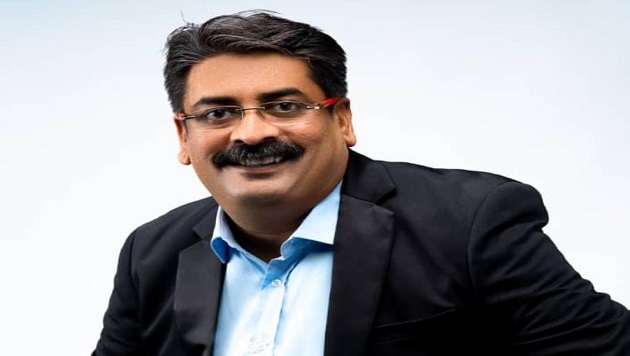
Dinesh Balsingh, Airtel Nigeria’s Chief Executive Officer, has called on business leaders to accelerate Nigeria’s digital future by embracing intelligent technology platforms that drive innovation, productivity, and sustainable economic growth.

Speaking at the Lagos Business School (LBS) Breakfast Club on the theme, “From Telco to Techno,” Balsingh said the telecommunications industry is evolving beyond connectivity to become the foundation for enterprise transformation and the country’s digital economy.
Balsingh explained that while previous generations of mobile technology connected people through voice, internet access, and mobile broadband, the future lies in intelligent ecosystems powered by artificial intelligence (AI), the Internet of Things (IoT), satellite connectivity, and integrated enterprise solutions.
“The role of telecommunications has fundamentally changed. Businesses are no longer asking only for connectivity; they want solutions that improve productivity, strengthen security, and accelerate digital transformation. That is the journey Airtel is leading. We are evolving from a telecommunications company into a technology partner that helps organisations unlock growth and create long-term value,” he said.
Noting that value is no longer measured by the volume of data consumed but by the business outcomes technology delivers, he highlighted a key shift in telecommunications to AI-powered customer protections, industry-specific digital solutions, IoT platforms, and hybrid satellite-terrestrial networks that extend reliable connectivity to underserved communities and remote business locations.
“Technology should do more than connect people. It should protect them, simplify operations, and help businesses make better decisions. Investments are now focused on building smarter, more resilient digital infrastructure that supports organisations across every sector of the economy.”
He added that sectors including retail, education, healthcare, government, manufacturing, and oil and gas increasingly require integrated digital solutions that combine connectivity with cloud services, intelligent networking, surveillance, automation, and data analytics.
Balsingh also urged business leaders to rethink their digital priorities, noting that future competitiveness will depend on how connected, intelligent, secure, automated, and resilient their organisations become.
“The organisations that will lead the next decade are those that invest today in intelligent digital infrastructure. Our customers are no longer buying connectivity alone. They are investing in productivity, intelligence, and digital transformation.”
The session, which also featured the IMF Resident Representative for Nigeria, Christian Ebeke, formed part of the Lagos Business School Breakfast Club, a platform that brings together business executives and industry leaders to examine emerging trends shaping the future of enterprise and economic development.
Airtel Nigeria’s participation reinforced its commitment to supporting Nigeria’s digital transformation by enabling businesses with innovative technologies that improve efficiency, strengthen resilience, and unlock new opportunities for growth across the country’s rapidly evolving digital economy.

Court Declares Keystone Bank Staff Wanted over Alleged N35m Fraud

IMF Raises Concerns over N8.83 Trillion Unreported Spending in Nigeria’s Budgets

NOTAP to Commercialise University Research, Expands Patent Drive

FG Unveils Digital Postcode System for MDAs

BoI, NBCC Sign MoU to Deepen Bilateral Trade, Industrial Growth and Investment

Mobile Internet Gender Gap Widest in Africa – GSMA

London Strengthens Global Investment Ties with Africa @ First Ever London-Africa Business Summit

FG Targets Alleged N3tn Capital Flight, Opens Airtime Credit Market to Nigerian Fintechs

Japan, UNESCO Boost Digital Learning in 15 CoEs with Donation of ICT Equipment

Nigeria Launches FreeTV Nationwide




 News2 days ago
Verve Strengthens Global Acceptance Across Leading Digital Platforms

 News2 days ago
Army Says Terrorists Now Recruiting, Raising Funds Online

 E-Business2 days ago
Kaspersky Warns of The Gentlemen Ransomware Group Expanding Operations with New Malware

 Telecom2 days ago
Lebara Nigeria Becomes Member of GSMA Network

 Telecom2 days ago
Airtel Nigeria Deepens Focus on Data Usage Transparency @ Customer Forum

 Telecom2 days ago
Vitel Wireless Warns Public, Says it Not Running any Investment Scheme

 General News2 days ago
FG to Abolish JSS-SSS Separation Policy after 20m Pupils Drop Out

 E-Financial2 days ago
Bank of Industry Appoints Kuramo Capital as Manager of Dice Fund of Funds