

/home/kenneth/web/nigeriacommunicationsweek.com.ng/public_html/wp-content/themes/zox-news/parts/post-single.php on line 153
">
Warning: Undefined array key 0 in /home/kenneth/web/nigeriacommunicationsweek.com.ng/public_html/wp-content/themes/zox-news/parts/post-single.php on line 153
Warning: Attempt to read property "cat_name" on null in /home/kenneth/web/nigeriacommunicationsweek.com.ng/public_html/wp-content/themes/zox-news/parts/post-single.php on line 153
IBM Selects Abuja, 15 Other Cities Smarter Cities Grant

Abuja, Nigeria’s administrative, diplomatic and political capital has been selected alongside 15 other cities globally by IBM for its Smarter Cities Challenge for 2014.
The IBM Smarter Cities Challenge is a competitive grant program that sends teams of some of IBM’s most talented experts to select cities and regions worldwide to provide expertise on the most critical issues faced by communities today.
IBM will therefore be helping 16 cities and counties around the world this year to address issues ranging from clean water, healthy food, and revenue generation, to job development, efficient transportation, and public safety.
To that end, IBM has named recipients of its Smarter Cities Challenge for 2014. For these pro bono consultative engagements, IBM teams invest months studying a local issue chosen by a winning municipality.
They then spend three weeks on the ground in the region gathering and analyzing all relevant data and reports, while meeting in person with dozens of members of the government, citizen, business, and not-for-profit communities.

In doing so, they gather diverse perspectives about the factors involved and potential solutions to the opportunity at hand.
At the conclusion of these studies, IBM presents comprehensive recommendations for addressing the issue in line with recognized “best practices.” This is followed weeks later by a more detailed, written plan for its implementation.
Smarter Cities Challenge was originally conceived in 2011 as a three-year grant program, but highly positive feedback and significant results have encouraged IBM to extend the initiative. In its first three years, IBM’s Smarter Cities Challenge deployed 600 experts on six-person teams that provided strategic and practical advice to 100 municipalities.
These highly prized three-week engagements, each currently valued at USD $500,000, have helped local government address key challenges.
Given that effective local governance today relies on the coordination of multiple municipalities, IBM made regional governments eligible for the grant program this year, not just cities.
With the previous participation of 100 cities, the Smarter Cities Challenge program now also offers winning municipalities access to fellow leaders with whom to consult on similar issues, so as to share strategies that have been effective elsewhere.
IBM will work with municipalities this year that seek its input on projects such as the following: improving transportation options by connecting roads, bikepaths, sidewalks and rails; protecting the environment with better water quality; collecting revenue, lowering costs and managing budgets more efficiently; and leveraging local industries and natural resources for tourism and economic development
Others are: Making more nutritious and affordable food available in urban neighborhoods; harnessing the sun and converting waste products into electrical energy; preserving public safety during dangerous weather and man made events; and decreasing high crime impacts in blighted neighborhoods
Apart from following are cities and regions that IBM announced as winners of the IBM Smarter Cities Challenge grants for 2014 are :Ballarat, Australia; Baton Rouge, United States; Birmingham, United States; and Brussels, Belgium.
Others are : Dallas, United States; Dublin, Ireland; Durban, South Africa; Jinan, China; and Mombasa County, Kenya
Also on the list are: Niigata, Japan; Perth, Australia; Suffolk County, United States; Tainan, Taiwan; Vilnius, Lithuania; and Zapopan, Mexico
Many previous grant recipients have implemented IBM’s Smarter Cities Challenge recommendations and tangibly improved the lives of their citizens.
For example: Da Nang, Vietnam and the Delhi-Mumbai, India Industrial Corridor are improving the coordination of municipal agencies as they manage complex projects.
• Date, Japan now provides more and better information to consumers about the safety of its agriculture — key for a city perceived as near the site of a nuclear power plant disaster.
• Eindhoven, Netherlands has reduced crime with strategies that include citizens’ use of social media. Meanwhile, St. Louis, USA provides better information about criminals to judges prior to sentencing.
• Edmonton, Canada has improved road safety by analyzing accident data and improving education programs. Meanwhile, Boston, USA is using data to manage traffic more efficiently and reduce pollution.
• Jacksonville, USA has hired an economic development officer and passed legislation that streamlines city council processes for economic development.
• Ottawa, Canada is developing the neighborhoods near its light rail system by giving incentives to developers and streamlining the permit process. Meanwhile, Providence, USA has streamlined and shortened the process for reviewing and approving construction plans and permits by putting more processes online and by creating a nimble agency. This will improve economic development and inspire the streamlining of other city services.
• Syracuse, USA created one of New York State’s first land banks, enabling the city to reclaim and work with the private sector to transform vacant properties. This is revitalizing its neighborhoods and restoring its tax base.
• Townsville, Australia is reducing its water and energy costs. Its efforts have earned it that country’s prestigious National Smart Infrastructure Award. Meanwhile, Tshwane, South Africa conducted a successful crowdsourcing project to pinpoint and reduce water leaks.
Smarter Cities Challenge is an elite program, having picked only 116 municipalities out of more than 500 applicants over the last four application cycles. Strong applications propose projects designed to address high priority problems of critical importance to citizens.
The city or region must be able to share detailed information to help the IBM team analyze the issue. Leaders must also guarantee face-to-face access to city, regional, civic and business stakeholders for interviews with IBM team members so that they may comprehensively assess a given problem and recommend solutions.
IBM dispatches IBMers on these engagements who hail from all over the world, and who offer diverse perspectives and skills in the areas of marketing, communications, technology, research and development, government, human resources, finance, business, legal matters and specific disciplines such as transportation, energy and health.
Jennifer Crozier, IBM’s vice president of Global Citizenship Initiatives, and whose team directs the Smarter Cities Challenge, said, “Congratulations to all of the cities and regional governments that have secured IBM Smarter Cities Challenge grants for 2014. If history is any guide, these municipalities can look forward to tapping a treasure trove of skills and knowledge from some of IBM’s best and brightest. By collaborating with our experts, local governments will be receiving valuable counsel that could very well influence the success of issues that are foremost on the local agenda. We hope to be a useful resource to the winning cities and regions and be a catalyst for progress.”


Warning: Undefined array key 0 in /home/kenneth/web/nigeriacommunicationsweek.com.ng/public_html/wp-content/themes/zox-news/parts/post-single.php on line 493
Warning: Attempt to read property "cat_ID" on null in /home/kenneth/web/nigeriacommunicationsweek.com.ng/public_html/wp-content/themes/zox-news/parts/post-single.php on line 493

The next currency crisis could accelerate the shift of the roughly $315 billion global stablecoin market into a digital-dollar alternative for citizens in emerging economies, notably in regions like sub-Saharan Africa and Latin America.

As local fiat currencies face devaluation and high inflation, citizens and businesses are increasingly utilizing smartphone-based stablecoins (such as USDT and USDC) as hedges and primary mediums of exchange.
According to the International Monetary Fund (IMF), the rapid adoption of dollar-linked digital assets—particularly in countries heavily affected by inflation like Nigeria—poses significant risks to monetary sovereignty.
With up to 95% of surveyed individuals in some African markets preferring to receive payments in stablecoins over local fiat, the rising volume of these decentralized, cross-border channels weakens domestic currency demand and dilutes the effectiveness of local monetary policy.
IMF observed in a report titled “Stablecoins in Nigeria: A Growing Cross-Border Channel” noted that the widespread use of stablecoins poses risks to monetary sovereignty, particularly as more individuals and businesses turn to digital dollar-linked assets for savings and transactions.
Nodding in agreement is Future Investment Initiative Institute (FII Institute), a non-profit organisation run by the Public Investment Fund, Saudi Arabia’s main sovereign wealth fund.
FII Institute said that central banks face structural challenges.
And according to the institute, when citizens move savings out of national banks and into private digital wallets, conventional capital controls lose their grip.
Institutions like the Bank for International Settlements warn that interest-bearing stablecoins compete directly with domestic-currency deposits, complicating financial oversight and making smartphone-based transfers incredibly difficult for authorities to monitor.
In Nigeria, Naira depreciation has pushed users toward dollar-stablecoins, according to report by Gino Matos in cryptoslate.com.
A stablecoin is a type of cryptocurrency designed to maintain a steady value by pegging its price to a reserve asset, such as a fiat currency (e.g., the U.S. dollar) or a commodity (e.g., gold).
They act as a bridge between traditional money and the digital asset world, providing the speed of crypto without the extreme price swings of assets like Bitcoin.
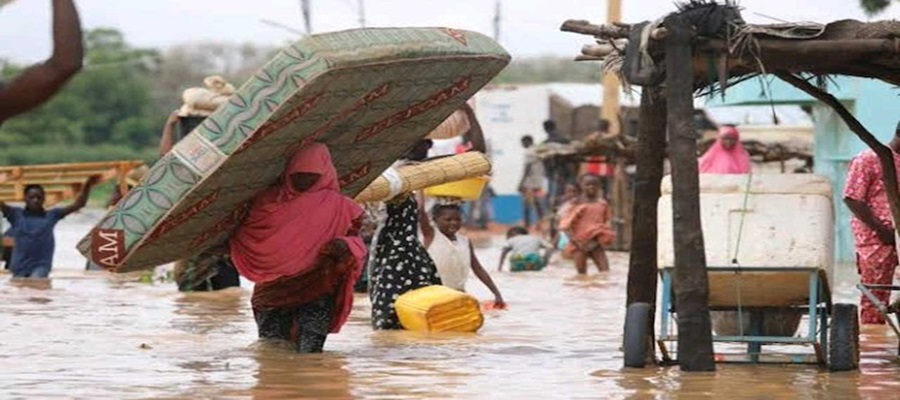
Nigeria Hydrological Service Agency (NIHSA) has warned of possible floods in parts of Adamawa, Bauchi, Edo, Imo, Enugu, Akwa Ibom, Cross River, Kaduna, Plateau, Niger, Benue, and Borno states within the next seven days.

According to information posted on NIHSA X handle, the Agency announced medium flood advisory in force for the next 7 days across Adamawa, Bauchi, and 11 other States.
“Localised inundation is forecast along the main channel; named communities below sit on the projected footprint. Stations: Saminara on the Karam river, Waya Dam Site on the Waya river, Amber on the Amber river.
“Adamawa; Lemsa, Lamurde, Numan Exposure: 147 comm. 49 schis 40 hith 6 mkts17 relig. Bauchi-Bauchi, Ningi, Shira. Exposure: 4 comm. Kaduna; Chikun, Giwa, Igabi, Jaba, Jema’a, Kachia, Kaura, Kauru, +6 more. Exposure: 1 comm.
“Borno-Gubio, Mobbar. Exposure: 680 comm. 8 schls 6 hith 5 mkts 21 relig. Edo-Akoko-Ed, EtsakoEa, EtsakoWe, Ikpoba-Okha, Orhionmw, OviaNort, OviaSo.. Exposure: 3 comm.
“Imo-Aboh-Mba, Oguta, Ohaji/Eg, Okigwe, Owerri North, Owerri West. Exposure: 3 comm. 7 more states affected and severity LGAs”.
NIHSA advised people in the affected areas to “do NOT cross flooded roads, bridges, or fast-moving water on foot or by vehicle.
“Clear drainage channels and river-mouth blockages; avoid building or living in the floodplain and move people, livestock and valuables from the floodplain to pre-identified higher ground,” NIHSA stated.
Federal government has reopened three federal government of Nigeria (FGN) bond issues valued at N1.2 trillion for subscription as part of efforts to raise long-term funds from the domestic debt market.

The Debt Management Office (DMO), which announced the offer on Tuesday, said the three reopened bond issues are each valued at N400 billion.
According to the DMO, the first offer is the January 2035 FGN Bond, a 10-year reopening, carrying an interest rate of 22.60 per cent per annum.
The second is the May 2028 FGN Bond, a 15-year reopening, with a coupon rate of 15.45 per cent per annum, while the third is the June 2037 FGN Bond, a 20-year reopening, also valued at N400 billion.
The office said the bond auction is scheduled for July 20, while successful subscriptions will be settled on July 22.
It explained that the bonds are offered at N1,000 per unit, with a minimum subscription of N50 million and additional investments in multiples of N1,000.
For the reopened bonds, the DMO said successful bidders would pay a price based on the yield-to-maturity that clears the auction, in addition to any accrued interest on the instruments.
Interest on the bonds will be paid every six months, while the principal will be repaid in full on the respective maturity dates.
The DMO reaffirmed that FGN bonds are backed by the full faith and credit of the Federal Government and constitute obligations chargeable on the general assets of the federation.
It added that the bonds qualify as trustee investment securities under the Trustee Investment Act and enjoy tax exemptions for eligible investors, including pension funds, under the Company Income Tax Act and Personal Income Tax Act.
The bonds are listed on the Nigerian Exchange (NGX) and FMDQ Securities Exchange and also qualify as liquid assets for banks in computing their liquidity ratios.
FGN bonds are long-term debt instruments through which investors lend money to the Federal Government in exchange for periodic interest payments and repayment of the principal at maturity.

Next Currency Crisis May Turn $300Bn in Stablecoins into National Currencies

NIHSA Warns States of Possible Flood within Seven Days

FG to Raise N1.2 Trillion via Fresh Bond Offer – DMO

Gigbanc Nigerian Fintech Startup Closes Shop after 3 Years

Mbunabo, Nigerian Filmmaker Accuses Ghana TV Stations of Pirating Nollywood Films

NRC, Ponzi Scheme Collapses Resulting Loss of Billions of Naira

Nigeria Launches FreeTV Nationwide

NASENI Moves to Digitize CCB’s 5m Assets Declaration and Operations

Lebara Nigeria Launches Lebara Play, Africa’s First Telecom-Owned Micro-Drama Platform

CANAL+ Partners Samsung to Pre-Load DStv Stream on New Samsung TVs In Nigeria, Other African Countries




 News3 days ago
Xora Finance, Fintech Firm Refuses to Hire Nigerians over Alleged Dishonesty

 Telecom3 days ago
NCC Advances Dig Once Policy, Engages Stakeholders on Cost-Based Framework for Duct Sharing

 Telecom3 days ago
NCC to Keynote Telecom Sector Sustainability Forum 7.0

 General News3 days ago
FG Secures Fresh $208.3m World Bank Loan for Cash Transfer
 News3 days ago
How Ponzi Scheme Victims can Seek Legal Remedies — Lawyers

 News3 days ago
PalmPay Nigeria Appoints Samuel Oluyemi as Chief Operating Officer

 Telecom2 days ago
MTN Nigeria Slashes Cost of Broadband Internet Router, Unwraps New Data Bundles for Low-Budget Users

 General News3 days ago
SERAP Sues INEC over Alleged N800Bn 2027 Tinubu Campaign Fund