

/home/kenneth/web/nigeriacommunicationsweek.com.ng/public_html/wp-content/themes/zox-news/parts/post-single.php on line 153
">
Warning: Undefined array key 0 in /home/kenneth/web/nigeriacommunicationsweek.com.ng/public_html/wp-content/themes/zox-news/parts/post-single.php on line 153
Warning: Attempt to read property "cat_name" on null in /home/kenneth/web/nigeriacommunicationsweek.com.ng/public_html/wp-content/themes/zox-news/parts/post-single.php on line 153
Emefiele Now Central Bank Governor In-Waiting

Godwin Emefiele is now the next Governor of the Central Bank of Nigeria (CBN) in-waiting following Senate confirmation of his appointment on Wednesday.
Emefiele will resume in June when the tenure of Sanusi Lamido Sanusi, the suspended Central Bank Governor, expires.
The president nominated Emefiele, current managing director of Zenith Bank, as the new CBN boss upon suspension of Sanusi in February.
Sanusi was suspended for alleged financial recklessness although many believe his suspension is due to his exposure of corruption in the petroleum industry.
Emefiele’s profile as published on Zenith Bank’s website reads thus:
“He is the Group Managing Director, Zenith Bank Plc, a position he has held since August 2010. Until then he was the Deputy Managing Director of the bank, having been appointed into that position in 2001.
“Emefiele has been on the bank’s management team since inception and has held various management positions in the bank, including serving as the Bank’s Executive Director in charge of Corporate Banking, Treasury, Financial Control and Strategic Planning.
“Until he took over as Group Managing Director, Emefiele was directly responsible for all the Group’s local subsidiaries, Treasury and Correspondent Banking, and Multilateral, Conglomerates, & Private Banking. He also had responsibilities for direct supervision of majority of the bank’s branches in Lagos and Northern Nigeria.
“Emefiele has over twenty-six (26) years banking experience and holds a B.Sc and an MBA in Finance both from the University of Nigeria Nsukka. Before commencing his banking career, he lectured Finance, Bank Management, and Insurance at the University of Nigeria and University of Port Harcourt respectively.
“He is an alumnus of Stanford University, Harvard and Wharton Graduate School of Business where he took courses in Negotiation, Service Excellence, Critical Thinking, Leading Change and Strategy.
“Under Emefiele’s leadership, Zenith Bank has strengthened its position as a leading financial institution in Africa, winning recognition and getting endorsement at home and abroad for giant strides in key performance areas like corporate governance, service delivery and deployment of cutting-edge ICT as well as impact in the bank’s numerous spheres of operations.
“In 2012, Emefiele’s visionary leadership saw Zenith Bank receiving acclaim from reputable institutions such as world finance, CFI and FTSE Global Markets that have named Zenith the Best in Corporate Governance, Best Commercial Bank in Africa, and Emerging Global Super brand respectively.”
—


Warning: Undefined array key 0 in /home/kenneth/web/nigeriacommunicationsweek.com.ng/public_html/wp-content/themes/zox-news/parts/post-single.php on line 493
Warning: Attempt to read property "cat_ID" on null in /home/kenneth/web/nigeriacommunicationsweek.com.ng/public_html/wp-content/themes/zox-news/parts/post-single.php on line 493


A Federal High Court, Lagos has declared Mrs. Ebele Okpala, a female banker with Keystone Bank, wanted over alleged N35 million fraud.

Apart from declaring the banker who is said to be outside the country wanted, Justice deinde Dipeolu, trial judge in the matter, also directed the Department of State Security (DSS), Nigerian Immigration Service (NIS), and Nigeria Customs Service (NCS), to arrest her upon arriving the country.
Justice Dipeolu made the above order while granting a motion ex-parte marked FHC/L/530C/2024, filed and moved by M. Bello, on behalf of the Nigeria Police.
In the motion, Ebele Okpala and one Perpetual Onyeto, also a banker were listed as first and second defendants/respondents in the suit, while DSS, NIS and NCS were listed as cited parties/respondents.
In urging the court to make the above orders, Bello, informed the court that the application was pursuant to several sections of the Administration of Criminal Justice Act (ACJA) 2015, and under the court’s inherent jurisdiction. Adding that the application was supported by an affidavit deposed to by Inspector Tope Akerele of the Force Criminal Investigation Department (FCID), Special Fraud Unit (SFU), Ikoyi, Lagos.
In granting the application, Justice Dipeolu held, “After considering the application and the supporting affidavit, the request had merit and granted all the reliefs sought by the prosecution.
“That an order is hereby made that the 1st defendant/despondent be declared wanted and placed on the wanted list of the Nigeria Police Special Fraud Unit, 13, Milverton Road, Ikoyi, Lagos until she is arrested.
“That an order is hereby made compelling cited parties/respondents to assist in apprehending 1st defendant/Respondent once he enters into the country.
“That an order is hereby made permitting the Publication of the name of the 1st defendant/despondent in the National Daily Newspapers and Social Media handles by the Nigeria Police Special Fraud Unity Ikoyi, Lagos for the purpose of fulfilling the requirement of the Order 1 above.”
Recall that both the wanted banker and the second defendant/respondent were previously arraigned before the court by the operatives of the police Special Fraud Unit, PSFU.
Specifically, the two bankers were arraigned before the court sometimes in September 2024, on alleged conspiracy, theft, money laundering, fraudulent lift of lien placed on bank’s customer’s account and obtaining the sum of N35 million by false presence.
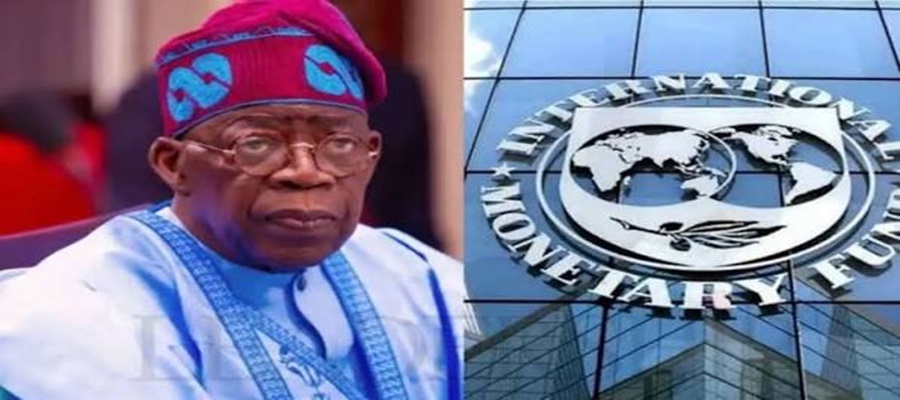
International Monetary Fund (IMF) has raised concerns over Nigeria’s fiscal transparency, disclosing that about two per cent of the country’s Gross Domestic Product (GDP), estimated at N8.83 trillion, was omitted from recent official budget documents.

Bola Tinubu
Unreported public spending—also known as off-budget expenditure—happens when a government spends money on public projects or services without including those costs in official budget documents.
This practice hides the true size of the government’s deficit, hides debt accumulation, and distorts overall economic data.
The IMF said the unreported expenditure has created a significant gap between Nigeria’s reported fiscal deficit and its actual financing requirements, making government borrowing appear lower than it truly is.
Speaking at an industry event in Lagos, Christian Ebeke, resident representative of IMF in Nigeria, said the expenditure should have been reflected in the country’s fiscal accounts to present a more accurate picture of public finances.
“So far we think that there are about two per cent of GDP of expenditure that were not reported that should be reported and should be recorded, so that this statistical discrepancy will disappear,” Ebeke said.
The estimate translates to approximately N8.83 trillion, based on the National Bureau of Statistics’ (NBS) latest nominal GDP figure of N441.5 trillion for 2025.
According to the NBS, Nigeria’s nominal GDP increased from N372.8 trillion in 2024 to N441.5 trillion in 2025 following improved performance across both the oil and non-oil sectors.
Using the Central Bank of Nigeria’s average exchange rate of N1,436 to the dollar for 2025, the omitted expenditure amounts to about $6.15 billion.
Ebeke attributed the discrepancy largely to capital projects executed outside the formal budget framework, noting that the omission had distorted assessments of Nigeria’s fiscal position and public investment profile.
He explained that some government spending was neither captured in approved budget documents nor reflected in budget implementation reports, resulting in an understatement of the country’s actual fiscal deficit.
According to him, the lack of comprehensive reporting also complicates coordination between fiscal and monetary authorities, as policymakers are left without a complete picture of government finances.
“The lack of full reporting can also complicate coordination between fiscal and monetary policy, as policymakers may not have a clear picture of the true deficit,” he said.
Ebeke warned that off-budget spending raises broader concerns about accountability, procurement processes and institutional oversight, stressing that improving fiscal transparency should remain a priority for the government.
“Improving transparency is critical,” he added, noting that expenditures outside the formal budget process undermine effective oversight and public accountability.
The IMF representative, however, acknowledged that the Federal Government has begun taking steps to address the problem through legislative reforms aimed at bringing previously unreported expenditures within the formal budget framework.
He said the authorities were working to amend existing budget laws to ensure greater disclosure of government spending but stressed that such reforms must be accompanied by timely and comprehensive budget implementation reports.
According to him, closing the reporting gap is essential to strengthening public financial management, improving transparency and restoring confidence in Nigeria’s fiscal framework.
The IMF’s latest observations come months after the National Bureau of Statistics rebased Nigeria’s economy, changing the GDP base year from 2010 to 2019, a revision that significantly increased the size of the country’s economy and, by implication, the value of expenditure estimates expressed as a percentage of GDP.
The concerns also follow the IMF’s recent Article IV Consultation on Nigeria, in which the Fund commended the Federal Government’s ongoing economic reforms for improving macroeconomic stability and boosting investor confidence, while cautioning that persistent structural weaknesses continue to limit the impact of the reforms on the broader population.

National Office for Technology Acquisition and Transfer (NOTAP), has commenced the process of patenting and commercialisation of research works by universities and other research institutions in the country.

Dr. Obiageli Amadiobi, director general of NOTAP
Dr. Obiageli Amadiobi, director general of NOTAP, stated this in Abuja, during an interaction with journalists on her achievements since assuming office.
Speaking on the theme, “Strengthening Indigenous Capacity: NOTAP’s Drive for Technology Transfer, Local Content Development, and Innovative activities,” Amadiobi said the agency had involved both the academia and industry so that researchers can work on topics brought forward for commercialisation purpose.
“My minister is very intentional about this– very intentional about commercialisation of research results, which we have already submitted to him. They are meaningful researches, which we need to commercialise.
“We have established 69 intellectual property technology transfer offices in 69 universities that we are still counting. We have informed the vice chancellors of Nigerian universities to set up such offices and we will come and educate them on intellectual property and technology transfers.
“As we are doing this, we are also taking record of all the researchers of these universities and research centres and documenting them in a compendium.
“So, we have compendiums from the universities to us and we put them in a database. If you will recall, recently, the ministry, our supervising ministry, which is the Federal Ministry of Innovation, Science, and Technology, launched a programme titled Energise Commercialisation. This entirely was for commercialisation of all R&Ds,” she said.
On research Institutions carrying out research on areas of industry needs, she said, “NOTAP is bridging the gap between research and development with industry needs, “it is on our programme called the NITDF, NOTAP Industry Technology Transfer Fellowship. By this programme, we engage the universities and the industries, in what we call the triple helix. We liaise with the universities and the industries to sponsor, the industries will sponsor a Ph.D candidate in a Nigerian university to conduct relevant researches.
“They will provide the topics that they want researches for and such students will research on that with the assistance of the industries, because they wear the shoes, so they know where it pinches them. But usually, there are Ph.D candidates already established. This year alone, we certified about 15 of them to enter into this programme and they have gone into the various universities.
“And we are still looking for people to update some of the projects; the research topics we already have. But we are not getting enough persons to do the researches. So, we are going to do further advertisement to see if other candidates will come up.

Court Declares Keystone Bank Staff Wanted over Alleged N35m Fraud

IMF Raises Concerns over N8.83 Trillion Unreported Spending in Nigeria’s Budgets

NOTAP to Commercialise University Research, Expands Patent Drive

FG Unveils Digital Postcode System for MDAs

BoI, NBCC Sign MoU to Deepen Bilateral Trade, Industrial Growth and Investment

Mobile Internet Gender Gap Widest in Africa – GSMA

London Strengthens Global Investment Ties with Africa @ First Ever London-Africa Business Summit

FG Targets Alleged N3tn Capital Flight, Opens Airtime Credit Market to Nigerian Fintechs

Japan, UNESCO Boost Digital Learning in 15 CoEs with Donation of ICT Equipment

Nigeria Launches FreeTV Nationwide




 News2 days ago
Verve Strengthens Global Acceptance Across Leading Digital Platforms

 News2 days ago
Army Says Terrorists Now Recruiting, Raising Funds Online

 E-Business2 days ago
Kaspersky Warns of The Gentlemen Ransomware Group Expanding Operations with New Malware

 Telecom2 days ago
Lebara Nigeria Becomes Member of GSMA Network

 Telecom2 days ago
Airtel Nigeria Deepens Focus on Data Usage Transparency @ Customer Forum

 Telecom2 days ago
Vitel Wireless Warns Public, Says it Not Running any Investment Scheme

 E-Financial2 days ago
Bank of Industry Appoints Kuramo Capital as Manager of Dice Fund of Funds

 General News2 days ago
FG to Abolish JSS-SSS Separation Policy after 20m Pupils Drop Out