

/home/kenneth/web/nigeriacommunicationsweek.com.ng/public_html/wp-content/themes/zox-news/parts/post-single.php on line 153
">
Warning: Undefined array key 0 in /home/kenneth/web/nigeriacommunicationsweek.com.ng/public_html/wp-content/themes/zox-news/parts/post-single.php on line 153
Warning: Attempt to read property "cat_name" on null in /home/kenneth/web/nigeriacommunicationsweek.com.ng/public_html/wp-content/themes/zox-news/parts/post-single.php on line 153
Don Seeks Science Research Approach to Solve Nigeria’s Problems

Prof. Charles Okigbo, university don has called for social science research approach to problems facing the Nigerian contemporary society.
Okigbo, a professor of Mass Communication at the North Dakota State University in the U.S., made the call in a paper entitled “Data Gathering in the Real World Social Science” in Awka.
The don, represented by Dr Peter Ezeh of the Sociology Department, University of Nigeria, Nsukka, presented the paper at the Eminent Persons Lecture Series of the Faculty of Social Science, Nnamdi Azikiwe University, Awka.
He said the problems included global warming, new deleterious health challenges and ever increasing population.
He said relevant and accurate data gathering for informed analyses were crucial to obtaining answers to address some of the problems of the society.
Okigbo said some of the scientific methods of data gathering required observational methods, ethnography, participant observation and participatory action research, participant action research and experimental methods.
Others methods are survey methods, personal interviews, group focus discussions, mail questionnaires, telephone surveys and the use of social media.
According to him, some of the methods can be difficult in the Nigerian setting and none is superior to the other.
“The problems of our contemporary society deserve concerted and varied social science research approaches to address.
“Nigeria is not shielded from big data, so our social science students and scholars must get on the act at our own level,” he said.
Prof. Dung Pam Sha of the Political Science Department, University of Jos, in his paper entitled “Ethical Issues in Social Science Research in Nigeria,” decried the poor teaching of research in the country.
He said there was need to eschew violation of the ethics of social research.
Sha said the common violations in social science research included principle of informed consent, plagiarism, lack of peer review and poor data management.
He called for more funding and enabling environment for effective social science research in the country.
“The Federal Government of Nigeria, the private sector and development partners must find a way of enacting an environment that propels all forms of research.
”This will entail the introduction of empowerment schemes, regulatory schemes and sustainability schemes,” Sha said.
The two-day maiden lecture series entitled “Research issues in Social Science,” also had other presenters like Prof. Isidore Obot of the psychology department at the University of Calabar and Hyacith Ichokwu of the economics department at the UNN.


Warning: Undefined array key 0 in /home/kenneth/web/nigeriacommunicationsweek.com.ng/public_html/wp-content/themes/zox-news/parts/post-single.php on line 493
Warning: Attempt to read property "cat_ID" on null in /home/kenneth/web/nigeriacommunicationsweek.com.ng/public_html/wp-content/themes/zox-news/parts/post-single.php on line 493


Central Bank of Nigeria (CBN) and commercial banks are reviewing the large number of transaction alerts sent to customers and the complaints about bank charges.

So called bank alert refers to real-time SMS or email notifications from your financial institution about transactions, balances, or security updates.
Olayemi Cardoso, governor, CBN, said this in Abuja after the 305th Monetary Policy Committee meeting.
He explained that many bank customers are confused because they receive too many debit alerts for a single transaction.
To address this, the CBN has created a quarterly meeting system involving its consumer protection team, commercial banks, and the top 10 microfinance banks. The goal is to resolve customer complaints faster and improve banking services.
Cardoso said one major issue being studied is how banks send multiple notifications for one transaction.African Politics Analysis
He said this often confuses customers and suggested that alerts should be simplified and combined so people can clearly understand what each debit is for.
He added that the issue is still being worked on and solutions will be proposed soon.
On the N50 stamp duty charge, the CBN governor explained that it is not a bank charge.
He said the charge comes from tax authorities, while banks only collect it and send it to the government.
He advised customers who notice wrong charges to first complain to their bank. If the issue is not resolved, they can escalate it to the CBN’s consumer protection department.
Cardoso also said the CBN has strengthened its monitoring system to ensure banks handle complaints properly, compensate customers when needed, and improve customer service.
The CBN is also reviewing how banks apply rules on charges and customer complaints, with the aim of improving transparency and reducing repeated issues in the banking system.
Femi Otedola, chairman, First HoldCo, has revealed that he will invest $100 million in Dangote refinery.

Aliko Dangote and Femi Otedola
This is coming ahead of news that the Dangote refinery is planning to raise $2 billion through private placement, by selling its shares to the general public on a stock exchange for the first time.
Otedola, announced his plans on Wednesday after leading top executives of First HoldCo to visit Aliko Dangote, president of the Dangote Group, at the refinery in Lagos.
“From on a personal note, I’ve appealed to him (Aliko Dangote). I’ve been here with him 25 times, so my compensation is he’s going to allocate to me shares worth $100 million in the private placement,” the billionaire said.
“That’s one of the reasons why I sold my stake in Geregu plant to come and invest my proceeds in the IPO of Dangote refinery.”
During the meeting, Dangote said, the company is targeting a private placement of about $2 billion for the refinery
Dangote, on October 22, 2025, said the refinery could sell up to 10 percent stake in the listing, which Bloomberg valued to be about $5 billion.
The billionaire is planning to make the IPO a cross-border listing to enable the refinery draw investments from domestic and international investors.
In an earlier report, Dangote said the IPO is designed to democratise wealth creation and give Africans direct access to participate in the continent’s industrial transformation.
On May 12, Bloomberg reported that the billionaire is reportedly aiming for a valuation of up to $50 billion for Dangote refinery.

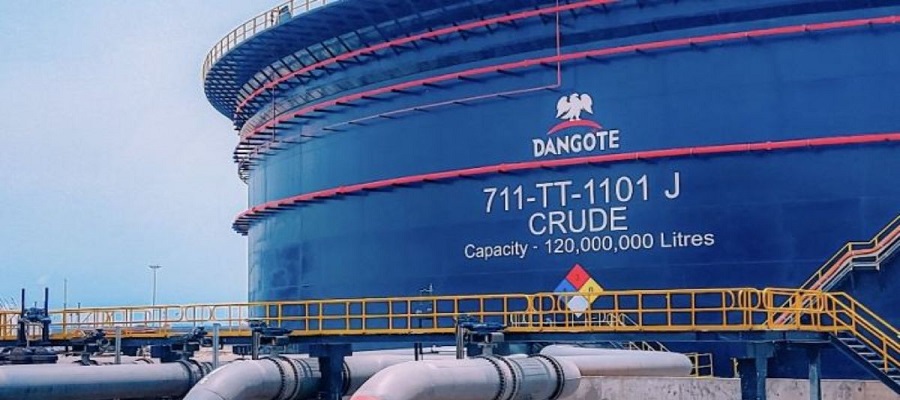
The blockade of the Strait of Hormuz caused by the US and Israel’s war with Iran is placing fresh pressure on emerging market telecom operators, many of which remain heavily reliant on diesel generators to keep their networks running.

According to developingtelecom, with around 20% of the world’s oil supply disrupted and crude prices climbing above US$120 per barrel for the first time since 2022, operators across Africa, the Middle East and Asia are being hit by soaring energy costs at a time when demand for connectivity continues to rise. Markets including Pakistan, the Philippines and parts of Sub-Saharan Africa are among the hardest hit due to their dependence on imported fuel and unreliable national electricity grids.
Industry analysts warn the crisis could accelerate the telecom sector’s shift towards renewable energy and alternative network back-up solutions such as satellite connectivity, as diesel becomes increasingly expensive and operationally unsustainable.
Emerging markets bear the brunt
Crude oil prices rose above US$120 per barrel at the end of April, their highest level since 2022.
Emerging markets have been hit hardest, particularly countries that have failed to diversify their energy supply chains.
The Philippines is currently facing a major crisis, with 98% of its oil imports sourced from the Middle East. Pakistan has also seen supplies of liquefied natural gas disrupted, making daily life increasingly difficult for households and businesses alike.
For the telecoms sector, it is unsurprisingly operators in emerging markets that are bearing the brunt of the energy shock.
Many rely heavily on diesel generators to power base stations and telecom towers, particularly in remote areas with little or no access to national electricity grids. As a result, the challenge of connecting underserved communities is becoming even steeper.
According to environmental certification organisation Gold Standard, developing countries host an estimated 350GW to 500GW of diesel generator capacity spread across 20 million to 30 million sites, in many cases exceeding the capacity of national grids themselves. Even before the latest conflict, diesel power was already costly, averaging around US$0.30 per kilowatt-hour and significantly more in remote regions where the unconnected often live.
Gold Standard estimates annual spending on generator fuel reaches between US$30 billion and US$50 billion.
Diesel dependence driving operational pressure
CrossBoundary Energy estimates that around 70% of Africa’s half a million telecom towers rely on diesel generators, accounting for between 30% and 60% of tower operating expenditure. Fuel costs for operators across parts of Africa have surged by 40% to 60% over the past two years, with the Strait of Hormuz disruption adding further pressure.
Nigeria has been highlighted as one of the markets facing the most acute energy challenges, with grid availability in some regions falling as low as 40% to 50%. In rural areas of the Democratic Republic of Congo, telecom infrastructure is almost entirely dependent on diesel due to the absence of national grid access.
Across Sub-Saharan Africa, between 60% and 80% of telecom towers experience daily grid outages lasting between eight and 12 hours.
The demand for energy is only expected to rise further as operators continue expanding 4G coverage and rolling out 5G networks across emerging markets.
Renewable energy gains momentum
According to MTN Consulting, renewable energy accounted for just 23% of global telecom energy consumption in 2024, up from 10% in 2019.
However, much of that progress has been driven by operators in Europe rather than developing regions.
Operators including Turkcell, Tele2, Telia, Deutsche Telekom, KPN, Swisscom, A1 Telekom Austria, Telefonica, Telecom Italia and Liberty Global were highlighted by MTN Consulting as benefiting from long-term “foresight” as competitors elsewhere face increasingly volatile energy costs.
Operators forced to rethink network resilience
Ismail Patel, senior analyst for Enterprise Technology and Services at GlobalData, said energy concerns are now becoming inseparable from telecom strategy in emerging markets.
“Energy policy is increasingly being integrated into telecoms policy,” Patel said.
“Diesel is used in markets where there are unreliable electricity grids or frequent loadshedding. Thus far, diesel has been a core part of the business model, not just as a back-up for powering towers. The whole ecosystem of diesel – which involves manually delivering fuel to towers and manpower – is also part of the model.”
Patel warned that rising diesel costs caused by geopolitical instability will ultimately push up the price of connectivity or squeeze already-thin operator margins in highly price-sensitive markets.
“Operators will be forced to re-evaluate the most optimal back-up power mechanisms for their networks, including clean energy upgrades,” he said.
“This includes solar panels, which are susceptible to theft but do not have the immediate resale value of diesel, which is even more prone to unauthorised misappropriation.”
He added that satellite connectivity could emerge as a medium-term alternative for network resilience, particularly as direct-to-device (D2D) satellite services mature.
“Within this context, satellite as a back-up coverage mechanism might feature in the medium term, with both US and Chinese LEO satellite operators in a prime position to offer back-up connectivity to devices in place of towers,” Patel said.
“As the digital divide decreases and more underserved communities become dependent on connectivity, it will become far less economical for operators and governments to tolerate outages.”
Rather than being driven primarily by sustainability goals, Patel argued the shift towards renewable and satellite-powered infrastructure may ultimately become an economic necessity.
“Operators will start to look at greener options and satellite not because they are green or necessarily offer better coverage, but because they are becoming more cost-effective compared to diesel,” he said.
Patel identified Pakistan, Bangladesh, much of Sub-Saharan Africa including Nigeria and South Africa, Lebanon, and rural regions of India, Indonesia and the Philippines as among the markets most exposed to the crisis.

CBN to Simplify Bank Alerts over Rising Customer Complaints

Otedola Plans $100m Investment in Dangote Refinery ahead of Proposed IPO

Telcos in Nigeria, other Emerging Markets Squeezed by Diesel Crisis

Immigration, Lasaco Assurance Partner on Institutional Growth

Nigeria gets AI-ready Lagos data centre

MTN, VDT, Zoracom, Digital Realty Back 2026 Girls in ICT Campaign

Vitel Wireless Partners Fintechs to Expand Access to Services

Kaspersky Discovers Vulnerability in Qualcomm Snapdragon Chips that can Lead to Data Loss & Device Compromise

Bank Customers to Pay N1,500 for ATM Card Issuance, Replacement – CBN

FCCPC Licenses 5 Firms for Airtime, Data Lending as Telcos Step Aside




 E-Financial3 days ago
FG Says All Taxable Nigerian Must Obtain Taxpayer ID

 News3 days ago
FG Unveils Free Tax Dispute Resolution Platforms for Nigerians

 News3 days ago
EFCC Which Handles Sensitive Data, Financial Records has No Privacy Policy on Website- FiJ

 E-Business3 days ago
TD Africa, HPE Drive Conversations on the Future of Intelligent Networking

 News3 days ago
Moniepoint DreamDevs Bootcamp Second Cohort Set for Demo Day

 Telecom3 days ago
Relief for SMEs as NACAN Launches Fight Against Expensive Broadband in Nigeria

 E-Business3 days ago
Identy.io, US Firm Eyes 1Bn Biometric Verification Transactions in Nigeria

 General News3 days ago
Lagos Unveils Plan for 24-hour Electricity Supply in the State