

/home/kenneth/web/nigeriacommunicationsweek.com.ng/public_html/wp-content/themes/zox-news/parts/post-single.php on line 153
">
Warning: Undefined array key 0 in /home/kenneth/web/nigeriacommunicationsweek.com.ng/public_html/wp-content/themes/zox-news/parts/post-single.php on line 153
Warning: Attempt to read property "cat_name" on null in /home/kenneth/web/nigeriacommunicationsweek.com.ng/public_html/wp-content/themes/zox-news/parts/post-single.php on line 153
Ndukwe, Father of Telecoms Gets ITU Honours

Ernest Ndukwe, father of modern telecommunications in Nigeria and chairman of the Openmedia Group, has been recognised by the International Telecommunications Union (ITU) for his contribution to global information and technologies and the work of the ITU.
The recognition was conveyed to Ndukwe in a letter signed by Hamadoun I. Toure, secretary-general of the ITU, which underscored the leading role he has played at home and abroad, but specifically for his immense contribution in the global sphere of information and technology.
The ITU is a specialized agency of the United Nations that was created to encourage international cooperation in all forms of telecommunication.
Its activities include maintaining order in the allocation of radio frequencies, setting standards on technical and operational matters, and assisting countries in developing their own telecommunication systems.
The recognition of Ndukwe by the ITU therefore speaks volume of the landmark of his achievement in the Nigeria’s telecoms industry particularly for organising a hitched-free GSM license auctioning in 2001, an event which ushered in the much cherished telecommunications revolution in Nigeria.

In his acceptance speech, Ndukwe noted that the recognition is indeed a further call to crystalize the development of ICT in Africa and greater service to humanity.
He pledged to devote effort to Broadband development in Africa given that it is critical to the continent’s Socio-economic development.
He disclosed that “we have recently founded a new project, the Broadband Rights Advocacy Network – Africa. This is to preserve the rights of everyone in Africa to broadband Access”.
He further noted with delight that “in Nigeria, we are lucky that President Goodluck Jonathan and Mrs. Omobola Johnson, minister of Communications Technology are strong advocates of pervasive Broadband development in Nigeria”. He therefore pledged to “continue to serve the nation & the ITU in the drive to make digital natives of everyone in Africa”.
Ndukwe, who is no stranger to local and international honours hold the national honour of the Order of the Federal Republic of Nigeria (OFR).
He is the immediate past Executive Vice Chairman and Chief Executive Officer of the Nigerian Communications Commission (NCC) and has over 36 years experience in the telecommunications industry.
He is currently the Chairman of Openmedia Group which recently organised a hugely successful “International Forum on Accelerating Nationwide Broadband Access in Nigeria”.


Warning: Undefined array key 0 in /home/kenneth/web/nigeriacommunicationsweek.com.ng/public_html/wp-content/themes/zox-news/parts/post-single.php on line 493
Warning: Attempt to read property "cat_ID" on null in /home/kenneth/web/nigeriacommunicationsweek.com.ng/public_html/wp-content/themes/zox-news/parts/post-single.php on line 493


Federal Competition and Consumer Protection Commission (FCCPC) has resumed implementation of the Digital, Electronic, Online or Non-Traditional Consumer Lending Regulations, 2025 (DEON Regulations).

This follows the judgment delivered yesterday by Justice A.L. Allagoa of the Federal High Court, Lagos, in Suit No. FHC/L/CS/760/2026 instituted by the Wireless Application Service Providers Association of Nigeria Ltd/Gte (WASPAN).
In the ruling, the Court dismissed the Plaintiff’s Originating Summons in its entirety, declined all the reliefs sought, and upheld the validity of the DEON Regulations, holding that they were made pursuant to the FCCPC’s statutory and constitutional powers and are therefore intra vires the Commission.
The Court also upheld the validity of the specific provisions of the Regulations challenged in the suit and consequently discharged the interim ex parte order that had restrained implementation and enforcement of the Regulations.
Accordingly, the legal impediment that had necessitated the Commission’s temporary suspension of implementation and enforcement of the DEON Regulations has been removed, and the Regulations are once again fully operational and enforceable.
WASPAN had challenged the Commission’s authority to issue and implement the DEON Regulations. Upon being served with the Court’s interim order in April 2026, the FCCPC immediately suspended implementation and enforcement of the Regulations in full compliance with the Court’s directive, consistent with its commitment to the rule of law and respect for judicial authority.
Meanwhile, the FCCPC has welcomed the judgement.
Reacting, Ondaje ljagwu, director of Corporate Affairs, FCCPC, said: “The Commission has always maintained that the rule of law is fundamental to effective regulation and good governance. When the Court issued its interim order, we immediately suspended implementation of the Regulations in full compliance with the Court’s directive. Now that the Court has affirmed the validity of the DEON Regulations and delivered judgment in favour of the Commission, we will continue to discharge our statutory responsibilities faithfully, professionally and in accordance with the law.
“The DEON Regulations are designed to promote responsible lending, improve regulatory accountability, curb unfair and exploitative practices, and strengthen consumer protection in Nigeria’s digital lending market. Our objective has always been to ensure that innovation and financial inclusion flourish within a transparent, fair and accountable regulatory framework that inspires confidence among consumers, investors and responsible operators alike.
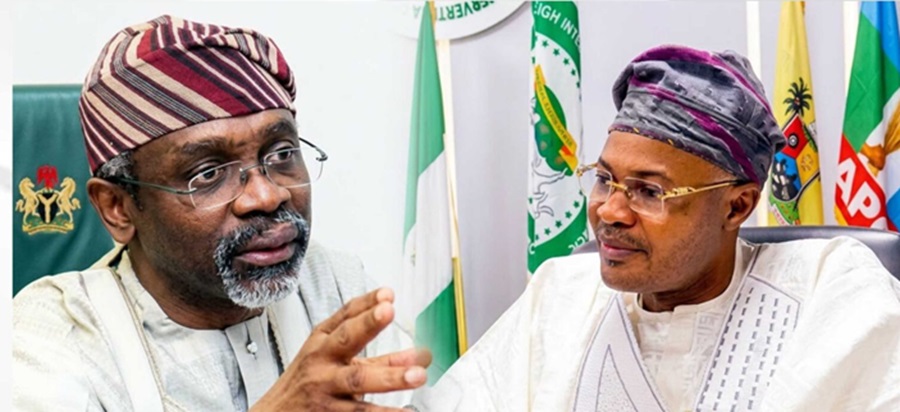
Central Bank of Nigeria (CBN) has disclosed that two foreign currency accounts opened in connection with the controversial Presidential Foreign Investment Promotion Council (PFIPC) have remained inactive since their creation, with no funds deposited and no transactions recorded.

The revelation emerged on Monday during the ongoing investigation by the House of Representatives Ad-hoc Committee probing the circumstances surrounding the establishment and operations of the council.
Lawmakers are investigating allegations that the PFIPC was created and operated without a valid legal framework and outside the established procedures required for government agencies and institutions.
Appearing before the committee, representatives of both the Central Bank of Nigeria and the Office of the Head of the Civil Service of the Federation (OHCSF) distanced their institutions from the establishment of the council.
The Office of the Head of the Civil Service of the Federation stated that it neither created the council nor possessed the constitutional authority to establish federal agencies.
Representing the office, officials explained that the OHCSF is only responsible for approving administrative structures of government agencies after all necessary requirements have been fulfilled.
According to the office, records showed that the council submitted a request on August 6, 2025, seeking approval for its organisational structure.
However, the application was not approved because the required supporting documents were not attached.
The committee heard that despite the rejection of the request, officials linked to the Presidential Economic Advisory Council (PEAC)/PFIPC later appeared during the 2025 manpower budget defence exercise and sought approval for staffing and recruitment arrangements.
The office disclosed that the council informed government officials that its activities were being carried out largely through personnel seconded or deployed from other institutions.
Lawmakers were told that the council requested approval for a total of 314 positions. The figure consisted of 14 existing officers and an additional 300 proposed positions.
The Office of the Head of the Civil Service further revealed that concerns later arose regarding documents presented by the council as evidence of its legal backing.
Officials told the committee that upon examination, the documents failed to display essential features expected of an enabling law or valid legal instrument establishing a government body.
Mrs. Didi Esther Walson-Jack, head of the Civil Service of the Federation, also rejected claims that her office deployed civil servants to work for the council.
She maintained that the office did not assign personnel to the body and did not provide office accommodation for its operations.
According to her, matters relating to the creation, supervision and oversight of government agencies fall under the responsibilities of other relevant institutions, including the Office of the Secretary to the Government of the Federation.
The Central Bank of Nigeria also provided details regarding accounts linked to the council.Nigerian current events
Hamisu Abdullahi, director at the apex bank, who represented the CBN Governor before the committee, explained that the bank opened two foreign currency accounts following a formal request from the Office of the Accountant-General of the Federation.
He told lawmakers that the request was received on July 30, 2025, and instructed the bank to create a United States dollar domiciliary account and a Pound Sterling domiciliary account.
Abdullahi stressed that the CBN only opens accounts for government agencies after receiving official authorisation from the Accountant-General’s office.
However, he disclosed that the accounts never became operational because the council failed to provide authorised signatories required for activation.
As a result, both accounts remained dormant from the day they were opened.
He informed the committee that neither account had received deposits nor processed withdrawals. The accounts also recorded no foreign exchange allocations, remittances, inflows or outflows.Governor election news
According to him, the balances in both accounts remain at zero.
The CBN official further stated that the council did not engage directly with the apex bank regarding the management or operation of the accounts after they were created.
Following the submissions, members of the committee demanded more information as part of efforts to determine the full scope of the council’s activities.
Hon. Abdulmalik Danga, chairman of the committee, directed the Central Bank to submit comprehensive records relating to both the Presidential Foreign Investment Promotion Council and the Presidential Economic Advisory Council.
The committee requested details covering the opening of the accounts, their operational history and any information connected to related banking activities.
Lawmakers also instructed the CBN to work with commercial banks to identify and provide records of any accounts linked to the entities under investigation.
However, the committee is expected to continue its hearings as more government agencies and officials appear before lawmakers to provide explanations on the controversial council and the circumstances surrounding its operations.

Jumia Nigeria, the country’s e-commerce platform, has introduced a new instalment payment option on its marketplace through a partnership with Buy Now, Pay Later (BNPL) provider Klump, giving customers another way to pay for purchases without bearing the full cost upfront.

The new option allows eligible customers to spread payments for selected purchases over a period of up to 12 months after making an initial deposit of between 20 and 30 percent. The partnership is expected to widen access to products such as smartphones, electronics, home appliances, and other everyday essentials for consumers who may prefer structured repayment plans over one-time payments.
Customers selecting the option at checkout can compare financing offers from participating financial institutions, complete a digital credit assessment, and, once approved, begin repayment through fixed monthly instalments. The introduction of instalment payments comes as digital commerce continues to evolve in Nigeria, with retailers exploring payment options that respond to changing consumer spending patterns and the growing demand for financial flexibility.
Commenting on the partnership, Chief Executive Officer of Jumia Nigeria, Temidayo Ojo, said the initiative reflects the company’s commitment to making online shopping more accessible to a wider range of consumers.
“We are constantly looking at practical ways to remove barriers to online shopping. For many customers, affordability is not always about the price of a product but about having payment options that fit their financial reality. By introducing instalment payments with Klump, we are giving customers greater flexibility while making quality products more accessible.”
He added that expanding payment choices forms part of Jumia’s wider effort to improve the overall customer experience and support the company’s ambition of becoming Nigeria’s everyday retail destination.
“Whether we are strengthening our logistics network, expanding product selection, or introducing new payment solutions, the goal remains the same: to make shopping on Jumia simpler, more convenient, and more accessible for customers wherever they are,” Ojo said.
Founded to simplify access to goods across Africa, Jumia has continued to invest in technology, logistics, and payment solutions to make digital commerce easier for consumers in both major cities and emerging markets across Nigeria.
The addition of instalment payments complements the range of payment methods already available on the platform and comes at a time when consumer demand for flexible financing options is increasing across the retail sector.
Celestine Omin, Co-founder and Chief Executive Officer of Klump, said the partnership aligns with Klump’s objective of expanding access to responsible consumer credit.
“When we started Klump, our mission was simple: to give Nigerians access to affordable credit wherever they shop. Today, we’re pleased to partner with Jumia to bring flexible instalment payments to one of Africa’s largest e-commerce marketplaces, making it easier for more customers to access the products they need,” Omin said.
Under the arrangement, Klump will provide the financing infrastructure while customers complete the application process digitally during checkout. Financing offers are provided through participating financial institutions, subject to approval.
For Jumia, the partnership represents another step in expanding the range of services available on its marketplace while supporting broader efforts to deepen digital commerce and financial inclusion. As more Nigerians turn to online shopping, the availability of flexible payment options is expected to lower one of the barriers to e-commerce adoption, particularly for higher-value purchases.
Customers can access the instalment payment option by selecting Klump at checkout on eligible products available on the Jumia platform.

Court Affirms FCCPC’s Power to Regulate Digital Lending

PFIPC Probe: Dollar, Pounds Accounts of Fake Agency Inactive – CBN

Jumia Nigeria Expands Flexible Payment Options with Klump Partnership

Lagos Unveils N10m Single-digit Loan Scheme for MSMEs

STEM Africa Fest to Nurture Nigeria’s Future Innovators

NRC, Ponzi Scheme Collapses Resulting Loss of Billions of Naira

NASENI Moves to Digitize CCB’s 5m Assets Declaration and Operations

Lebara Nigeria Launches Lebara Play, Africa’s First Telecom-Owned Micro-Drama Platform

CANAL+ Partners Samsung to Pre-Load DStv Stream on New Samsung TVs In Nigeria, Other African Countries

Tokenization, Blockchain Technology will Transform Financial Institutions – IMF




 News3 days ago
EFCC Busts NIS Visa Overstay Racket, Uncovers N700m in an Account

 News3 days ago
NCC, NDLEA Partner to Fight Piracy and Drug Trafficking

 General News3 days ago
Dangote Refinery’s Private Placement Reportedly Hits $2.5Bn

 E-Financial3 days ago
CBN to Monitor Every Dollar with FXBT, Forex Tracker

 General News3 days ago
FG, UNODC Plan National Strategy against Organized Crime

 News1 day ago
NIMASA Unveils Accelerator Scheme to Drive Innovation, Sustainable Growth

 E-Business1 day ago
SERAP to Sue NASS over Bill Empowering NDPC to Regulate Social Media

 E-Financial1 day ago
Access Holdings Sells 7.44% Stake in Ghana Unit