

/home/kenneth/web/nigeriacommunicationsweek.com.ng/public_html/wp-content/themes/zox-news/parts/post-single.php on line 153
">
Warning: Undefined array key 0 in /home/kenneth/web/nigeriacommunicationsweek.com.ng/public_html/wp-content/themes/zox-news/parts/post-single.php on line 153
Warning: Attempt to read property "cat_name" on null in /home/kenneth/web/nigeriacommunicationsweek.com.ng/public_html/wp-content/themes/zox-news/parts/post-single.php on line 153
Nigeria Forex Reserves Add Quick $50m in 2 Days

The country’s foreign reserves which have been on decline for the past two months reversed the trend with $47 million increase in just in two days.
The reserves were at $37.80 billion on March 31 but rose to $37.83 billion and further increased to $37.85 billion on April 3.
The reserves had received serious battering after the suspension of Sanusi Lamido Sanusi, governor of the Central Bank of Nigeria ( CBN) on February 20 as foreign investors scurried for exit.
Foreign-exchange reserves (also called forex reserves or FX reserves) are assets held by central banks and monetary authorities, usually in different reserve currencies, mostly the United States dollar, and to a lesser extent the Euro, the Pound sterling, and the Japanese yen, and used to back its liabilities, e.g., the local currency issued, and the various bank reserves deposited with the central bank, by the government or financial institutions.
The reserves were at $42.77 billion on February 3, and dropped to $39.72 billion on March 3, losing $3 billion in one month. Analysts said the reserves declined as imports of petroleum and foods soared.
The level of Nigeria’s external reserves had fallen to $43.63 billion as at December 30th last year. This is the lowest level since November, 2012 and a decline of 10.7 per cent from 2013’s Year to Date peak of $48.86 billion.
The continuous use of the external buffers to support the value of the naira and declining oil receipts are among the contributing factors to the depletion.
With over 50 per cent of foreign exchange utilised for the importation of fuel and food, the CBN said policy should focus on a comprehensive backward integration production strategy, while fast-tracking the repair of existing refineries.
As at October 10, the reserves were at $45.3 billion, as against $46 billion in September 19, and $47 billion in August 19, data from the CBN website showed.
Further findings showed that reserves were at $47.7 billion on July 1, and dropped to $47 billion on July 15. Reserves also entered August 1 at $47 billion. The foreign currency reserves had five years ago, in August 2008, peaked at $68 billion before the global financial crises impacted negatively on it. uf


Warning: Undefined array key 0 in /home/kenneth/web/nigeriacommunicationsweek.com.ng/public_html/wp-content/themes/zox-news/parts/post-single.php on line 493
Warning: Attempt to read property "cat_ID" on null in /home/kenneth/web/nigeriacommunicationsweek.com.ng/public_html/wp-content/themes/zox-news/parts/post-single.php on line 493
Telecom
Airtel Africa Foundation Equips 200 Young Women with Digital Skills to Drive Nigeria’s Tech Economy

Airtel Africa Foundation, through Airtel Nigeria and in partnership with the Ishk Tolaram Foundation, Co-Creation Hub (CcHub), and SAIL Innovation Lab, has commenced the DigiLeap Women in Tech Programme, a transformative initiative designed to equip 200 young women from underserved communities in Ikorodu, Lagos, with industry-relevant digital skills and pathways into Nigeria’s rapidly expanding technology sector.

The programme, hosted by the SAIL Innovation Lab Ikorodu, comprises a 12-week immersive learning experience from June to September 2026, designed to prepare participants for careers in Product Design, Software Development, Digital Marketing, and Data Analytics.
Beyond technical training, beneficiaries will receive leadership development, structured mentorship from Airtel Nigeria professionals, and internship opportunities that provide practical workplace experience and exposure to industry best practices.
Commenting on the programme kick-off, Segun Ogunsanya, Chairman of the Airtel Africa Foundation, said empowering young women with digital skills represents one of the most sustainable investments in Africa’s future.
He also noted that the initiative reflects Airtel Africa Foundation’s continued commitment to expanding access to digital education while creating opportunities for young Africans to participate meaningfully in the continent’s digital transformation.
“We encourage every participant to approach this programme with purpose, discipline, and curiosity. The knowledge, networks, and mentorship you gain over the coming weeks have the potential to transform not only your own future but also the lives of your families, communities, and the next generation of girls who will look up to you. This is how lasting impact is created,” Ogunsanya said.
Also speaking on the initiative, Dinesh Balsingh, Chief Executive Officer of Airtel Nigeria, highlights that the initiative aligns with the company’s commitment to building an inclusive digital economy by ensuring more young Nigerians, particularly women, are equipped for the jobs of the future.
Balsingh said, “Nigeria’s digital economy presents enormous opportunities, but participation must be inclusive if we are to realise its full potential. Through the Airtel Africa Foundation, we are intentionally investing in young women because we recognise the immense value they bring to innovation, technology, and economic growth.
“DigiLeap is designed to equip participants with practical, industry-relevant skills that employers are looking for today while also giving them the confidence, mentorship, and professional exposure needed to build successful careers.”
According to the DigiLeap curriculum, participants will engage in intensive classroom instruction, hands-on projects, mentorship sessions, and internship placements designed to bridge the gap between learning and employment.
Airtel Nigeria professionals will serve as mentors, providing career guidance and sharing real-world industry insights to help participants transition successfully into the technology workforce.
The DigiLeap Women in Tech Programme spotlights the Airtel Africa Foundation’s growing investment in digital inclusion and youth empowerment across Africa. By creating pathways for more women to access technology careers, the Foundation continues to contribute to Nigeria’s digital transformation agenda while helping build a diverse pipeline of talent capable of driving innovation, creating businesses, and shaping the future of the country’s digital economy.
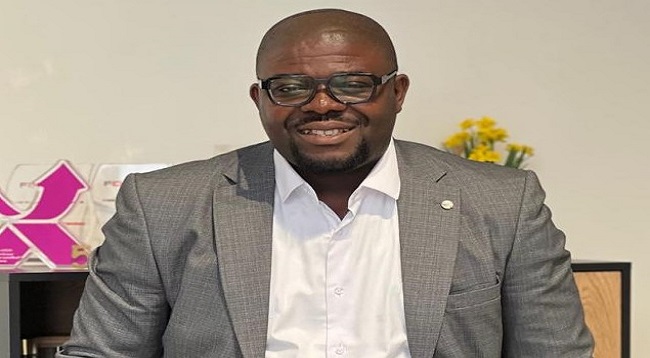
Mr. Emmanuel Ovaga, the Chief Executive Officer (CEO) of PufferPay Limited will deliver the keynote paper at the 3rd Business Journal Fintech & Financial Inclusion Roundtable 2026 scheduled for Friday, July 31, 2026 at Oriental Hotel, Lekki Road, Victoria Island, Lagos.

The theme of the Roundtable is: Fintech: Driving the Future of Digital Financial Ecosystem in Nigeria. Mr. Emmanuel Ovaga is a graduate of Computer Engineering from the Enugu State University of Science and Technology, Enugu State.
He is a technology entrepreneur and business leader with a strong track record in building and scaling innovative digital and enterprise solutions across Africa.
As the CEO of PufferPay, he drives the company’s vision to deliver seamless, secure and inclusive payment solutions tailored for emerging markets.
He is also the Chief Executive Officer of Pufferfish Technology Limited, a Pan-African IT and consulting firm specialising in software development, data analytics and systems integration for both public and private sector clients.
Under his leadership, the company has established strategic partnerships with globally recognised technology providers, including industry leaders in enterprise computing and analytics.
Pufferfish Technologies Limited has in a few years of its existence, birthed PufferPay, a fintech payment business created to enhance financial inclusion and payments facilitation in Africa.
PufferPay is created with best-in-class technology for transaction speed and security that guarantees top-range service delivery to its growing customers.
Reacting to the development, the Publisher/Editor-in-Chief of Business Journal Media Group, Prince Cookey said:
“Mr. Emmanuel Ovaga represents the next generation of tech leaders in the fintech space in Nigeria and Africa. His laudable accomplishments as the CEO of PufferPay Limited deserve accolades. He has positioned PufferPay as a leading player in the digital financial ecosystem in Nigeria and emerging corporate tentacles across the continent. Accordingly, stakeholders attending the 3rd Business Journal Fintech & Financial Inclusion Roundtable 2026 would be looking forward to a robust conversation on the State of the Fintech market today and tomorrow.”
The Special Guests of Honour include Dr. Aminu Maida, Executive Vice-Chairman/CEO, Nigerian Communications Commission (NCC) and Mr. Olusegun Omosehin, Commissioner for Insurance/CEO, National Insurance Commission (NAICOM) while Alhaji (Dr.) Umaru Kwairanga, Group Chairman, Nigerian Exchange Group (NGX) will Chair the event.
The Guest of Honour is Mrs. Ekeoma Ezeibe, President/Chairman of Council, NCRIB.
Distinguished members of the Panel include:
- Dr. Muda Yusuf, CEO, Centre for the Promotion of Private Enterprise (CPPE)
- Mrs. Idu Okeahialam, Group Managing Director/CEO, Royal Exchange Plc
- Mr. Jide Orimolade, Managing Director/CEO, Stanbic IBTC Insurance Limited
- Dr. Obioha Oti, President, Association of Mobile Money and Bank Agents in Nigeria (AMMBAN)
- Mr. Sarafadeen Fasasi, President, Association of Financial Inclusion Agents of Nigeria (AFIAN)
- Chidubem Emelumadu, Ecosystem Lead (Africa), Lisk
The revolutionary success story of Moniepoint, Opay, PalmPay, Flutterwave and others in the digital payment system in Nigeria represents a positive expansion of the financial services sector in the country.
With millions of Nigerians and businesses lacking access to basic financial services, the importance of Fintechs remain sacrosanct in achieving substantial level of Financial Inclusion and expanding the frontiers of the industry.
According to AI Overview, Fintechs in Nigeria have revolutionised the financial landscape by dramatically increasing access to banking services, driving, for example, a 20% increase in financial inclusion and helping to bring the banked population to roughly 63%. These firms have introduced faster, affordable digital payments, lending, and investment services, forcing traditional banks to adopt digital transformation.
On investment, AI Overview stated: “Fintechs in Nigeria dominate the tech landscape, securing 35% of total tech funding ($2 billion total) in 2024, with over 430 companies attracting roughly 36% of all African fintech investment. Despite global challenges, the sector remains highly resilient, driven by high demand, with significant deals including Moniepoint’s $110 million series C.”
In January 2026, the Central Bank of Nigeria (CBN) granted national licences to Moniepoint, Opay etc, giving them the regulatory authority to operate across the 36 States of the Federation. The decision firmly underscores the great strides by Fintechs in driving Financial Inclusion and supporting sustainable economic growth in the country.
The 3rd Business Journal Fintech & Financial Inclusion Roundtable 2026 aims to underscore the positive contribution of Fintechs in deepening Financial Inclusion, expanding access to financial services and contributing to economic growth in the country.
Expected participants at the Roundtable include regulators, operators from key sectors of the economy, media and members of the public.

World Bank has said Nigeria’s greatest fiscal challenge is weak revenue mobilisation rather than excessive borrowing, urging the Federal Government to strengthen revenue generation to support sustainable economic growth and meet its debt obligations.

The World Bank Country Director for Nigeria, Mr. Mathew Verghis, stated this during an interview on Channels Television on Friday.
According to him, Nigeria’s debt profile remains moderate by international standards and does not place the country among nations experiencing debt distress.
“From our assessment, Nigeria doesn’t have a high indebtedness problem; it has a low revenue problem,” Verghis said.
He explained that Nigeria’s debt-to-Gross Domestic Product (GDP) ratio is lower than that of many comparable economies, adding that the country’s fiscal challenge lies more in its limited revenue base than in the volume of its borrowing.
“When we looked at the numbers, Nigeria is a moderately indebted country, meaning it has less debt relative to its economy than most of its neighbours and many other countries.
“Nigeria is in a very different situation from Ghana, for example, which is going through a debt restructuring,” he said.
Verghis defended government borrowing, describing it as a legitimate tool for financing long-term investments capable of stimulating economic growth and improving citizens’ welfare.
“Nigeria borrows for the same reasons that all countries borrow. If you want to deliver results to people, the money available on an annual basis is not enough.
“So you borrow, deliver results, and that improves your ability to repay,” he said.
He cited electricity infrastructure as an example, noting that expanding access to power for millions of Nigerians would require substantial upfront financing.
“To be able to connect and provide energy to 32 million Nigerians, Nigeria needs to borrow money now.
“But with increased access to energy, the country will become wealthier and better positioned to repay the loans,” he added.
The World Bank official, however, warned that Nigeria’s low revenue generation poses a greater risk to fiscal sustainability than its current debt burden.
“Nigeria’s debt is not particularly high, and in fact, it is quite moderate by international standards.
“Its revenues are very low by international standards, and unless those revenues are raised, it will not be able to pay back debt,” he said.
Verghis said improving revenue mobilisation would enable the government to invest more in critical sectors such as infrastructure, healthcare, education and agriculture, while supporting job creation, strengthening human capital development and reducing poverty.
He noted that the World Bank’s recently unveiled Country Partnership Framework for Nigeria for 2026 to 2032 places job creation at the centre of its support for the country.
According to him, the framework will focus on investments in infrastructure, healthcare, agriculture and digital connectivity to promote inclusive and sustainable economic growth.

Airtel Africa Foundation Equips 200 Young Women with Digital Skills to Drive Nigeria’s Tech Economy

PufferPay CEO to Keynote Business Journal Fintech & Financial Inclusion Roundtable 2026

World Bank Sounds Alarm: Low Revenue, Not Debt, Is Nigeria’s Biggest Fiscal Threat

World Bank Okays New $1.25Bn Loan for Nigeria

Xenophobia: MTN Nigeria Belongs to Nigerians, Not Only South Africans — Toriola

Mobile Internet Gender Gap Widest in Africa – GSMA

Nigeria Launches FreeTV Nationwide

NASENI Moves to Digitize CCB’s 5m Assets Declaration and Operations

UK, Nigeria Launch £15m Growth Programme to Accelerate Economic Transformation

Court Deals Fresh Blow to NBC, Throws Out Appeal over Broadcast Fines




 E-Financial3 days ago
IMF Raises Concerns over N8.83 Trillion Unreported Spending in Nigeria’s Budgets

 Broadcasting2 days ago
Why We’re Partnering With NIHOTOUR To Bring Nigerians In South Africa Home – Steve Babaeko

 News3 days ago
Court Declares Keystone Bank Staff Wanted over Alleged N35m Fraud

 News2 days ago
FG Clears N39Bn Pension Arrears for NITEL, PHCN, Other Retirees

 News2 days ago
How Fraudsters Emptied a Judge’s Account of N7.2 Million in Midnight Attack

 E-Business3 days ago
NOTAP to Commercialise University Research, Expands Patent Drive

 Telecom2 days ago
MTN Nigeria Celebrates Volunteers at Y’ello Care Impact Showcase

 E-Business3 days ago
FG Unveils Digital Postcode System for MDAs