

/home/kenneth/web/nigeriacommunicationsweek.com.ng/public_html/wp-content/themes/zox-news/parts/post-single.php on line 153
">
Warning: Undefined array key 0 in /home/kenneth/web/nigeriacommunicationsweek.com.ng/public_html/wp-content/themes/zox-news/parts/post-single.php on line 153
Warning: Attempt to read property "cat_name" on null in /home/kenneth/web/nigeriacommunicationsweek.com.ng/public_html/wp-content/themes/zox-news/parts/post-single.php on line 153
Tax Revenue Ratio to GDP Drops to 12%

Dr. Ngozi Okonjo-Iweala, the Coordinating Minister for the Economy, yesterday said that the tax revenue ratio to the country’s Gross Domestic Product (GDP) had declined from 20 per cent to 12 per cent.
Okonjo-Iweala spoke at the inauguration of the Federal Inland Revenue Service (FIRS) Multipurpose Training School in Abuja.
She said that the county’s GDP increased from N42.3 trillion to N80.3 trillion, an increase of 89.22 per cent in 2013, which made Nigeria Africa’s largest economy.
The minister added that of the 12 per cent, non-oil revenue was four per cent and described the development as not good for the country.
She urged FIRS to redouble its efforts by improving the capacity of the staff in ensuring that the situation was reversed, while improving the revenue collection system.

“We just celebrated the fact that Nigeria has now become the largest economy in Africa with N80 trillion of GDP (509.9 billion Dollars).
“This makes us the 26th largest economy in the world and advances us on our goal to become one of the 20 largest economies in the world.
“But now with this recalculation, our revenue to GDP ratio is 12 per cent and our non-oil revenue ratio to GDP is four per cent, which means that we live worse than before.
“As you know, our revenue ratio to GDP before was 20 per cent, just about in the middle of the emerging market economy, not as good as the 22 per cent that we want to be.
“For tax revenue to GDP, we now have to redouble our efforts to get back to the 20 per cent ratio at least to where we were before,” she said.
Okonjo-Iweala expressed confidence that FIRS would rise up to the challenge and bring the country’s revenue ratio to GDP back on track with its initiative to establishing a training school.
She urged FIRS to step up Nigeria’s capacity to handle transfer pricing to address the issue of tax evasion, adding that billions of Dollars was lost every year.
“I hope that this academy will bring in experts who know how to handle transfer pricing and I know that FIRS will live up to its mandate to do more, even though it is currently doing well.
“The news I bring to you this morning is not a deterrent but an incentive to do more,” she added.
In an address of welcome, Mr Kabir Mashi, acting executive chairman of FIRS, said that capacity development was an integral part of the tax reform programme of the Federal Government.
Mashi added that the establishment of the multidisciplinary training centre was the main platform upon which FIRS had implemented the reform agenda.
He also stated that the ultimate goal of FIRS in establishing the training school was to have a Tax Academy which would offer accredited tax courses to tax officers and taxpayers.
“We also intend to make the training centre available for taxpayers’ education as part of our continuous efforts to institutionalise a tax culture among Nigerians.
“It is also our intention as time goes on to make this facility available for use by other ministries, departments and agencies when available,” he said.


Warning: Undefined array key 0 in /home/kenneth/web/nigeriacommunicationsweek.com.ng/public_html/wp-content/themes/zox-news/parts/post-single.php on line 493
Warning: Attempt to read property "cat_ID" on null in /home/kenneth/web/nigeriacommunicationsweek.com.ng/public_html/wp-content/themes/zox-news/parts/post-single.php on line 493

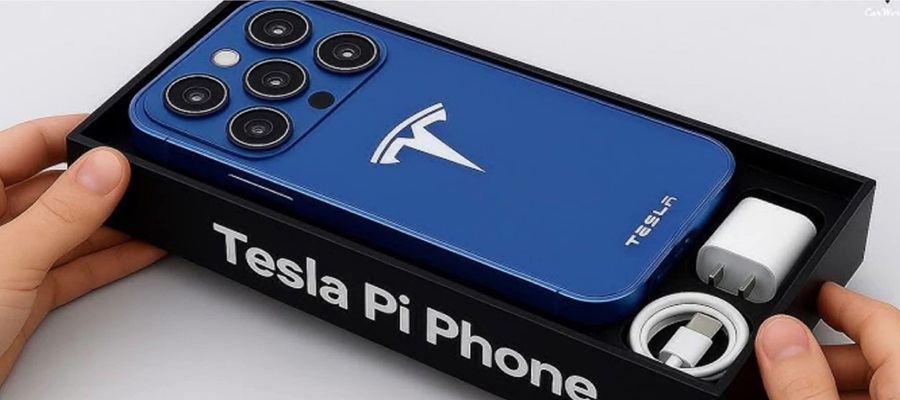
Viral rumors about a “Tesla Pi Phone” a new phone, being developed by Elon Musk, CEO and largest shareholder of Tesla and SpaceX, are entirely fake.

AI Generated Tesla Pi Phone and Elon Musk
Instead, the tech giant said on Monday it has filed an application with the US Federal Communications Commission for permission to deploy the constellation by 2028.
It said the system would provide voice, messaging, data and emergency services.
A quick fact-check revealed that Tesla Inc. has never manufactured, developed, or released a smartphone.
Videos and articles claiming a release (often priced between $150 and $800 with solar charging or satellite-only connections) rely on AI-generated concept art and recycled internet hoaxes dating back to 2021.
Musk has only mentioned a phone in hypothetical remarks, stating Tesla would build one only if major app stores completely blocked or censored essential apps like X (formerly Twitter).
On Monday however, his company said that “Amazon looks forward to delivering on the promise of D2D [direct-to-device] connectivity, including to the millions of people living, travelling and working in places beyond the reach of existing networks today,”
The filing is the first step from Amazon into satellite mobile connections, which has until now been dominated by SpaceX’s Starlink service.
Musk’s group has signed partnerships with existing operators such as T-Mobile US and the UK’s Virgin Media O2 to provide phone services for customers where their conventional networks do not reach.
Starlink operates across more than 150 countries, offering high-speed internet connections through its constellation of satellites.
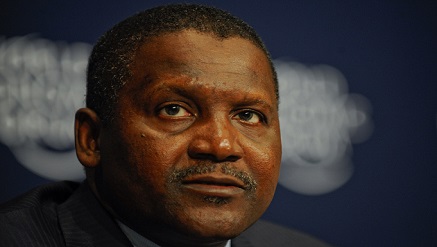
Aliko Dangote, Africa’s richest man, plans to dedicate one-third of his wealth to charity as part of his succession plan, Halima Dangote, his daughter, has revealed.

Aliko Dangote
Halima, a trustee of the Aliko Dangote Foundation, disclosed this in an interview with Bloomberg published on Tuesday, saying the billionaire had secured the support of his family to commit 33 per cent of his estate to philanthropy.
According to the Bloomberg Billionaires Index, Dangote’s net worth is estimated at $35.1 billion, meaning one-third of his current wealth would be worth about $11.7 billion if his fortune remains at that level.
Halima explained that her father views philanthropy as a key part of his legacy and has incorporated it into the family’s long-term succession plans.
She said Dangote had structured his estate to ensure that charitable giving continues across generations, particularly in areas such as healthcare and education.
“He sort of put all the structure in place whereby we focus a lot on health and education. He actually donated 25 per cent to the foundation. If you look at it, it is what we call in Sharia Code in Islam; it means he has donated 33 per cent of his whole inheritance to his foundation,” she said.
Halima added that Dangote believes giving back is central to the success of his businesses and the family’s values.
She said the billionaire asked her, her two sisters, and his mother to sign the agreement allowing 33 per cent of his inheritance to be dedicated to humanitarian causes.
The planned donation builds on Dangote’s longstanding philanthropic activities through the Aliko Dangote Foundation, which was established in 1994.
According to Halima, the foundation received an endowment of $1.25 billion about a decade ago and has since received an additional $700 million in funding.
She said about 70 per cent of the foundation’s spending goes to programmes in Nigeria, while 20 per cent supports projects across Africa, with the remaining funds directed to initiatives in other parts of the world.
The foundation’s interventions focus on healthcare, education, nutrition, and humanitarian support, including partnerships that contributed to the eradication of wild poliovirus in Africa.
Dangote’s planned charitable commitment adds to increasing global attention on billionaire philanthropy.
Although the proposed 33 per cent allocation is below the 50 per cent commitment associated with the Giving Pledge, it would rank among the largest philanthropic commitments announced by an African billionaire.
Earlier this year, Dangote was named among the world’s most influential philanthropists by TIME magazine’s inaugural TIME100 Philanthropy list, recognising the impact of the Aliko Dangote Foundation, which reportedly spends more than ₦50 billion annually on programmes across Africa.
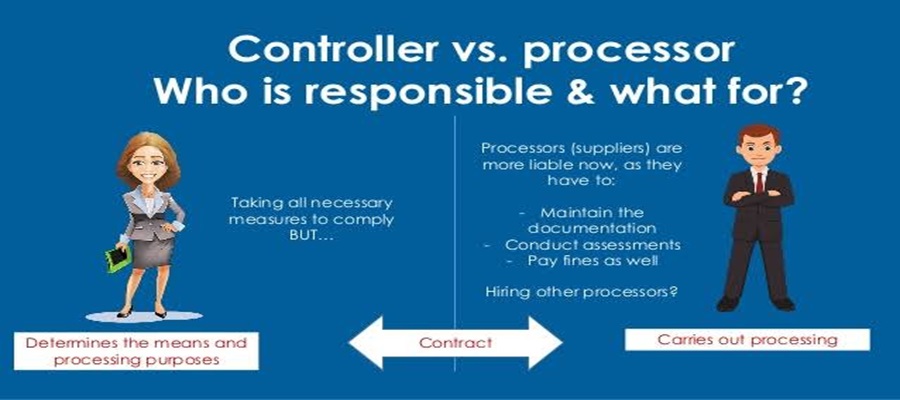
Nigeria Data Protection Commission (NDPC) has directed all Data Controllers and Data Processors of Major Importance (DCPMIs), yet to register with the commission to do so immediately.

This followed a Federal High Court judgment affirming NDPC statutory powers to designate and register such entities.
DCPMIs are entities operating in Nigeria that handle sensitive personal data or large volumes of information, requiring mandatory registration with the NDPC under the Nigeria Data Protection Act (NDPA).
In a statement issued on Tuesday by Babatunde Bamigboye, head of Legal, Enforcement and Regulations at the NDPC, described the judgment as a major milestone for data accountability and regulatory oversight in Nigeria.
The commission said the ruling arose from a suit filed by Emmanuel Harunna against the NDPC in Emmanuel Harunna v. NDPC (FHC/L/CS/1116/2024), in which the applicant sought a declaration that Point of Sale agents were not Data Controllers or Processors of Major Importance under the Nigeria Data Protection Act and requested a perpetual injunction restraining the commission from registering them.
According to the statement, Justice F.N. Ogazi examined the commission’s Guidance Notice on Registration alongside Sections 5(d), 6(c), 44, 45 and 65 of the Nigeria Data Protection Act before concluding that the commission acted within its statutory powers in designating entities under the Major Data Processing – Ordinary High Level category as Data Controllers and Processors of Major Importance.
Quoting the judgment, the statement read, “The Nigeria Data Protection Act was enacted to promote accountability, transparency and responsible data governance. Registration enables the Respondent to identify entities engaged in significant data processing activities, monitor compliance.”
It added that the court held that, “Far from undermining the constitutional right to privacy, the registration framework is one of the statutory mechanisms designed to safeguard that very right by subjecting data controllers and data processors to effective regulatory oversight.”
The statement further quoted the court as saying, “Looking at the recitals of the Guidance Notice, there is every indication that the Guidance Notice is also aimed at protecting the privacy and security of data subjects, thus bringing the registration requirement of the Guidance Notice within the protective shield of Section 45 of the 1999 Constitution.”
According to the commission, the court also held that, “Remarkably, Section 63 of the Data Protection Act provides that the provisions of the Act shall prevail over any other law inconsistent with its provisions on matters relating to the processing of personal data.”
Reacting to the judgment, the commission described the decision as a significant boost to Nigeria’s data protection regime.
“The Commission appreciates the ground-breaking efforts of the court towards the advancement of the jurisprudence relating to data accountability in Nigeria, as eloquently demonstrated in this case,” the statement read.
Following the ruling, Vincent Olatunji, national commissioner and chief executive officer, had directed every Data Controller and Processor of Major Importance that had yet to comply with the registration requirement to register without delay.
The commission warned that entities failing to comply with the registration requirement could face legal consequences.
“Failure to register creates serious legal liabilities under the law, while compliance with registration requirements builds public trust and safeguards the fundamental rights and freedoms of data subjects in Nigeria,” the statement added.

Fact-Check: Elon Musk’s “Tesla Pi Phone” is Internet Rumor

Dangote Plans to Donate One-Third of Wealth to Charity as Legacy

NDPC Directs DCPMIs to Register with Agency or Face Legal Consequences

Malpass, Ex World Bank Chief Raises Alarm over Nigeria’s Secretive Debt Structures

How and Why Apps Deplete Data – ALTON

NRC, Ponzi Scheme Collapses Resulting Loss of Billions of Naira

EFCC Busts NIS Visa Overstay Racket, Uncovers N700m in an Account

Tokenization, Blockchain Technology will Transform Financial Institutions – IMF

From Scarcity to Scale: What Africa Can Learn from India’s Agricultural Transformation

BON Establishes Six Ad Hoc Committees to Modernize Broadcasting




 News3 days ago
See Verified 20 Countries Nigerian Passport Holders Can Travel Visa-Free

 E-Business3 days ago
Report Says Cybercriminals Deploy Malware to Hijack Crypto Wallets, Monitor Browsers Telegram

 Telecom3 days ago
NCC, REA Partner to Cut Telecom Costs with Renewable Energy

 Telecom3 days ago
Subscribers, Telcos Warn FCCPC over Airtime Lending Enforcement

 E-Business3 days ago
NPC Opens 131 Births, Deaths Registration Centres in Anambra

 General News3 days ago
AfDB, Nigeria Urge African Control of Mineral Resources

 News2 days ago
History as Lagos Becomes First Nigerian State to Launch Greenhouse Gas Registry

 E-Business2 days ago
UNN to Partner Firm on AI, Smart Mobility Innovation Centre