

Telecom
AVEVA Unveils Key learnings from AVEVA 2023 Sustainability Progress Report


AVEVA, a global leader in industrial software, launches AVEVA’s 2023 Sustainability Progress Report and the first edition of the AVEVA Industrial Intelligence Index at London Tech Week 2024 where the company advocates for an ethical and impact-driven AI aimed at increasing creativity and efficiency for a more sustainable world.

AVEVA 2023 Sustainability Progress Report: key learnings
In 2023, AVEVA continued to make progress on its core ESG framework objectives, including enabling the sustainable transformation of industry through its software, modelling environmental stewardship and ethical best practice, and fostering an inclusive workplace culture where every employee feels engaged and empowered to learn and grow.
This fourth edition of the report is AVEVA’s first publication of ESG data and workstream advancements aligned to a calendar year reporting period. It details progress made in 2023 to AVEVA’s three key pillars: Technology handprint, Operational footprint, and Inclusive culture.
Technology handprint

“Beyond our efforts to reduce our own carbon footprint, we recognize that our biggest opportunity to make a positive impact and accelerate our journey towards NetZero is through our core products, digital solutions that can help industries improve efficiency, circularity, traceability and resilience” declared Lisa Wee, Global Head of Sustainability, AVEVA.
With this regard, the company has developed a green new logo program that has supported in the first six months the deployment of clean tech activities for 25 customers.
In addition, with 13 new case studies quantifying the reduction of emissions AVEVA software enables for customers, the company demonstrates how it walks the talk through tangible achievements contributing to sustainability. Last but not least, hackathons run in 2023 generated 80 sustainability-led technology ideas for future innovations.
2023 also saw the launch of AVEVA’s Sustainability Accelerator program the purpose of which is to advance sustainability use cases and capabilities across the company’s portfolio and partner ecosystem, including via AVEVA’s industrial intelligence platform, CONNECT.
“AVEVA’s Sustainability Accelerator program aims to enable faster uptake of existing sustainability solutions across the industrial landscape, while we continue to invest in product capabilities and partnerships that will push out the frontiers of sustainability innovation for industry” said Joana Mainguy, Director of Sustainability in charge of the program.
Finally, AVEVA has pioneered a new standard for green software: since the end of 2023, 31% of its portfolio has built-in power consumption measurement technology.
Operational footprint
In 2023, AVEVA met 4 out of the 15 2025 ESG targets including 93% reduction in scope 1 and scope 2 emissions through a combination of measures: the company procured 100% of renewable electricity in all global markets as per RE100 criteria, reduced its overall fleet of 21% over the year, and counted hybrid or electric vehicles for 25% of the remaining fleet.
Notable achievements related to upstream emissions include a 36% decrease in purchased goods and services and a 49% decrease in business travel emissions.
The latter goes beyond our 2025 ESG goal of a 20% reduction.
Regarding the scope 3, AVEVA has integrated e-waste data in the inventory under the waste category to report another significant achievement: “Our initial target of diverting 5 tons of e-waste from landfill in 2025 was surpassed by 22.75 tons in 2023. 100% of e-waste sent to our disposal partner is now diverted from landfill,” explained Lisa Wee.
Inclusive culture
AVEVA’s commitment to developing a workplace environment where all employees feel included and are treated with dignity and respect is also highlighted in the report.
“Globally, with 39.9% of new hires, 29% of managers and 26,5% of leaders being women, AVEVA has significantly increased gender representation in 2023 and will continue in this direction to raise these numbers to 50% of new hires, 40% of managers and 30% of leaders by 2030. Besides, we have reached our goal of less than 1% pay equity, and it currently stands at 0.5%”,commented Lisa Wee with enthusiasm. In addition, AVEVA demonstrated its commitment to society donating £ 310,000 to causes supported by AVEVA employees’ communities around the world.
AVEVA also achieved key milestones in regions: In the US, the company has developed a partnership with two Historically Black Colleges and Universities (HBCUs) for an ‘AVEVA Scholars Program. Spanning three years, the program includes scholarships and immersive onsite experiences, ultimately paving the way for talented Black scholars in Engineering and Computer Science to join the AVEVA team upon graduation. The pilot will kick-off mid-June 2024 and count 12 students.
AVEVA Industrial Intelligence Index Report: A 2-in-1 publication to report on industrial needs and to give guidance on existing solutions through inspiring examples of successful and sustainable digital transformation:
At London Tech Week 2024, AVEVA launched its first annual AVEVA Industrial Intelligence Index:
“AVEVA has been supporting the industrial world for more than half a century. Listening to our customers’ needs and understanding their challenges is how we innovate and develop tailored solutions that will help them cope with current and future challenges. With more than 25 000 customers across all industries, we have built a unique expertise. Today I’m delighted to introduce our first AVEVA Industrial Intelligence Index Report. Our ambition is to issue this report every year to help C-suite executives, business unit leaders, and strategic decision-makers leverage industrial intelligence and succeed in the digital age, with inspiring insights about how industries transform towards a more sustainable future” declared Caspar Herzberg, AVEVA CEO.
Drawing on research conducted with 500 global industry executives across Europe, North America and Asia Pacific, this first edition gives valuable and actionable insights into the power, manufacturing, infrastructure, and chemicals industries. Including comments from AVEVA’s experts and leaders, the report unveils macro trends and describes the forces that drive change and innovation. It also presents case studies showcasing successful digitalization initiatives, and strategies for driving innovation and efficiency to chart a course towards a more sustainable and profitable future.


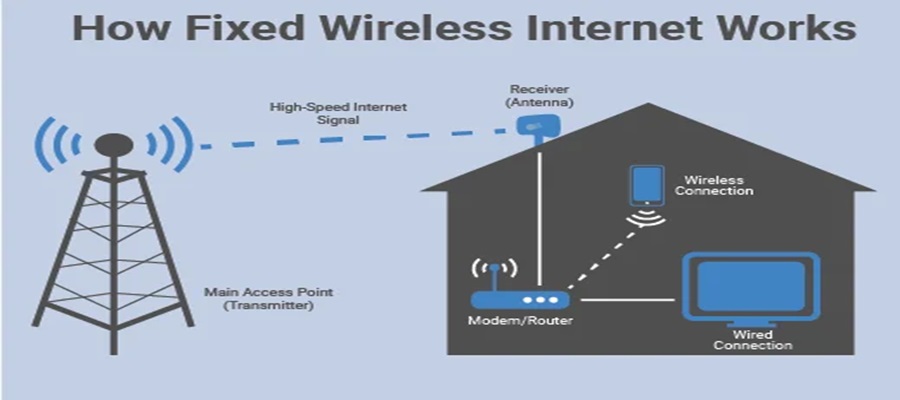
Nigeria has exactly 156,662 active fixed wired internet subscriptions as of mid-2026.

This is a tiny fraction compared to mobile GSM networks, which dominate the market with over 154 million subscribers.
The fixed wired market primarily consists of homes and offices using direct physical cables like fiber optics.
Fixed wired services use physical cables, like glass fiber or copper wire, to bring internet directly into a building.
It is like a dedicated, private water pipe for your home. It provides very fast speeds, unlimited data, and is reliable.
In contrast, mobile GSM uses radio waves transmitted from tall towers to phones, acting more like a sprinkler that sprays a signal across an entire neighborhood.
Because laying physical cables across cities is expensive and hard to do, these subscriptions are very rare.
However, the market has seen recent growth, driven largely by Fiber-to-the-Home (FTTH) services.
The top players are: MTN FibreX with 110,564 subscribers, which is roughly 88.7 per cent of the entire market.
SWIFTNG accounts for about 13,945 connections.
The others are ipNX and 21st Century Technologies which make up the number.

Nigerian Communications Commission (NCC) says it is intensifying efforts to implement Nigeria’s planned 112 national emergency number following its approval by the National Economic Council (NEC).

NCC
The commission disclosed this during a meeting between Vice President Kashim Shettima and an NCC delegation led by the Chairman of its Governing Board, Chief Idris Ibikunle Olorunnimbe, at the Presidential Villa, Abuja.
Briefing the Vice President, Olorunnimbe said the NCC had already established about 35 Emergency Communications Centres (ECCs) across the country to support a unified national emergency response system.
He said the next phase of implementation would focus on closer collaboration with state governments and emergency response agencies to ensure the effective rollout of the initiative.
The development follows the recent approval by the NEC, chaired by the Vice President, for the adoption of 112 as Nigeria’s single national emergency number across all tiers of government and emergency response agencies.
The council also approved the establishment of a multi-agency implementation committee to be jointly coordinated by the Office of the Vice President and the NCC.
Olorunnimbe stressed that the success of the initiative would depend on the commitment of state governments to support and maintain emergency communications infrastructure, as well as the readiness of response agencies to promptly attend to distress calls.
“We need commitment at every level of all response agencies—from top to bottom—including the Nigeria Police Force, ambulance services across the states and, at the national level, the National Emergency Management Agency (NEMA),” he said.
Responding, Shettima directed the NCC to develop a comprehensive roadmap for the nationwide implementation of the single emergency number in line with international best practices.
He also urged the commission to work closely with the National Emergency Management Agency (NEMA), citing the agency’s experience in disaster management, relief and rehabilitation.
The Vice President assured the commission of the Federal Government’s commitment to sustaining the initiative, saying funding would be mobilised through the National Economic Council and partnerships with the private sector.
He also called for greater dedication from all emergency response agencies to ensure the success of the programme.
The adoption of 112 is expected to harmonise emergency communications across Nigeria by providing a single number through which citizens can quickly access police, fire, ambulance and other emergency services.
The initiative is also expected to replace multiple emergency contact numbers currently in use and improve coordination and response during emergencies.

Nigerian Communications Commission (NCC) has said that it was strengthening collaboration with state governments and industry players to develop a transparent, cost-based pricing framework for sharing telecom ducts as part of efforts to speed up broadband expansion across Nigeria.

Ayuba Shuaibu, director of Policy, Competition and Economic Analysis, NCC, disclosed this at the Stakeholders’ Forum in Abuja.
Shuaibu said the initiative was designed to build consensus among all parties.
“The primary purpose of this forum is to ensure seamless synergy between the Commission and all stakeholders,” he said.
The director said the consultation was prompted by longstanding complaints over permits, levies and other charges imposed by different levels of government.
He said bringing together state commissioners, telecom operators, tower companies and representatives of the Nigeria Governors’ Forum had helped improve understanding of the issues.
“This engagement is a work in progress. We expect more input from stakeholders before presenting the outcome to the Nigeria Governors’ Forum,” he added.
Dr Helen Adeneye, commissioner for Innovation, Science and Technology, Kogi State. welcomed the consultation, saying Nigeria needs a harmonised policy that clearly defines the responsibilities of both the federal and state governments.
“We need a harmonised policy that allows states to collaborate better with telecom operators and creates a more business-friendly environment,” she said.
Dr Adeneye added that adopting the Dig-Once policy would establish a uniform pricing system and help resolve disputes over charges for telecom infrastructure deployment.
Chidi Ajuzie, chief executive officer, WTES Projects Limited, whose firm is conducting the consultancy study, said the proposed framework would introduce a common cost structure for duct sharing to support broadband investment and economic growth.
“The study is designed to create a uniform pricing model that will drive broadband growth, economic development and wider adoption across the country,” he said.
Ajuzie explained that the consultants had developed preliminary floor and ceiling prices to guide operators while allowing flexibility within the approved range.
He added that the recommendations remain open to industry input before the NCC finalises the framework.
The Dig-Once Policy is designed to reduce the cost and disruption of deploying broadband infrastructure by requiring fibre ducts to be installed whenever roads are constructed or rehabilitated.
The NCC is developing a cost-based pricing framework for sharing these ducts to promote fair pricing, reduce duplication of infrastructure and encourage investment.
The proposed model is expected to support the Federal Government’s broadband expansion targets while improving collaboration between telecom operators and state governments.

Court Adjourns Alleged Binance Tax Evasion Case over Settlement Talks

Fixed Wired Internet Market Lags as Mobile Gains Ground

Xenophobic Attacks: OYC Threatens to Picket MTN Nigeria Offices

New NIMC Act Strengthens Data Protection, Privacy – Director

BON Establishes Six Ad Hoc Committees to Modernize Broadcasting

NASENI Moves to Digitize CCB’s 5m Assets Declaration and Operations

Mobile Internet Gender Gap Widest in Africa – GSMA

Nigeria Launches FreeTV Nationwide

CANAL+ Partners Samsung to Pre-Load DStv Stream on New Samsung TVs In Nigeria, Other African Countries

Lebara Nigeria Launches Lebara Play, Africa’s First Telecom-Owned Micro-Drama Platform




 News3 days ago
NRC, Ponzi Scheme Collapses Resulting Loss of Billions of Naira

 News3 days ago
NSITF Partners South African Insurer on Digital Transformation

 E-Financial3 days ago
FCT-IRS Unveils New Digital Platform, Taxporta

 General News3 days ago
KPMG Urges Africa’s Most Innovative Tech Entrepreneurs to Enter the Global Tech Innovator 2026 Competition

 E-Business3 days ago
FG Suspends New Internet Regulations to Prevent Overlapping Rules
 E-Business3 days ago
NIN Enrollment Hits over 136m as New ID Law Takes Effect

 E-Business3 days ago
Plateau PCC Collects Nigerians’ Data without Privacy Policy – FIJ

 Telecom2 days ago
NCC Seeks Cost-Based Pricing Framework for Ducts