

News
Nigeria’s food importation policy could destroy country’s agriculture, warns Akinwumi Adesina


Dr. Akinwumi Adesina, President of the African Development Bank Group has said the decision by Nigeria’s government to allow massive food importation risks destroying the country’s agriculture.

Dr. Akinwumi Adesina
This follows the announcement by Nigeria’s Minister for Agriculture Abubakar Kyari on July 10 that the Federal Government would suspend duties, tariffs, and taxes on the importation of maize, husked brown rice, wheat, and cowpeas through the country’s land and sea borders, for 150 days.
“Nigeria’s recently announced policy to open its borders for massive food imports, just to tackle short-term food price hikes, is depressing,” Adesina told African Primates of the Anglican Church at a Retreat in Abuja, Nigeria, on Friday.
He warned that the policy could undermine all the hard work and private investments that have gone into Nigeria’s agriculture sector.
“Nigeria cannot rely on the importation of food to stabilize prices. Nigeria should be producing more food to stabilize food prices, while creating jobs and reducing foreign exchange spending, that will further help stabilize the Naira,” said the African Development Bank president.
“Nigeria cannot import its way out of food insecurity,” he said, “Nigeria must not be turned into a food import-dependent nation.”

Speaking on the theme ‘Food security and financial sustainability in Africa: The role of the Church’, Adesina said Nigeria “must feed itself with pride,” warning, “a nation that depends on others to feed itself, is independent only in name.”
Faith and food security
The clergymen assembled in Abuja under the umbrella of the Council of Anglican Provinces of Africa (CAPA), representing more than 40 million Anglicans across the continent.
In his opening remarks, the host, His Grace the Most Reverend Henry C. Ndukuba, Primate of the Church of Nigeria (Anglican Communion), said the gathering was a unique opportunity for African Anglican leaders to deepen bonds of friendship and collaboration, and to share collective wisdom and experiences.
The chairperson of the event, Emeritus Nigerian Professor of Science Education, Olugbemiro Jegede, told Adesina: “You have the whole of Africa represented here. Every Primate represents a region. Behind these Primates are millions and millions of Anglicans who are listening to us here.”
Noting that Africa accounts for nearly a third of the more than 780 million people worldwide who are hungry, the African Development Bank president said agriculture is critical for the diversification of economies, and for the transformation of rural areas, where over 70 percent of the population of Africa live. “It is clear therefore that unless we transform agriculture, Africa cannot eliminate poverty,” he insisted.
Adesina said Africa has 65 percent of the uncultivated arable land left in the world, to feed 9.5 billion people by 2050. Therefore, what Africa does with agriculture will determine the future of food in the world. “Essentially, food is money. The size of the food and agriculture market in Africa will reach $1 trillion by 2030.”
Transformational strides
Adesina briefed the Primates on the Bank’s $25 billion program to transform agriculture by providing high performing agricultural technologies for 40 million farmers and making Africa food self-sufficient by 2030.
He shared the Bank’s successes in helping member countries tackle the negative effects of climate change, through financial investments and its flagship Technologies for African Agricultural Transformation (TAAT) program.
According to the Bank president, TAAT has helped Ethiopia to become a net exporter of wheat within five years, and it has significantly increased Sudan’s wheat production, as well as supported countries in Eastern and Southern Africa to continue producing food in the face of a prolonged drought.
For Nigeria, Adesina said, “Together with the Islamic Development Bank and the International Fund for Agricultural Development, we have provided $520 million to support the establishment of Special Agricultural Processing Zones, which will allow private agribusinesses to establish industries that process and add value to agricultural commodities.”
In addition, the Bank provided $134 million to Nigeria for emergency food production to help drive down food price inflation, by significantly boosting the local production of wheat, and cassava, under the national Agricultural Growth Scheme.
Adesina urged the Nigerian government to take advantage of the Bank’s investments and support for African farmers; show greater determination and commitment to achieving food self-sufficiency, and to incentivize private sector agribusinesses.
To support Africa’s ambitions to move up the global agricultural value chains, the African Development Bank Group and its partners, are supporting the development of 28 Special Agro-Industrial Processing Zones (SAPZs) l in 11 countries, with $4.5 billion dollars mobilized so far.
Speaking on behalf of the Chairman of the Council of Anglican Provinces of Africa and Bishop of Northern Zambia, the Most Reverend Albert Chama, the Archbishop of the Anglican Church of Kenya, the Most Reverend Dr. Jackson Ole Sapit, called for greater cooperation between the Bank Group and the Anglican Church.
“The African mind must be at the center of solving African problems. If the African Development Bank mobilizes resources for the African continent, and the Church also mobilizes resources for holistic transformation, we can achieve a lot working together – and make a difference,” Ole Sapit said.
The church as a change agent
Proposing solutions for agriculture in Africa, Adesina said the world desperately needs “visionary and passionate leaders who are strategic solution providers and transformational change makers.”
This includes, he said, public advocacy for robust government policies to end hunger and malnutrition, complemented by church-led food banks and other social protection programs for the poor and needy; investing in commercial farms, especially in rural areas; advocacy on issues of climate change; supporting and encouraging young Africans to engage in agricultural entrepreneurship; and demanding greater financial accountability, public probity, and better financial management from governments.



Nigeria and Israel yesterday reaffirmed their commitment to deepening bilateral cooperation in research, technology and innovation as both countries pledged to expand partnerships that will drive entrepreneurship, commercialise research and accelerate economic development.

The commitment was made at the closing ceremony and innovation showcase of the I-FAIR Cohort of the Israel-Nigeria Innovation Fellowship for Aspiring Inventors and Researchers (I-FAIR) in Abuja, where the Ambassador of Israel to Nigeria, Michael Freeman, announced that funding had been secured for the fifth edition of the programme, scheduled to begin in October 2026.
Freeman described I-FAIR as a practical demonstration of the growing partnership between both countries, saying it had enabled Nigerian innovators to develop local solutions to national challenges through Israeli mentorship and expertise.
He said, “This programme has never been about bringing Israeli solutions to Nigeria. It’s been about helping brilliant Nigerian innovators develop Nigerian solutions to Nigerian challenges supported by Israeli experience, mentorship and innovation.”
The envoy noted that the initiative had brought together government, academia, investors, engineers and entrepreneurs to transform innovative ideas into businesses capable of creating jobs and stimulating economic growth.
Announcing the continuation of the programme, he said, “I am so proud to stand here today and announce that we have secured with our partners funding for I-FAIR 5 and I-FAIR 5 will be launching in October 2026.”
Freeman said the relationship between Nigeria and Israel had grown significantly over the past four and a half years through cooperation in innovation, agriculture, healthcare, education, water management and technology.
He expressed confidence that stronger collaboration between both countries would unlock greater opportunities for startups, research institutions and businesses.
According to him, “Israel brings experience and innovation, technology, agriculture, healthcare, cyber security, security and water management. Nigeria brings extraordinary talent, creativity, entrepreneurship and one of the most dynamic young populations anywhere in the world.”
He added, “I have no doubt that the best chapters of the relationship between Israel and Nigeria are still ahead of us.”
The Executive Secretary of the Tertiary Education Trust Fund, Architect Sonny Echono, also reaffirmed TETFund’s commitment to strengthening research and innovation through strategic partnerships with Israel and other stakeholders.
He said the I-FAIR programme aligned with Nigeria’s priorities in food security, agriculture, medicine, technology, clean energy and the circular economy, adding that TETFund would continue supporting initiatives that promote research commercialisation.
Echono stressed that collaboration between government, academia and industry remained critical to translating research findings into products and services.
He said, “It is this critical linkage, especially between science, engineering, technology and innovation, and the productive sector that is critical for translating R&D results and inventions into finished products for socio-economic benefits of our people.”
He disclosed that TETFund was working with partners to establish innovation facilities in about 60 tertiary institutions and had created a student innovation fund that would provide up to ₦50 million to students with commercially viable ideas.
The TETFund boss also announced plans for a National Research Fair later this year, where innovators would showcase products before policymakers, financial institutions and investors to attract funding and commercial partnerships.
Paying tribute to the outgoing Israeli ambassador, Echono described Freeman as a strong bridge between Nigeria and Israel.
He said, “Nigeria is grateful for your service. You have been a strong bridge between our two countries.”
Earlier, Head of Programmes at Innov8 Hub, Tolulope Aina, said sustainable economic development depended on building an innovation ecosystem that transforms ideas into successful businesses.
She noted that Innov8 Hub had supported more than 3,000 innovators, researchers and entrepreneurs, helping them convert research into products, startups and investment-ready ventures.
Aina said, “Nigeria does not suffer from a shortage of brilliant minds, what we need are stronger pathways that help those ideas become products, businesses, and opportunities that improve life.”
She thanked the Embassy of Israel and TETFund for their continued support in strengthening Nigeria’s innovation ecosystem.
According to her, “Building an innovation-driven economy requires collaboration, long-term commitment and shared purpose.”

Chief Judges drawn from countries across the African continent have resolved to collaborate and support measures aimed at ensuring the success of the Africa Continental Free Trade Area (AfCFTA) through an efficient, reliable and predictable dispute resolution system.

They agreed to explore ways to harmonize disputes resolution mechanisms in the continent with a view to making it easier and faster to resolve commercial disputes.
The resolutions formed part of the decisions taken at the third Africa Chief Justices’ Alternative Dispute Resolution (ADR) Summit held in Nairobi, Kenya between June 18 and 19.
According to a statement by the Special Assistant on Media to the Chief Justice of Nigeria (CJN), Justice Kudirat Kekere-Ekun, Mr. Tobi Soniyi, the African judicial leaders were of the view that commercial confidence depends largely on legal certainty.
They emphasised how structured Alternative Disputes Resolution could enhance commercial justice, protect the business environment and support the AfCFTA.
In her contribution, the Chief Justice of Nigeria (CJN), Justice Kudirat Kekere-Ekun urged called on African judiciaries to proactively prepare for emerging challenges to disputes resolution in the continent.
Justice Kekere-Ekun, who served as Co-Chair of the session on “Financial sector disputes, tax certainty and ADR: Building commercial confidence in Africa, noted that AfCFTA represents one of the most ambitious economic integration projects in modern history.
The CJN, who stressed the importance of a proactive Judiciary to the success of AfCFTA, warned that its success would depend, not only on trade protocols, tariff reductions and economic policies, but also on the strength and reliability of the institutions that support commerce.
Justice Kekere-Ekun urged her colleagues to examine how judiciaries in the continent, central banks, tax administrations and ADR institutions could work together to reduce uncertainty, prevent disputes, strengthen investor confidence and support the realization of AfCFTA’s objectives.
She envisaged the growth of intra-African trade to inevitably generate cross-border tax disputes; foreign exchange disputes; banking and payment system disputes; digital commerce disputes; enforcement of arbitral awards; recognition of foreign judgments; and disputes arising from regional supply chains.
The CJN, who said “African Judiciaries must proactively prepare for these emerging realities,” challenged African judicial leaders on the importance of disputes prevention mechanism.
She stated that modern commercial justice must move beyond the traditional focus on disputes resolution after conflicts arise.
“The most successful commercial systems are not those that generate the highest volumes of litigation but those that reduce the need for litigation,” she added.
Justice Kekere-Ekun, who stressed the importance of ADR, cautioned against seeing ADR as merely an alternative procedure.
She said ADR should rather be considered as a strategic tool for reducing transaction costs, preserving commercial relationships, enhancing investor confidence, reducing court congestion, improving ease of doing business and strengthening commercial certainty.
Sharing the Nigerian experiences, Justice Kekere-Ekun cited the recent decision by the Nigerian Supreme Court in the case of EMTS v. AFDIN Ventures Ltd. & Ors. (2026), which reaffirmed important principles of commercial certainty, including respect for arbitration agreements; recognition that consent may be inferred from conduct; judicial restraint from re-litigating arbitral disputes on the merits; and the importance of finality in arbitral awards.
According to her, the decision reinforced Nigeria’s position as an arbitration-supportive jurisdiction.
She identified timely resolution of tax disputes as an important factor in ensuring certainty and recommended Nigerian tax disputes resolution mechanism which she said “offers useful example of institutional reforms that support commercial certainty.”
Justice Kekere-Ekun recommended the Nigeria’s Tax Appeal Tribunal model, which she described as one of Nigeria’s most significant innovations.
According to Mr. Soniyi, Justice Kekere-Ekun’s message to his brother justices is clear: building an African commercial environment in which investors, businesses, regulators and citizens can transact across borders with confidence, secure in the knowledge that their rights will be protected and their obligations fairly enforced.
The summit advanced the goals of the African Chief Justices Alternative Dispute Resolution Forum (ACJADRF) to harmonize jurisprudence and establish common enforcement standards across the continent.
The CJN was, on the last day of the summit, nominated by the Chief Justice of Kenya as the Vice Chairperson of the Africa Chief Justice ADR Forum with effect from August 1, 2026. The nomination was ratified by the forum.
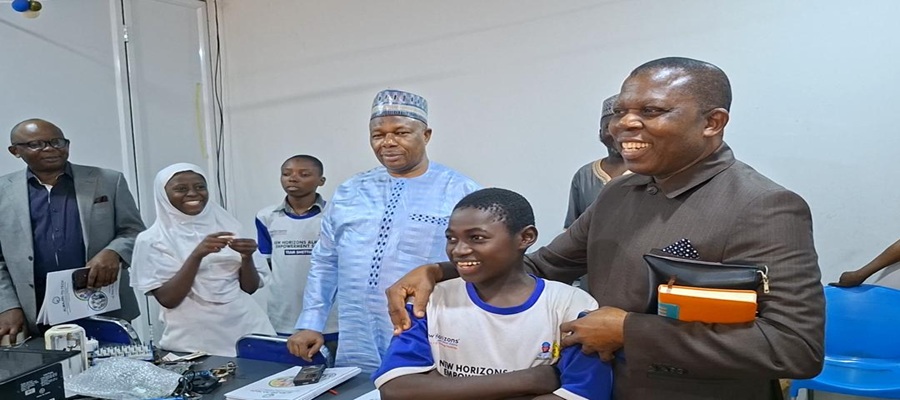
Twenty-one former Almajiri learners and street children are set to graduate as certified technology technicians under the Almajiri-to-Tech Initiative, a programme designed to equip vulnerable children with digital and entrepreneurial skills while addressing youth unemployment, poverty and insecurity.

The pioneer graduation ceremony is scheduled to hold on July 29 in Abuja, where the graduates will demonstrate practical skills, including assembling computers and drones, before government officials, development partners, members of the diplomatic community and the media.
The initiative was founded by technology education advocate, Mr Tim Akano, in partnership with New Horizons Nigeria, an Information and Communication Technology (ICT) training organisation.
According to the organisers, the programme seeks to provide practical solutions to the growing challenge of out-of-school children by combining technology education, entrepreneurship, mentorship and character development.
The organisers said the initiative had transformed children who previously had little or no exposure to technology into technicians capable of repairing laptops, desktop computers, mobile phones, power banks, electric fans, microwave ovens and other electronic devices.
They explained that the participants also received entrepreneurship training, mentorship, transportation support, daily meals, learning materials and professional work tools during the programme.
The organisers added that religious instructors from the participants’ respective faiths regularly visited the trainees to provide moral guidance, describing character development as a critical component of the initiative.
Unlike many vocational interventions that end with the presentation of certificates, the organisers said graduates of the programme would receive start-up support, while outstanding participants would be provided with professional work tools to establish their own businesses.
They also disclosed plans to launch a business directory and customer contact platform that would enable individuals, businesses and organisations to engage the services of the graduates.
Speaking on the initiative, Akano, who is also the Managing Director and Chief Executive Officer of New Horizons System Solutions Ltd., said the programme was conceived as a practical response to the challenges of youth unemployment, insecurity, poverty and irregular migration.
“You do not end migration by building higher walls. You do not defeat insecurity by relying only on military force, and you do not end poverty by preaching patriotism.
“You solve these challenges by building hope where hopelessness exists, equipping young people with practical skills, and creating opportunities where they live,” he said.
According to him, the pilot programme has demonstrated that children who have experienced neglect and exclusion can become innovators, entrepreneurs and contributors to national development when provided with quality education and opportunities.
He said one of the trainees, Mohammed, who arrived from the Niger Republic without speaking English, had acquired sufficient language proficiency within months to communicate confidently with customers while carrying out computer and electronics repairs.
Another participant, Fatima, discovered her interest in poetry during the programme and produced a poem celebrating New Horizons Nigeria, reflecting the broader personal development fostered by the initiative.
The organisers said the programme was inspired by concerns over the growing number of out-of-school children in Nigeria, estimated at about 30 million, and the broader global challenge of millions of children without access to education.
They argued that investing in digital skills, entrepreneurship and mentorship for vulnerable children offers a sustainable approach to addressing poverty, insecurity, youth unemployment and violent extremism.
As part of efforts to sustain the programme, the foundation said it had established a fully equipped workshop known as “The Almajiri Republic Workshop” in Wuse II, Abuja.
The workshop, according to the organisers, will serve as a commercial repair centre where graduates can provide computer and electronics repair services while continuing to strengthen their technical expertise.
The foundation called on the Presidency, federal and state governments, Ministries, Departments and Agencies (MDAs), members of the National Assembly, development partners, donor agencies, corporate organisations, civil society groups, religious institutions and other stakeholders to support the expansion of the initiative across Nigeria.
It maintained that scaling up the programme could transform millions of vulnerable children into skilled professionals capable of contributing to economic growth while reducing poverty, unemployment and insecurity.
The organisers said local and international media organisations, including CNN, BBC, Al Jazeera and ARISE News, had been invited to witness the graduation ceremony and the practical demonstrations by the pioneer graduates.

HURIWA, CLO Protests Bill Asking Social Media Firms’ to Open Shops Nigeria

Anambra Govt Bans Graduation Ceremonies in Anambra Schools

Airtel Secures Another 10-year Spectrum Renewal in Nigeria

Moniepoint as a Key Driver in Expanding Financial Access for Businesses in Nigeria

Nigeria, Israel Strengthen Research, Technology Collaboration

NRC, Ponzi Scheme Collapses Resulting Loss of Billions of Naira

NASENI Moves to Digitize CCB’s 5m Assets Declaration and Operations

Tokenization, Blockchain Technology will Transform Financial Institutions – IMF

EFCC Busts NIS Visa Overstay Racket, Uncovers N700m in an Account

From Scarcity to Scale: What Africa Can Learn from India’s Agricultural Transformation




 E-Financial3 days ago
FG Says Rumours, Fear, Can Crash Banks

 Telecom3 days ago
Court Dismisses Pan African Towers’ Bid to Halt Ex-CEO’s Suit, Awards ₦500,000 Costs

 E-Business3 days ago
Kaspersky Warns of a Phishing Campaign Abusing Microsoft Authentication Mechanism

 Telecom3 days ago
Telcos Seek Clear Regulatory Framework on Airtime Credit Services

 News3 days ago
IMF Sees 4% AI Growth Boost for Africa

 Telecom3 days ago
MTN Nigeria Announces 2026 mPulse Spelling Bee, Opens Entries for Students Nationwide

 Telecom3 days ago
MTN Warns Customers against Fake Promo

 E-Financial3 days ago
EU Debunks Fake Compensation Scheme Targeting West African Bank Customers