

Broadcasting
Imoke, Buratai, Maida, others to headline GOCOP 2024 conference in Kogi

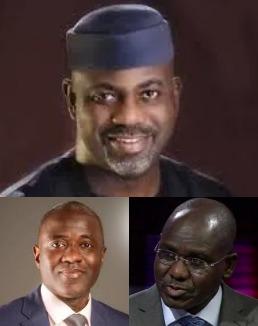
Senator Liyel Imoke, former Minister for Power and Steel, has been confirmed as the keynote speaker at the annual conference of the Guild of Corporate Online Publishers (GOCOP) scheduled for October 3, 2024 in Lokoja, the Kogi State capital.

This is just as attendance and participation by other highly fecund speakers and panelists have been confirmed.
They comprise, among others, former Chief of Army Staff, Lt-General Tukur Yusuf Buratai (Retd); the Executive Vice Chairman, Nigerian Communications Commission (NCC), Dr. Aminu Maida; a Professor of Political Science at the Federal University Lokoja, Rotimi Ajayi, and an edutainment communicator and veteran broadcaster, Ms Debrah M. Ogazuma.
Read Also: GOCOP Takes 8th Annual Conference to Lokoja
Chairman, 2024 Conference Planning Committee, Danlami Nmodu, mni, disclosed these in a press statement issued by the Publicity Secretary of GOCOP, Sir Remmy Nweke.
According to the statement, Nmodu said that Imoke would lead discussion on the theme: “Nigeria: Tackling Insecurity, Power Deficit, and Transitioning to Digital Economy” at the Reverton Hotel, GRA Lokoja, Kogi State on Thursday, October 3, 2024 by 10am.
Senator Imoke was at a time Special Adviser to President Olusegun Obasanjo on Utilities and Chairman, Presidential Committee on OMPADEC and NEPA Technical Boards.
In 2007, Senator Imoke was elected Governor of Cross River State and served his people in that capacity from 29 May 2007 to 29 May 2015.
Imoke studied Law at the University of Buckingham, England for his LLB degree in 1985, and then studied at the American University in Washington, D.C., where he gained a master’s degree in Law. He completed his legal education at the Nigerian Law School, Lagos, in 1988.
He was earlier elected a Senator in 1992 and was in the National Assembly until the military incursion, following the annulment of the presidential election of June 12,1993.
He then went into private enterprise in 1993 as a Managing Consultant.
Retired Lt-General Buratai would be joined by Dr. Aminu Maida as Guest Speakers.
The statement stated that Professor Ajayi would join other panellists, including a former Commissioner in Kwara state and National Coordinator of West African Media Network (WAMNET), Ms Ogazuma.
The 2024 GOCOP conference is the 8th in the series and would be chaired by former Nigeria’s Ambassador to Spain, Yusuf Mamman.
The 2023 edition was chaired by the JAMB Registrar and Chief Executive, Prof Ishaq Olarenwaju Oloyede, while the first Nigerian Professor of Capital Market, Prof. Uchenna Joseph Uwaleke was the keynote speaker.
Previous speakers at the annual conference consisted of Rev. Matthew Hassan Kukah, the Bishop of the Catholic Diocese of Sokoto who delivered the 2019 lecture on “Economy, Security and National Development: The Way Forward.”
In 2021, Mr. Boss Mustapha, as the Secretary to the Government of the Federation and Chairman of the Presidential Task Force on Covid-19, keynoted the conference and spoke on: “Post Covid-19 Pandemic: Recovery and Reconstruction in Nigeria.”
Professor Mahmood Yakubu, Chairman, Independent National Electoral Commission, delivered the keynote at the 2022 edition themed “2023 Elections: Managing the Process for Credible Outcome.”
GOCOP was established to ensure that online publishers uphold the tenets of journalism.
Membership of the Guild is a constellation of editors and senior journalists who, having distinguished themselves in their various positions in the print and electronic media, ventured into online publishing which is both the present and future of journalism globally.
The Guild has over 104 corporate publishers as members.


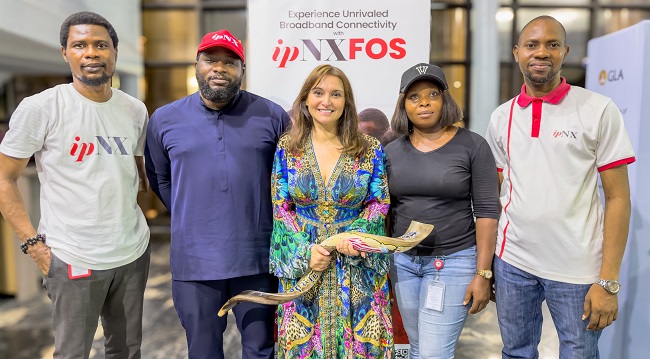
ipNX, one of Nigeria’s telecommunications and connectivity providers, successfully powered the Queen Esther Musical, presented by the Society for the Performing Arts in Nigeria (SPAN), reinforcing its role as a key enabler of innovation across industries through reliable, high-speed connectivity.

Held at Guiding Light Assembly, Parkview, Ikoyi recently, the Queen Esther Musical delivered a captivating blend of music, drama, and visual storytelling to a packed audience. Behind the scenes, ipNX’s advanced fiber-optic infrastructure played a critical role in ensuring seamless execution, supporting the production’s extensive technical requirements, from synchronized audiovisual systems to real-time digital enhancements that enriched the overall experience for the audience within the auditorium and on digital platforms.
As sophisticated technology integrates into live performances, the demand for stable, high-capacity bandwidth to deliver this experience to online audiences has become essential. ipNX provided technical support, delivering uninterrupted connectivity that enabled production teams to coordinate effectively and execute a technically complex show without disruption. The event served as a powerful demonstration of how telecommunications infrastructure can elevate creative expression and redefine audience engagement.
“Our involvement in the Queen Esther Musical reflects our commitment to powering experiences that matter,” said Akintunde Taiwo, Head of Sales, ipNX Retail. “This production broadcast required precision, speed, and reliability, all of which our network is designed to deliver. Beyond telecoms, we see ourselves as partners in progress across sectors, and this collaboration with SPAN highlights how our solutions can seamlessly support the creative industry just as effectively as we do small enterprises and critical services.”
For SPAN, the partnership translated into a production that fully leveraged technology to enhance storytelling and audience immersion.
“We were proud to collaborate with ipNX on the Queen Esther Musical,” said Sarah Boulous, Founder of SPAN. “The scale and ambition of this production required a technology partner we could rely on completely as we wanted audience to enjoy seamless streaming on the Zaia app. ipNX delivered exceptional bandwidth and stability, allowing us to integrate digital elements seamlessly and create a truly memorable experience. Their support played a significant role in bringing our creative vision to life.”
The Queen Esther Musical not only entertained but also illustrated the growing intersection between technology and the arts in Nigeria. ipNX’s role in powering the event highlights its broader mission to connect people, ideas, and industries and ensure that innovation is supported by infrastructure capable of meeting modern demands.
By bridging connectivity and creativity, ipNX continues to demonstrate that its impact extends far beyond traditional telecommunications, positioning the company as a trusted partner in shaping experiences across Nigeria’s evolving economic and cultural landscape.
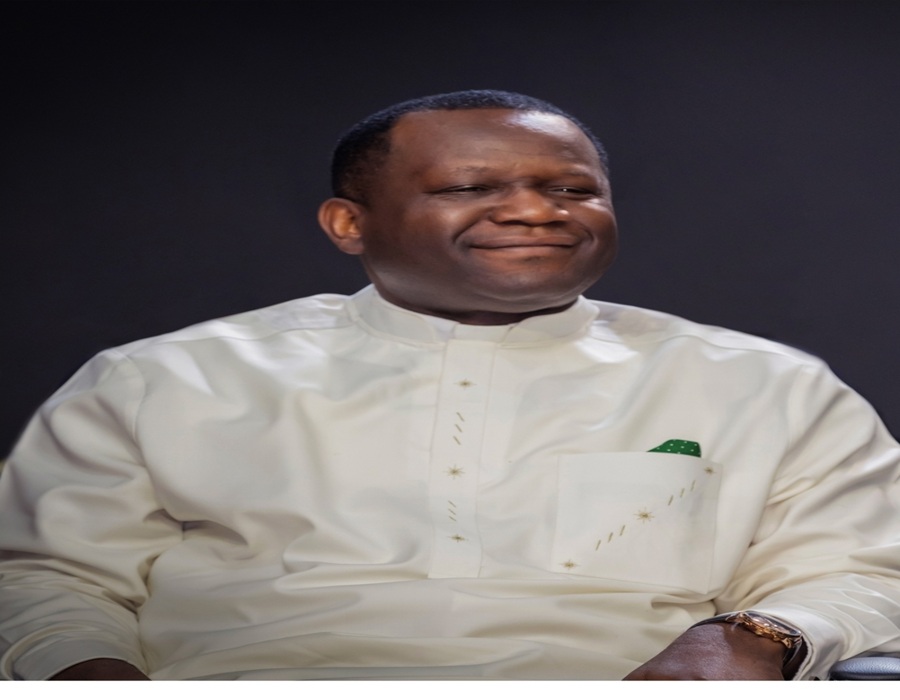
By Blaise Udunze
Milestones often invite reflection. Birthdays, especially, offer a pause to measure time not merely in years lived, but in lives shaped and systems influenced. This is especially true for David Ogbueli, who is celebrating his birthday. But instead of focusing on how old he is getting, it is more interesting to think about the impact he has had, not just building visible success, but the quiet, persistent architecture of transformation that his ministry has helped construct across continents.

David Ogbueli
Come to think of it, that in an era obsessed with visibility, metrics, and viral impact, Ogbueli’s work represents something different and distinguishing, slower, deeper, and far more enduring. Yes, multitude within and outside the country who know him either closely or from a distance definitely can attest that it is common with him, as this happens to be the kind of influence that rarely trends but steadily alters the trajectory of individuals, institutions, and nations.
To understand the global footprint of his work, one must first confront a fundamental shift he embodies, which emphatically is the redefinition of ministry itself. Through Dominion City International, founded from humble beginnings as a campus fellowship in 1991 at the University of Nigeria and later formalised in 1995 in Enugu, Ogbueli has built what is now a vast global movement. With over 2,000 chapters spanning Africa, Europe, Asia, the Middle East, and the Americas, alongside regional offices in the United States, the United Kingdom, and Nigeria, Dominion City has evolved into far more than a church network, into a leadership engine with an ambitious ongoing vision across Nigeria and beyond.
What distinguishes this expansion is not just its scale, but its philosophy. Beyond running a church, Dominion City was never designed merely to gather people; it was built to raise leaders who transform society. One emerging fact today is that the philosophy has shaped a generation of professionals, entrepreneurs, public servants, and ministers who carry its influence into boardrooms, government institutions, and grassroots communities across the world.
At the heart of this ecosystem is a deliberate investment in human capital development. Verifiably, through platforms like the Dominion Leadership Institute, which has produced over 30,000 graduates globally, Ogbueli has undeniably and consistently built a leadership pipeline that addresses one of Africa’s most persistent challenges. These prevailing challenges are the deficit of capable, values-driven leadership. At this point, this narrative definitely contradicts societal beliefs that his curriculum must be confined to spiritual formation; rather, it will interest society to know that his agenda integrates systems thinking, governance, productivity, and ethical leadership, equipping participants to function effectively in complex environments.
This emphasis on leadership extends into a broader scope and platforms. One of them is the Global Leadership Forum, and it would be of interest that it is not just designed for spiritual pursuit, but it is a mentorship and training hub designed to enhance performance and productivity across sectors, including business, politics, ministry, and enterprise. It reflects Ogbueli’s conviction that transformation must be holistic, that transcendence and cutting across every sphere of human endeavor.
Yet leadership, in his framework, is incomplete without economic empowerment. Across his ministry network, initiatives have been structured to move individuals from dependency to productivity. This is evident in large-scale interventions such as a N1 billion entrepreneurship support fund introduced to equip participants with the resources, skills, and networks required to succeed in business and career pursuits. At leadership retreats and empowerment programs, thousands are trained in areas ranging from agriculture and food security to innovation, healthcare, and global enterprise.
Beyond structured programs, his personal actions reinforce this philosophy. has sparked widespread reactions following a remarkable act of generosity during a recent church service
From distributing financial support to individuals in need during church services to empowering teams within the ministry with significant financial gifts, as one recent such act sparked widespread reactions following a remarkable benevolence, gifting about 35 choristers N1 million each during a recent church service. With several other instances of generosity in the past, Ogbueli consistently underscores a critical principle that reveals that while immediate relief matters, sustainable change comes from enabling people to create value. In the course of one such intervention, which captures this ethos succinctly, he said that giving alone is not enough; people must be equipped to build.
With the right mindset, this approach aligns with a broader development truth that clearly states nations do not rise on charity, but on the strength of productive citizens. By embedding this mindset within a faith-based structure, Ogbueli is redefining how development can be pursued at scale.
Equally significant is his ability to mobilize faith as a development asset. It is an irony that in many parts of Africa and the global South, religious institutions remain among the most trusted social structures. Yet, their potential as vehicles for development often remains underutilized. Ogbueli’s model challenges that limitation by positioning the church as a hub for leadership incubation, economic activation, and social accountability.
Through initiatives like the Golden Heart Foundation, he has extended this vision into the nonprofit space. One of the good feats is that the foundation’s flagship program, the National Youth Summit, attracts over 50,000 participants annually from across Africa, focusing on leadership education, value reorientation and entrepreneurial development. These interventions target young people, especially a demographic that represents both Africa’s greatest asset and its most urgent responsibility.
His influence also extends into collaborative networks such as the Global Missions Network, which usher in developmental change, thereby bringing together leaders with a shared mandate of expanding the reach of the Gospel while driving national transformation. One important aspect of Ogbueli’s strategic drive for change is that through such alliances, his ideas are not confined to a single organization but are disseminated across a broader ecosystem of leaders and institutions.
Beyond ministry and nonprofit initiatives, Ogbueli’s engagement with development takes on an institutional and structural dimension. This is driven through ventures like Huram Development, which is involved in large-scale projects including auditoriums, estates, and universities. Noteworthy also is that he is contributing to physical infrastructure that supports long-term growth. Similarly, Priesthood Institute is equipping ministry professionals with the competence and capacity required for modern-day leadership, while Shalom World ensures the distribution of knowledge resources through books and media.
Also, one significant dimension of Ogbueli’s influence lies in his intellectual contributions, which portray him as a prolific author with nearly a hundred published titles spanning leadership, personal development, spirituality, and nation-building. His more recent works, including Pillars of King Solomon’s Wisdom & Wealth, Jewish Secrets, and The Laws of Proper Speech. Meanwhile, this reflects his continued effort to distill timeless principles into practical frameworks for contemporary living and reinforce his broader mission of transforming minds as a pathway to transforming societies.
Ogbueli is the host of the TV and Radio Program Expand Your World, which runs on TV and radio stations across Nigeria, extending his influence to seven continents, reinforcing his role not just as a pastor but as a global thought leader in transformation and leadership.
Importantly, Ogbueli’s credibility is not confined to religious circles only. Being a management and public policy consultant, an alumnus of institutions such as the Harvard Business School, Lagos Business School, and National Institute for Policy and Strategic Studies, he operates at the intersection of spirituality and strategy. It must be established that his engagements with governments, corporate organizations, and policy platforms reflect a rare ability to translate faith-based principles into actionable frameworks for development.
Unbeknownst to many, perhaps the most enduring feature of his model is its emphasis on multiplication. Rather than building a personality-driven movement, Ogbueli has focused on raising leaders who can replicate systems independently. This distributed approach ensures that his influence is not limited by geography or personal presence. It also guarantees continuity, a critical factor in sustainable development.
Of course, the challenge of measuring such an impact remains. Unlike infrastructure projects or economic indices, which are factors on which the government’s progress is reliant, the outcomes of leadership development and mindset transformation are not immediately quantifiable but have a greater impact. They unfold over time, often expressed in stories rather than statistics used for evaluation, a thriving business birthed from a training program, a principled leader emerging in public service, a community mobilized for collective progress.
Yes, in most cases, these outcomes may be difficult to measure, but they are foundational to nation-building and transformation beyond boundaries.
One important aspect the world must clearly know is that Pastor David Ogbueli’s contribution lies not merely in what he has built, but in what he has set in motion, which is transgenerational. This tells that his work challenges conventional development paradigms by emphasizing that lasting change begins with people, their values, their thinking and their capacity to build systems that endure.
One of Ogbueli’s outstanding influences, beneath the surface, even in a world grappling with complex challenges, from economic instability to leadership crises, is such that his model offers a compelling reminder that transformation is not only engineered through policies and capital but through the deliberate cultivation of human potential.
His legacy is rapidly unfolding. But already, it is evident that the structures he has built, across ministry, leadership development, youth empowerment, and enterprise, are quietly shaping a future that extends far beyond the pulpit.
And perhaps that is the most powerful kind of transformation, the kind that is not always seen, but is deeply felt, widely spread, and ultimately, enduring.
Blaise, a journalist and PR professional, writes from Lagos and can be reached via: [email protected]

More than 100 channels have signed on to broadcast free-to-air digital content under Nigeria’s Digital Switchover (DSO) programme, marking a major milestone in the country’s transition to digital broadcasting.

The National Broadcasting Commission (NBC) disclosed this in a statement on Wednesday, saying the development followed the unveiling of FreeTV, a free-to-air direct-to-home (DTH) national platform supported by satellite and Internet Protocol (IP) delivery.
According to the commission, the platform offers a broad mix of content targeted at Nigerian households.
It said the channel line-up includes 14 news and current affairs stations, 15 general entertainment channels, six kids and family channels, two lifestyle and talk shows, three music and entertainment channels, one business and finance station, and five movie channels.
The commission added that 57 of the channels are already live and accessible through the FreeTV app and the NigSat satellite platform.
It advised viewers to download the FreeTV application from Google Play Store to access the services.
Director-General of NBC, Charles Ebuebu, said the initiative would improve television access and viewing quality for Nigerians.
“We will deliver digital TV with clearer pictures, more free channels, and opportunities for every family.
“It is one simple change for a better future,” he said.
Ebuebu noted that with over 100 stations onboard and a satellite-led strategy, Nigeria’s digital migration was making significant progress.
The DSO project was launched in 2008 following the Geneva 2006 Agreement (GE06) as part of efforts to modernise the nation’s broadcasting ecosystem.
Its objectives include improving picture and sound quality, freeing up spectrum space for broadband development, and supporting Nigeria’s creative industry.
The commission acknowledged that the project had faced delays despite its official launch in 2016 and an earlier pilot phase in Jos.
It said nationwide implementation had remained slow due to infrastructural and logistical challenges.
According to NBC, a major turnaround came after President Bola Tinubu approved a N10 billion intervention fund in August 2024 to accelerate the project.
The commission said the funding enabled the adoption of a new satellite-first model under a partnership between NBC and the Nigerian Communications Satellite Limited (NIGCOMSAT).
The strategy replaces the earlier terrestrial tower-heavy rollout with direct satellite broadcasting using the NigComSat-1R satellite.
“This technological leap is expected to accelerate nationwide rollout by over 65 per cent while avoiding infrastructure bottlenecks,” Ebuebu said.
He added that about 10 million Nigerian households already own satellite-ready televisions or DVB-S2 set-top boxes and can immediately access the channels.
For households without compatible devices, NBC said hybrid set-top boxes combining satellite reception and internet streaming would be introduced.
The commission added that the DSO initiative would also support local content creation, with 40 per cent of channel slots allocated to independent and regional producers.
It said plans were also underway for local production of five million set-top boxes annually, a move expected to generate more than 20,000 jobs.

Jim Ovia Steps Down as Zenith Bank Chairman, Bello Takes Over

Kled AI, US Data Firm Blocks Nigeria over High ‘Fraudulent Activity’

Reps Approve NCC’s N479.508Bn Budget for 2026

SEC Flags Weak Disclosures by Nigerian Companies

NCAN Commends NCC for Mandating Telcos to Compensate Subscribers for Poor Services

Kaspersky Discovers Vulnerability in Qualcomm Snapdragon Chips that can Lead to Data Loss & Device Compromise

FG to Gift Nigerians over 100 Free TV Channels from May 15

MTN Suspends Data, Airtime Borrowing Service over New FCCPC Lending Rules

What Adekunle Gold’s Support Means for ‘The Gathering on 100

Bank Customers to Pay N1,500 for ATM Card Issuance, Replacement – CBN




 E-Financial3 days ago
Tax Ombudsman Sets 30-Day Limit for Settlement of Tax Disputes

 News3 days ago
Stakeholders Applaud NiRA’s Leadership in Strengthening Nigeria’s Internet Infrastructure

 General News3 days ago
UBA Debunks Viral Divorce Claim against Elumelus, Suspects in Custody

 E-Business3 days ago
NDPC Warns of Offshore Data Risks as 90 Percent of Country’s Data is Hosted Abroad

 Broadcasting3 days ago
David Ogbueli and Unseen Architecture of Global Transformation

 E-Business2 days ago
Firm Spots Rising Scam Activity Around the 2026 World Cup, from Bogus Tickets to $500,000 “grant” Emails

 E-Financial3 days ago
Access Bank Warns Nigerians against Fake WhatsApp Investment Groups using Aig-Imoukhuede’s Identity

 General News2 days ago
Why 9 African Countries Are Looking to Nigeria for Data Protection Lessons