

General News
DHL Nigeria Becomes Certified Intl Specialist Centre of Excellence


Nigerian office of DHL Express, the world leader in international express delivery and the world’s most international company, has received a further endorsement of its ‘Employer of Choice’ claim with its recent successful assessment and recognition as a Certified International Specialist (CIS) Centre of Excellence.
With this, DHL Nigeria joins South Africa and Mauritius as the only three countries in Sub-Saharan Africa with the award.
DHL’s CIS program, which has seen all 100,000 employees worldwide receive world class comprehensive training on the fundamentals of international shipping and company strategy has been a key intervention in Sub-Saharan Africa, bridging the skills divide and providing comprehensive training and education for the DHL employees.
DHL’s CIS program is one of the most comprehensive Learning and Development programs aimed at cultural change ever introduced.
CIS enables staff empowerment through knowledge and provides development opportunities for all 100,000 Express colleagues.
Staffs are provided with the specialized knowledge they need to do their job competently and confidently – and that’s good news for both employees and customers.
CIS has been a key intervention in Sub-Saharan Africa and in particular Nigeria, bridging the skills divide and providing comprehensive training and education for all DHL employees.
Over 500 staff in Nigeria have completed courses covering Company Induction, International Express business knowledge and Customer Service.
CIS also includes management modules preparing mangers for the challenges of 21st Century leadership.
The CIS program employs innovative learning methodologies and is delivered by DHL employees.
Through video interviews, it also engages former executives of the company in telling the story of the entrepreneurial roots of DHL and the values that helped the company to become a global leader in logistics.
Commenting on the program Randy Buday, managing director for DHL Express Nigeria, said: “CIS has played a fundamental role in the business performance of DHL and we’ve seen how a change management program can really contribute towards the bottom line. Our company in sub-Saharan Africa posted strong growth last year, continuing to drive the economic growth of the continent, and I believe that CIS is a big part of this growth and our success.”
The Certified International Specialist Center of Excellence is designed to ensure that not only is training happening but that it is being delivered with consistency and quality across the entire DHL network.
Nigeria through its recognition as a CIS – Center of Excellence has clearly demonstrated the highest levels of CIS quality through training delivery and leadership participation.
Its has also shown how CIS goes beyond the classroom through company communication and recognition programs.
The CIS program also aims to bridge the skills divide in sub-Saharan Africa, which continues to widen as foreign direct investment increases and the demand for talent far outstrips supply.
Earlier in the year, DHL Nigeria was named by popular online job portal, jobberman.com, as one of the best 100 places to work in Nigeria.


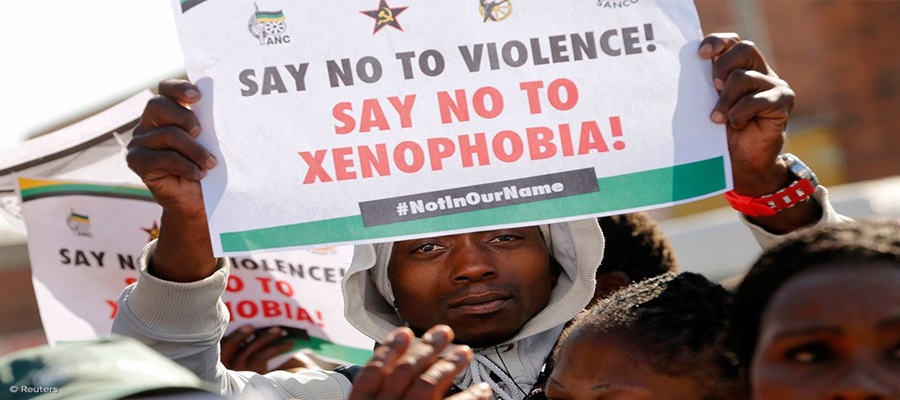
Anonymous Nigeria, hacktivism, known for launching coordinated cyberattacks and protests in support of socio-political movements, has threatened to leak stolen South African government data unless its demands were met.

The group, called for the department to stop xenophobic attacks on Nigerians in South Africa, or it will expose the data.
“They call themselves correctional services, but they can’t correct the citizens. What a shame,” the group said in its Telegram channel, MyBroadband reported.
“They killed a lot of Nigerians while the so-called correctional services watched and the ministry of justice.”
It is immediately know if Anonymous Nigeria is affiliated to Nullsec Nigeria.
But in a post on a hacker forum, Nullsec Nigeria included a link showcasing an example of data stolen from the department.
It included two bid invitation notices, bid results, a copy of the bids received, and a notice of a bid awarded in various formats.
“We’ll expose all your evil deeds for the world to see, unless this attack stops. But if not, we’ll leak everything they got,” Nullsec Nigeria said.
“Unless the government of South Africa ends these xenophobic attacks on Nigeria, we’ll expose everything about you, your evil deeds will be exposed, and the world shall know.”
MyBroadband asked the Department of Correctional Services about the claimed breach and Nullsec Nigeria’s demands, but it did not immediately respond to our questions.
Nullsec Nigeria also claimed responsibility for breaching several other entities in South Africa, while responding to an X post about its OpSouthAfrica campaign in its Telegram channel.
“I wanna express something here. I saw a report on the #OpSouthAfrica hack by Nullsec Nigeria, but it was stolen by another person,” it said. “Tag the real breachers next time.”
In a separate thread on the hacker forum, Nullsec Nigeria also claimed responsibility for breaching the Ephraim Mogale Local Municipality’s systems.
It claimed to have hacked the local government’s website and threatened to expose “everything you got for others to see how heartless you are. You killed mothers, brothers, students.”
Nullsec Nigeria said the breach and the threats were in response to the xenophobic attacks on and killing of Nigerians and the South African government’s supposed silence on the issue.
“These attacks are still going on in the dark, and we’ll expose them all. If the South African government doesn’t act first, the whole of South Africa will suffer,” it said.
“This is just a wave. These documents are about 11GB, but we decided to pull just this one.”
Its post included two images: one for a public hearing and another, a handwritten tender document for the appointment of an insurance service provider.
It also included a link to several other documents, including an old annual report, council resolutions, financial statements, and various other notices.
The Nigerian Government recently announced plans to bring citizens back to the country from South Africa after violent protests over foreign nationals in the country erupted earlier in May.
President Cyril Ramaphosa condemned the protests and criminal acts directed at foreign nationals in his From the Desk of The President weekly newsletter on 11 May 2026.
He emphasised the recent demonstrations and attacks did not represent the views of the South African people, nor the government’s policy.
“These are the acts of opportunists who are exploiting the legitimate grievances, particularly those of the poor, under the false guise of ‘community activism’,” The President said.
“Some of these people are assuming functions that only state officials are permitted to perform, including stopping people to check identification and conducting searches of private property.”
He added that such lawlessness would not be tolerated, regardless of who the perpetrators or victims were.

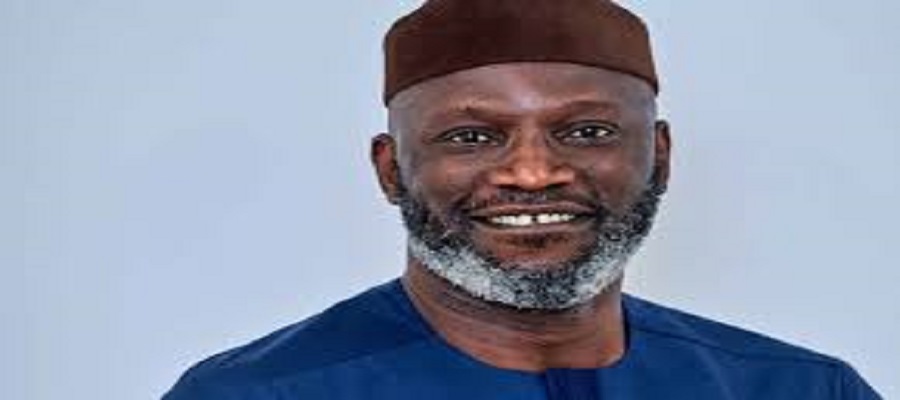
MTN Nigeria says it plans to pass fibre to eight million homes over the next three years as part of efforts to deepen broadband penetration and expand digital service offerings across the country.

Tobe Okigbo
Tobe Okigbo, Chief Corporate Services and Sustainability Officer, disclosed this at the MTN Media Innovation Programme (MIP) Alumni “Ask Me Anything” session held on Saturday.
Okigbo said the telecom company was making significant investments in home fibre infrastructure despite challenges such as regulatory approvals, physical deployment requirements and the long period needed to recover costs.
According to him, fibre broadband differs from mobile internet services because customers pay for connection speed rather than bandwidth consumption.
He said the investment formed part of MTN’s broader strategy to gradually shift customers from mobile-heavy internet usage to fixed broadband services for home connectivity.
Okigbo noted that the global telecommunications industry was evolving beyond traditional voice and data services, driven by advances in artificial intelligence, 5G, smart devices and internet-connected homes.
He warned that telecom operators that fail to adapt risk becoming mere providers of connectivity infrastructure while technology companies capture greater value from digital services.
“The future of telecoms is no longer just about expanding coverage. It is also about building services and platforms around network infrastructure to remain relevant and competitive,” he said.
On recent tariff increases, Okigbo said the adjustments were necessary to address rising operating costs, inflation and sector sustainability concerns.
He cited increased diesel prices and other operational expenses as major factors affecting the cost of delivering telecom services in Nigeria.
According to him, tariff pricing should increasingly reflect market realities and inflation trends, while allowing consumers to switch providers offering better value.
Speaking on service quality, Okigbo said MTN had compensated customers in cases of poor network performance and remained in discussions with regulators on accountability for service failures.
He explained that discussions were ongoing to distinguish between network issues caused directly by operators and those resulting from external factors such as vandalism, construction activities and infrastructure damage.
Okigbo said MTN supported compensating customers for genuine service lapses but sought clarity on regulatory parameters guiding such liabilities.
He added that fibre deployment remained more complex than mobile network expansion because it involved physical cable installation, local government approvals and detailed service planning.
On mobile money operations, Okigbo said MTN Group had acquired a 60 per cent stake in MoMo across its markets to strengthen competitiveness and improve customer experience.
He said the future of telecoms would also be shaped by embedded connectivity, smart homes, connected vehicles and broader Internet of Things adoption.

World Bank has restricted comments on its Instagram page after thousands of Nigerians flooded the platform begging them to stop lending money to Nigeria.

The protest erupted after reports that President Bola Ahmed Tinubu is seeking a fresh $1.25 billion dollar loan for approval on June 26.
Some Nigerians asked the World Bank to provide more details about the purpose of the loan and how the funds would be managed.
Others said the country should reduce dependence on foreign loans and focus on improving local revenue.
The federal government has continued to defend its borrowing plans.
Officials say the funds will support economic reforms, development projects and efforts to strengthen the economy.
Nigeria remains one of the major borrowers from the World Bank in Africa, with different administrations securing loans over the years for infrastructure, social programmes and economic support.

Xenophobic Attacks: Anonymous Nigeria Threatens to Leak South African Stolen Data

WHO Says Ebola Outbreak Worse than Reported

Chapel Hill Denham Says Banks Lose N2.5 Trillion Annually to High CRR in New Report

Lagos Sanctions 15 Money Lending Firms for Operational Violations

FirstBank, Visa Launch Multicurrency Signature, Naira Debit Cards

MTN, VDT, Zoracom, Digital Realty Back 2026 Girls in ICT Campaign

Vitel Wireless Partners Fintechs to Expand Access to Services

Kaspersky Discovers Vulnerability in Qualcomm Snapdragon Chips that can Lead to Data Loss & Device Compromise

Bank Customers to Pay N1,500 for ATM Card Issuance, Replacement – CBN

FCCPC Licenses 5 Firms for Airtime, Data Lending as Telcos Step Aside




 General News2 days ago
World Bank Blocks Social Media Comments from Nigerians over Loan Backlash

 Telecom2 days ago
NITDA, FMCIDE Deepen Collaboration on Nigeria’s Digital Transformation

 Telecom2 days ago
Nigerians Lose N12.5bBn to Telecom-Related Financial Crimes – PwC

 E-Business2 days ago
Jumia Nigeria Records Strong Q1 2026 Growth as Technology-Led Strategy Drives Market Expansion

 General News2 days ago
LG Electronics Strengthens Household Energy Efficiency in Nigeria with Advanced Inverter Refrigerator Solutions

 Telecom2 days ago
NITDA Showcases Nigeria’s Startup Framework as Model for Angola

 News2 days ago
Only 1 in 3 Families Fully Secure their Devices, Kaspersky Study Reveals

 Telecom2 days ago
Upperlink, ICANN, Others Rally Global Participation for UA Day 2026