

News
23 Years After, Obasanjo was Right on Zinox

By Ayodele Adigun
It was a weather-friendly Tuesday morning on October 9, 2001 at Eko Hotel and Suites in Lagos. History was made in Nigeria. Zinox, a wholly indigenous tech brand, was launched with many firsts and unique features. The brainchild of Forbes Best of Africa’s Tech Icon, Dr. Leo Stan Ekeh, it had the blessings of the then President Olusegun Obasanjo, an African statesman of peerless courage.

The event was attended by dignitaries from both the public and private sectors, diplomats and representatives of multinational computer brands.
The then Vice President Atiku Abubakar was Special Guest of Honour, while President of the Senate at that time, Rt. Hon. Anyim Pius Anyim, was Chairman of the occasion. Asiwaju Bola Ahmed Tinubu, then Governor of Lagos State, was chief host. Lagos was on lockdown literally, from the Island to the mainland as many governors, ministers, senators and members of the National Assembly, top corporate moguls, the leadership of the different labour unions, led by Adam Oshiomhole, then President of the Nigeria Labour Congress, were in attendance.
Beyond the razzmatazz of the colourful launch, Zinox more than justified the confidence Obasanjo reposed in Ekeh and the brand. It did not just transform into a formidable African brand, it scored many firsts, a salute to the legendary innovative entrepreneurial skill of Ekeh and his team and a testament to the outstanding leadership clairvoyance of Obasanjo. It is safe to say that in Zinox, Obasanjo saw the future.
After the launch, Obasanjo invited the management to Aso Rock and endorsed the Zinox brand as a national pride. It was no surprise that Obasanjo branded Ekeh: “Icon of Hope,” on October 1, 2002, as a role model to future Nigerian digital entrepreneurs, a fitting cap for an exemplar of the true Nigerian spirit of chutzpah, excellence, innovation, humility and integrity.
True, President Obasanjo achieved a lot in the ICT ecosystem from the introduction of the GSM genre of telephony via one of the most transparent mobile digital auctions administered by Dr. Ernest Ndukwe, to the creation of several indigenous computer assembly plants. But it was obvious that Zinox brand and its promoter, Ekeh, occupied a huge space in the President’s heart. Obasanjo boldly flaunted the Zinox brand, travelling the world with it, not just as a user but as a national brand and pride and was never shy to show it to other world leaders that Nigerians can also produce computers.
In one of his books, Obasanjo is a prolific writer, it has to be said, he celebrated Ekeh as a model for Nigerian youths. He topped the presidential adulation for Ekeh with the Officer of the Order of the Federal Republic, one of the high-ranking honours of the Federal Republic of Nigeria. Obasanjo never hid his admiration for Ekeh or his pride in his accomplishments as an indigenous player with global clout. On one occasion when President Obasanjo was hosting the nation’s captains of industry at State House, he singled out Ekeh and openly prayed for him, showering him with presidential blessings and publicly affirming his positive impact on Nigerian youths as a man who is living the Nigerian dream with hard work.
On account of the reliability of the Zinox brand and Obasanjo’s matchless sense of patriotism, he directed all Ministries, Departments and Agencies (MDAs) to standardise on Zinox and equivalent indigenous brands. This gave a spur to the growth of the Zinox brand and it became the preferred brand in the industry among public and private sector officials.
Zinox at 23 is beyond a celebration of an African brand. It is a celebration of uniqueness, doggedness, resilience and entrepreneurial majesty of an African who dared the digital nerds of the advanced economies and succeeded in creating digital mills in and across Africa. But more significantly, Ekeh singlehandedly turned global attention to Nigeria.
And just by Ekeh’s stroke of genius, Zinox scored many firsts. The first internationally certified indigenous computer brand in West Africa and the first computer brand in the world to incorporate the Naira sign (N) on its keyboard. First Original Equipment Manufacturer in sub-Saharan Africa to receive Microsoft Windows Hardware Quality Lab Certification; first Microsoft Prime Production Online Automation Partner in Sub-Saharan Africa with the OA Version 3.0; first Intel Premium Partner; first OEM in West Africa to attain the ISO 9001-2015 Certification; first to acquire the Google Mobile Application Distribution Agreement in West Africa; first OEM in Nigeria to introduce renewable energy and lifestyle products and attaining the status of Intel Platinum Partner in sub-Saharan Africa.
In 23 years, Zinox has become one of a kind, unique in name, quality, global competitiveness and readiness for the market. The high-profile stature of its launch said it all. Zinox is truly like no other indigenous brand.
Atiku, a retired Customs Officer, widely travelled businessman and nationalist, underscored the seriousness of the Zinox brand at the launch. He said: “I have been in both public and private sector. I have travelled widely and have witnessed the launch of products and services across the world but nowhere in the world have I seen a product launch of this magnitude and type. Zinox has just made a huge marketing statement out of Nigeria that would be heard in the rest of Africa and around the globe.”
Atiku gushed as he addressed the enraptured and sufficiently excited audience. An elated Atiku spoke glowingly about the Zinox project, describing it as a perfect example of backward integration which sits well with the Federal Government policy of looking inward to boost the nation’s primary sector. He saluted Ekeh and his team for their ingenuity and tech-savvy showmanship.
An excited Oshiomhole, who launched the “Computerise Nigeria Project”, a social project at the event by Zinox meant to democratise the ownership of computers to the unreached and under-reached, described Ekeh as a “digital militant”.
A good 23 years after, Atiku deserves to be called a master of clairvoyance. As he predicted 23 years ago, Zinox’s influence has spread across Africa and beyond.
The public presentation of Zinox range of products was beyond a product launch. It was a loud statement on the sovereignty of Nigeria. In the 21st century, no nation is truly sovereign without her home-grown tech identity and sufficiency. Ekeh sings this as his abiding song: the need to create a truly Nigerian IT identity.
Ekeh is a serial digital disruptor, an incurable challenger of status quo. And Zinox is a product of both personal determination and patriotism. It was born to break protocol and discard stereotype. It answered the question: Can anything good come out of Nigeria?
Ekeh says with a sense of national pride and self-satisfaction: “We showed that in Nigeria, it’s possible to create technology that is smart, competitive and stands shoulder to shoulder with any of its kind across the globe. We went a step further in domesticating the technology behind Zinox. We conceptualised and built into the systems stabilizers and surge protectors to take care of our peculiar challenges of irregular electricity supply and the problems associated with switching from Alternating Current (AC – national grid) to Direct Current (DC-generators). What gives me joy above monetary reward is that today when our children hear about Zinox, they have a sense of self-belief because they have been to our plant and they now know there’s nothing so special about the computer and the technology behind it.”
So far, Zinox has proven both competence and capacity at home and other parts of Africa. It was the preferred technology that powered several mega projects including the 8th All Africa Games codenamed COJA 2003; the 18th Commonwealth Heads of Government Meeting held in Nigeria in 2003; All-Africa University Games held in Bauchi in 2004; and 7th Ordinary Session of the Assembly of the Africa Union held in The Gambia in 2006. It has also undertaken critical interventions by transforming the Nigeria and Guinea Bissau electoral systems from analogue to digital. The conduct of Nigeria general elections in 2007 and 2011 is a good example. Zinox has also fully provided the technology for the postponed national census.
A quintessential family man, Ekeh has stayed deep-rooted in the ICT space. His wife, Lady Chioma Ekeh, a mathematician and chartered accountant, oversees the biggest tech distribution company in sub-Sahara Africa, TD Africa. His first son, Prince Nnamdi Ekeh, aka The Prince of Konga, with MBA from Oxford, leads Konga, the ecommerce giant, which he acquired through his company, Yudala, in one of the most ambitious and seamless acquisitions in Africa’s tech history.
His first daughter, Gozy Ajogun, nee Ekeh, an alumnus of London School of Economics, oversees Task Systems, an ICT solutions firm under the Zinox Group. T second daughter, Chidalu Ekeh, with Masters in Digital Marketing from Imperial College, London, is a Fintech whiz, while his other two younger sons also play in the tech space.
Ekeh has built a digital family rooted in ICT. He has added digital value to Africa, but the best of them all is the gift of Zinox, for which the nation is grateful.
. Adigun, an Associate Professor of Mechatronics, writes from Lagos.



A Federal High Court, Lagos has declared Mrs. Ebele Okpala, a female banker with Keystone Bank, wanted over alleged N35 million fraud.

Apart from declaring the banker who is said to be outside the country wanted, Justice deinde Dipeolu, trial judge in the matter, also directed the Department of State Security (DSS), Nigerian Immigration Service (NIS), and Nigeria Customs Service (NCS), to arrest her upon arriving the country.
Justice Dipeolu made the above order while granting a motion ex-parte marked FHC/L/530C/2024, filed and moved by M. Bello, on behalf of the Nigeria Police.
In the motion, Ebele Okpala and one Perpetual Onyeto, also a banker were listed as first and second defendants/respondents in the suit, while DSS, NIS and NCS were listed as cited parties/respondents.
In urging the court to make the above orders, Bello, informed the court that the application was pursuant to several sections of the Administration of Criminal Justice Act (ACJA) 2015, and under the court’s inherent jurisdiction. Adding that the application was supported by an affidavit deposed to by Inspector Tope Akerele of the Force Criminal Investigation Department (FCID), Special Fraud Unit (SFU), Ikoyi, Lagos.
In granting the application, Justice Dipeolu held, “After considering the application and the supporting affidavit, the request had merit and granted all the reliefs sought by the prosecution.
“That an order is hereby made that the 1st defendant/despondent be declared wanted and placed on the wanted list of the Nigeria Police Special Fraud Unit, 13, Milverton Road, Ikoyi, Lagos until she is arrested.
“That an order is hereby made compelling cited parties/respondents to assist in apprehending 1st defendant/Respondent once he enters into the country.
“That an order is hereby made permitting the Publication of the name of the 1st defendant/despondent in the National Daily Newspapers and Social Media handles by the Nigeria Police Special Fraud Unity Ikoyi, Lagos for the purpose of fulfilling the requirement of the Order 1 above.”
Recall that both the wanted banker and the second defendant/respondent were previously arraigned before the court by the operatives of the police Special Fraud Unit, PSFU.
Specifically, the two bankers were arraigned before the court sometimes in September 2024, on alleged conspiracy, theft, money laundering, fraudulent lift of lien placed on bank’s customer’s account and obtaining the sum of N35 million by false presence.


The United Kingdom has announced expanded collaboration with Nigeria to accelerate the country’s digital economy through a package of initiatives delivered under the UK’s Digital Access Programme.

At the heart of this partnership is the State-level Policy, Regulatory and Institutional Reforms Enabling Digital Transformation (SPRIRET) initiative which was announced during the June visit of the UK Minister for Africa and International Development, Baroness Chapman MP.
The SPRIRET Project is designed to support reforms across five states: Abia, Edo, Ekiti, Enugu and Niger, and to reduce regulatory barriers and unlock greater investment and innovation in broadband, digital services, and emerging technologies. The UK will look to support more states in future iterations of the project.
SPRIRET will work with Initiative for Digital Inclusion to strengthen state-level policies, governance systems, digital infrastructure and human capacity to improve service delivery, increase transparency, and expand citizen access and participation in the digital economy.
The project is designed as a scalable model for nationwide replication, enabling states to generate new economic opportunities and support inclusive digital transformation at scale.
British Deputy High Commissioner, Mr. Jonny Baxter said: “The UK is proud to partner with Nigeria to drive an inclusive and innovative digital economy. Through initiatives like SPRIRET, we are supporting practical reforms that will unlock investment, strengthen institutions, and expand digital access, creating opportunities for businesses and citizens alike. This partnership reflects our shared ambition to harness technology for sustainable growth.”
Prof. Chidiebere Onyia, Secretary to the State Government, Enugu State said: “We wish to express our sincere appreciation to the British Deputy High Commission and the Foreign, Commonwealth and Development Office (FCDO) for the sustained interest in Enugu State’s development agenda and for the initiative in co-designing the SPRIRET project in response to the State’s priorities.
“We are satisfied that the SPRIRET project addresses a critical gap at the level of policy, regulatory, and institutional reform – areas that are foundational to giving lasting direction and effectiveness to all current and future digital investments in the State. We look forward to a productive and impactful partnership that will significantly advance Enugu State’s vision of an inclusive digital economy.”
Alongside SPRIRET, the UK is supporting targeted interventions to strengthen Nigeria’s wider digital ecosystem. A Technical Assistance Facility will enhance the performance of the Universal Service Provision Fund, improving its systems, institutional capacity and delivery to ensure more inclusive and sustainable digital access outcomes.
In parallel, the Safeguarding Trust, Digital Rights, Inclusion and Data Ethics (STRIDE Nigeria) Project will promote responsible data governance by raising awareness of rights under the Nigeria Data Protection Act, strengthening institutional compliance, and building a pipeline of skilled professionals.
Through a nationwide “Own Your Data” campaign and targeted fellowships, the initiative will equip citizens and businesses with the knowledge and tools to participate safely and confidently in the digital economy.
Together, these initiatives demonstrate the UK’s continued commitment to supporting Nigeria in building a more inclusive, secure and dynamic digital economy – unlocking growth, strengthening institutions, and empowering citizens.
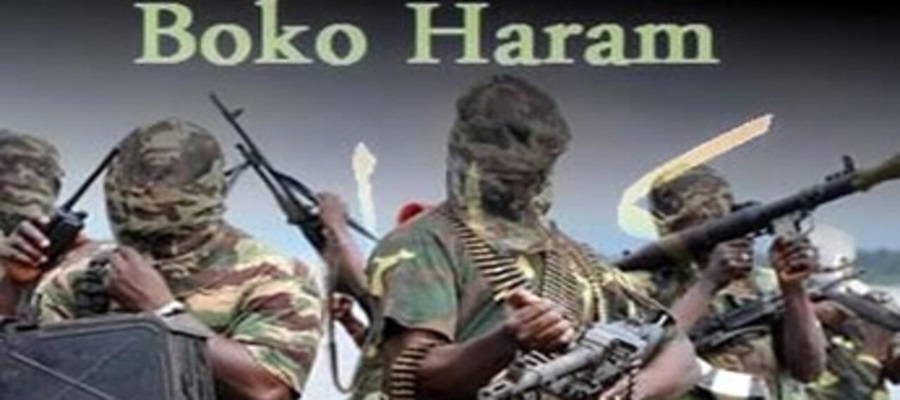
Nigerian Army has warned that terrorist and criminal groups were increasingly exploiting cyberspace to recruit members, raise funds, coordinate attacks and spread propaganda, describing the trend as a growing threat to Nigeria’s national security.

Lt.-Gen. Waidi Shaibu, chief of Army Staff (COAS), raised the alarm on Tuesday at the 2026 Nigerian Army Cyber Warfare School Seminar in Abuja.
Represented by Maj.-Gen. Jeremiah Manjang, deputy chief of Special Services and Programmes, the Army Chief said cyberspace has evolved into a strategic battlefield where both state and non-state actors operate with unprecedented speed, making security threats more complex and difficult to counter.
He noted that hostile actors no longer require physical presence to disrupt critical infrastructure, compromise sensitive information, manipulate public opinion or undermine national security through anonymous cyber attacks.
According to him, terrorism, insurgency, banditry, kidnapping, separatist agitations, organised crime, misinformation and disinformation are increasingly being enabled, coordinated and amplified through digital platforms and cyber networks.
“The reality is that terrorist and criminal groups now exploit cyberspace for recruitment, propaganda, fundraising, intelligence gathering, attack coordination and concealment of illicit financial transactions. This demands a proactive and coordinated national response,” he said.
Shaibu said the changing nature of security threats had compelled the Nigerian Army to strengthen its cyber capabilities to effectively address complex, asymmetric and technology-driven challenges.
He called for stronger cyber intelligence capabilities driven by artificial intelligence (AI), machine learning and advanced data analytics to improve early warning systems, threat detection and predictive security analysis.
The COAS also advocated deeper collaboration among government institutions, the military, law enforcement agencies, academia and the private sector, stressing that cybersecurity can no longer be handled by a single institution.
He emphasised the need for sustained investment in indigenous cyber capabilities, research, technological innovation and human capacity development to protect Nigeria’s digital sovereignty and enhance national resilience against emerging threats.
Shaibu further stated that integrating cyber capabilities into conventional military operations would strengthen surveillance, intelligence gathering, geospatial analysis, command-and-control systems, situational awareness and overall operational effectiveness.
Earlier, Brig.-Gen. Jacob Bawa, commandant of the Nigerian Army Cyber Warfare School, said the seminar was organised to deepen cybersecurity awareness, strengthen cyber resilience and promote collaboration among security stakeholders.
Bawa noted that Nigeria’s increasing reliance on digital technologies has exposed critical infrastructure, including telecommunications, power systems, financial institutions and government databases, to cybercriminals, terrorists and hostile state actors.
He said the Cyber Warfare School was established as a centre of excellence for cyber warfare training, education and research.
According to him, participants at the seminar would examine cyber resilience, threat intelligence, incident response, cyber warfare and emerging technologies with a view to developing practical recommendations for strengthening Nigeria’s cybersecurity architecture.
Also speaking, Abdulhakeem Ajijola, cybersecurity expert, warned that national security now depends significantly on the protection of digital systems, noting that artificial intelligence is transforming military operations, command structures and the protection of critical infrastructure.
Ajijola urged Nigeria to develop sovereign cyber capabilities, warning that excessive dependence on foreign-controlled software, platforms and artificial intelligence systems could undermine national resilience, operational continuity and independent decision-making during periods of crisis.
He stressed that while technology should be deployed to strengthen national sovereignty, responsibility for operational decisions must remain with human commanders.

Court Declares Keystone Bank Staff Wanted over Alleged N35m Fraud

IMF Raises Concerns over N8.83 Trillion Unreported Spending in Nigeria’s Budgets

NOTAP to Commercialise University Research, Expands Patent Drive

FG Unveils Digital Postcode System for MDAs

BoI, NBCC Sign MoU to Deepen Bilateral Trade, Industrial Growth and Investment

Mobile Internet Gender Gap Widest in Africa – GSMA

London Strengthens Global Investment Ties with Africa @ First Ever London-Africa Business Summit

FG Targets Alleged N3tn Capital Flight, Opens Airtime Credit Market to Nigerian Fintechs

Japan, UNESCO Boost Digital Learning in 15 CoEs with Donation of ICT Equipment

Nigeria Launches FreeTV Nationwide




 News3 days ago
Verve Strengthens Global Acceptance Across Leading Digital Platforms

 News3 days ago
Army Says Terrorists Now Recruiting, Raising Funds Online

 Telecom3 days ago
Lebara Nigeria Becomes Member of GSMA Network

 Telecom2 days ago
MTN Foundation, Microsoft Empower Nigerian Educators with AI Integration Skills

 E-Business3 days ago
Kaspersky Warns of The Gentlemen Ransomware Group Expanding Operations with New Malware

 Telecom3 days ago
Airtel Nigeria Deepens Focus on Data Usage Transparency @ Customer Forum

 Telecom3 days ago
Vitel Wireless Warns Public, Says it Not Running any Investment Scheme

 E-Financial3 days ago
Bank of Industry Appoints Kuramo Capital as Manager of Dice Fund of Funds