

News
AfriTECH 4.0 Unveils QNET, Galaxy Backbone, Digital Realty, Hyperspace, Other Sponsors Driving Africa’s Digital Future

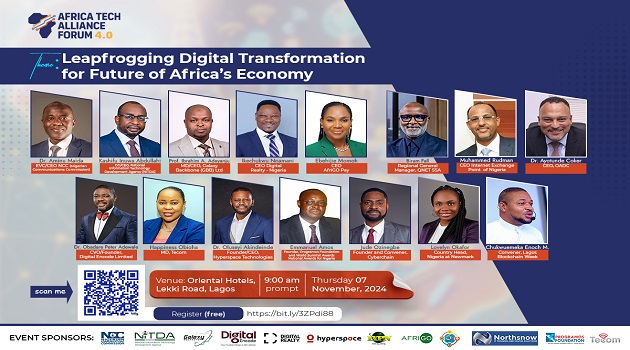
The organizers of AfriTECH 4.0 are thrilled to announce the official sponsors of this year’s event, showcasing a lineup of renowned organizations committed to advancing Africa’s digital transformation, with QNET emerging as Gold Sponsors.

Set to take place at Oriential Hotels, Lekki Road, Lagos, Nigeria, on Thursday November-07-2024, AfriTECH 4.0 is Africa’s premier technology and innovation conference, uniting industry leaders, innovators, policymakers, and tech enthusiasts from across the continent.
The theme for AfriTECH 4.0, “Leapfrogging Digital Transformation for Future of Africa’s Economy,” reflects the urgent need to harness technology for sustainable development across the region.
This year’s sponsors include major players in ecommerce (Direct Selling), telecommunications, artificial intelligence/blockchain technology, finance/digital assets, and cybersecurity, each recognized for their contributions to shaping Africa’s digital economy.
Official Sponsors of AfriTECH 4.0:
QNET – GOLD SPONSOR
QNET is a prominent lifestyle and wellness company that uses a direct selling business model to offer a wide selection of exclusive products that enable individuals to embrace a healthier, more balanced life.
Since 1998, QNET’s innovative products and e-commerce-driven business model have helped build a global community of satisfied customers and microentrepreneurs, who are driven by the mission of RYTHM – Raise Yourself To Help Mankind. Popular product brands offered by QNET include the Bernhard H. Mayer range of luxury watches and jewellery, HomePure range of home care products, the Amezcua wellness range, Physio Radiance personal care range, and QVI branded holiday packages.
QNET proudly holds memberships in the Direct Selling Association in several countries, the Hong Kong Health Food Association, the Health Supplements Industry Association of Singapore, and more.
QNET is also active in several global sports sponsorships including in its role as the official direct selling partner of the Manchester City Football Club and the Confederation of African Football (CAF), underscoring its commitment to excellence and global reach. Discover a world of new possibilities with QNET by visiting www.qnet.net.
Galaxy Backbone
Galaxy Backbone was established by the Federal Government of Nigeria to operate a nationwide IP-based network that will provide a common platform for connectivity and other infrastructure services for all Government Ministries, Departments and Agencies (MDAs).
Galaxy Backbone currently owns and operates a 1482Km optical fibre backbone from Abuja across 13 states of the federation, with 19 more states coming. They also own and operate a 375km metro optical fibre network covering Abuja and other parts of the FCT.
As one of the telecommunications services provider in Africa, Galaxy Backbone’s sponsorship underlines the importance of robust connectivity infrastructure in driving digital transformation. GBB will showcase its innovative services and network solutions designed to empower businesses and individuals across Africa.
Digital Realty (Nigeria)
Digital Realty Nigeria is a data center operator that offers colocation, interconnection, and data center solutions. As part of Digital Realty, a global data center provider with over 300 facilities in more than 25 countries, Digital Realty Nigeria offers secure and scalable infrastructure, access to undersea cables, and carriers to connect to Europe and the Mediterranean.
Digital Realty Nigeria has a data center in Lagos, Nigeria, called LOS1, located at 8A Saka Tinubu Street, Victoria Island. Digital Realty Nigeria also has a data center in the Lekki area of Lagos, and plans for a fourth campus in the Ikeja area.
Hyperspace Technologies
Hyperspace Technologies is a Lagos-based web3 startup that offers web solutions, including websites, web applications, branding, marketing, and hosting. The company also has a focus on security, with a patented product called cipherKEY tap2sign MFA that uses blockchain, public/private key cryptography, and NFC (Near Field Communication) technology to protect against identity theft, phishing, and social engineering.
Open Access Data Centres (OADC)
With the development of Africa’s digital economy a significant driving force for the continent’s economic growth, the launch of Open Access Data Centres (OADC) represents a major milestone for Africa: a US$500 million-plus, multi-year investment programme that will strengthen key elements of the continent’s digital infrastructure.
OADC has made a significant impact on the market in terms of its rapid speed in building a network of data centres and flexible client solutions. Learn more about OADC at AfriTECh 4.0.
Honourable Mentions: Several other sponsors, including leading tech startups and industry associations, are contributing to the success of AfriTECH 4.0, ensuring the event delivers on its promise to be a dynamic platform for networking, collaboration, and thought leadership.
They include, Digital Encode Limited, Tecom, Northsnow, Internet Exchange Point of Nigeria (IXPN), AfriGoPay Financial Services Limited, Cyberchain, Lagos Blockchain Week, InnovationBed Africa, amongst others.
AfriTECH 4.0 will feature keynote speeches, interactive panel discussions, workshops, and exhibitions, focusing on emerging technologies like artificial intelligence (AI), blockchain, fintech, cybersecurity, and digital infrastructure. This year’s sponsors will take center stage to share their insights and offer practical solutions to the challenges facing Africa’s digital economy.
Speaking on the sponsorships, Chike Onwuegbuchi, co-convener, and AfriTECH 4.0 Organizing Committee Chairman, said:
“We are excited to have such a strong group of sponsors onboard for AfriTECH 4.0. These organizations are not only leaders in their respective fields but also catalysts for change in Africa’s digital ecosystem. Their support underscores the importance of collaboration in shaping Africa’s digital future.”
AfriTECH 4.0 is expected to draw hundreds of attendees, including government representatives, business executives, technology experts, and innovators from across the continent and beyond. With the support of its sponsors, AfriTECH 4.0 is set to be a landmark event, driving conversations and initiatives that will propel Africa’s digital economy to new heights.
For more information about AfriTECH 4.0, including sponsorship opportunities, visit the website: https://africatechallianceforum.africa/.
Participation is free, but you are required to register via the link here: https://bit.ly/3ZPdi88.


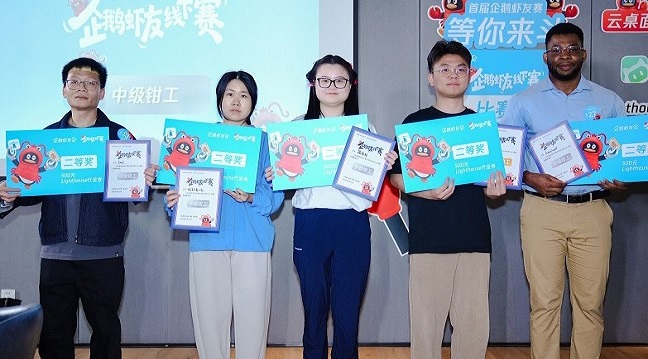
In a striking moment of global recognition for African talent in artificial intelligence, Shenzhen-based Nigerian technologist, Francis Okafor has emerged as the second-place winner at the 2026 Tencent OpenClaw Hackathon, a fiercely contested competition hosted by Chinese tech giant Tencent.

The achievement places the Nigerian engineer among the top innovators in one of the world’s most competitive technology hubs, Shenzhen, often described as China’s Silicon Valley.
Okafor’s journey to the podium was anything but scripted. Walking into Tencent’s facility on the day of the contest, he found a room already buzzing with elite programmers deep in preparation.
“Laptops open. Heads down. Some people setting up their system before the challenges even dropped,” he recalled, contrasting the scene with his own uncertainty at that moment. “And then there is me — a Nigerian looking around like, okay Francis, what exactly are you doing here?”
Rather than confidence, his first reaction was raw nerves. “I won’t lie, I had goose bumps. Not the inspirational kind,” he admitted, describing a quiet internal debate about whether he had wandered into territory far beyond his league. Yet that hesitation quickly gave way to experimentation, a hallmark of the hackathon spirit.
Earlier that same week, Tencent had rolled out OpenClaw integration into WeChat (known domestically as Weixin), exposing its massive user base to AI agent capabilities.
Okafor, a senior technology lead, artificial intelligence advocate, and global community organiser, had already been stress-testing the system and decided, on the spot, to build his entry around it. “I had been pushing it hard all week just to see what it could do… so when the challenges dropped I thought, you know what, let me use this thing as my weapon.”
That decision proved decisive. Competing against some of the most accomplished engineers in China’s hyper-competitive tech ecosystem, Okafor’s solution stood out for both ingenuity and execution. “It went far enough apparently,” he said with understated pride after securing second place.
Remarkably, he had entered without a grand plan. “I didn’t go in with a strategy. I went in for the thrill of it… Honestly I thought I would learn a few things and go home with a good story.” Instead, he left with a trophy, and a narrative that has resonated far beyond the competition hall.
Beyond personal triumph, Okafor emphasized the broader technological significance of the moment. Tencent released the WeChat OpenClaw plugin on the very morning of the event, effectively putting advanced AI agent tools into the hands of an estimated 1.4 billion users.
In his view, this signals a profound shift in how artificial intelligence will reach the public. The company, he observed, is “not just making AI accessible to developers… they are bridging it to everyone,” while using hackathons to identify innovators capable of pushing the technology forward, regardless of origin.
Okafor was acutely aware of his uniqueness in the room. “I was definitely the only African there and for sure stood out,” he noted. Yet what mattered was not nationality but capability. “Nobody cared about where I was from. They cared about what I built.”
His message to aspiring technologists, particularly those from underrepresented regions, is both simple and powerful: show up. “Enter things you think you have no business entering,” he urged. “The worst case is you learn something. The best case is you shock yourself.”
In an industry often defined by geography, capital, and institutional advantage, Okafor’s victory offers a compelling counter-narrative. Talent, preparation, and courage can still disrupt expectations, even in rooms that seem designed for someone else.
As he concluded in a line that has since captured widespread attention: Black excellence, he said, “doesn’t need a geography.”


Economic and Financial Crimes Commission (EFCC) has urged the Central Bank of Nigeria (CBN) to deepen collaboration and provide faster operational support in Enugu State.

Zonal Director of the EFCC Enugu Zonal Directorate, Commander Daniel Isei, made the call during a courtesy visit to the CBN Branch Controller in Enugu, Mr Otutubuike Justice Agbaeze, on Tuesday.
The engagement forms part of ongoing efforts to boost inter-agency ties, enhance financial sector accountability, and fortify anti-money laundering initiatives nationwide.
Isei described the CBN as “our most critical partner in the fight against economic and financial crimes,” highlighting years of joint operations and the bank’s role in securing recovered assets.
“The CBN naturally stands out as one of our most critical partners… it serves as a secure repository for valuables recovered by the EFCC and it has greatly enhanced our operations,” he stated.
While commending past cooperation, Isei appealed for quicker responses to the EFCC’s frequent investigative requests from its Enugu office.
“We understand that these requests may be demanding, but timely responses are crucial, as time is of the essence in financial investigations. We therefore seek your continued indulgence in ensuring that our letters receive expeditious attention,” he added.
In response, Agbaeze reaffirmed CBN’s dedication to the partnership, pledging expert support and improved synergy “in the interest of financial system stability and national development.”

As smart devices with artificial intelligence (AI) tools, and always-on services become part of everyday life, the cybersecurity habits many people formed a few years ago may no longer be enough.

From AI-powered scams to social media trends that encourage users to upload personal details, the way people interact online is changing quickly. Ensuring that you stay secure now requires small, deliberate actions in your daily digital behaviour. Experts from Kaspersky, a global cybersecurity and digital privacy company, share the below advice to stay safe online.
- Be cautious with verification requests. Many scams now mimic legitimate verification processes, asking users to confirm accounts, update payment details, or approve login attempts. Because people are used to frequent security prompts, it is easy to respond automatically. Pause before sharing verification codes or personal information and independently verify requests through official websites or by contacting service providers directly.
- Cultivate healthy AI usage habits. AI agents, chatbots and multimedia-generating apps can be convenient and entertaining, but uploading high-resolution photos or personal information carries privacy implications. Facial images can function as biometric identifiers, and once shared with an online service, be it AI or a social network, control over how that data is stored or reused may be limited. Before using AI tools, review privacy policies, minimise the personal information they provide, and avoid uploading sensitive documents or confidential content.
- Do your homework on AI. For parents, the rise of AI assistants introduces another dimension. While AI tools can help in making education interactive and gamified, children may turn to AI tools for homework support or entertainment without fully understanding how their data is used or how to evaluate responses critically.
Open conversations about responsible AI use, privacy awareness, and the importance of not oversharing personal information can help children build safe digital habits from an early age.
- Audit your online subscriptions. Reducing digital exposure is another simple but often overlooked step. Over time, unused subscriptions, dormant accounts, and forgotten apps accumulate personal data and payment details. Regularly reviewing subscriptions, deleting unused accounts, and checking which apps have access to personal information can significantly reduce risks of this data being leaked.
- Secure your devices and home. Device longevity and smart home security also play an important role. Older devices that no longer receive security updates may contain unpatched vulnerabilities.
Ensure that smartphones, laptops, routers, and smart home devices are running the latest firmware and are protected with strong passwords and multi-factor authentication. Changing default passwords on connected devices and securing home Wi-Fi networks are essential steps in protecting both personal data and physical spaces.
As technology and AI becomes more integrated into daily life, security is less about dramatic measures and more about consistent, informed habits.
“Technology evolves quickly, and our online behaviour should keep pace,” says Brandon Muller, Technical Expert for the Middle East and Africa region at Kaspersky. “Take time to review privacy settings, app permissions, and connected third-party services, removing anything that is no longer needed. By being more deliberate about what we share, how we verify requests, and how we manage our devices, we can significantly reduce exposure to modern cyber risks while enjoying all the benefits of new technologies.”

NCC to Curb SIM Fraud, Strengthen Digital Security with New Platform

NBC Boss Urges Content Ceators to Participate in DSO

Kidnappers Now Use Banks to Collect Ransoms — Expert

CBN Says Bank Customers Won’t Lose Deposits because of Recapitalisation

Jury Finds Meta, Google Liable for Woman’s Social Media Addiction

Kaspersky Discovers New Phishing Campaign Exploiting Google Tasks Notifications to Steal Corporate Credentials

esentry 2025 Report Shows Healthcare, Financial Services and Telecoms as Staging Grounds for Increased Cyberattacks in Africa

Spotify’s Loud & Clear Report Reveals Over ₦60Bn Revenue for Nigerian Artists in 2025

MTN Nigeria Posts Record N1.70 Trillion Pre‑Tax Profit, Declares N20 Dividend for 2025

China Threatens to Shut Nigeria’s Satellite Over $11.44m Unpaid Debt




 E-Financial2 days ago
CBN Directs IMTOs to Open Naira Settlement Accounts

 Telecom2 days ago
Nigerians Lose N12.5Bn to AI-Driven Scams- PwC

 General News2 days ago
Court Remands Hacker for Allegedly Stealing N3.09Bn from FCMB

 Telecom2 days ago
Airtel Africa, Starlink Mobile Data and Messaging Testing Take off in Kenya

 E-Financial2 days ago
DLM Capital Group’s AAA-Rated Sovereign Bond-Backed Composite Notes (“SBCNS”) Strengthens Investor Confidence with Successful First Principal & Interest Payment

 E-Business2 days ago
AU Sees AI Adoption Evolving to Boost Economic Growth in Africa

 Telecom2 days ago
GATEWAY Programme Opens Doors for 340,000 Nigerian Youths to Tap into $1.85trn Global Gig Economy

 News2 days ago
Kaspersky, AFRIPOL Conduct Joint Cybersecurity Training for African law Enforcement