

E-Financial
PalmPay Reaffirms Commitment to Ensuring a Safe Financial Ecosystem @ Anti-Fraud Walk

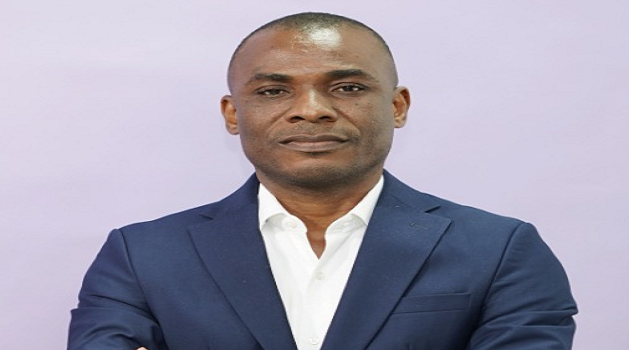
As part of the commemoration of 2024 International Fraud Awareness Week, PalmPay over the weekend organized anti-fraud walk in Ikeja area of Lagos aimed at educating Nigerians on the need to secure their personal transactions information against fraudsters.

Mr. Chika Nwosu, managing director, PalmPay speaking at the event expressed PalmPay’s commitment to ensuring a safe financial ecosystem as events like this are central to that mission.
“This global initiative underscores a pressing issue that touches individuals, businesses, and economies alike—fraud. This week serves not only as a reminder of the pervasive risks posed by fraud but also as a call to action to combat it through education, awareness, and collaboration.
“Fraud is more than just a crime, it is a systemic threat that undermines trust, compromises security, and disrupts progress. Its effects are far-reaching, impacting personal livelihoods and the integrity of businesses.
“As digital payment platforms rapidly expand across Nigeria, fraudsters have unfortunately seized the opportunity to exploit vulnerabilities in the system. Mobile, web, and POS channels are now prime targets for criminal activities. Recent statistics from the Financial Institutions Training Centre (FITC) reveal that over 11,500 fraud cases were reported in Q2 2024—a stark reminder of the growing sophistication and persistence of these threats. These figures are more than numbers; they represent real people whose trust has been broken and whose finances have been compromised.
“Fraud prevention is a collective effort. Individuals, businesses, and governments must work together to build a robust defense against this menace.
“On the people side, we need to educate people on the need to safe guard their PIN because when you compromise your PIN if fraud happens from that end it will not be our fault. It is better we educate people to be aware so that they don’t compromise their PIN or password.
“At PalmPay, we recognize that combating fraud begins with awareness. That is why we have taken a proactive approach to ensure that our users and the broader community are equipped with the knowledge and tools they need to stay protected.
“Our campaign this week focuses on empowering individuals to safeguard their digital identities, spot fraudulent schemes, and take swift action when they encounter suspicious activities,” he stated.
He highlighted some of the key lessons for fraud prevention to include:
- Stay Informed: Regularly update yourself on emerging fraud tactics and the steps to counter them.
- Protect Your Information: Safeguard personal and financial details, using strong passwords and secure platforms.
- Verify and Report: Always verify requests for sensitive information and report suspicious activities promptly.
- Educate Others: Share what you’ve learned with family, friends, and colleagues, creating a ripple effect of awareness.
At PalmPay, we are deeply committed to leading the fight against fraud. This commitment extends beyond our platforms and services. It is reflected in our efforts to collaborate with industry stakeholders, engage with communities, and invest in cutting-edge security technologies.



Nigeria Revenue Service (NRS), in collaboration with the Joint Revenue Board (JRB), has announced the implementation of a nationwide Taxpayer Identification (Tax ID) system, mandating all taxable persons in the country to obtain a unified tax identity.

The directive, unveiled in a public notice issued on Monday, is anchored in sections 6, 7, and 8 of the Nigeria Tax Administration Act, 2025.
The provisions require every individual and entity liable to tax in Nigeria to register for a Tax ID as part of broader reforms aimed at strengthening tax administration.
According to the notice, the Tax ID will function as a single, consolidated identifier for taxpayers, enabling seamless interaction with tax authorities across federal, state, and local levels.
The authorities said the system is designed to eliminate duplication of records, improve data integrity, and enhance the overall efficiency of tax-related processes.
The initiative forms part of ongoing efforts by regulators to deepen transparency, boost compliance, and curb revenue leakages within the tax ecosystem.
By harmonising taxpayer data across all tiers of government, officials expect improved accountability and more accurate tracking of tax obligations.
Under the new framework, the Tax ID will replace the existing Taxpayer Identification Number (TIN) validation system currently in use. Ministries, Departments and Agencies (MDAs), financial institutions, and other organisations relying on the TIN Validation API have been directed to transition to the new Tax ID infrastructure.
The NRS and JRB also advised organisations requiring system integration or validation services to engage with designated departments within both agencies for access to the Tax ID Application Programming Interface (API) and related technical guidelines.
Authorities say the reform will simplify registration, filing, and payment processes for taxpayers, while providing the government with a more robust mechanism for revenue assurance and fiscal planning.
The rollout signals a significant step in Nigeria’s ongoing tax modernisation agenda, as policymakers seek to expand the tax base and improve non-oil revenue mobilisation amid evolving economic pressures.

Securities and Exchange Commission (SEC) has approved the transition to the T+1 settlement cycle for capital market transactions from June 1, 2026.

T+1 settlement is a financial rule requiring that securities trades (like stocks, bonds, and ETFs) be finalized and ownership transferred just one business day after the trade is executed. It replaces the older T+2 system, giving investors faster access to their funds and reducing overall market risk.
This is coming some months after Nigeria moved from the T+3 settlement cycle to the T+2 settlement cycle.
In a notice on Monday, the SEC, which is the apex capital market regulator in Nigeria, said it was authorising the new system to “promote an efficient, fair, and transparent capital market.”
Under the new arrangement, equities and commodities traded by investors at the market would be cleared and settled by the Central Securities Clearing System (CSCS) within one day.
The agency noted that the migration to a T+1 settlement cycle forms part of its ongoing market modernisation initiatives aimed at enhancing market efficiency and strengthening risk management. reducing counterparty exposure, improving liquidity, and aligning the Nigerian capital market with international standards and global best practices.
“Accordingly, all eligible trades executed in the Nigerian capital market shall settle one business day after the trade date (T+1),” a part of the statement noted.
It was stressed that “Friday, May 29, 2026, shall be the final trading day under the existing T+2 settlement cycle. Trades executed on Friday, May 29, 2026, and Monday, June 1, 2026, shall both settle on Tuesday, June 2, 2026. All trades executed from Monday, June 1, 2026, onward shall be subject to the T+1 settlement cycle.”
SEC tasked all capital market operators, securities exchanges, clearing and settlement infrastructure providers, custodians, registrars, issuers, and other relevant stakeholders to take all necessary measures to ensure full operational readiness and compliance with the new settlement framework.
“Market participants are expected to review and align their systems, processes, controls, and operational workflows ahead of the implementation date,” it further stated, promising to continue to engage stakeholders and monitor the implementation process to ensure an orderly and seamless transition.
The regulator said it remains committed to strengthening market integrity, enhancing investor confidence, and fostering the development of a modern. resilient and globally competitive Nigerian capital market.

Nigeria’s banking sector is losing an estimated N2.5 trillion in annual earnings due to the Central Bank of Nigeria’s high Cash Reserve Ratio (CRR) policy, according to a new report by Chapel Hill Denham.

The investment banking and research firm said the policy continues to impose significant constraints on bank profitability by requiring lenders to keep a large portion of customer deposits with the Central Bank without earning returns on them, effectively locking away funds that could otherwise support lending and income generation.
In its report titled “The Nigerian Banking Paradox: High Returns, Deep Discounts,” Chapel Hill Denham noted that although Nigerian banks rank among the highest return-on-equity performers in Africa, they remain undervalued compared to peers, largely due to regulatory constraints and macroeconomic uncertainty.
The firm identified the CRR regime as a key structural factor limiting the sector’s earnings potential, arguing that it reduces balance sheet efficiency and restricts credit creation to the real economy.
According to the report, banks are still required to pay interest on deposits while a significant portion of those funds remains sterilised at the apex bank.
Chapel Hill Denham stated that the current policy framework, which evolved in response to past financial sector instability and exchange rate pressures, may now be exerting a heavier drag on growth and profitability than originally intended.
“Our analysis reveals that Nigerian banks operate under a uniquely restrictive regulatory perimeter,” the report said, adding that the structure suppresses reported returns despite underlying profitability strength.
The report also compared Nigeria’s reserve requirements with other jurisdictions, noting that the country’s CRR remains significantly higher than several African and emerging markets.
While South Africa operates a 2.5 per cent CRR, Kenya maintains 4.25 per cent, Ghana 15 per cent, and Egypt 16 per cent, with Morocco reported to have reduced its reserve ratio to zero.
Analysts at the firm said a moderation of Nigeria’s CRR from 50 per cent to 30 per cent could release up to N8 trillion into the banking system and potentially boost annual pre-tax profits by about N800 billion.
They added that investors currently price Nigerian banks on the assumption that the tight monetary stance will persist, limiting valuation upside despite strong earnings performance.
At its February 2026 meeting, the Monetary Policy Committee of the Central Bank of Nigeria retained the CRR for Deposit Money Banks at 45 per cent, while Merchant Banks remained at 16 per cent, and public sector deposits outside the Treasury Single Account framework at 75 per cent, as part of efforts to sustain tight monetary conditions and manage liquidity pressures.

Identy.io, US Firm Eyes 1Bn Biometric Verification Transactions in Nigeria

FG Says All Taxable Nigerian Must Obtain Taxpayer ID

SEC Sets June 1 for Transition to T+1 Settlement Cycle

Lagos Unveils Plan for 24-hour Electricity Supply in the State

EFCC Which Handles Sensitive Data, Financial Records has No Privacy Policy on Website- FiJ

MTN, VDT, Zoracom, Digital Realty Back 2026 Girls in ICT Campaign

Vitel Wireless Partners Fintechs to Expand Access to Services

Kaspersky Discovers Vulnerability in Qualcomm Snapdragon Chips that can Lead to Data Loss & Device Compromise

Bank Customers to Pay N1,500 for ATM Card Issuance, Replacement – CBN

FCCPC Licenses 5 Firms for Airtime, Data Lending as Telcos Step Aside




 General News1 day ago
Xenophobic Attacks: Anonymous Nigeria Threatens to Leak South African Stolen Data

 E-Financial1 day ago
Chapel Hill Denham Says Banks Lose N2.5 Trillion Annually to High CRR in New Report

 Telecom1 day ago
MTN Targets 8m Homes in Fibre Expansion Drive

 Telecom1 day ago
GBB Says Cross-border Partnerships Key to Africa’s Digital Transformation

 E-Financial1 day ago
Lagos Sanctions 15 Money Lending Firms for Operational Violations

 E-Financial1 day ago
AfDB Approves $200m for BoI to Support MSMEs

 News1 day ago
WHO Says Ebola Outbreak Worse than Reported

 News1 day ago
Digital PayExpo 2026 to Convene Africa’s Most Influential Payments Leaders in Lagos