

Telecom
Empowering Youth: Highlights from Meta’s First Youth Summit in Lagos

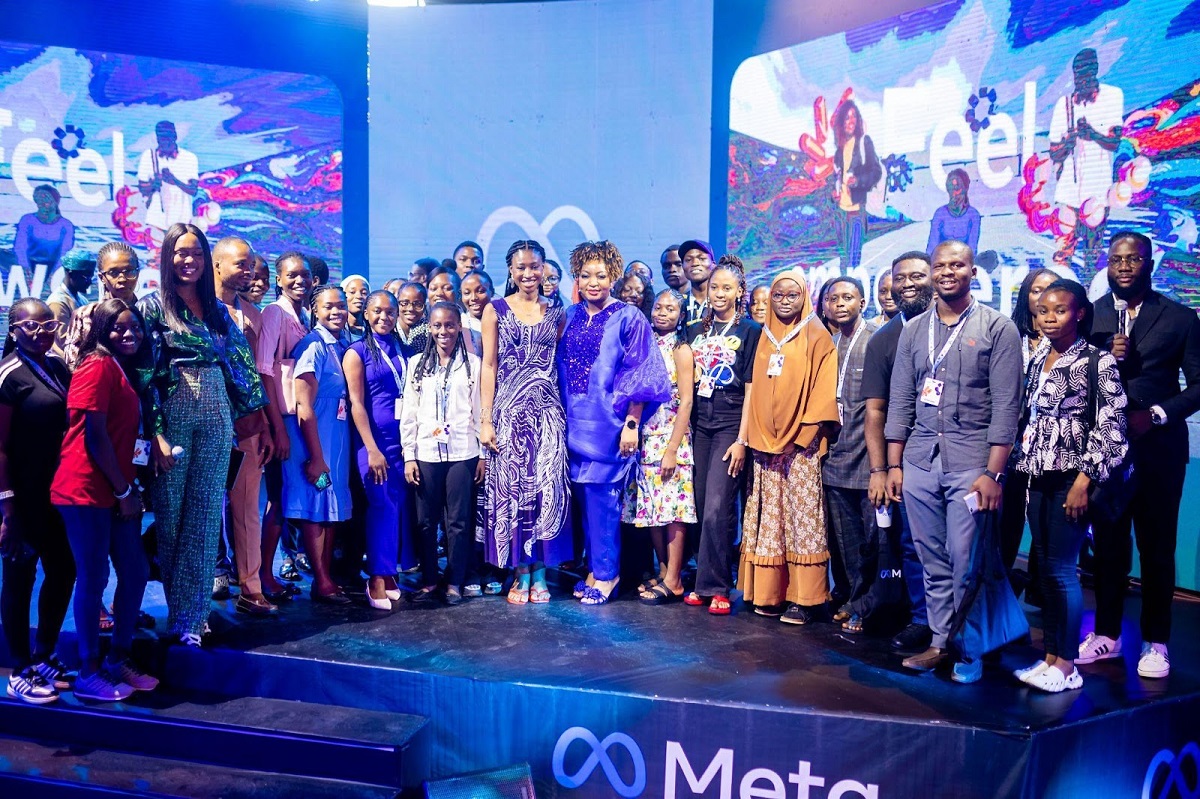
Meta recently hosted its first Youth Summit in Lagos, Nigeria, bringing together over 200 young professionals, students, recent graduates, creatives, tech enthusiasts and aspiring entrepreneurs.

A cross-section of some of the attendees and the Meta team.
Themed ‘Empowering Youth Through Technology, Innovation and Entrepreneurship’, the summit included a series of thought-provoking panel discussions, a mentoring session and an interactive workshop designed to equip young Nigerians with the skills, insights and networks needed to thrive in today’s tech-driven world.
Commenting about the event, Phil Oduor, Head of Policy Programs, Sub-Saharan Africa said, “At Meta, we believe that today’s youth are tomorrow’s change-makers.
“Through initiatives like the Youth Summit, we aim to foster innovation, promote digital literacy and empower young Nigerians with the tools and opportunities to realise their potential and contribute to Nigeria’s growing digital economy.”
Delivering the keynote address, Femi Aluko, CEO/Co-Founder, Chowdeck, shared his journey of breaking barriers to achieve success in tech. He encouraged attendees to embrace the limitless opportunities within today’s technology ecosystem.
A panel discussion, led by Chinny Francis, Public Policy Manager at Meta, featured panellists Nifemi Akinwamide, Head of Operations, Alt School; Adaora Mbelu, Co-Founder of Lumination Global and Obaloluwa Adeagbo, Marketing Lead at Talstack.

They shared valuable insights about the future of work, emphasising the importance of storytelling to build a personal brand, practicing self-awareness, developing soft skills, lifelong learning and honing problem-solving skills to thrive in a digitally transformed world.
Francis Sani, Technical Adviser for Innovation, Entrepreneurship & Capital at the Federal Ministry of Communications, Innovation & Digital Economy, spoke at the event.
He highlighted the 3 Million Technical Talent (3MTT) program, emphasising that the program aims to build Nigeria’s technical talent backbone to drive the digital economy and position Nigeria as a net talent exporter. He encouraged youth to take advantage of this opportunity.
Another panel of industry experts took the stage during the ‘Lunch and Learn: Navigating Entrepreneurship in a Rapidly Changing Landscape’ session, moderated by Sade Dada, Head of Public Policy for Anglophone West Africa at Meta.
Seye Bandele, CEO of PaidHR and Damilola Teidi-Ayoola, Head of Platform and Networks at Ventures Platform Fund, shared their invaluable insights.
Seye highlighted the importance of grit, curiosity and candour, while Damilola reinforced the need to understand one’s target audience, deliver value through their business and embrace data-driven decision-making in the dynamic entrepreneurial landscape.
The event also featured inspiring conversations with leading figures in the creative industry. Miss Techy, an award winning tech content creator and Salem King, a creator, storyteller, author and speaker, shared their experiences and advice on achieving long-term success.
Attendees also benefited from an interactive workshop and a mentoring session, where industry experts shared practical advice and strategies for entrepreneurs and tech enthusiasts.
Meta’s Youth Summit 2024 highlights a commitment to driving positive change, championing youth empowerment and advancing economic opportunities in Nigeria. Through investments in key areas—such as the creative industry, digital literacy, economic impact and youth job training—Meta is dedicated to empowering young Nigerians to thrive in today’s tech-driven world.



MENXTT TECH NG, a Lagos-based technology company, has launched an initiative to make quality Dell laptops more affordable for Nigerians through flexible payment plans and extended warranty support.

The company said the initiative was aimed at helping students, entrepreneurs, professionals and small businesses acquire reliable computing devices despite rising technology costs.
According to the company, customers can now purchase premium pre-owned Dell Latitude, Dell Precision and Dell Inspiron laptops at competitive prices, with selected models available under staggered payment arrangements.
The laptops, it said, are designed to meet the needs of users ranging from students and office workers to architects, engineers, software developers, graphic designers and video editors.
Speaking on the initiative, the Co-Founder of MENXTT TECH NG, Mr Anthony Emeka Nwosu, said access to quality technology should not be limited by financial constraints.
“A laptop is no longer a luxury; it is an essential tool for education, business and career development.
“Unfortunately, many people are forced to settle for unreliable devices because of the high cost of new laptops.
“At MENXTT TECH NG, we want to bridge that gap by providing durable Dell business laptops at affordable prices, backed by a full one-year warranty and flexible payment plans.
“We want every student, entrepreneur, freelancer and business owner to have access to technology that helps them succeed,” he said.
Nwosu explained that every laptop undergoes comprehensive testing before delivery and comes with a one-year warranty, an original charger, a complimentary laptop bag, Windows 11 operating system and Microsoft Office Suite pre-installed.
He added that the company, an authorised Bitdefender Antivirus reseller in Nigeria, also installs genuine Bitdefender security software on every system to protect customers against cyber threats.
According to him, customers requiring additional productivity tools can also have licensed Foxit PDF software installed on their devices.
Nwosu said the flexible payment option was introduced in response to prevailing economic realities, enabling customers to spread payments over an agreed period.
He noted that the arrangement would make it easier for students, startups and growing businesses to acquire quality computers without placing excessive pressure on their finances.
Beyond laptop sales, the company provides information technology consultancy, computer repairs, software licensing, cybersecurity solutions and digital transformation services to organisations across Nigeria.
He reaffirmed the company’s commitment to supporting Nigeria’s digital economy by making dependable computing devices and enterprise technology solutions more accessible to individuals and businesses.
According to him, the initiative reflects MENXTT TECH NG’s vision of combining affordability, quality products and professional after-sales support to help more Nigerians participate in the country’s expanding digital ecosystem. (NAN)


Clydestone Ghana Plc has filed a writ of summons and statement of claim against MTN Ghana, MTN Group Limited and Mobile Money Fintech Limited, alleging unauthorized use of its intellectual property.

The company announced the court action at the Ghana Stock Exchange, confirming proceedings in the Commercial Division of the High Court of Ghana.
The case relates to work commissioned in 2007 that Clydestone alleges was later used without authorisation or compensation.
Clydestone said the claim involves proprietary intellectual property, confidential commercial information and operational methodology developed during the engagement. The company is seeking declarations, damages and equitable remedies.
In a statement, Clydestone said MTN Ghana engaged it in 2007 to develop a commercial and operational framework for a mobile money business.
“The work was developed and delivered by the company’s founder and Group CEO, Paul Jacquaye, and included a full mobile money ecosystem covering the commercial model, operational architecture, implementation methodology and business case.”
Clydestone said the work was commissioned on the understanding that a non-disclosure agreement and memorandum of understanding would be signed.
It alleges these agreements were not finalised despite repeated requests.
The company further alleges MTN Ghana later used its proprietary work and methodology without authorisation or compensation, including in MTN Mobile Money Ghana and other markets.
Clydestone said the alleged use has continued since the launch of MTN Mobile Money Ghana in 2009.
“The wrongful use of that work has been ongoing since 2009. What has changed is the availability of independently verifiable information that documents its scale and commercial significance,” the company said.
It cited the GSMA State of the Industry Report on Mobile Money 2026 and MTN Ghana’s 2025 annual report as evidence of the platform’s scale.
According to Clydestone, the reports show approximately 19.3 million active users and annual revenue of about GHS 6.0 billion ($516m).
The company said it reviewed its records following these publications and concluded there were sufficient grounds to initiate legal proceedings.
It added that it has received no payment or acknowledgement for the work since December 2007, and that pre-action correspondence in 2026 received no substantive response.
“The Board of Directors has unanimously authorised the commencement of these proceedings,” the company said.
Jacquaye said: “This case is about accountability for commissioned intellectual property.
“When independent publications in 2025 and 2026 revealed the scale of the mobile money business, we reviewed all documentation relating to the original engagement and concluded these proceedings were necessary.”
MTN Group Limited, named as a defendant, had not commented at the time of publication.
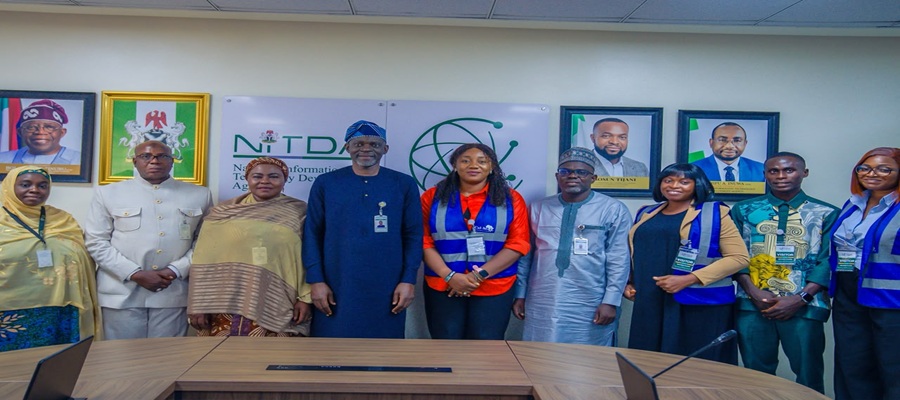
National Information Technology Development Agency (NITDA) has reaffirmed its commitment to expanding digital inclusion through strategic partnerships aimed at equipping underserved communities with digital skills and access to technology.

Mr. Oladejo Olawunmi, Director, Digital Development Services representing the Director General of NITDA, and the Executive Director of Cal-Maji Foundation, alongside members of their respective delegations, pose for a group photograph following a strategic engagement on advancing digital literacy, capacity building, and digital inclusion for women, youth, and underserved communities.
Director-General of NITDA, Kashifu Inuwa, made the commitment during a courtesy visit by the Executive Director of Cal-Maji Foundation, Mrs Faith Ayuba, to the agency’s headquarters in Abuja.
Represented by the Director of Digital Development Services, Mr Oluwunmi Oladejo, Inuwa said collaboration with community-based organisations remained central to NITDA’s vision of ensuring that no Nigerian was left behind in the country’s digital transformation journey.
He noted that feedback from beneficiary communities demonstrated the long-term impact of the agency’s interventions across the country.
“It is always gratifying to receive feedback from communities that have benefited from our interventions.
“Many of these projects were implemented years ago, and it is rewarding to know they are still creating opportunities,” he said.
The NITDA boss explained that the agency continued to monitor the performance of its intervention centres nationwide while leveraging emerging technologies to enhance digital learning and virtual capacity-building.
According to him, the National Digital Literacy Framework remains the foundation of NITDA’s efforts to equip children, students, artisans, farmers, professionals and other groups with digital competencies needed in a technology-driven economy.
Responding to requests for additional support, Inuwa disclosed that the agency would consider training community-based instructors to sustain digital literacy initiatives at the grassroots.
He encouraged the foundation to submit a formal request, accompanied by evidence of activities at its digital centre, to facilitate further intervention.
The director-general, however, acknowledged that maintaining internet connectivity across numerous intervention centres nationwide remained a major funding challenge.
He stressed the need for innovative financing models and stronger collaboration to ensure the sustainability of digital inclusion projects.
Earlier, Ayuba commended NITDA for its openness to partnerships and its commitment to supporting initiatives that deliver measurable impact in underserved communities.
She described the agency as one of the few government institutions that prioritised impactful programmes over personal connections.
According to her, the Cal-Maji Foundation focuses on improving access to education, strengthening food systems, enhancing food security and providing social protection for women and young people, particularly in remote communities.
Ayuba said NITDA’s Knowledge Access Centre, established at the foundation’s community school in a border community in Kogi State, had significantly transformed learning by providing students and residents with access to computers, internet services and digital education.
“The ICT centre became an equaliser.
“Young people who ordinarily would never have had access to computers or the internet suddenly had the opportunity to acquire digital knowledge.
“We came back simply to say thank you because this partnership has changed lives,” she said.
She disclosed that more than 1,000 children had benefited from the foundation’s educational programmes.
Ayuba also presented a former student who progressed from the community school to a Nigerian university after utilising the digital resources available at the centre.
She described the student’s achievement as evidence of the enduring impact of the collaboration.
The foundation’s executive director appealed for deeper collaboration through the training of community instructors, upgrading of computer systems and expanded access to NITDA’s digital capacity-building programmes.
She stressed that rural communities must not be left behind as Nigeria advances in emerging technologies such as artificial intelligence, cybersecurity and digital innovation.
The meeting ended with both organisations reaffirming their commitment to strengthening collaboration to expand digital opportunities, promote inclusive technology adoption and support Nigeria’s digital economy agenda.

Kaspersky Uncovers Cyber Threats Defining the First Half of 2026 in Nigeria, Others

MENXTT TECH NG Offers Affordable Dell Laptops with Flexible Payment Plans

ATU Summit Ends in Abuja with Landmark Declaration to Eradicate Continental Digital Divide

$40bn Net Reserves, Record Wealth, Relentless Poverty: Who Is Nigeria’s Economy Serving Today?

Nwokolo, Nollywood Actor Claims Internet Fraud is “Keeping Economy Afloat’

NRC, Ponzi Scheme Collapses Resulting Loss of Billions of Naira

EFCC Busts NIS Visa Overstay Racket, Uncovers N700m in an Account

From Scarcity to Scale: What Africa Can Learn from India’s Agricultural Transformation

Tokenization, Blockchain Technology will Transform Financial Institutions – IMF

BON Establishes Six Ad Hoc Committees to Modernize Broadcasting




 Telecom2 days ago
Fact-Check: Elon Musk’s “Tesla Pi Phone” is Internet Rumor

 E-Financial2 days ago
Malpass, Ex World Bank Chief Raises Alarm over Nigeria’s Secretive Debt Structures

 Telecom2 days ago
How and Why Apps Deplete Data – ALTON

 E-Financial2 days ago
S&P Global Acquires Agusto & Co. to Strengthen Credit Ratings Across Africa

 News2 days ago
CIBN, ACAMB Push for Financial Inclusion, Women Empowerment

 Telecom2 days ago
Galaxy Backbone Soft Launches Government Service Portal to Simplify Access to Public Services

 E-Business2 days ago
NDPC Directs DCPMIs to Register with Agency or Face Legal Consequences

 Broadcasting2 days ago
Africa Prudential Posts N1.59bn Profit in H1 2026, Reaffirms Digital Growth Strategy