

Broadcasting
A Policy Blueprint for a New Era of African Innovation

By Doron Avni, VP, Public Policy & Government Affairs, Emerging Markets, Google
The dawn of the AI age presents a unique opportunity for Africa. With the right policies, the continent can experience accelerated socio-economic progress. According to a recent study by Public First, AI could increase the Sub-Saharan African economy by over $30 billion annually, and is already revolutionizing various African sectors.

For instance, AI-powered ultrasound checks are accessible in remote areas, AI combined with satellite imagery helps assess village electrification, and AI and cloud connect youth with jobs via mobile search. As the AU Commissioner for Infrastructure and Energy, H.E. Dr. Amani Abou-Zeid wrote at the introduction to the recently adopted Continental AI Strategy: AI “is seen as a driving force for positive change, socio-economic transformation, and cultural renaissance.”
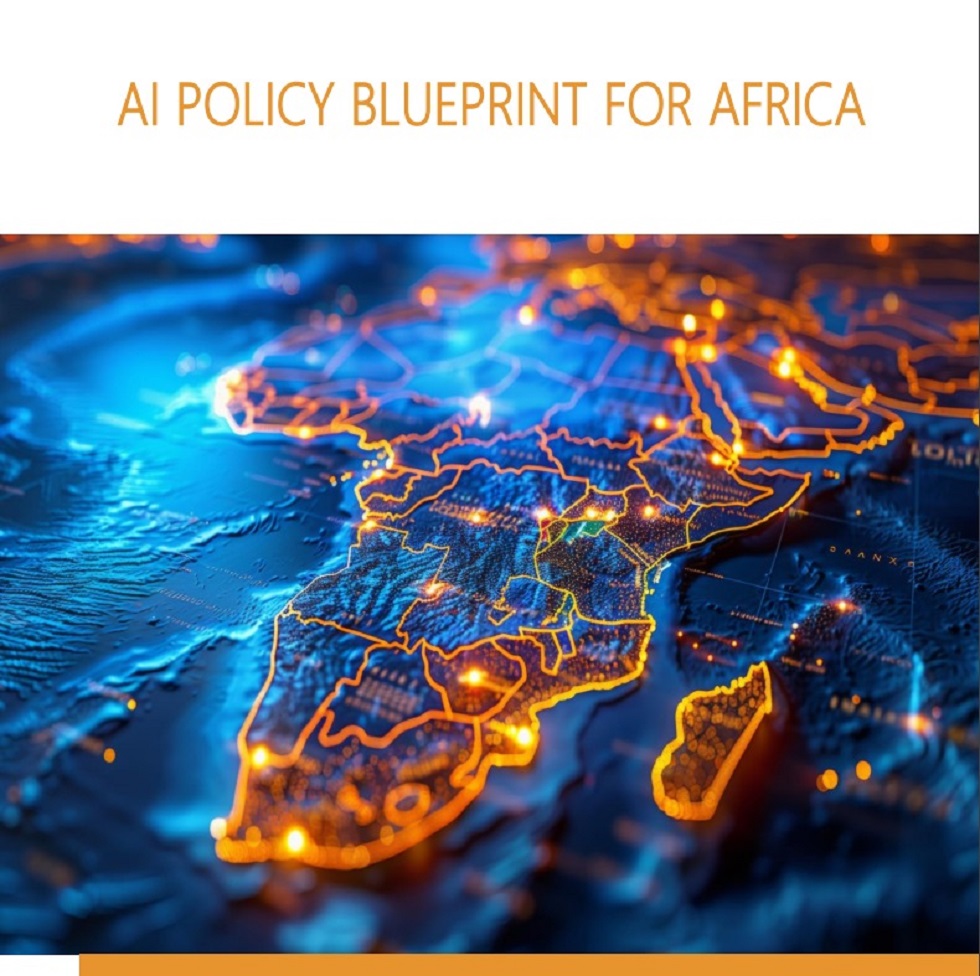
Strong government policy is crucial for unlocking Africa’s AI potential, and new research confirms this critical link. The Google-commissioned AI Policy Blueprint for Africa report by Nextrade Group, which surveyed over 2,000 African students, businesses, and organizations, reveals a striking connection between policy readiness and AI adoption. The report demonstrates a clear correlation: African countries with established, pro-AI digital policy frameworks also have significantly higher AI adoption rates than their peers with less mature policy frameworks. This is especially timely as governments across the continent are actively working on AI strategies at the national level, with some already having adopted them. This data underscores the vital role governments play in creating an environment where AI can flourish.
To guide this crucial government leadership, the AI Policy Blueprint report provides a practical roadmap. Building upon the foundational recommendations from Google’s AI Sprinters report, this blueprint offers specific policy guidance across four key pillars: infrastructure, skills development, investment in innovation, and responsible AI regulation. For each pillar, the blueprint outlines specific policy actions African nations can take to accelerate AI adoption and maximize its benefits for their citizens. The report was designed to help policymakers in the task of translating the exciting vision of the recent AU Continental AI Strategy into practical policies aimed at achieving it.
One of the most important recommendations the report makes is on data readiness. The blueprint emphasizes the importance of ensuring access to high-quality datasets that reflect Africa’s diversity. Governments can achieve this by opening up non-sensitive public data for AI development, promoting data transfer across borders, and encouraging the use of privacy-enhancing technologies (PETs). The blueprint also stresses the importance of harmonized data protection frameworks to ensure privacy and security as AI systems are deployed. Crucially, the blueprint advocates for a “cloud-first” approach in the public sector, where governments prioritize cloud-based solutions for data storage and service delivery.
By migrating to the cloud, governments can effectively manage and process the vast amounts of data required for AI, unlocking its potential to improve public services and address critical challenges. The report, scanning the global horizon for AI policies, mentions Singapore as a prime example, where the government has issued guidelines that allow for greater flexibility in using personal data for AI development while still protecting privacy.
This call for government leadership is echoed by the very people who stand to benefit most from AI. The report reveals a groundswell of excitement among African businesses, especially fast-growing firms, with many seeing AI as “absolutely transformative” for their operations and predicting significant revenue gains—as much as 20% annually. In fact, almost 90% are already applying AI to research, data analysis, marketing content creation, and even coding. Moreover, a majority of Africans believe AI can boost productivity and accelerate national development. These individuals and businesses expressed hope that governments will proactively support this progress by ensuring AI is used safely and responsibly, equipping young people with essential AI skills, and helping small businesses leverage this powerful technology.
Governments must also lead by example, actively adopting AI within their own operations to demonstrate its value and build public trust. The report found overwhelming support for this approach, with over 80% of respondents agreeing that governments should invest in AI to improve public service delivery. Adoption of AI by governments not only improves government efficiency but also inspires confidence in AI across all sectors, encouraging wider adoption.
At Google, we are committed to being a steadfast partner for African governments, businesses, and individuals on their journey to capture the vast opportunities presented by AI. We believe in the power of technology to drive progress and improve lives, and we are dedicated to supporting Africa’s digital transformation. Our recent announcements, including a $5.8 million commitment to AI skills development and the expansion of speech technology to include 15 more African languages, demonstrate our ongoing investment in the continent’s future. We are committed to working with African governments as they embrace AI, not just as policymakers but as active users, demonstrating its transformative potential to their citizens and the world. We are confident that by working together, we can unlock Africa’s immense potential and build a future where AI empowers everyone.


Broadcasting
Obi, NDC Presidential Candidate Faces N50Bn Defamation Claim over Alleged Podcast Remark

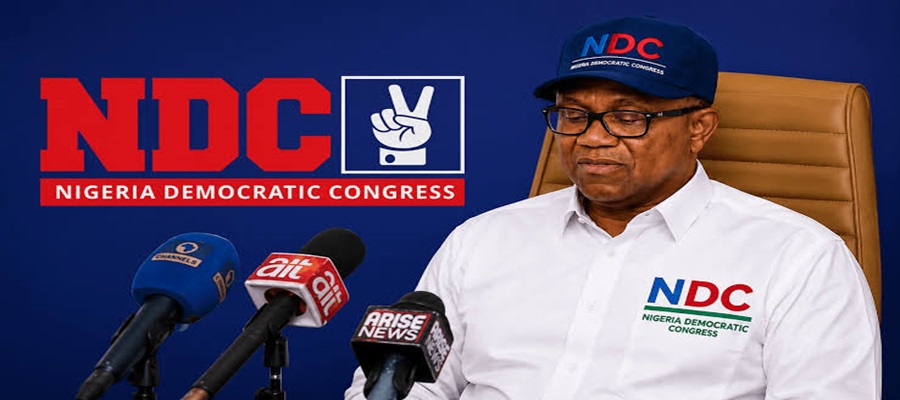
Abayomi Arabambi, national vice chairman (South-West) of the Labour Party, has demanded a public apology, a retraction, and N50 billion in damages from Peter Obi, presidential candidate of the Nigeria Democratic Congress (NDC), over an alleged defamatory statement made during a podcast interview.

The demand was contained in a letter issued by the law firm Neplus Ultra Attorneys and signed by Anderson U. Asemota, Peter O. Asimegbe, and Stanley C. Eziefulle on behalf of Arabambi.
According to the letter, the legal dispute arose from comments allegedly made by Obi during the interview, where he reportedly stated that Arabambi “does not have an address.”
Arabambi’s legal team described the statement as false, malicious, and defamatory, arguing that it portrayed their client as a faceless individual without legitimacy, credibility, or standing in public life.
The lawyers further claimed that the interview was widely circulated on television stations and digital platforms, exposing Arabambi to public ridicule and damaging his reputation.
“Our client has had a known residential and business address, maintains professional and political affiliations within Nigeria, and has never been a person whose whereabouts or identity were unknown,” the letter stated.
The legal team maintained that the alleged publication caused embarrassment and harmed Arabambi’s public image and political standing.
As part of their demands, the lawyers called for an unreserved public apology to be aired on national television, published on Obi’s verified social media platforms, and carried as full-page apologies in national newspapers.
They also demanded the payment of N50 billion as compensation for the alleged injury to Arabambi’s reputation, dignity, political standing, and public image.
Broadcasting
Why We’re Partnering With NIHOTOUR To Bring Nigerians In South Africa Home – Steve Babaeko

When Nigerians began arriving back home on emergency flights following an ultimatum from anti-migrant groups in South Africa, Steve Babaeko, alongside The Nigerian Institute of Hospitality and Tourism (NIHOTOUR), saw an opportunity to step up for his fellow citizens.

Steve Babaeko
The CEO of X3M Ideas explains that he saw a deep obligation, one that had nothing to do with advertising and everything to do with hospitality. For Babaeko, it was a reminder that an agency owes a duty of care to the community it exists within.
That conviction shaped the creative agency’s partnership with the Nigerian Institute of Hospitality and Tourism (NIHOTOUR) for the newly launched ‘Welcome Home’ pilot programme at Murtala Muhammed International Airport (MMIA) in Lagos. Rather than simply crafting a messaging campaign around the crisis, X3M Ideas helped design a tangible, physical system.
“This wasn’t built as a campaign about a crisis,” Babaeko said. “It was a hospitality agency deciding what it owes its own citizens the moment they land.”
For Babaeko, what X3M has built is infrastructure, something returnees can physically walk through, use, and benefit from the instant they clear the arrival gate.
With the MMIA pilot now officially running, NIHOTOUR directs returnees to immediate support services and issues them a Returnee Card. This card grants individuals a free first night at partner hotels, immediate transport assistance from the airport, and fast-tracked business registration support.
Furthermore, the initiative features a dedicated Restart Desk to assist returnee entrepreneurs and tradespeople with job placement referrals and business registration. This operates alongside a public Homecoming counter that tracks the cumulative number of returnees welcomed, businesses restarted, and jobs facilitated.

Spotify has announced a partnership with Afro Nation Portugal as the festival’s official sponsor and exclusive streaming partner for the 2026 edition, in a move aimed at bringing African music and festival experiences to a wider global audience.

The collaboration will provide fans with a dedicated Afro Nation destination on Spotify, featuring official festival playlists, participating artists and selected performance videos after the event.
The 2026 edition of Afro Nation Portugal is scheduled to hold from July 3 to July 5 in Portimão, Portugal.
Spotify said the partnership would enable fans to engage with the festival before, during and after the live event, regardless of their location.
The streaming platform noted that the initiative aligns with its continued investment in promoting African music and supporting its growing international audience.
Speaking on the partnership, Spotify’s Content Marketing Manager for Sub-Saharan Africa, Mr Rifumo Mdaka, described Afro Nation as a global showcase for African music and culture.
“Afro Nation is more than a festival; it is a global expression of African music, fan culture and creative influence.
“Our partnership is about helping that moment travel further through our first collaboration with Afro Nation of this nature.
“By bringing the festival to Spotify, we are giving fans a place to connect with the artists, performances and stories that define the festival long after the final set,” he said.
According to Spotify, the collaboration will also include exclusive festival content, artist discovery features, curated playlists and fan-focused storytelling.
The company said it would document the journey of a selected fan travelling to the festival as part of efforts to showcase the growing global appeal of African music.
Also speaking, Director of Global Partnerships at The Malachite Group and Afro Nation, Ms Clémence Blum, said the partnership represented a major step in expanding the festival’s global reach.
“Afro Nation has always been more than a festival. It is a platform built to celebrate African music, support artist breakthroughs and connect a global community through culture.
“Our partnership with Spotify reflects the shared role we both play in helping artists reach new audiences and giving fans deeper ways to engage with the music they love,” she said.
Spotify said selected live performances from the festival would be made available on the platform after the event, allowing fans around the world to relive the performances on demand.
The company added that the partnership reinforces its commitment to promoting African music, supporting artists and strengthening connections between creators and audiences across the globe.

DSS Spyware Acquisition Enables Illegal Wiretaps, Detentions – The ICIR

Microsoft to Lay Off 4,800 Workers

Access Bank, Fifth Chukker and UNICEF Renew Commitment to Expanding Educational Opportunities for Nigeria’s Most Vulnerable Children

IHS Nigeria, FCT-HSES Concludes Clean Cooking Energy Campaign “Project Breathe Clean Air” in Abuja

Kaspersky Transforms Threat Intelligence Reporting into an Interactive Content Hub

Mobile Internet Gender Gap Widest in Africa – GSMA

Nigeria Launches FreeTV Nationwide

NASENI Moves to Digitize CCB’s 5m Assets Declaration and Operations

CANAL+ Partners Samsung to Pre-Load DStv Stream on New Samsung TVs In Nigeria, Other African Countries

UK, Nigeria Launch £15m Growth Programme to Accelerate Economic Transformation




 General News1 day ago
NIS Deploys Advanced Surveillance Masts, other Critical Infrastructure to Boost Border Security

 E-Financial1 day ago
Tokenization, Blockchain Technology will Transform Financial Institutions – IMF

 Broadcasting1 day ago
Obi, NDC Presidential Candidate Faces N50Bn Defamation Claim over Alleged Podcast Remark

 E-Business1 day ago
Weebly Websites to Shut Down for Nigeria, 66 Other Countries from September

 Telecom1 day ago
No Plans for Fresh Tariff Hike – MTN

 E-Financial1 day ago
FG Denies N8 Trillion ‘Shadow Budget’, Says IMF Quoted out of Context

 General News1 day ago
PufferPay CEO to Keynote Business Journal Fintech & Financial Inclusion Roundtable 2026

 Telecom1 day ago
Airtel Africa Foundation Equips 200 Young Women with Digital Skills to Drive Nigeria’s Tech Economy