

General News
UBA Rewards Customers with over N41m in Final Edition of Legacy Promo


United Bank for Africa (UBA) Plc, Africa’s global Bank, has distributed over N41.8m in prizes to over 100 lucky customers in its just concluded UBA Legacy Promo series.

The promo which began last year, was specially designed by the bank to celebrate UBA’s rich legacy spanning over 75 years, as well as its long-standing commitment towards rewarding its loyal customers in a grand style.
The campaign, which was opened to several categories of Account holders including Bumper Account holders, Savings account, Kiddies & Teens Account holders as well as Nextgen account holders, also saw lucky customers winning other consolidation prizes including educational grants.
The winners were announced during the Grand Finale draw of the promo which held at the UBA Head-office, Marina, Lagos last Thursday and was witnessed by members journalists and representatives of relevant regulatory bodies including the National Lottery Regulatory Commission (NLRC), among other stakeholders.
In the Savings Account category, ten loyal customers walked away with N1,000,000 each. The lucky winners are: Olonade Funmilayo, Abdullahi Yunusa, Anibueze Augustine Chidozie, Ibironke Adedayo, Gilbert Godswill Pepple, Ekonmene Daniel Leghemo, Oligbo Francis Azuka, Liafeez Adebowale, Abiodun Bolanle Felicia, and Adamu Bappayo.
When contacted over the phone, one of the winners, Mr. Oligbo Francis Azuka, who won N1,000,000 in the savings account category expressed his surprise and excitement, stating that it was totally unexpected. He was however grateful to the bank for the gesture, adding: “I am deeply grateful and surprised by this reward from UBA. I honestly, didn’t expect this. I really appreciate the fact that UBA recognizes me. I am very grateful,” he stated.
The Bumper Category saw 10 people who emerged winners of N1,000,000 each. They are: Emem Christian Thompson, Lateefat Omotayo Waheed, Victoria Oluwaferanmi Adebusoye, Nkechinyere Agnes Okolo, Ibrahim Rabiu, Hammed Akande Idowu, Modester Chiadikobi Nwoke, Ajisafe Folashade Success, Thelma Ndubisi Enajiyerin, and Sunday Obaje.
20 lucky customers also received N500,000 each. They are: Ojo Goroye Banjo, Sandra Christopher Effiong, Femi Henry Idehen, Rashida Oiza Momohjimoh, Umar Usman, Joshua Chidera Nweke, Racheal Erhieyovwe, and Fatima Muhammed. Others include Ogbonna Edward, Eziuche Goodluck Chinyere, Lydia Bawa, Obiajulu Augustine Agwazia, Sale Barde, and Sikiru Morakinyo; Tajudeen Kareem Opeloyeru, Regina Queen Abeekaa, Isaac M. Ponfa, Mary Amos, Emmanuel Isa, and Amaechi Okoro.
Also in the bumper category another twenty customers got N250,000 each, while 10 lucky customers each won N100,000 each during the live draws.
In the NextGen category, Emmanuel Olakotan Oke, Sharon Oluwafunmilayo Ibitoye, Fortunate Izegboya Ijewemen, Anozie Janerose Chinelo, Maryam Zaharaddeen, Oluwakamikun Faidat Taiwo, Daniel Ayomikun Olawale, Ayomide Goodness Olowodara, Dennis Ogina Gbele, and Ofeoritse Jessica Waya each received N180,000 pocket money for a year.
The Kiddies and Teens category, also saw 20 young customers receiving N200,000 each in educational grants.
UBA’s Group Head, Retail and Digital Banking, Shamsideen Fashola, who spoke at the event, emphasized the significance of the promotion in strengthening the relationship between the bank and its community.
He said, “UBA Legacy Promo is our way of saying thank you to our loyal customers who have trusted us over the years. As we celebrate 75 years of impact, we remain committed to deepening financial inclusion and providing innovative and customer-focused products and services. Our goal is to make banking more rewarding and life-changing, improving lives and building stronger communities.”
Over the past six months, from July till December 2024, UBA has through a series of draws; cluster, monthly, and quarterly draws, rewarded over 600 customers with prizes totaling more than ₦200 million. This remarkable initiative has created over 60 millionaires, highlighting the bank’s commitment to enriching the lives of its customers and promoting savings culture, as UBA continues to reaffirm its dedication to launching more impactful initiatives, ensuring customer satisfaction and financial well-being remain at the forefront of its operations.
United Bank for Africa is one of the largest employers in the financial sector on the African continent, with 25,000 employees group wide and serving over 45 million customers globally. Operating in twenty African countries and the United Kingdom, the United States of America, France and the United Arab Emirates, UBA provides retail, commercial and institutional banking services, leading financial inclusion and implementing cutting edge technology.



World Health Organisation (WHO), yesterday, said that Ebola outbreak is “very high” but added that the global risk remains “low”.

So far, 82 cases and seven deaths have been confirmed in the Democratic Republic of Congo (DRC), but WHO, said, the real scale of the outbreak is likely far larger, with nearly 750 suspected cases and 177 suspected deaths reported
Tedros Adhanom Ghebreyesus, chief, WHO, said the situation was “deeply worrisome”.
He said there were now nearly 750 suspected cases in the DR Congo and 177 suspected deaths, as health workers scramble to track down contacts of everyone thought to be infected with the virus.
“The Ebola outbreak in the Democratic Republic of the Congo is spreading rapidly,” he told a press conference.
“So far, 82 cases have been confirmed in DRC, with seven confirmed deaths.
“But we know in people who travelled from DRC and one death.
Measures to address the epidemic in DRC are much larger.
There are now almost 750 suspected cases and 177 suspected deaths.”
He said the situation in Uganda was “stable”, with two cases confirmed in Uganda, including “intense contact tracing” and calling off the Martyrs’ Day commemorations, “appear to have been effective in preventing the further spread of the virus”, Tedros added.
While a US national who was working in the DRC has tested positive and been transferred to Germany for care, Tedros said another US national deemed to be a high-risk contact had been transferred to the Czech Republic.
Besides national staff already in the DRC, he said 22 international staff had been deployed to the field, “including some of our most experienced people”.
Tedros said that violence and insecurity were impeding the response to the outbreak in the DRC.
“We are now revising our risk assessment to very high at the national level, high at the regional level, and low at the global level.
“So far, 82 cases have been confirmed in DRC, with seven confirmed deaths.
“But we know the epidemic in DRC is much larger. There are now almost 750 suspected cases and 177 suspected deaths.
“The situation in Uganda is stable, with two cases confirmed in people who travelled from DRC, with one death.”
Tedros said that violence and insecurity were impeding the response to the outbreak.
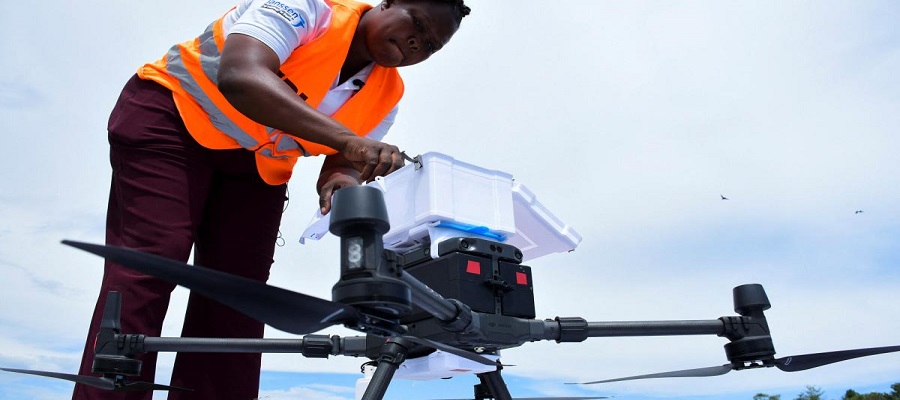
Nigerian Army has acquired additional drones and other advanced force multipliers to strengthen surveillance operations, improve target acquisition, and enhance precision strike and casualty evacuation capabilities.

Lt.-Gen. Waidi Shaibu, chief of Army Staff (COAS), said that the new drones will boost surveillance, precision strikes.
Shaibu, who disclosed this in a statement shared via the Nigerian Army’s official X handle, noted that the conference provided a platform for critical assessment of ongoing operations and the development of forward-looking strategies to address Nigeria’s evolving security challenges.
He said deliberations at the Nigerian Army Conference Centre, Asokoro, focused on sharpening operational responses, strengthening training frameworks and adapting to the demands of modern security warfare.
According to him, the resolutions reached are aimed at building a more agile, combat-ready, technologically driven and mission-oriented force capable of responding effectively to emerging threats.
A key highlight of the reforms is the Army’s increasing investment in modern warfare technology, including the acquisition of additional tactical drones and the reconfiguration of Army aviation assets for combat roles.
Shaibu explained that these developments have significantly enhanced intelligence gathering, precision targeting, operational mobility and casualty evacuation across various theatres of operation.
He also highlighted ongoing improvements in recruitment, advanced training, professional military education and leadership development, stressing that discipline, competence and meritocracy remain central to building a stronger institution.
Reaffirming his “soldier-first” philosophy, the COAS said troop welfare remains a top priority, stressing that “troop welfare remains non-negotiable; well-motivated soldiers operating in conducive environments are critical to mission success.”
He urged senior officers to ensure that resolutions from the conference are fully implemented in field operations, stressing that the true value of the gathering lies in measurable impact on the battlefield.
Describing the ongoing reforms, Shaibu said: “We are not just reforming the Army; we are building a lethal, technology-driven fighting force where only discipline, merit, and mission success matter.”
The Army Chief expressed appreciation to President Bola Ahmed Tinubu for his support, as well as the Minister of Defence, Minister of State for Defence, Chief of Defence Staff, service chiefs and intelligence agencies for their continued collaboration.
The conference ended with the presentation of commendation plaques to senior officers recognized for outstanding contributions to operational effectiveness.

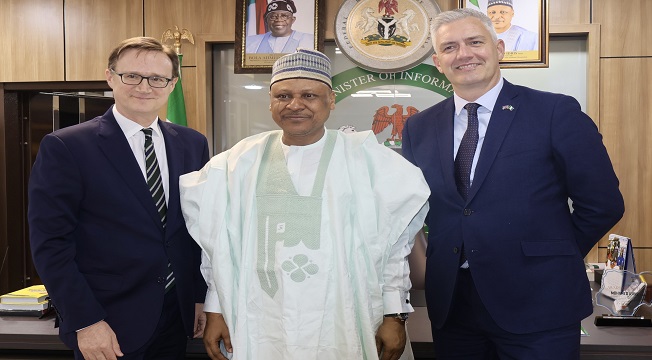
The UK Special Envoy for Freedom of Religion or Belief (FoRB), David Smith MP, concluded a three-day visit to Abuja this week, marking Nigeria as the first focus country he has visited under the UK’s FoRB strategy.

During the visit, David Smith MP held a wide range of meetings with senior Nigerian government officials, religious leaders, civil society organisations, and local communities – reflecting the UK’s commitment to sustained, practical engagement and partnership on freedom of religion or belief in Nigeria.
Meetings included discussions with the National Security Adviser, Mallam Nuhu Ribadu, the Honourable Minister of Information and National Orientation, Mohammed Idris, and the Governor of Plateau State, Caleb Mutfwang.
The Special Envoy also met with the co-chairs of the Nigeria Inter-Religious Council, Archbishop Daniel Okoh, President of the Christian Association of Nigeria, and HRH the Sultan of Sokoto, Muhammadu Sa’ad Abubakar III, President-General of the National Supreme Council for Islamic Affairs.
At the end of the visit, the UK Special Envoy for Freedom of Religion or Belief, David Smith MP, said: “Over the past few days, I have been honoured to meet a wide range of people — from senior government figures and civil society to faith leaders and local communities. I came to listen, learn, and see both how freedom of religion or belief is experienced in everyday life, and how it connects to – and is a core part of addressing – Nigeria’s wider challenges around security and cohesion.
“Some of the most powerful moments of this visit were at community level. Visiting Father Emmanuel Unamba’s parish and meeting Christian and Muslim neighbours living side by side was a real reminder that peaceful coexistence is something people build every day through leadership, dialogue, and shared responsibility.
“What I take away from this visit is the importance of further progress being Nigerian led, rooted in strong institutions and inclusive dialogue, with FoRB at its heart. The UK will continue to support practical efforts in ensuring greater peace, security and prosperity for all.”
The visit also included a roundtable with partners of the UK’s Strengthening Peace and Resilience in Nigeria (SPRiNG) programme, a £38 million UK government-funded conflict and resilience programme operating primarily in Kaduna, Katsina, Benue and Plateau states.
During the visit, Special Envoy David Smith MP held meetings with the Institute for Peace and Conflict Resolution, the Nigerian National Human Rights Commission, and civil society organisations working at the intersection of insecurity and religious freedom. He also visited the National Mosque and the National Ecumenical Centre in Abuja.
Speaking to the various stakeholders, Mr Smith called for greater tolerance across religion or belief in Nigeria and hoped that the cohesion he saw on a community level in the capital, could be achieved nation-wide with the same resolve. He hoped to continue these dialogues with interlocutors in the UK.
The visit builds on the momentum of President Tinubu’s State Visit to the United Kingdom in March 2026, which reinforced the UK-Nigeria Strategic Partnership and included interfaith events attended by President Tinubu and His Majesty The King, underlining both countries’ shared commitment to fostering constructive interfaith dialogue.

WHO Says Ebola Risk Now at Highest Level

Airtel Africa Launches $110m Share Buyback Programme for Capital Efficiency

NCC Drafts New Rules for Virtual Mobile Operators

LG Electronics Showcases Advanced HVAC Solutions at Mega Clima Nigeria 2026

FG Unveils AI Public Services Platform

MTN, VDT, Zoracom, Digital Realty Back 2026 Girls in ICT Campaign

Vitel Wireless Partners Fintechs to Expand Access to Services

Kaspersky Discovers Vulnerability in Qualcomm Snapdragon Chips that can Lead to Data Loss & Device Compromise

Bank Customers to Pay N1,500 for ATM Card Issuance, Replacement – CBN

FG Okays 112 as Toll-Free National Emergency Response Number




 Telecom2 days ago
Google unveils Gemini-powered advertising, commerce tools at Marketing Live 2026

 E-Financial2 days ago
Griffin Capital Group Launches Integrated Financial Services Group Positioned to Strengthen Capital Formation in Nigeria, Africa

 Telecom2 days ago
Nigeria gets AI-ready Lagos data centre

 E-Business2 days ago
Kaspersky Detected More than 92,000 Malware Attacks Disguised as AI Services in Four Months

 E-Financial2 days ago
CBN to Simplify Bank Alerts over Rising Customer Complaints

 Telecom2 days ago
Telcos in Nigeria, other Emerging Markets Squeezed by Diesel Crisis

 Telecom2 days ago
ipNX Seeks Coordinated Action on Fibre Deployment @ National Dig-Once Forum

 General News2 days ago
Otedola Plans $100m Investment in Dangote Refinery ahead of Proposed IPO