

E-Financial
Nigeria’s Cash Payments to Decline 32% by 2030 on Digital Transaction Surge

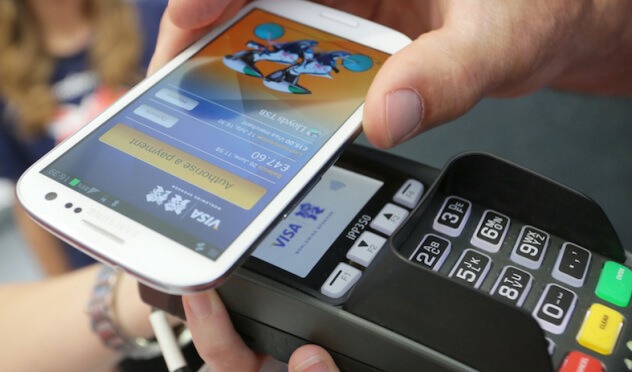
Nigeria is undergoing a significant shift toward digital payment methods, with cash payments projected to decline by 32 percent by 2030, according to Worldpay’s Global Payment Report 2024 (GPR).

This is because access to financial services in remote areas via smartphones has transformed millions of people’s access to the global economy.
According to the report, Nigeria led Middle Eastern and African countries in cash dominance for point-of-sale transactions, accounting for 40 percent of 2024 PoS value from 91 percent in 2019.
The report said the use of cash in Nigeria is higher when compared to the MEA region including Saudi Arabia with 22 percent in 2024, South Africa (30 percent), and the UAE (17 percent).
“Over the past decade, Nigeria has witnessed progress in financial inclusion. According to the World Bank, the percentage of banked Nigerians increased from 30 percent in 2011 to 45 percent in 2021. Similarly, South Africa’s banked population grew from 54 percent in 2011 to 85 percent in 2021,” it said.
The Nigerian Inter-Bank Settlement System (NIBSS) reported that the number of active bank accounts surged to 311 million in 2024, further underscoring the country’s rapid financial transformation.
The global report disclosed that account-to-account (A2A) transfers via the NIBSS Instant Payments (NIP) have emerged as the leading e-commerce payment method in Nigeria.
Furthermore, A2A payments via NQR are now the second most popular payment method at the PoS, trailing only cash. This surge in A2A usage underscores the growing adoption of instant payment systems in the country.
Recent data shows that electronic payment transactions in Nigeria rose to an all-time high of N1.07 quadrillion in 2024. This is a 79.6 percent increase from the N600 trillion recorded in 2023.
Beyond transaction value, the volume of e-payments also saw a substantial increase. The total number of transactions processed by NIBSS rose from 9.7 billion in 2023 to 11.2 billion in 2024, representing a 15.5 percent year-on-year growth.
Also, PoS transactions soared to N19.4 trillion in 2024, marking an 81 percent increase from N10.73 trillion in 2023.
Industry experts attributed the surge in electronic transactions to a combination of factors, including the cash scarcity experienced in early 2023 and the continued implementation of the Central Bank of Nigeria’s (CBN) cashless policy.
The GPR report highlights MEA’s progress in digital payments, with e-commerce transactions accounting for 29 percent of total value in 2014. By 2024, digital payments represented 49 percent, nearly matching the combined value of cash and card transactions (51 percent). By 2030, digital payments are expected to dominate e-commerce, making up 65 percent of transaction value.
“The shift is even more pronounced at PoS. In 2014, digital payments accounted for only 1 percent of PoS transaction value. By 2024, they had grown to one-third of the market. Worldpay projects that by 2030, digital payments will account for 47 percent of PoS transaction value, nearly equalling traditional cash and card payments,” it said.


Nigeria’s Bank Verification Number (BVN) database expanded to 69.55 million as of July 5 2026 from 69.32 million in June 2026, according to latest data released by the Nigeria Inter-Bank Settlement System (NIBSS).

BVN is an 11-digit biometric identification system introduced by the Central Bank of Nigeria and managed by the Nigeria Inter-Bank Settlement System (NIBSS) to secure customer accounts and reduce fraud.
This means that BVN enrolments increased by 228,947 between June and July 5 this year.
With the BVN database standing at 67.8 million as of December 31, 2025, it also means that the database grew by 1.75 million between the end of last year and July 5, 2026.
Specifically, with less than 1.8 million BVN enrolments so far recorded for this year, it is looking highly unlikely that BVN registrations at the end of 2026 will come close to the 4.3 million total registrations recorded in 2025.
Analysts note that while the expansion in the BVN database last year was largely driven by the introduction of the NonResident Bank Verification Number (NRBVN) initiative, which enables Nigerians in the diaspora to do their BVN enrolment remotely, thereby removing physical barriers and boosting cross-border financial engagement, the Central Bank of Nigeria (CBN) in March this year, announced a revised BVN regulatory framework, that saw it introducing stricter controls on suspected fraudulent transactions, BVN enrollment, and data access within the banking system.
According to the regulator, the amendments to the BVN framework, which came into effect on May 1, 2026, were aimed at strengthening fraud monitoring, improving identity management within the financial system and safeguarding the integrity of banking transactions, by strengthening identity verification and ensuring that BVN registration aligns with legally recognised age thresholds.
Thus, under the revised BVN framework, the apex bank introduced a stricter age requirement for BVN enrolment, limiting registration to 18-year-old individuals and above.
Also, under the new framework, customers will only be allowed to change the phone number associated with their BVN once. The CBN further stated: “Under the new guidelines, financial institutions are required to establish and maintain a temporary watch-list for BVNs linked to suspected fraudulent transactions reported within the banking system.
“A BVN may remain on this temporary Watch-list for a maximum period of twentyfour (24) hours, during which the BVN owner shall be contacted to provide clarification regarding the identified transaction(s).”
Launched on February 14, 2014, by the CBN in collaboration with the Bankers’ Committee, the NIBSS, and the German firm Dermalog, the BVN scheme was designed to capture the biometrics of all bank customers and provide each with a unique 11-digit identification number that can be verified across the Nigerian banking industry.

Central Bank of Nigeria (CBN) has reaffirmed that the standard N100 banknote remains legal tender across the country, warning that its rejection by individuals, businesses and institutions violates the law.

The clarification follows reports that some members of the public have refused to accept the standard N100 note over concerns about its legal tender status following the introduction of the commemorative N100 banknote issued to mark Nigeria’s centenary.
In a statement signed by Mrs. Hakama Sidi-Ali, acting director of Corporate Communications, the apex bank stressed that “both the commemorative N100 banknote and the standard N100 banknote are valid legal tender and must be accepted for all transactions nationwide.”
The CBN explained that the commemorative N100 note was introduced to celebrate Nigeria’s centenary and did not replace the existing standard N100 banknote.
The CBN cautioned individuals, businesses, financial institutions and other economic agents against rejecting the standard N100 note, noting that such action contravenes the provisions of the CBN Act and undermines public confidence in the national currency.
It warned that appropriate enforcement measures would be taken against any person or organisation found violating the law.
The apex bank reaffirmed its commitment to protecting the integrity of the naira, maintaining confidence in all duly issued banknotes and ensuring the smooth circulation of currency across the country.
The CBN also urged members of the public to continue accepting and transacting with all banknotes legally issued by the Bank and advised anyone seeking further clarification to use its official communication channels.
FCMB Asset Management Limited (FCMBAM), the asset management arm of FCMB Group Plc, has received an upgrade to its national scale long-term and short-term issuer ratings of A(NG) and A1(NG), from A-(NG) and A2(NG), by GCR Ratings, a leading pan-African credit rating agency.

The outlook on the ratings remains stable, said the rating agency.
The upgrade is anchored on FCMBAM’s competitive resilience and financial discipline, alongside the strengthened credit profile of FCMB Group.
GCR highlighted FCMBAM’s decade-long track record of strong performance, well-established brand franchise, diversified product suite and robust distribution network as key drivers of its standalone strength.
These are further supported by consistent earnings growth and a disciplined, unleveraged balance sheet, it said.
According to GCR, FCMBAM’s competitive position is supported by “its relatively long track record, strong brand franchise, established product and geographical distribution network and cross-selling opportunities,” with the rating agency noting that FCMBAM ranks among the top five asset managers in Nigeria, with an estimated five per cent share of a fragmented market as of 31 December.
The Company’s financial performance underpinned the upgrade, with revenue growing by 30 per cent and operating cash flow increasing by 13 per cent, enabling the business to be fully funded without recourse to debt.
Liquidity strengthened further, with liquidity sources versus uses improving to 5x as of December 2025, from 3.6x a year earlier, while the EBITDA margin edged up to over 58 per cent.
Commenting on the upgrade, the Chief Executive Officer of FCMB Asset Management, James Ilori, said: “This upgrade is an important external validation of a strategy we have pursued with discipline over many years: building an investment franchise that performs reliably, governs itself rigorously, and earns trust in every market cycle. It speaks to the strength of our membership of FCMB Group and to a culture that holds itself to local and global standards of risk management and capital stewardship.
“As Nigeria’s asset management industry enters a new era of higher capital thresholds and rising investor expectations, we intend to lead from the front – ahead of regulatory timelines, ahead in digital transformation and ahead in the outcomes we deliver for the clients who trust us to assist them in achieving their investment objectives.”

CAC to Sanction Companies with Incomplete Business Letters From August 1

BVN Enrollments Hit 69.55m- NIBSS

CBN Warns against Rejection of N100 Banknotes

Data Protection Industry Hits N16.3Bn in 3 Years- NDPC

NCC Seeks Cost-Based Pricing Framework for Ducts

NASENI Moves to Digitize CCB’s 5m Assets Declaration and Operations

Mobile Internet Gender Gap Widest in Africa – GSMA

Nigeria Launches FreeTV Nationwide

CANAL+ Partners Samsung to Pre-Load DStv Stream on New Samsung TVs In Nigeria, Other African Countries

Lebara Nigeria Launches Lebara Play, Africa’s First Telecom-Owned Micro-Drama Platform




 News2 days ago
NRC, Ponzi Scheme Collapses Resulting Loss of Billions of Naira

 General News3 days ago
IHS Nigeria, FCT-HSES Concludes Clean Cooking Energy Campaign “Project Breathe Clean Air” in Abuja

 E-Business3 days ago
Kaspersky Transforms Threat Intelligence Reporting into an Interactive Content Hub

 News3 days ago
Microsoft to Lay Off 4,800 Workers

 Broadcasting3 days ago
NELFUND Investigates 34 Universities Over Students’ Missing Tuition Refunds

 Telecom3 days ago
Airtel Africa Cuts Diesel Dependence by 9.1m Litres

 Telecom3 days ago
A New Blueprint – How Strategic Collaboration is Rewriting the Narrative on Youth Drug Abuse

 News3 days ago
Access Bank, Fifth Chukker and UNICEF Renew Commitment to Expanding Educational Opportunities for Nigeria’s Most Vulnerable Children