

Telecom
PAFON 2.0: Experts Discuss Pathways to Boost Financial Inclusion in Nigeria

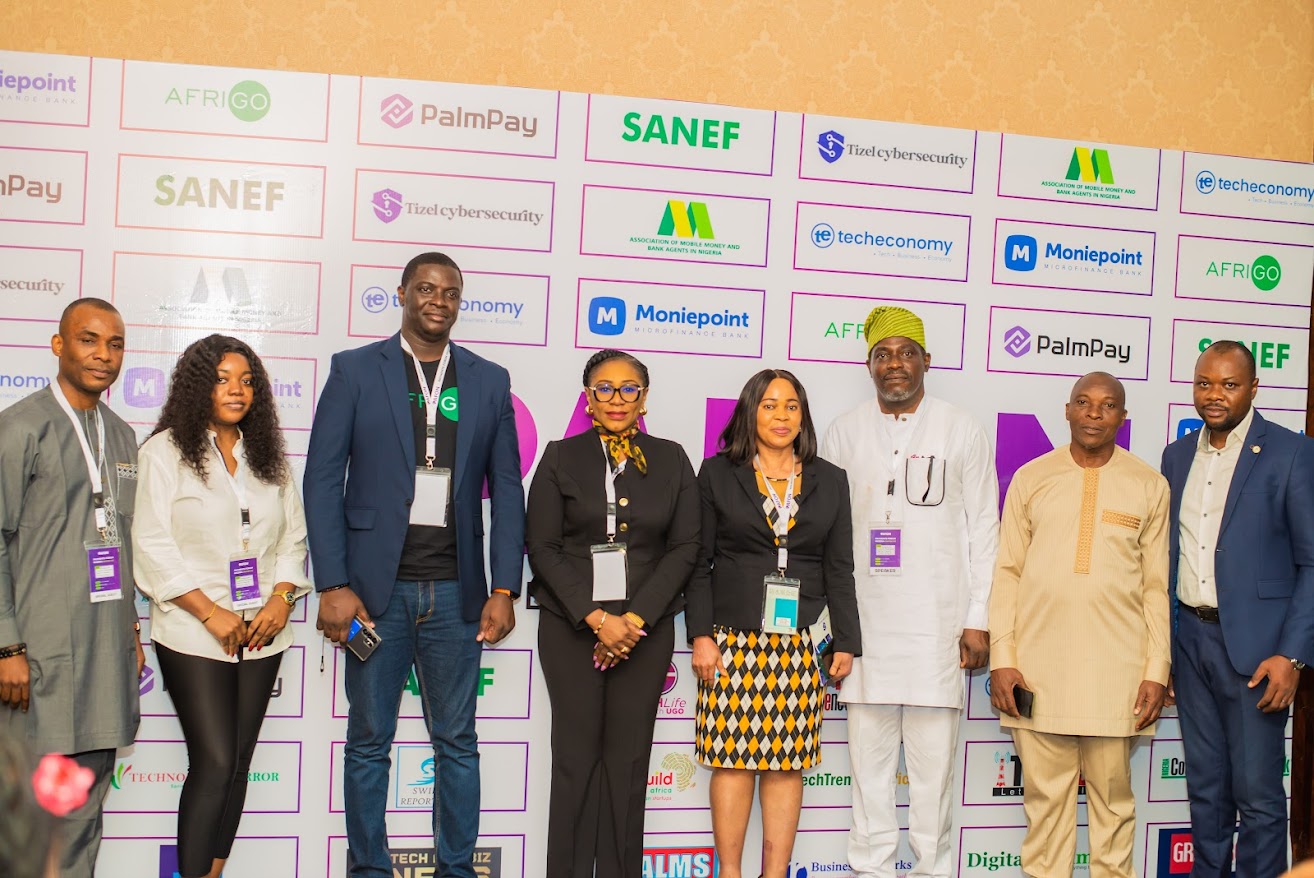
Improved efforts at collaboration among financial service providers, telecommunication operators, and tech Startups, with conscious effort geared at consumer awareness, have been proffered as key remedies to the challenge of financial inclusion in the country.

L-r: Chika Nwosu, managing director of PalmPay; Oluwabunmi Ogunyemi, customer support lead at Moniepoint MFB; Munachi Duru, Head of Innovation and partnership at AfriGoPay Financial Services Limited; Mrs. Uche Uzoebo, MD/CEO, Shared Agent Network Expansion Facilities Limited (SANEF) Limited; Happiness Ohioha, CEO, Tizel Cybersecurity; Ibirogba Oluwagunwa, chairman, Lagos State Chapter of the Association of Mobile Money & Bank Agents in Nigeria (AMMBAN); Chike Onwuegbuchi and Peter Oluka, co-conveners, Payments Forum Nigeria (PAFON), at PAFON 2.0 held in Lagos, recently.
This is the viewpoint of stakeholders that gathered for the second edition of Payment Forum Nigeria (PAFON 2.0) held recently in Lagos.
Delivering a keynote address on the theme, “Bridging the Customer Experience Gap for Financial Inclusion Using AI”, Ebehijie Momoh (Mrs.), the managing director and chief executive officer of AfriGoPay Financial Services Limited, said that with 64% of Nigerian adults being financial included the country has made immense progress in that regards.
She said that between 2012 till date, the country has recorded robust regulatory reforms, especially the launch of the Bank Verification Number (BVN) in 2014 making it easier to identify and track customers across different banks.
“This initiative enhanced the credibility of the financial sector and increased confidence in formal banking systems.
The growth in adoption of smartphones has also helped the financial sector to leapfrog financial inclusion. Nigeria has 142.16 mobile internet subscriptions with an average consumption of ~7.04GB / month as of January 2025. If you juxtapose it to the 15.9% decline in shipments of feature phones to 18.8 million units in Africa as at Q1 2024, you will understand that the uptake in smartphones has helped us a great deal.
Mrs. Momoh who spoke through Mr. Munachi Duru, the head of Innovation and Strategic Partnership at AfriGoPay, said the adoption of artificial intelligence banking gave birth to solutions like smile identity, a leading KYC verification provider launches facial recognition capabilities in Nigeria as neobanks and commercial banks are deploying AI-based KYC verification tools, enabling cheaper and efficient customer acquisition and servicing.
In her goodwill message, Mrs. Uche Uzoebo, MD/CEO, Shared Agent Network Expansion Facilities Limited (SANEF) Limited said that with progress made in accelerating financial inclusion to unbanked and underbanked communities in Nigeria, SANEF has leveraged Artificial Intelligence (AI) as the next step to advancement in financial services in the country.
She noted that as technology evolves rapidly within the financial ecosystem, Financial Inclusion must continue to be at the center of the nation’s progress.
According to her, agent banking has been a game-changer in expanding financial inclusion across Nigeria. “By deploying agents in underserved areas, we have brought financial services and banking products such as account opening, cash in, cash out, bill payment, transfers and other services closer to the unbanked and underserved.”
Speaking during a panel session, Mr. Ibirogba Oluwagunwa, chairman, Lagos State Chapter of the Association of Mobile Money & Bank Agents in Nigeria (AMMBAN), spoke of lack of collaboration and slow institutional drive towards AI as key barriers hindering digital inclusion.
He harped on the need for information sharing among fintech operators, and improved free flow of information to consumers. “The human barrier angle needs to be addressed. Fintechs need to be pushed to move forward, AI cannot operate itself.”
In his contribution, Mr. Chika Nwosu, managing director of PalmPay, reiterated the need to reach the consumers with simple format communication and education style.
He said operators should create awareness and design consumer–centric approach in developing any products. This will not only draw the consumers towards the product, but also generate trust and ease the use of such products.
Focusing on the use of AI to ensure reach, inclusion and security, Azure Application and AI Specialist at Microsoft UK, Olusoji Solomon Adeyemo, spoke on the need for AI and Blockchain in the bid to extend services to rural communities and the unbanked.
According to him, “AI, Blockchain and CBDs are shaping the future of payment, and there is a serious need for education. We need to align with global trends in new tech adoption.”
While noting that AI can ensure reach, Adeyomo said blockchain will also create digital identity that is exclusive and will promote digital financial inclusion.
In her position, Oluwabunmi Ogunyemi, the customer support lead at Moniepoint MFB, proffered physical and digital meet with customers, even in rural areas, as a viable means of inclusivity.
Also speaking, Olusegun Afolabi, the co-founder of Face Technologies UK Ltd., called for improved collaborations among stakeholders in the financial sector.
According to him, the fintech companies must also embrace effective identification solutions, focusing on biometrics and card technologies to ensure topnotch security for users.
Earlier in his opening remarks, Mr. Peter Oluka, co-Convener of the Forum, noted that the financial inclusion journey in the country has come to a crucial juncture where over 30 million adults are still financially excluded, many of whom reside in rural areas or belong to vulnerable demographics.
He noted that despite 12% growth in access to formal financial services between 2020 and 2023, as recorded by the EFInA Access to Financial Services Survey 2023, challenges still exist that hinders the unlocking of the potentials of digital payments to drive inclusive growth in Nigeria.
He further posited: “As digital infrastructure grows and fintech innovation accelerates, we must channel these advancements toward building a more inclusive, secure, and trusted financial ecosystem. This is not just about transactions — it’s about empowerment, opportunity, and economic participation for all.
Nodding in agreement, Mr. Chike Onwuegbuchi, co-Convener, PAFON, reiterated the need for all stakeholders in the financial payment industry, including regulators, to participate in forums as PAFON, to map out, growth strategies with consumers and other strata of the ecosystem.
He promised to invite security stakeholders, such as the EFCC and others in subsequent editions of the event. This will help give insight into security concerns in deployment of products and services in rural and unbanked communities.
Payments Forum Nigeria (PAFON) is a platform dedicated to shaping the future of digital payments and financial services in our country.



Galaxy Backbone Limited (GBB) has said that sustained collaboration among African countries remains central to the continent’s drive toward digital transformation.

The organisation stressed that building secure, interoperable and inclusive digital systems across Africa cannot be achieved in isolation, calling for stronger regional partnerships to accelerate innovation and shared infrastructure development.
The position was contained in a statement issued on Sunday by the Head of Corporate Communications at Galaxy Backbone, Chidi Okpala.
As it prepares to host a major delegation of policymakers, technology leaders and development partners in Abuja, GBB said the engagement would further highlight the importance of cross-border cooperation in shaping Africa’s digital future.
Okpala explained that the initiative is designed to provide both dialogue and practical exposure to Nigeria’s digital infrastructure ecosystem.
According to him, the visit will allow delegates to better understand how shared ICT systems are supporting governance and service delivery in the country.
“This engagement will provide an opportunity for African stakeholders to not only discuss policy frameworks but also see firsthand how digital public infrastructure is being deployed to improve efficiency, connectivity and innovation in the public sector,” Okpala said.
He added that GBB’s hosting role reflects its growing importance in advancing digital governance and infrastructure development across the continent.
“Galaxy Backbone is increasingly positioned as a key enabler of trusted digital infrastructure, and this engagement reinforces that role within Nigeria and beyond,” he noted.
Speaking ahead of the programme, the Managing Director and Chief Executive Officer of Galaxy Backbone, Professor Ibrahim Adeyanju, said the future of Africa’s digital economy depends on the ability of countries to work together in building resilient systems.
“No single country can achieve the level of transformation required on its own. We must share knowledge, align strategies, and invest in systems that can serve the entire continent,” Adeyanju said.
According to the statement, the engagement will feature a continental dialogue themed “Building Africa’s Digital Foundations Together,” bringing together stakeholders from 11 African countries in Abuja.
The programme is being organised in partnership with Co-Develop, Smart Africa, and MicroSave Consulting, with discussions expected to focus on Digital Public Infrastructure (DPI), digital identity systems, secure connectivity, interoperability frameworks, and inclusive digital ecosystems.
GBB said delegates will also undertake a guided tour of its infrastructure and facilities in Abuja, where they will be exposed to Nigeria’s digital transformation journey and the systems supporting cloud services, cybersecurity, government connectivity, and digital platforms.
The company noted that the tour is intended to demonstrate how shared ICT infrastructure is strengthening governance and enabling more efficient public service delivery.
Participants are expected to explore practical pathways for accelerating the deployment of digital public infrastructure to support economic growth and institutional reforms across Africa.
GBB maintained that the initiative also confirms Nigeria’s position as a regional hub for digital innovation and infrastructure development, while deepening cooperation among African nations.

MTN Nigeria reinforced its commitment to supporting African storytelling and emerging creative talent at the 12th Africa Magic Viewers’ Choice Awards (AMVCA), held on Saturday, May 9, 2026, at Eko Hotels & Suites.

MTN Nigeria
Hosted by Bovi Ugboma and Nomzamo Mbatha, the star-studded event brought together some of the biggest names in African film, television, and entertainment for a night celebrating creativity, culture, and cinematic excellence.
As part of its participation at the Awards Night, MTN Nigeria sponsored the Best Short Film category, one of the standout moments of the evening aimed at recognising and rewarding emerging filmmakers shaping the future of African storytelling.
The award was presented by the General Manager, Enterprise Sales, MTN Nigeria, Febisola Oyeleye, alongside actor Jide Oyegbile.
The winning film, Hussaini, by filmmakers Orire Nwani and Josh Olaoluwa, earned both the prestigious AMVCA recognition and a ₦5 million cash prize sponsored by MTN Nigeria.
Speaking during the presentation of the cash prize to the winners, Chief Marketing Officer, MTN Nigeria, Onyinye Ikenna-Emeka, reiterated MTN’s commitment to youth empowerment and supporting the creative industry through platforms that spotlight emerging talent.
According to her, the brand remains intentional about supporting young Nigerians who continue to push boundaries through creativity and storytelling. “At MTN, one of the things that we are so committed to is youth empowerment.
We believe that the youth of Nigeria are actually the future of the country. When we see young people being productive and coming out tops in what they do, it speaks to their commitment and ability to move beyond boundaries.
One of the ways we support the creative industry is through the short film category, and we are delighted to see deserving winners who are obviously on their way to great things,” she said.
The filmmakers behind Hussaini also celebrated the win, with one of the creators describing it as a defining moment after multiple nominations in the category.
“This is our last nomination in this category, and I’m excited we finally have it,” he said. “Next year, we are coming for Best Feature Film.”
Beyond the Awards Night, MTN’s presence throughout the AMVCA week extended to initiatives such as Young Filmmakers Day and the #MTNFilmChallenge, both designed to spotlight emerging talent and create opportunities for young creatives to tell authentic Nigerian and African stories through film and digital content.
With its continued investment in platforms that celebrate creativity and empower young storytellers, MTN Nigeria once again highlighted the important role partnerships can play in shaping the future of Africa’s entertainment industry.

MTN Nigeria says it plans to pass fibre to eight million homes over the next three years as part of efforts to deepen broadband penetration and expand digital service offerings across the country.

Tobe Okigbo
Tobe Okigbo, Chief Corporate Services and Sustainability Officer, disclosed this at the MTN Media Innovation Programme (MIP) Alumni “Ask Me Anything” session held on Saturday.
Okigbo said the telecom company was making significant investments in home fibre infrastructure despite challenges such as regulatory approvals, physical deployment requirements and the long period needed to recover costs.
According to him, fibre broadband differs from mobile internet services because customers pay for connection speed rather than bandwidth consumption.
He said the investment formed part of MTN’s broader strategy to gradually shift customers from mobile-heavy internet usage to fixed broadband services for home connectivity.
Okigbo noted that the global telecommunications industry was evolving beyond traditional voice and data services, driven by advances in artificial intelligence, 5G, smart devices and internet-connected homes.
He warned that telecom operators that fail to adapt risk becoming mere providers of connectivity infrastructure while technology companies capture greater value from digital services.
“The future of telecoms is no longer just about expanding coverage. It is also about building services and platforms around network infrastructure to remain relevant and competitive,” he said.
On recent tariff increases, Okigbo said the adjustments were necessary to address rising operating costs, inflation and sector sustainability concerns.
He cited increased diesel prices and other operational expenses as major factors affecting the cost of delivering telecom services in Nigeria.
According to him, tariff pricing should increasingly reflect market realities and inflation trends, while allowing consumers to switch providers offering better value.
Speaking on service quality, Okigbo said MTN had compensated customers in cases of poor network performance and remained in discussions with regulators on accountability for service failures.
He explained that discussions were ongoing to distinguish between network issues caused directly by operators and those resulting from external factors such as vandalism, construction activities and infrastructure damage.
Okigbo said MTN supported compensating customers for genuine service lapses but sought clarity on regulatory parameters guiding such liabilities.
He added that fibre deployment remained more complex than mobile network expansion because it involved physical cable installation, local government approvals and detailed service planning.
On mobile money operations, Okigbo said MTN Group had acquired a 60 per cent stake in MoMo across its markets to strengthen competitiveness and improve customer experience.
He said the future of telecoms would also be shaped by embedded connectivity, smart homes, connected vehicles and broader Internet of Things adoption.

Xenophobic Attacks: Anonymous Nigeria Threatens to Leak South African Stolen Data

WHO Says Ebola Outbreak Worse than Reported

Chapel Hill Denham Says Banks Lose N2.5 Trillion Annually to High CRR in New Report

Lagos Sanctions 15 Money Lending Firms for Operational Violations

FirstBank, Visa Launch Multicurrency Signature, Naira Debit Cards

MTN, VDT, Zoracom, Digital Realty Back 2026 Girls in ICT Campaign

Vitel Wireless Partners Fintechs to Expand Access to Services

Kaspersky Discovers Vulnerability in Qualcomm Snapdragon Chips that can Lead to Data Loss & Device Compromise

Bank Customers to Pay N1,500 for ATM Card Issuance, Replacement – CBN

FCCPC Licenses 5 Firms for Airtime, Data Lending as Telcos Step Aside




 General News2 days ago
World Bank Blocks Social Media Comments from Nigerians over Loan Backlash

 Telecom2 days ago
NITDA, FMCIDE Deepen Collaboration on Nigeria’s Digital Transformation

 E-Business2 days ago
Jumia Nigeria Records Strong Q1 2026 Growth as Technology-Led Strategy Drives Market Expansion

 Telecom2 days ago
Nigerians Lose N12.5bBn to Telecom-Related Financial Crimes – PwC

 General News2 days ago
LG Electronics Strengthens Household Energy Efficiency in Nigeria with Advanced Inverter Refrigerator Solutions

 News2 days ago
Only 1 in 3 Families Fully Secure their Devices, Kaspersky Study Reveals

 Telecom2 days ago
NITDA Showcases Nigeria’s Startup Framework as Model for Angola

 Telecom2 days ago
Upperlink, ICANN, Others Rally Global Participation for UA Day 2026