

E-Financial
UBA Envisions Footprint in over 100 Countries


United Bank for Africa (UBA) Plc has unveiled an ambitious vision to expand its presence to over 100 countries worldwide in the next 75 years, deepening its role as a truly global African institution.

Looking ahead, UBA also plans to grow its customer base from over 45 million at present to more than one billion customers within the next 75 years.
The bank aims to achieve this by leveraging cutting-edge technology, customer-first innovation, trusted relationships, and collaborations to meet the evolving needs of individuals, businesses, and governments.
The bank projects to accomplish more, driven by its unwavering Customer 1st philosophy, the vast and untapped potential across Africa, and the deeply held belief that UBA possesses the capacity, resilience, and responsibility to confront and overcome the continent’s most pressing challenges while unlocking sustainable opportunities for future generations.
This vision was unveiled by Dr Oliver Alawuba, GMD/CEO of UBA Plc, over the weekend during his opening remarks at the UBA @ 75 anniversary gala dinner in Abuja.
Speaking during the celebration, themed “UBA @ 75 – A Legacy of Excellence… A Future of Impact,” Alawuba said, “At UBA, we are building more than a bank; we are building a future for the next generation of Africans—one defined by opportunity, inclusion, and transformation.
“In the next 75 years, we envision a UBA with a presence in every African country and an expansion to over 100 countries worldwide, deepening its role as a truly global African institution.
“In the next 75 years, UBA will serve more than one billion customers, leveraging cutting-edge technology, customer-first innovation, and trusted relationships and collaborations to meet the evolving needs of individuals, businesses, and governments.
“In the next 75 years, UBA will be more than a part of Africa’s economic renaissance—it will shape its trajectory and champion its transformation.”
Alawuba highlighted that 75 years ago, UBA commenced operations in 1949 on Kakawa Street, Lagos Island, as the British and French Bank. Today, through the strength and resilience of its people and the unwavering trust of its customers, the bank operates in 20 African countries and four global financial centres—New York, London, Paris, and Dubai.
“We are serving over 45 million customers through 1,000 business offices and a diverse array of channels: more than 430,000 POS terminals, 2,600 ATMs, and 21 million cardholders, powered by a workforce of over 25,000 staff across our network,” he stated.
UBA has consistently recorded numerous achievements, delivering an impressive performance in the 2024 fiscal year, with gross earnings soaring by 53.6% to ₦3.19 trillion ($2.14 billion)—underscoring the bank’s strong earnings momentum.
Furthermore, total assets expanded by 46.8% to ₦30.32 trillion ($19.58 billion), and shareholders’ funds strengthened by 68.39% to ₦3.42 trillion ($2.21 billion)—reflecting UBA’s growing balance sheet and unwavering resilience.
The GMD/CEO said, “These milestones stand on the pillars of stability, resilience, and excellence—pillars that have anchored UBA’s growth over the last seven and a half decades.”
Earlier, Senator Kashim Shettima, vice president, extolled what he termed the staying power of the United Bank for Africa (UBA Group) over the past 75 years, describing the financial institution as a pacesetter in innovation, emerging markets, and generational ambition.
“Seventy-five years is not something you pick up at a supermarket. It is earned. It’s through risks and calculations, through storms and sunshine, through mergers and acquisitions, and through the brainpower and courage of those who believe in its promise of a new world. That is what leadership means,” he declared.
Senator Shettima said the celebration of an institution like UBA “that has outlived generations and still pulses with the vibrancy of youth” is not something that happens every day.
“The United Bank for Africa, or simply UBA, is not what it is because of the age of its ideas. It is what it is because of the attention it pays—attention to innovation, attention to emerging markets, attention to shifting dreams, and attention to the changing contours of generational ambition.
“UBA has remained a pacesetter because it is led by people who do not just manage capital but manage curiosity.
“UBA’s staying power is owed to its pursuit of relevance. It has stood as a reward for new thinking, expanding not just across geography but across ideas.
“It serves millions, it shapes economies, and it influences the narrative of what an African institution can become when excellence is institutionalised and when well-intentioned dream-makers are in charge.”
The Vice President acknowledged the leadership ability of Mr Tony Elumelu, group chairman, UBA, whom he described as one of the finest sons of the African continent, noting that no institution writes its history without the signature of those who believe in it.
According to him, Elumelu has “become a bridge between the old and the new, between the outdated and the emerging,” adding that he “has won the trust of even the Gen Zs, or whatever this brilliant, digital generation calls itself.”
He continued, “Tony Elumelu is not a dreamer. Dreamers are those who are stuck in the bubble. Mr Elumelu is a dream-maker. He has made true the imagination of those who wish for an empire from the comfort of their homes. He has taught us that it is possible to build without breaking, to lead without losing touch, and to dream without borders.
“One thing that has amused me about Mr Elumelu over the years is that he has cracked a code many still struggle to decipher—the delicate art of balancing the boardroom with the living room, of being a captain of industry and still a commander at home.
“Not many men have managed a balance between building empires and building families, between saving the world and being present at Christmas in their village. But this man, this maverick, this dream-maker, has shown us that you can help move the continent forward without losing touch with home and family.”
The Vice President also lauded Elumelu’s wife, Dr Awele Elumelu, saying she is not just a spouse “but an Amazon—a matriarch who gathers the kith and kin under her warm canopy,” as well as the quiet strength behind the force that is her husband.
Earlier,Tony Elumelu, group chairman of UBA, expressed profound gratitude to the Vice President while acknowledging the bank’s foundational history.
“This is a night of celebration, gratitude to God and to customers and shareholders who have made it possible,” Elumelu stated.
The Chairman emphasised the importance of honouring those who established UBA’s foundation, saying, “We all today are under the shields because someone planted the tree. The foundation of UBA was laid by people before us; we are only taking it further.”
Looking toward the future, Elumelu expressed confidence in the bank’s continued success, tying it directly to Nigeria’s economic environment.
“On the vision of the next 75 years, just keep transforming our domestic economy as President Bola Ahmed Tinubu is doing, and UBA will keep roaring,” he affirmed.



The International Monetary Fund (IMF) has warned that the rapid expansion of stablecoin usage in Nigeria could significantly weaken demand for the naira and reduce the effectiveness of domestic monetary policy.

This is coming as the country recorded about $59 billion in crypto-asset inflows between July 2023 and June 2024.
The IMF said in it’s report titled “Stablecoins in Nigeria: A Growing Cross-Border Channel,” that the growing adoption of dollar-pegged digital assets for payments, remittances, and savings reflects deeper macroeconomic pressures in Nigeria, including elevated inflation, foreign exchange scarcity, and persistent currency depreciation.
According to the Fund, these conditions have increased the attractiveness of stablecoins as both a store of value and a medium of exchange, particularly among individuals and businesses seeking stability amid exchange rate volatility.
The IMF warned that the widespread use of U.S. dollar-denominated stablecoins effectively represents a form of “digital dollarisation,” which could erode demand for the naira and weaken the Central Bank of Nigeria’s (CBN) ability to transmit monetary policy through interest rates and exchange rate interventions.
Nigeria remains one of the world’s most active digital asset markets, ranking second globally in Chainalysis’ 2024 Global Crypto Adoption Index and sixth in the 2025 edition.
The IMF further noted that the country accounts for nearly 60 per cent of stablecoin inflows into sub-Saharan Africa since 2019, underscoring its dominant role in regional crypto activity.
The report also highlighted the appeal of stablecoins in reducing transaction costs and improving the speed of cross-border payments.
However, the IMF cautioned that the increasing shift of payment activity from traditional banking systems to crypto exchanges and digital wallets may create regulatory blind spots.
It warned that such developments could complicate the monitoring of capital flows and increase exposure to illicit financial risks, including money laundering.
Despite these concerns, the Fund did not advocate restrictive measures. Instead, it called for a balanced policy approach that addresses the structural drivers of stablecoin adoption while strengthening oversight frameworks.
Key recommendations include maintaining macroeconomic stability to support the naira, enhancing regulatory clarity for stablecoin-related activities, and strengthening coordination between the Central Bank of Nigeria (CBN) and the Securities and Exchange Commission (SEC).
The IMF also urged improved transaction data collection through blockchain analytics and continued investment in efficient, regulated payment infrastructure.
The Fund noted that stablecoin growth is largely driven by inefficiencies in cross-border payment systems, stressing that policy efforts should focus on narrowing these gaps while ensuring emerging risks remain effectively contained.

VeendHQ has said that its AI-powered credit platform, Vida AI, helped recover N69 million from a N172.5 million portfolio of loans that were more than 90 days overdue, in a pilot that highlights the growing role of technology in loan recovery and portfolio management.

The result comes at a time when lenders are under increasing pressure to improve recovery outcomes while managing the cost, reputational risk, and operational burden associated with overdue loans.
For many credit providers, the challenge is no longer only how quickly loans can be approved, but how effectively repayment can be monitored and delinquent loans can be recovered after disbursement.
According to VeendHQ, the pilot delivered a 40 percent recovery rate on the overdue loan portfolio.
The company said the result significantly outperformed traditional recovery benchmarks, where a five percent recovery rate on a similar loan book would amount to about N8.6 million.
VeendHQ said the pilot demonstrates how Vida AI can support lenders beyond credit assessment, extending into repayment monitoring, collections, and recovery.
“Credit access is only one side of lending. The bigger challenge for many lenders is what happens after disbursement,” said Olufemi Olanipekun, co-founder and CEO of VeendHQ.
“Vida AI helps lenders make smarter decisions across the credit lifecycle, from approval to repayment and recovery.”
VeendHQ, a Nigerian fintech company building digital credit infrastructure, developed Vida AI as an artificial intelligence-powered platform for lenders, merchants, and financial institutions.
The platform supports credit assessment, identity verification, repayment collections, and loan management workflows.
With the recovery pilot, the company is positioning Vida AI beyond loan origination, as a tool for lenders seeking to improve repayment performance and manage overdue portfolios more efficiently.
Delinquent loans remain a major cash-flow challenge for lenders.
Once loans exceed 60 to 90 days past due, recovery becomes more difficult, expensive, and unpredictable. Traditional approaches such as manual calls, recovery agents, and legal escalation often increase costs without significantly improving recovery rates.
VeendHQ said Vida AI’s recovery workflow enables lenders to upload overdue loan records, verify borrower information, assess repayment capacity, and trigger automated recovery actions.
This gives lenders better visibility after disbursement and allows recovery teams to prioritize overdue portfolios more effectively.
“If lenders cannot recover efficiently, they become more conservative with lending. That affects consumers, small businesses, and the wider credit market,” Olanipekun said.
“Better recovery infrastructure gives lenders more confidence to lend, manage risk, and keep credit flowing.”
The company said the recovery use case is especially relevant for banks, microfinance institutions, digital lenders, cooperatives, and merchants managing loans that are 60 to 180 days past due.
It added that it plans to deepen Vida AI’s recovery capabilities for credit providers seeking to improve recovery performance without relying solely on manual methods.
“As lending expands across Nigeria and Africa, recovery infrastructure is becoming as critical as origination,” Olanipekun said. “Tools that improve both will define which lenders can scale sustainably.”
The pilot, VeendHQ says, points to a broader shift in the credit market: approval speed alone is no longer enough. Increasingly, lenders will be defined by how effectively they monitor repayment, recover overdue loans, and manage portfolio risk over time.

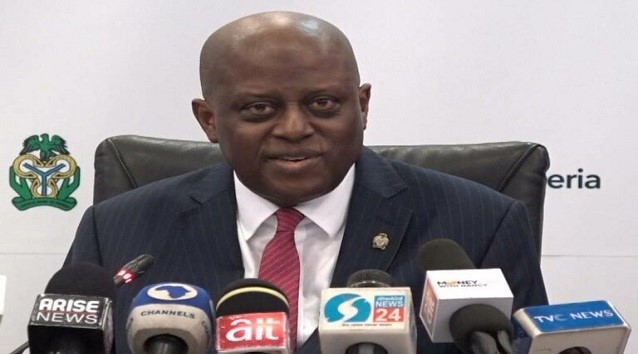
The Central Bank of Nigeria has directed banks, fintech firms, and other payment service providers to store payment transaction data generated within the country on local servers from January 1, 2027, as part of new measures to strengthen oversight of the fast-growing digital payments ecosystem.

The directive was contained in a circular issued by the Payments System Supervision Department of the CBN on Monday and addressed to deposit money banks, microfinance banks, mobile money operators, switching and processing companies, payment terminal service providers, payment solution service providers, super agents and other licensed operators in the payments industry.
The circular, signed by the Director of the Payments System Supervision Department, Rakiya Yusuf, also introduced new market structure rules, beneficial ownership disclosure requirements and systemic oversight measures for payment service operators.
According to the apex bank, the reforms became necessary following the rapid expansion of electronic payments and digital financial services across the country.
The CBN said it had observed “significant structural developments within the Nigerian Payments ecosystem, characterised by rapid growth in electronic payments, increasing adoption of digital financial services, and the emergence of operators with substantial market presence across key payment activities.”
It noted that while the growth had improved innovation, efficiency and financial inclusion, it had also created concerns around market concentration, operational dependence, ownership transparency and the storage of critical payments data.
To address these concerns, the regulator ordered all financial institutions facilitating payments in Nigeria to ensure that transaction data generated within the country are stored domestically.
The circular stated, “All Financial Institutions and participants facilitating payments within Nigeria shall ensure that payments transaction data generated within Nigeria are stored and managed in Nigeria in accordance with data protection laws and regulations applicable in Nigeria.”
It added that “all affected Financial Institutions shall fully comply with this requirement effective January 1, 2027.”
The move is expected to strengthen regulatory oversight, enhance data sovereignty and ensure that sensitive payment information remains within Nigeria’s jurisdiction.
It also aligns with broader efforts by regulators globally to localise critical financial data and reduce reliance on offshore infrastructure.
Beyond data localisation, the CBN ordered banks, payment service providers and other financial institutions with digital payment operations to disclose the ultimate beneficial ownership of significant shareholders.
According to the circular, institutions must maintain accurate and up-to-date records of their ultimate beneficial owners and make such information available to the apex bank upon request.
The regulator said the disclosure requirement must comply with existing anti-money laundering, counter-terrorism financing and counter-proliferation financing regulations.
The directive builds on previous CBN efforts to strengthen beneficial ownership transparency as part of wider measures to combat money laundering and illicit financial flows in the financial system.
The central bank also introduced fresh competition rules aimed at limiting excessive market dominance in the payments industry.
Under the new framework, any financial institution that controls more than 25 per cent of the card-issuing market in a rolling 12-month period will not be allowed to hold more than 15 per cent of the merchant-acquiring market during the same period.
Similarly, operators with more than 25 per cent market share in merchant acquiring activities will be restricted to a maximum of 15 per cent market share in card issuing activities.
Merchant acquiring refers to processing card payments on behalf of merchants, while card issuing involves providing payment cards to customers.
The CBN said all regulated entities would be required to submit monthly market share returns based on prescribed templates and timelines.
It further directed affected institutions to take the necessary measures to achieve full compliance with the market structure requirements by December 31, 2026.
The apex bank said the new measures were designed to “improve transparency through beneficial ownership disclosure, address concentration risk, promote a fair, competitive, and resilient payments ecosystem.”
According to the regulator, the reforms are also intended to “safeguard the integrity of the Nigerian payments system and ensure the localisation of payments transaction data within Nigeria.”
The CBN warned that it would closely monitor compliance and impose sanctions where necessary.
“The CBN shall monitor compliance with the provisions of this Circular and may, where necessary, impose supervisory sanctions in accordance with applicable laws, regulations, and guidelines,” the circular stated.
The latest directive comes amid a rapid expansion of Nigeria’s digital payments industry, with electronic transactions reaching record levels and regulators increasing oversight of banks, fintech firms and other payment operators to address operational, cybersecurity and systemic risks.

Nigeria Launches FreeTV Nationwide

NIPOST Plans Digital Postcodes for Every Building in Nigeria

Enugu to Host The Gathering on 100 as MTN-Backed Youth Movement Expands Across Nigeria

Prof. Dzidonu Urges Universities to Produce Deep Thinkers for AI Age

FG Debunks Claims of Plans to Introduce Telecoms, Fuel Taxes

CBN Extends PoS Geo-Fencing Enforcement Deadline to August 2026

NCC Drafts New Rules for Virtual Mobile Operators

London Strengthens Global Investment Ties with Africa @ First Ever London-Africa Business Summit

FG Targets Alleged N3tn Capital Flight, Opens Airtime Credit Market to Nigerian Fintechs

Easybuy Partners WAWUAfrica to Upskill 10 Million Youths and Women, Boosting Nigeria’s Economic and Financial Inclusion




 Telecom1 day ago
MTN Foundation Commits N32Bn in Projects across Nigeria

 E-Financial3 days ago
CBN Orders Banks, Fintechs to Host Payment Data Locally

 E-Business3 days ago
Galaxy Backbone @ 20, Pledges Nationwide Connectivity, Data Sovereignty

 E-Financial3 days ago
Analysts Warn of Growing “Crowded Trade” in Foreign Exchange Markets

 E-Financial3 days ago
ACAMB Kicks-off 30th Anniversary Celebration With Tree Planting Initiative

 News3 days ago
PalmPay Joins Industry Leaders @ Digital Pay Expo 2026

 Telecom3 days ago
Nigeria Innovation Summit 2026 Set to Convene West Africa’s Brightest Minds to Shape the Future of Innovation

 Telecom3 days ago
UK Bans TikTok, Instagram, Facebook for Under-16s in Landmark Crackdown