

News
Digital Africa Global Consult, NDPC Partner on Ground-Breaking “Nigeria Data Challenge” Initiative


In a bold and forward-looking move to embed a culture of data privacy in Nigeria’s educational landscape, Digital Africa Global Consult (DAGC), a leading technology advancement firm, on Friday, entered into a strategic partnership with the Nigeria Data Protection Commission (NDPC).

The collaboration was formalised through the signing of a Memorandum of Understanding (MoU) aimed at launching the Nigeria Data Challenge, a pioneering, education-focused initiative designed to inculcate data protection awareness among secondary school students across the country.
The Nigeria Data Challenge is more than a knowledge dissemination campaign. It is a structured, competitive learning program that introduces students to the fundamentals of data protection and digital privacy.
By engaging learners through curriculum-based activities, practical challenges, and assessments, the program seeks to nurture a generation of data-responsible citizens well-prepared for the demands of Nigeria’s digital future.
Speaking during the signing ceremony, Dr. Vincent Olatunji, National Commissioner and Chief Executive Officer of the NDPC, applauded Digital Africa Consult for initiating the challenge, which he described as timely and transformative.
He noted that the project complements the Commission’s existing Privacy Club Initiative in tertiary institutions and aligns with its broader mandate to cultivate a privacy-aware culture throughout Nigerian society.
“This partnership is a natural extension of our mission to build a data protection-conscious ecosystem in Nigeria. We are excited about the opportunity to reach young minds early, and this program promises to be a cornerstone in our awareness strategy,” Dr. Olatunji stated.
In his remarks, Dr. Evans Woherem, Chairman of Digital Africa Global Consult and a seasoned advocate of digital transformation in Africa, expressed appreciation to the NDPC for embracing the vision of early-stage data literacy.
He underscored the strategic importance of data as the “new oil” of the digital economy and emphasised the need to build data consciousness from a young age to prepare Nigeria for a competitive global digital environment.
“The future belongs to nations that understand and manage data responsibly. By starting from our secondary schools, we are planting the seeds of a resilient data economy,” Dr. Woherem said.
Adding further insight, Nneoma Ofodile, General Manager of Digital Africa Global Consult, highlighted the novelty and global relevance of the Nigeria Data Challenge.
“This is the first data-focused challenge of its kind anywhere in the world, making it not only a national milestone but also a global precedent. It aligns with Sustainable Development Goals (SDGs) 4, 9, and 16, promoting quality education, industry innovation, and strong institutions,” she stated.
She also noted the urgency of addressing the indiscriminate ways data is shared and mishandled by young people, often without their full understanding of the consequences.
“This initiative comes at a time when even students are becoming both victims and agents of data breaches, consciously or unconsciously. Awareness is not optional; it is essential,” she added.
Nigeria, like many nations in Africa, is rapidly digitizing across public and private sectors. With this digital evolution comes the imperative to protect personal data and promote ethical digital practices.
The establishment of the Nigeria Data Protection Commission in 2023 signalled a new era of regulatory oversight in line with global data protection trends, including the EU’s GDPR and similar frameworks adopted in countries like Kenya, South Africa, and Rwanda.
Yet, awareness of data rights and responsibilities remains low, particularly among the youth. Initiatives such as the Nigeria Data Challenge help bridge this critical knowledge gap by bringing data education into mainstream educational curricula.
The project is expected to scale through state-level rollouts and regional contests, eventually culminating in a national championship that will showcase top-performing schools and students.
This initiative arrives at a time when the digital economy is estimated to contribute significantly to Nigeria’s GDP, and data-driven innovation, spanning fintech, e-commerce, health tech, and AI—continues to surge. However, this growth is threatened by weak data protection compliance and poor digital hygiene among users.
The NDPC and Digital Africa Global Consult are optimistic that this partnership will ignite similar collaborations and inspire a new frontier in civic education, one that recognises data as both a right and a responsibility.
As Nigeria positions itself to be a digital leader in Africa, the Nigeria Data Challenge may well become a benchmark model for other countries aiming to develop grassroots data governance awareness.



Payaza Africa, a payments infrastructure company, has earned strong credit ratings from four major rating agencies, reinforcing its growing reputation as a resilient and credible player in Africa’s financial services ecosystem.

The payment company recorded upgrades across the board, with DataPro raising its rating from A to AA-, Intelligence Africa assigning it an A- investment-grade rating, Agusto upgrading it from BBB to A-, and GCR, an affiliate of Moody’s, also moving it from BBB to A-.
A credit rating reflects a company’s financial strength and its ability to meet debt obligations, indicating how safe it is for lenders and investors to extend credit.
In a statement on Monday, the company described the achievement as a validation of its disciplined growth trajectory and operational resilience in a dynamic fintech landscape. It added that the upgrades position Payaza as a future-ready brand with increasing relevance not only within Africa but also in the global fintech space.
Commenting on the development, Seyi Ebenezer, the Chief Executive Officer of Payaza Africa, said the ratings reflect years of deliberate effort to build a sustainable and globally competitive institution.
“This milestone is a strong affirmation of the work we have done to build Payaza on a foundation of discipline, trust, and long-term value creation. Receiving these upgraded ratings sends a clear message that Payaza is not only growing, but growing with strength, structure, and sustainability,” he said.
Ebenezer noted that the recognition goes beyond financial performance, highlighting the company’s ability to execute strategically while maintaining strong risk management practices.
“For us, this is bigger than recognition. It reflects our commitment to building a world-class institution that can compete globally while continuing to serve businesses and consumers across the continent with excellence.
“Over time, our ratings journey has reflected more than strong financial performance. It speaks to a business built on disciplined execution, prudent management, and the ability to scale responsibly in a dynamic market. This has helped us stand out not only as an innovator in digital payments, but as a maturing financial institution with the operational depth to compete globally.
“These new ratings are expected to further strengthen Payaza’s standing with investors, regulators, partners, enterprise clients, and the wider financial community. In a sector where trust, resilience, and compliance are increasingly central to long-term success, independent ratings remain a powerful endorsement of a company’s ability to manage risk, meet obligations, and sustain growth,” Ebenezer said.
Payaza Africa provides payment infrastructure solutions focused on collections, payouts, embedded finance, and digital commerce enablement for businesses across Africa.
The company has also continued to expand its product ecosystem with solutions such as Payaza Checkout for payment collections and payouts, Chat and Pay by Payaza for WhatsApp-based transactions, Payaza Give for donations and digital contributions, and Shopaza, its e-commerce platform designed to help businesses sell and receive payments more efficiently.
News
London Strengthens Global Investment Ties with Africa @ First Ever London-Africa Business Summit
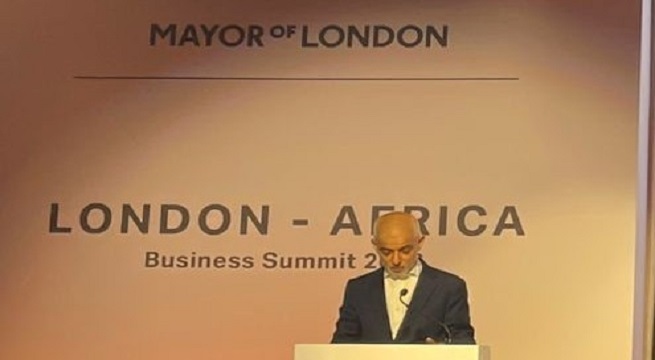
The Mayor of London, Sadiq Khan, has today hosted City Hall’s first ever London-Africa business summit, bringing together 200 business and political leaders from across the continent to strengthen trade and investment ties between London and Africa.

Held in the heart of the City of London, the summit included the Minister of Trade for Agribusiness and Industry in Ghana and representatives from SOAS, the Nigerian Exchange Group, Ventures 54 and London Africa Network to showcase London as the global city of choice for African companies looking to expand internationally and attract investment.
The Mayor announced the summit during his 2025 trade mission to Nigeria, Ghana and South Africa, where he led a delegation to promote London as a global destination for investment. Since the visit, African businesses have invested more than £30 million into London through foreign direct investment.
117 African organisations are listed on the London Stock Exchange, spanning sectors from telecoms and finance to energy and technology. Companies include telecoms giant Airtel Africa and energy supplier Seplat Energy. By comparison, fewer than 20 African organizations are listed on the New York Stock Exchange, underlining London’s deep economic and cultural links with the continent.
The summit builds on growing economic momentum between the UK and Africa. Total UK-Africa trade reached approximately £52 billion in 2025 despite continued global economic uncertainty, while UK exports to Africa increased to nearly £26.2 billion, reflecting rising demand for UK goods and services across African markets.
Africa is increasingly recognised as one of the world’s most important long-term growth regions, driven by rapid urbanisation, infrastructure investment, population growth and expanding consumer markets.
The UK remains among Africa’s top 10 supplying markets and continues to strengthen trade relationships through agreements covering 18 African countries. There are also huge community links between the UK and Africa. The UK has the second largest Nigerian diaspora population, second only to the US, with an estimated 215,000 Nigerians living here.
The Mayor’s London Growth Plan identified the need to attract more foreign direct investment to help grow London’s economy by £107 billion by 2035 and support the creation of 150,000 good jobs by 2028. London continues to lead as the top destination for African foreign direct investment in Europe and the US, ranking second globally outside Africa behind only Dubai.
The summit also highlighted major opportunities for collaboration across sectors, including financial services, digital technology, education, healthcare, energy transition, infrastructure and the creative industries, with London well positioned to deepen its role as a strategic trade and investment partner for African markets.
The Mayor of London, Sadiq Khan, said: “I am proud to host City Hall’s first ever London-Africa business Summit, bringing together investors, entrepreneurs and businesses to showcase London as the best city in the world for African companies to expand internationally and attract investment.
“With more African companies listed on the London Stock Exchange than any other exchange, it is one of the most globally important growth regions. I am delighted that my African trade mission last year has encouraged both inward investment and outward expansion, creating jobs and further strengthening the links between us. I look forward to more opportunities developing from this Summit as we continue to build a better, more prosperous London for everyone.”
Mr. Mark Smithson, Country Director, UK Department for Business and Trade, Nigeria, and Anglo West Africa said: “The London-Africa Business Forum has brought together ambition, capital and creativity, reinforcing London’s role as a global gateway for African enterprise.
“As we look to the next chapter, we are deepening partnerships that drive sustainable growth, shared prosperity and long-term opportunity across both regions. In Nigeria, we are working closely with key partners, businesses and investors to unlock investment, create jobs and deliver tangible economic outcomes.”
Soren Nikolajsen, Managing Director, Industry Engagement Defence and Trade at Natwest said: “London remains one of the world’s leading destinations for international investment, underpinned by its deep financial expertise and global connectivity. Bringing together investors from across Africa in this way is a valuable opportunity to strengthen relationships, showcase the breadth of opportunity here, and support long-term, mutually beneficial growth.”
Olukorede (K.O.) Adenowo, Chief Executive Officer, FirstBank UK, said: “FirstBank UK is proud to support the strengthening of the Africa–UK corridor, where growing demand for capital and expertise continues to drive cross-border opportunity. London remains a powerful gateway for African businesses seeking to scale internationally, while Africa offers compelling long-term investment potential.
“At FirstBank UK, we are focused on supporting cross-border trade and facilitating capital flows by connecting clients to global markets and structuring bankable opportunities. Through stronger collaboration, we can unlock greater investment and deliver sustainable growth across both regions.”
Dylan Martin, Chief Executive Officer of Teybridge Capital said: “Our expansion in London marks an important milestone for Teybridge Capital Europe and reflects the strength of our growth in the UK market. With over 60 per cent of our client base in the UK, this was a natural step in deepening our presence on the ground and investing in a high-performance, locally based team to support our next phase of growth.”
The Federal Government has received a major boost in its drive to strengthen teacher education and digital learning, as the Government of Japan, through the UNESCO International Institute for Capacity Building in Africa (IICBA), donated ICT equipment and learning materials to 15 teacher training institutions across Nigeria.

Speaking at the official handover ceremony held at the Federal Ministry of Education in Abuja, the Minister of State for Education, Prof. Suwaiba Said Ahmad, described the intervention as a significant contribution to the country’s efforts to improve teacher quality, digital literacy and inclusive education.
She said the donation forms part of a regional initiative launched in 2024 by UNESCO-IICBA, the Government of Japan and the African Union to strengthen teacher training and promote continuous access to safe, quality education for girls in West Africa.
According to the minister, the project, which covers Nigeria, Burkina Faso, Cameroon, Chad, Mali and Mauritania, aligns with the Federal Ministry of Education’s priorities under the Renewed Hope Agenda, particularly in the areas of equity, quality education, digital transformation and inclusion.
“Teachers remain the backbone of every education system. No education reform can succeed without well-trained, motivated and digitally empowered teachers,” Ahmad said, noting that the equipment would modernise teacher training institutions and improve access to digital learning resources.
The beneficiaries comprise 15 federal and state colleges of education spread across Nigeria’s six geo-political zones, including the Federal College of Education, Kontagora; Federal College of Education, Zaria; Federal College of Education (Technical), Gombe; Federal College of Education, Yola; Federal College of Education (Technical), Asaba; Federal College of Education (Special), Oyo.
Others are Federal College of Education (Technical), Umunze; College of Education, Zuba, FCT; Isaac Jasper Boro College of Education; Enugu State College of Education (Technical); Sa’adatu Rimi College of Education, Kano; Adamu Augie College of Education, Argungu; Shehu Shagari College of Education, Sokoto; Adamawa State College of Education, Hong and Taraba State College of Education, Zing.
The donated items include 65 laptop computers, 71 tablets, four desktop computers, five interactive smart boards, 19 all-in-one desktop computers, 14 projectors, 15 printers and 15 backup hard drives.
Ahmad said the facilities would enhance both pre-service and in-service teacher training by promoting innovation, digital competence and learner-centred teaching approaches, while preparing educators for the demands of a technology-driven world.
The event also featured a national consultation on school safety and infrastructure security, with participants discussing strategies for creating safer and more inclusive learning environments.
The minister stressed that safe schools remain critical to achieving quality education, particularly for girls and other vulnerable learners, adding that the ministry would continue to prioritise policies and programmes aimed at strengthening school security.
She further highlighted the ministry’s focus on Technical and Vocational Education and Training (TVET), Science, Technology, Engineering and Mathematics (STEM), girl-child education, quality assurance, data management and digital transformation as key pillars for improving educational outcomes nationwide.
Ahmad also disclosed plans to implement new interventions aimed at empowering female teachers and school leaders in crisis situations through mobile-based learning platforms, as well as programmes designed to integrate out-of-school children into formal education.
She commended UNESCO-IICBA, the Government of Japan, the African Union and other development partners for supporting teacher education in Nigeria and urged beneficiary institutions to utilise the equipment responsibly to improve learning outcomes and build a more resilient education system.
“The equipment will enhance digital literacy among our pre-service teachers and boost the attainment of education goals in Nigeria,” she said.
In their separate remarks, the Director of the UNESCO International Institute for Capacity Building in Africa (IICBA), Dr. Quentin Wodon, and the Chargé d’Affaires of the Embassy of Japan in Nigeria, Hitoshi Kozaki, reaffirmed their commitment to supporting efforts aimed at improving teacher education and expanding access to quality learning opportunities across Nigeria and the West African region.
They noted that the donation of ICT equipment to the beneficiary colleges of education reflects the shared commitment of UNESCO, the Government of Japan and their partners to strengthening the capacity of teacher training institutions, particularly in the area of digital learning.
According to them, equipping teachers with modern technological skills is critical to improving learning outcomes and ensuring that education systems are responsive to the demands of the 21st century.

Firm Discovered a New Corporate Phishing Technique using a Popular AI Web Development Platform

MSMEs Paucity of Funds Receives Boost as Senate Backs Bill Seeking to Unlock Cash for them

Airtel Nigeria Launches Web Data Calculator to Give Customers Greater Visibility into Data Usage

America Borrows Power, Nigeria Borrows Survival

NCC Board Reviews Telecom Sector, Notes Progress in Network Expansion, Consumer Compensation

CBN Extends PoS Geo-Fencing Enforcement Deadline to August 2026

FG to Launch Nationwide Free Digital TV Platform June 17

Jumia Nigeria Records Strong Q1 2026 Growth as Technology-Led Strategy Drives Market Expansion

NCC Drafts New Rules for Virtual Mobile Operators

FG to Balance Innovation with National Security with Stronger Drone Regulations




 Telecom3 days ago
FCCPC Refutes Airtime Market Takeover Claims

 E-Financial3 days ago
Reps Committee Recovers N521m Unremitted VAT from CBN

 General News3 days ago
SSDC Warns Businesses against Cyber, Election-Related Risks

 E-Business2 days ago
Monnify Processed ₦25 Trillion Worth of Transactions in 2025, Stepping into the Spotlight

 Telecom2 days ago
QNET Breaks Silence After NSCDC Busts Alleged Human Trafficking Ring in Lagos

 E-Financial2 days ago
Report Faults Banks over N91.1 Trillion Sterilised at CBN

 Telecom2 days ago
Telcos Fault Data of FDI Flow, Claim Investment of N1.86 Trillion on Service Expansion

 E-Business2 days ago
NDPC, Meta Launch 2-Year M-SIDP after Regulatory Settlement