

Broadcasting
Curbing Insecurity, Investing in Rural Infrastructure are Key to Nigeria’s Agri-Potential


By Diana Tenebe, Chief Operating Officer, Foodstuff Store
Nigeria, often dubbed the “Giant of Africa,” possesses immense agricultural potential. With vast arable land and a predominantly agrarian population, the nation could easily achieve food security and become a major player in global food markets. However, this promising future remains largely untapped, held hostage by two formidable challenges: pervasive insecurity and a severe deficit in rural infrastructure. Addressing these twin issues is not merely an economic imperative but a matter of national survival and prosperity.

The escalating insecurity across many parts of Nigeria, particularly in the Middle Belt, has dealt a crippling blow to agricultural productivity. Benue State, famously known as the “Food Basket of the Nation” due to its rich soil and significant contributions to Nigeria’s food production, provides a stark and tragic illustration of this crisis. Recent events in Benue underscore the devastating impact of unchecked violence on farming communities.
In June 2025, horrifying attacks in Yelewata in Benue State claimed the lives of dozens, with reports suggesting the death toll could be over a hundred. Families have been displaced, their homes razed, and their farmlands abandoned. The International Organization for Migration (IOM) reported over 500,000 registered Internally Displaced Persons (IDPs) in Benue State as of 2024, a number that continues to rise.
The economic ramifications of this violence are profound. Farmers, fearing for their lives and livelihoods, are unable to cultivate their lands during critical planting seasons. Crops are destroyed, storage facilities are razed, and market access is severely hampered. A recent study revealed that a one percent increase in insecurity leads to a 0.211% and 0.311% decrease in crop and livestock output respectively in Benue State. The state, which accounts for over 51% of Nigeria’s yam production and is a leading producer of cassava, rice, and soybeans, is witnessing a drastic reduction in its agricultural output. This directly fuels food inflation, pushing millions deeper into hunger and poverty. The once vibrant agricultural landscape of Benue is now characterised by fear, abandonment, and immense losses.
Beyond the immediate human and economic toll, insecurity erodes trust in government and institutions, making it difficult to implement any meaningful agricultural development programs. Farmers are reluctant to invest in their farms due to the uncertainties attributed to insecurities. This cycle of violence and despair starves the nation of its most fundamental resource: food.
However, even if insecurity were to magically disappear, Nigeria’s agricultural sector would still face an uphill battle without significant investment in rural infrastructure. Rural areas, where the vast majority of agricultural activities take place, are largely underserved by basic amenities. Poor road networks make it incredibly difficult and expensive for farmers to transport their produce to markets, leading to significant post-harvest losses. Lack of access to reliable electricity hinders processing and storage, further diminishing the value of agricultural products. Limited access to irrigation facilities means farmers remain heavily dependent on erratic rainfall, making them vulnerable to climate change.
The symbiotic relationship between curbing insecurity and investing in rural infrastructure cannot be overstated. A secured environment provides the foundation for infrastructure development, allowing construction projects to proceed without fear of attack or sabotage. Improved infrastructure, such as good roads, can facilitate quicker deployment of security forces to troubled areas, enhancing response times and potentially deterring attacks.
Investment in rural infrastructure is a catalyst for agricultural transformation. It reduces transportation costs, increases market access for farmers, and encourages value addition through processing. Cold storage facilities, for instance, can drastically reduce post-harvest losses, while improved irrigation systems can boost yields and enable year-round farming. Rural electrification can power small and medium-scale agro-allied industries, creating employment opportunities and diversifying rural economies. Access to information and communication technology, even in remote areas, can connect farmers to market information, modern farming techniques, and financial services.
To unlock Nigeria’s vast agricultural potential, a comprehensive and integrated approach is essential. This begins with establishing a robust security architecture to protect farming communities. The government must prioritize this through increased deployment of security personnel, fostering community-led intelligence gathering, implementing effective conflict resolution mechanisms, and ensuring swift justice for perpetrators of violence. It’s also crucial to address the root causes of farmer-herder conflicts, such as land disputes and resource scarcity, by promoting equitable land governance and establishing designated grazing reserves.
At the same time, massive investment in rural infrastructure is imperative. A national strategy focusing on rural development should prioritize constructing and rehabilitating feeder roads to connect farms directly to markets. This also includes providing reliable electricity through both grid expansion and sustainable renewable energy solutions, developing modern irrigation schemes, and establishing efficient storage and processing facilities. To bridge the significant funding gap in these areas, public-private partnerships should be actively encouraged.
Immediate support for displaced farmers is also critical. For communities, particularly those in states like Benue who have been displaced by violence, urgent assistance is needed to help them return to their ancestral lands and resume their farming activities. This support should encompass providing essential resources such as seedlings, fertilizers, and financial aid, alongside much-needed psychosocial support.
A successful transformation hinges on policy coherence and implementation. There must be a strong political will to effectively implement existing agricultural policies and to create new ones that are responsive to current challenges. This includes vital areas such as land reforms, ensuring easier access to credit for smallholder farmers, and strengthening agricultural extension services.
Nigeria’s agricultural sector is a sleeping giant, capable of feeding the nation and driving economic growth. However, until the twin scourges of insecurity and infrastructural deficit are decisively tackled, its immense potential will remain largely unrealized. The tragic narrative in Benue State serves as a poignant reminder that the path to agricultural prosperity in Nigeria begins with peace and the foundational investments that empower those who feed the nation.



Nigerian Education Loan Fund (NELFUND) says it is investigating about 34 tertiary institutions over allegations that they failed to refund students whose tuition fees were paid twice under the Federal Government’s student loan scheme.

The Managing Director of NELFUND, Mr Akintunde Sawyerr, disclosed this during an interview on Arise Television.
Sawyerr said the agency had deployed a five-member investigative team, including operatives of the Economic and Financial Crimes Commission (EFCC) and internal auditors, to examine the allegations.
According to him, the investigation was prompted by numerous complaints received from affected students.
“As of right now, there are 34 institutions that we are looking at closely with respect to this issue,” he said.
Sawyerr explained that the double payment issue arose because President Bola Tinubu directed that the student loan scheme commence in the middle of an academic session instead of at the beginning.
He said the decision compelled many students to pay their tuition fees to meet registration deadlines while awaiting approval of their loan applications.
“What happened is that a lot of schools got double payment; some from the students and some from us,” he said.
“The refund process is entirely out of our hands. It is the recipient of the double payments that is obliged to make refunds to the students.”
The NELFUND boss noted that many students had borrowed money from family members, friends and other sources to pay their tuition with the expectation of receiving refunds once the loans were disbursed.
He said while some institutions had promptly refunded affected students, others had failed to do so.
“Some have been very good at this. Others haven’t been so good at it,” Sawyerr said.
“I reserve judgement on the intentionality around it because, for some of them, they just didn’t have the process to make refunds.”
Sawyerr disclosed that NELFUND was exploring a tokenised payment system that would enable students to authorise tuition payments directly to their institutions, thereby reducing the likelihood of duplicate payments.
He said the agency deliberately chose not to disburse tuition loans directly to students to minimise the risk of fund diversion.
“Paying the funds to the students could really lead to the temptation for them to divert and do other things,” he said.
The managing director, however, acknowledged that NELFUND lacked the statutory powers to compel institutions to refund students or prosecute officials found culpable.
He added that many frustrated students had submitted complaints not only to NELFUND but also to anti-corruption agencies, including the EFCC and the Independent Corrupt Practices and Other Related Offences Commission (ICPC).
Sawyerr also expressed concern over increases in tuition fees by some institutions following the introduction of the student loan scheme.
He said NELFUND had declined to pay institutions that increased their tuition fees beyond acceptable levels.
“Some schools, because they get paid easily, started to put up their fees. We refused, point blank, to pay institutions who had hiked their fees beyond a certain level,” he said.
He reaffirmed the agency’s commitment to investigating every reported irregularity and strengthening the implementation of the student loan programme through continuous monitoring and internal reviews.
Broadcasting
Obi, NDC Presidential Candidate Faces N50Bn Defamation Claim over Alleged Podcast Remark

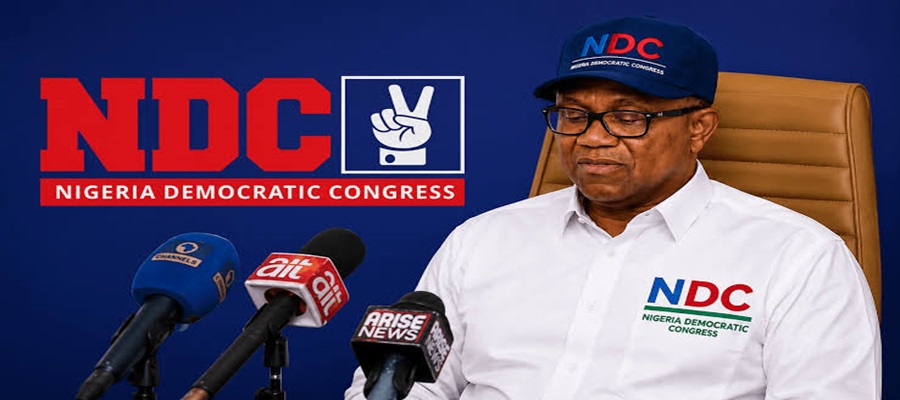
Abayomi Arabambi, national vice chairman (South-West) of the Labour Party, has demanded a public apology, a retraction, and N50 billion in damages from Peter Obi, presidential candidate of the Nigeria Democratic Congress (NDC), over an alleged defamatory statement made during a podcast interview.

The demand was contained in a letter issued by the law firm Neplus Ultra Attorneys and signed by Anderson U. Asemota, Peter O. Asimegbe, and Stanley C. Eziefulle on behalf of Arabambi.
According to the letter, the legal dispute arose from comments allegedly made by Obi during the interview, where he reportedly stated that Arabambi “does not have an address.”
Arabambi’s legal team described the statement as false, malicious, and defamatory, arguing that it portrayed their client as a faceless individual without legitimacy, credibility, or standing in public life.
The lawyers further claimed that the interview was widely circulated on television stations and digital platforms, exposing Arabambi to public ridicule and damaging his reputation.
“Our client has had a known residential and business address, maintains professional and political affiliations within Nigeria, and has never been a person whose whereabouts or identity were unknown,” the letter stated.
The legal team maintained that the alleged publication caused embarrassment and harmed Arabambi’s public image and political standing.
As part of their demands, the lawyers called for an unreserved public apology to be aired on national television, published on Obi’s verified social media platforms, and carried as full-page apologies in national newspapers.
They also demanded the payment of N50 billion as compensation for the alleged injury to Arabambi’s reputation, dignity, political standing, and public image.
Broadcasting
Why We’re Partnering With NIHOTOUR To Bring Nigerians In South Africa Home – Steve Babaeko

When Nigerians began arriving back home on emergency flights following an ultimatum from anti-migrant groups in South Africa, Steve Babaeko, alongside The Nigerian Institute of Hospitality and Tourism (NIHOTOUR), saw an opportunity to step up for his fellow citizens.

Steve Babaeko
The CEO of X3M Ideas explains that he saw a deep obligation, one that had nothing to do with advertising and everything to do with hospitality. For Babaeko, it was a reminder that an agency owes a duty of care to the community it exists within.
That conviction shaped the creative agency’s partnership with the Nigerian Institute of Hospitality and Tourism (NIHOTOUR) for the newly launched ‘Welcome Home’ pilot programme at Murtala Muhammed International Airport (MMIA) in Lagos. Rather than simply crafting a messaging campaign around the crisis, X3M Ideas helped design a tangible, physical system.
“This wasn’t built as a campaign about a crisis,” Babaeko said. “It was a hospitality agency deciding what it owes its own citizens the moment they land.”
For Babaeko, what X3M has built is infrastructure, something returnees can physically walk through, use, and benefit from the instant they clear the arrival gate.
With the MMIA pilot now officially running, NIHOTOUR directs returnees to immediate support services and issues them a Returnee Card. This card grants individuals a free first night at partner hotels, immediate transport assistance from the airport, and fast-tracked business registration support.
Furthermore, the initiative features a dedicated Restart Desk to assist returnee entrepreneurs and tradespeople with job placement referrals and business registration. This operates alongside a public Homecoming counter that tracks the cumulative number of returnees welcomed, businesses restarted, and jobs facilitated.

DSS Spyware Acquisition Enables Illegal Wiretaps, Detentions – The ICIR

Microsoft to Lay Off 4,800 Workers

Access Bank, Fifth Chukker and UNICEF Renew Commitment to Expanding Educational Opportunities for Nigeria’s Most Vulnerable Children

IHS Nigeria, FCT-HSES Concludes Clean Cooking Energy Campaign “Project Breathe Clean Air” in Abuja

Kaspersky Transforms Threat Intelligence Reporting into an Interactive Content Hub

Mobile Internet Gender Gap Widest in Africa – GSMA

NASENI Moves to Digitize CCB’s 5m Assets Declaration and Operations

Nigeria Launches FreeTV Nationwide

CANAL+ Partners Samsung to Pre-Load DStv Stream on New Samsung TVs In Nigeria, Other African Countries

UK, Nigeria Launch £15m Growth Programme to Accelerate Economic Transformation




 E-Financial2 days ago
Tokenization, Blockchain Technology will Transform Financial Institutions – IMF

 General News2 days ago
NIS Deploys Advanced Surveillance Masts, other Critical Infrastructure to Boost Border Security

 Broadcasting2 days ago
Obi, NDC Presidential Candidate Faces N50Bn Defamation Claim over Alleged Podcast Remark

 E-Business2 days ago
Weebly Websites to Shut Down for Nigeria, 66 Other Countries from September

 Telecom2 days ago
No Plans for Fresh Tariff Hike – MTN

 E-Financial2 days ago
FG Denies N8 Trillion ‘Shadow Budget’, Says IMF Quoted out of Context

 General News2 days ago
PufferPay CEO to Keynote Business Journal Fintech & Financial Inclusion Roundtable 2026

 Telecom2 days ago
Airtel Africa Foundation Equips 200 Young Women with Digital Skills to Drive Nigeria’s Tech Economy