

General News
Africa Gears Up For Digital Sovereignty At 13th Edition Of Digital Africa Conference 2025

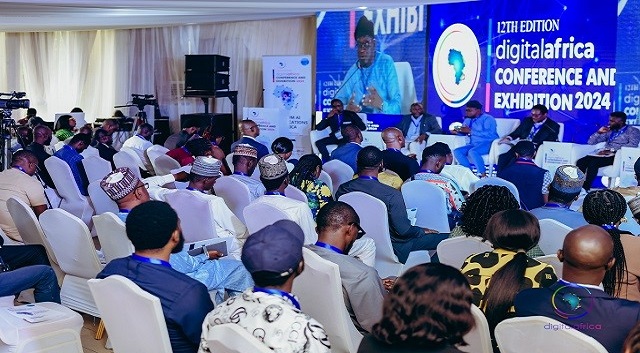
Africa’s digital destiny will on October 28-29, 2025, take centre stage at the 13th Edition of the Digital Africa Conference & Exhibition (DACE), to be held at Merit House, Abuja, under the theme: “Sovereign Intelligence: Africa’s Voice in the Global Digital Order.”

At a time when artificial intelligence (AI), smart systems, and data technologies are reshaping societies, economies, and governance structures worldwide, DACE 2025 is sounding a clarion call: ‘Africa must lead, not lag in this transformation.’
Organizers say the aim is to move beyond consumption and dependency, and instead position the continent as a proactive contributor to global digital norms and governance.
“This year’s conference is about shifting from passive adoption to active leadership,” said Dr. Evans Woherem, Chairman, Digital Africa Consult, organisers of the event. “Sovereign Intelligence is more than a concept, it’s a movement to ensure that Africa controls its digital resources, designs its own ethical frameworks, and asserts its voice in shaping global technology norms.”
A Defining Moment for Africa’s Digital Future
Woherem said the conference will serve as a high-level, cross-sectoral platform aimed at positioning Africa as a co-author of global AI governance standards, rather than a mere recipient, assuring that the conversations are expected to align closely with the African Union’s Continental AI Strategy, advocating for a united, self-determined digital ecosystem across the continent.
“The urgency of this moment cannot be overstated. As the world builds its digital infrastructure, much of the technology consumed in Africa is still imported, foreign-owned, and culturally disconnected. African data is often stored offshore, local languages and cultural contexts remain invisible in AI systems, and African experts are frequently excluded from global decision-making tables.
“This must change. Digital Africa 2025 is about taking control of our data, our narratives, and our technological development. Africa must move from being users of foreign systems to creators of our own,” Woherem added.
Key Objectives of DACE 2025
One of the primary objectives of this year’s event is to advocate for African ownership of digital infrastructure, data policies, and technology standards. Organizers hope to inspire African leaders and institutions to say yes to innovation and regulation built by Africans, for Africans.
Another major focus will be amplifying African voices on the global stage. This involves not only advocating for inclusion in international policy dialogues but also ensuring that African values, cultures, and wisdom shape the design and deployment of AI systems worldwide.
“The conference will also spotlight homegrown innovation. Startups and developers from across the continent will showcase digital solutions addressing local challenges in healthcare, agriculture, finance, and education. These practical examples will reinforce the message that Africa is already generating intelligent, scalable answers to complex problems,” said Nneoma Ofodile, General Manager, Digital Africa.
Empowering young Africans through digital skills, research opportunities, and leadership training is another key goal of the gathering. Organizers are committed to fostering a new generation of African tech leaders who can confidently shape global digital trends from a place of knowledge and ownership.
Regional cooperation will be front and centre, as DACE encourages cross-border collaboration on harmonizing laws, sharing infrastructure, and building integrated digital ecosystems. Sessions will explore how African nations can jointly develop policies and platforms that reflect the continent’s unique needs and aspirations.
While global partnerships will also be on the agenda, the conference aims to deepen Africa’s engagement with international institutions such as UNESCO, the UN, and the OECD, not as passive participants but as co-authors of global standards for ethical and inclusive AI.
Nneoma said that throughout the two-day event, attendees can expect high-level discussions on digital law, tech sovereignty, and innovation policy, alongside practical workshops for developers, educators, and youth. Innovation showcases will highlight the work of African tech hubs, while strategy sessions will promote cross-country digital alignment.
At the close of the event, a concrete roadmap is expected to emerge—outlining actionable steps toward achieving digital sovereignty across the continent. The conference will also aim to strengthen networks among African innovators, regulators, and thinkers, while increasing the visibility of African insights in international technology policy.
Above all, Digital Africa 2025 is about reclaiming agency. “This isn’t just a technology conversation,” Nneoma emphasized. “It’s about power, voice, and independence. Africa must not only catch up; Africa must lead.”
As preparations intensify, DACE 2025 is inviting visionary organizations, sponsors, and partners to join the mission of building a digitally sovereign and inclusive Africa.


Dr. Aminu Maida, executive vice chairman and chief executive officer (EVC/CEO), Nigerian Communications Commission (NCC), has has been confirmed as a Special Guest of Honour at this year’s Africa Beacon of ICT Lectures and Awards.

Dr. Aminu Maida, executive vice chairman and chief executive officer, NCC
Africa Beacon of ICT Lectures and Awards, is widely regarded as the most prestigious annual event available in the ICT industry in Nigeria.
The event according Ken Nwogbo, editor-in-chief of Nigeria Communications Week,“is digital transformation edition” will hold on Saturday, May 30, 2026 at the Four Points by Sheraton, Lagos.
Africa’s BoICT Lecture is designed to explore efforts to put Nigeria on the global Information and Communications Technologies map.
It will also to recognise and celebrate organisations and individuals in the ICT and banking industries that have impacted in digital transformation of the economy.
Nwogbo said that Dr. Maida, oversees the regulation, development, and strategic direction of the Nigerian telecommunications industry.
His administration at the NCC, actively drives initiatives to improve telecom consumer experience, enhance infrastructure, and foster collaborations (such as with the Central Bank of Nigeria) to protect citizens from financial fraud
He holds a PhD in Electrical & Electronic Engineering from the University of Bath, UK.
Prior to joining the NCC, he served as the Executive Director, Technology and Operations at the Nigeria Inter-Bank Settlement System Plc (NIBSS).
At NIBSS, Dr. Maida was responsible for spearheading the technical and operational standardization of all devices deployed in the financial system in Nigeria for interoperability.
He led a dynamic team that ensured that all terminals used in the e-payment industry and all devices deployed in Nigeria would accept all cards issued by banks and other licensed card schemes without discrimination.
Prior to his appointment at NIBSS, Maida was the Chief Technical Officer (CTO) at the Nigerian-based FinTech Arca Payments Network and Senior Manager at Cisco Systems, United Kingdom.
As a seasoned technical professional with over 15 years of multi-functional and international experience in FinTech & Telecoms & Enterprise Technology, Dr. Maida between 2010 and 2014, worked as a Network Design Consultant at EE, part of BT Group, and one of the largest mobile communications companies in the UK.
He was also at some point (2006-2010) a System Engineer at Ubiquisys, a leading company in intelligent 3G and LTE small cells, which is now part of Cisco.
Dr. Maida will be joining will join top dignitaries who have graced the event in the past including: Dr. Ernest Ndukwe, former executive vice-chairman, Nigeria Communications Commission (NCC); Engr. Yomi Bolarinwa, former Director-General of National Broadcasting Commission (NBC); Dr. Jean Luc Fort, CEO at OR System France and a specialist in Counterparty Risk; and Professor Chris Nwagboso, Chairman, Knowledge Factory International, United Kingdom.
Others are: Chris Uwaje, chairman, Mobile Software Solutions Ltd; Uche Orji, former managing director/chief executive officer, Nigeria Sovereign Investment Authority (NSIA); Biodun Omoniyi, Managing Director/CEO, VDT Communications; and John Obaro, CEO and founder of Systemspecs; Dr. Isa Pantanmi, former DG, NITDA; Dr. Obadare Peter Adewale, co-founder and COO, Digital Encode Limited; among others.
The highpoint of the BoICT Lecture will be the conferment of awards to companies and individuals for their significant contributions to the growth of technology in Nigeria and indeed Africa.
The event is a five-star event; easily Nigeria’s ICT Oscars.
General News
Pantami, Ex Minister of Communication Withdraws from Gombe APC Governorship Primaries over Alleged Electoral Violations


Professor Isa Ali Ibrahim Pantami, former minister of Communications and Digital Economy, has withdrawn from the All Progressives Congress (APC) governorship primary election in Gombe State, citing alleged violations of the Electoral Act 2026 and failure by party officials to provide conditions necessary for a credible primary process.

Professor Isa Ali Ibrahim Pantami
Pantami announced his withdrawal in a statement issued by Barrister Ibrahim M. Attahir on behalf of the Pantamiyya Movement.
The former minister said his decision followed extensive consultations with stakeholders and careful assessment of developments surrounding the APC direct primaries in the state.
According to the statement, Pantami participated fully in the governorship process out of loyalty to the APC after accepting appeals from party leaders, youths, women groups and other stakeholders urging him to contest for the state’s top seat.
The statement noted that Pantami complied with all party requirements and procedures and was the only governorship aspirant represented at the Peace Accord meeting organised by the Nigeria Police Force, Gombe State Command, on May 14, 2026.
It added that his representative was also the only aspirant’s delegate who signed the peace accord during the event.
Despite this, the Pantamiyya Movement alleged that the APC leadership repeatedly failed to provide critical information relating to the conduct of the direct primaries.
According to the statement, several letters sent by Pantami’s solicitors to relevant organs of the party seeking clarification on procedures, accreditation, collation centres and other operational details were neither acknowledged nor responded to.
“In a democracy, the law must guide the process. Non-compliance with the Electoral Act 2026 and the party guidelines renders the exercise unsafe and illegitimate,” the statement said.
The movement further alleged that no actual election took place during the recent National Assembly direct primaries conducted in Gombe State on May 16 and 18, 2026, claiming that many aspirants were not informed about voting venues, accreditation procedures or collation arrangements before results were announced.
The statement maintained that Pantami’s political strength lies in his grassroots support base, particularly among youths and women, but alleged that ordinary party members were sidelined in the recent primaries.
It also claimed that despite President Bola Ahmed Tinubu’s insistence on credible and transparent direct primaries, the directives were allegedly not implemented in Gombe State.
“Prof. Pantami had requested details on the time and place for accreditation of agents and observers, the procedures for accreditation, voting and collation, and the location of collation centres. This information should have been provided to all aspirants without being solicited. As of this moment, nothing has been provided,” the statement added.
Pantami expressed appreciation to supporters, especially youths who reportedly raised funds through crowdfunding to purchase his expression of interest and nomination forms.
The movement disclosed that donations from supporters ranged between ₦5,000 and ₦4 million, with contributors publicly sharing receipts online.
The former minister also thanked women groups, coordinators at ward and local government levels, elders, campaign officials and members of the Campaign Coordinating Committee for their support and loyalty throughout the process.
He urged his supporters to remain calm, peaceful and law-abiding, stressing that democracy must be anchored on the rule of law, peace and security.
The statement added that the Pantamiyya Movement would communicate its next political direction and future plans to supporters and followers across Gombe State and the country in due course.
“All followers, admirers and supporters of Malam Pantami are to remain united for the next alignment and realignment in the political space,” the statement said.
Pantami’s withdrawal is expected to significantly reshape political calculations within the APC ahead of the 2027 governorship election in Gombe State, given his strong support base among youths and grassroots mobilisers.

The U.S. Trade and Development Agency (USTDA) has concluded arrangements to deploy U.S.-made wireless infrastructure in Nigeria and other three West African countries.

Donald Trump …..credit..foxbusiness
According to a statement made available by the U.S Embassy, Abuja, U.STDA, disclosed the funding for a feasibility study to install approximately 1,500 turnkey mobile communications base stations for deployment of wireless technology across Benin, Côte d’Ivoire, Ghana and Nigeria.
The deployment of American-made mobile base stations, it further stated will address West Africa’s urban-rural connectivity gap and provide millions of West Africans with faster, more reliable mobile access, aimed at supporting economic activity in areas.
The statement reads: “USTDA announced funding for a feasibility study to install approximately 1,500 turnkey mobile communications base stations from Massachusetts-based company Vanu Inc. (Vanu), across Benin, Côte d’Ivoire, Ghana and Nigeria.
“USTDA is bringing private sector solutions to unlock widespread, affordable, trusted internet access in off-grid communities across West Africa,” said Thomas R. Hardy, USTDA’s deputy director.
“By helping American companies compete in these critical markets, we are offering an alternative to insecure infrastructure while creating export opportunities that make America more prosperous.”
“USTDA’s assistance will fund the study for Vanu Côte d’Ivoire, which has selected Georgia-based Vernonburg Group LLC to provide U.S. expertise to assess the commercial viability of large-scale deployment and help mobilize financing for implementation.
The study will evaluate existing network infrastructure, analyze market conditions across all four countries, assess legal and regulatory frameworks, and develop a comprehensive financing plan.
The project will generate substantial opportunities to deploy trusted U.S. wireless solutions, network management systems, and other digital infrastructure throughout the project’s implementation.
“The deployment of American-made mobile base stations will address West Africa’s urban-rural connectivity gap and provide millions of West Africans with faster, more reliable mobile access, supporting economic activity in areas that have historically been offline or limited to outdated 2G and 3G networks.
Andrew Beard, CEO of Vanu Inc., said: “Vanu is proud to partner with USTDA to demonstrate how our systems enable mobile network operators in West Africa to deliver broadband Internet and voice services in some of the most economically and operationally challenging markets and prove that connectivity in these markets can be profitable, sustainable and scalable. Building on our pioneering world-first Federal Communications Commission certification of a software radio product, Vanu has developed an ecosystem of American companies to deliver cost-effective systems based on open interfaces and architectures. The USTDA study will help catalyze new investment, expand U.S. exports, and accelerate deployment of trusted, secure digital infrastructure to connect billions of people worldwide.”

Maida, EVC NCC to Lead Speakers @ 17th Africa’s BoICT Merit & Leadership Lecture

Court Orders Globus Bank to Pay Firm N256m for Breach of Contract

WASPAN Drags Bello, FCCPB Boss to Court over Alleged Disobedience of Order

Pantami, Ex Minister of Communication Withdraws from Gombe APC Governorship Primaries over Alleged Electoral Violations

Lagos Warns against Fake Emergency Calls, Says Rising Misuse Put Lives at Risk

MTN, VDT, Zoracom, Digital Realty Back 2026 Girls in ICT Campaign

Vitel Wireless Partners Fintechs to Expand Access to Services

Kaspersky Discovers Vulnerability in Qualcomm Snapdragon Chips that can Lead to Data Loss & Device Compromise

Bank Customers to Pay N1,500 for ATM Card Issuance, Replacement – CBN

FCCPC Licenses 5 Firms for Airtime, Data Lending as Telcos Step Aside




 General News2 days ago
Xenophobic Attacks: Anonymous Nigeria Threatens to Leak South African Stolen Data

 Telecom2 days ago
MTN Targets 8m Homes in Fibre Expansion Drive

 E-Financial2 days ago
Chapel Hill Denham Says Banks Lose N2.5 Trillion Annually to High CRR in New Report

 E-Financial2 days ago
Lagos Sanctions 15 Money Lending Firms for Operational Violations

 Telecom2 days ago
GBB Says Cross-border Partnerships Key to Africa’s Digital Transformation

 E-Financial2 days ago
AfDB Approves $200m for BoI to Support MSMEs

 News2 days ago
WHO Says Ebola Outbreak Worse than Reported

 E-Financial2 days ago
FirstBank, Visa Launch Multicurrency Signature, Naira Debit Cards