

Telecom
Africa’s Lawmakers Commit to Strengthening AI, Digital Health and Smart Manufacturing Frameworks


The Pan-African Parliament (PAP) and the African Population Health Research Center (APHRC), in collaboration with the GSMA, have concluded the first Africa Digital Parliamentary Summit focused on building legislative capacity in Artificial Intelligence (AI), data protection, digital health and smart manufacturing, in a bid to promote evidence-based policy-making for Africa’s digital future.

The three-day Summit, held from 9-11 July in Lusaka, convened over 20 Members of Parliament from the Pan-African Parliament Committees on Transport, Industry, Communications, Energy, Science and Technology, and Health, Labour and Social Affairs and was opened by the Zambian Minister of Technology and Science, Honourable Felix Mutati. Strategic partners in attendance included AUDA-NEPAD, Africa CDC, ECOSOCC, and the African Peer Review Mechanism (APRM).
This concluded with the publication of the Lusaka Declaration outlining shared priorities and next steps for ensuring Africa’s digital transformation is inclusive, responsible and grounded in evidence-based policy.
The Lusaka Declaration recognised the vital role of Members of Parliament in shaping laws and policies that drive the continent’s development. The Digital Parliamentary Summit offered a timely platform to enhance the knowledge and capacity of Parliamentarians on critical aspects of digital transformation.
A key highlight of the Summit was the consideration and discussion with Parliamentarians on the draft Africa Digital Health and Smart Manufacturing reports developed by APHRC and the GSMA.

Both reports will be submitted to the Plenary of the PAP when Parliamentarians of the 55 member states of the African Union meet in Midrand later this month on the occasion of the 5th Ordinary Session of the 6th Legislature of the Pan-African Parliament.
Honourable Behdja Mokrani, Chairperson of the Pan-African Parliament Committee on Transport, Industry, Communications, Energy, Science and Technology said “Against the backdrop of global economic uncertainties and the accelerating pace of technological disruption, this Summit has highlighted the critical need to equip African legislators with the foresight and capabilities required to navigate the Fourth Industrial Revolution.
The capacity-building component of the Summit, along with the presentation of the Africa Digital Health and Smart Manufacturing Reports by APHRC and GSMA, reinforced the importance of African policymakers acquiring the relevant skills to address policy issues related to digital transformation – particularly in the areas of Digital Health and Smart Manufacturing – in alignment with the African Union’s Agenda 2063.
Anthony Mveyange, Director of Programs, Synergy, African Population Health Research Center adds “At APHRC, we firmly believe that digital health is a transformative force, holding immense potential for Africa to ‘leapfrog’ traditional development pathways.
This Summit powerfully demonstrates how, by leveraging AI alongside advancements in digital health and smart manufacturing, we can accelerate socio-economic progress and foster deeper continental integration, directly aligning with the ambitious goals of the African Union’s Agenda.”
Key themes explored during the Summit included:
- The potential of AI-driven digital health to accelerate universal health coverage through better data integration and cross-border information exchange
- The role of smart manufacturing in enhancing industrial resilience and job creation through automation and IoT
- The need for harmonised, Africa-led data governance frameworks to ensure responsible AI development and protect privacy and human rights
“AI, digital health, and smart manufacturing have the potential to transform Africa’s economies and improve lives – but unlocking that potential requires the right policy environment.
“This Summit is an important step in equipping lawmakers with the tools to shape secure, inclusive and future-ready digital economies” said Kenechi Okeleke, Senior Director, Regional, Social and Policy Research, GSMA.
Participants reaffirmed their commitment to advancing digital transformation through coordinated reforms, including:
- Strengthening STEM education and digital literacy among policymakers
- Embedding ICT training in public service development
- Establishing cross-sector collaboration between the health, trade and ICT sectors
- Creating enabling conditions for investment in advanced connectivity infrastructure
Draft findings presented during the Summit estimate that Africa’s digital health market could reach $6.5 billion by 2030 under an optimistic scenario, highlighting the urgent need for policy alignment to maximise impact and drive inclusive growth.
The Summit also set out a roadmap for ongoing engagement between the Pan-African Parliament, APHRC and the GSMA, including the establishment of ‘Evidence-to-Policy’ resource units, sustained capacity-building efforts, and regional forums to harmonise legislation on AI, digital health, and data governance across Africa.



Starbase Technologies has launched Yolly, a new social entertainment platform designed to reward users for watching, streaming and creating content while promoting wholesome digital engagement.

Starbase Technologies
The company said the platform was developed to redefine participation in the digital economy by enabling viewers, creators and brands to earn value from meaningful online interactions.
According to Starbase Technologies, Yolly introduces a reward system powered by Stars, its native digital rewards currency, which users accumulate through activities such as watching videos, live streaming and creating content.
The company said the initiative was built on the belief that everyone contributing to the digital ecosystem should have the opportunity to benefit from the value they help generate.
Unlike conventional social media platforms where monetisation is often restricted to creators with large followings, Yolly allows creators to begin earning from their first stream without meeting follower thresholds.
The platform also provides emerging creators with features including gifting, Boosts and a Founder Creator badge to help them grow their communities from the outset.
Viewers are also eligible to earn Stars through the platform’s Watch+ feature, which rewards users for watching content from their first session.
For brands, the company said Yolly offers an alternative to traditional impression-based advertising by providing verified engagement metrics, real-time performance dashboards and brand safety controls to improve campaign measurement and audience interaction.
Speaking on the launch, the Head of Business at Yolly, Emeka Okenwa, said the platform was designed to create a more inclusive and rewarding creator economy.
He said the rewards ecosystem prioritises wholesome content and genuine community engagement rather than content driven solely by algorithms or viral trends.
“The platform has been developed on the premise that the future of the creator economy should be more inclusive, more rewarding and built around genuine communities rather than algorithms alone,” Okenwa said.
He added that Yolly was created to encourage family-friendly content while providing viewers, creators and brands with a trusted environment to connect, create and grow.
According to the company, the platform features content across entertainment, sports, lifestyle, education, technology and live events.
Starbase Technologies said the launch forms part of its broader vision of connecting creators and innovators through technology solutions that expand opportunities within the global digital economy.

Court filings in multiple legal disputes arising from the 2023 acquisition of Pan African Towers have raised questions about corporate governance, board oversight and executive independence, with the company’s Board Chairman, Adefolarin Ogunsanya, featuring prominently in the proceedings.

The disputes, currently before Nigerian courts, stem from the acquisition of Pan African Towers by Development Partners International (DPI), Verod Capital Growth Fund III LP and African Development Partners International LLP.
According to documents filed before the Federal High Court, former Chief Executive Officer of Pan African Towers, Azeez Amida, played a central role in identifying and engaging prospective investors after the company’s shareholders decided to sell the business.
The filings stated that negotiations led by Amida culminated in the acquisition, which was later recognised as the African Deal of the Year.
However, less than three years after the transaction, the acquisition has become the subject of three separate court cases challenging aspects of its governance and implementation.
According to the court filings, a proposed Management Incentive Plan (MIP) formed part of the negotiations leading to the acquisition.
Amida alleged that he informed prospective investors that management would retain a minimum five per cent equity stake following the acquisition, an arrangement he said distinguished the successful consortium from competing bidders.
The pleadings further alleged that the consortium accepted the proposal through the MIP and related term sheets.
Among the exhibits before the court is an email attributed to Ogunsanya forwarding a document titled “PAT – MIP analysis.xlsx,” described as an analysis of the proposed incentive scheme.
According to the claimant, the proposed equity participation could have generated returns exceeding 30 million U.S. dollars, but the arrangement was allegedly not implemented after the acquisition.
He is consequently seeking damages exceeding 30 million dollars in a separate action before the Federal High Court.
The filings further alleged that governance dynamics changed significantly after the acquisition, with shareholder representatives and board members becoming increasingly involved in operational matters ordinarily handled by executive management.
The defence claimed that disagreements arose over procurement processes and commercial negotiations, including sourcing decisions involving companies in which some directors allegedly had interests.
The filings identify Ogunsanya as one of the directors involved in those discussions.
The allegations remain disputed and are yet to be determined by the court.
Another issue raised in the defence concerns the company’s financial approval procedures.
According to the filings, following the appointment of a new Chief Financial Officer (CFO), Amida deliberately withdrew from final expenditure approvals because of governance concerns.
The defence maintained that expenditures subsequently challenged in the litigation were processed through the company’s established approval procedures, involving reviews by relevant departments and final authorisation by the CFO.
It also argued that the CFO responsible for the approvals remains employed by the company and has since been promoted.
The defence further contended that the disputed hospitality, investor engagement and related business expenses passed through internal approval processes and were reflected in the company’s audited financial statements before becoming the subject of litigation.
Internal emails, approval workflows, WhatsApp communications and financial records have been listed among the evidence expected to be presented during the trial.
The court filings also noted that Ogunsanya participated in negotiations surrounding the Management Incentive Plan, signed an October 2024 query issued to Amida before a Mutual Separation Agreement and later declined a request for an amicable settlement in a separate matter before the National Industrial Court.
Amida further alleged that a subsequent Federal High Court action instituted by Pan African Towers was retaliatory and intended to exert pressure in connection with his earlier legal action against DPI, Verod and other parties involved in the acquisition.
The allegations remain contested, and the parties are expected to present their respective cases before the courts.
As of the time covered by the filings, the defendants had not filed substantive defences to some of the claims referenced by the claimant.
The matters remain pending before the courts, and no judicial determination has yet been made on the merits of the allegations.
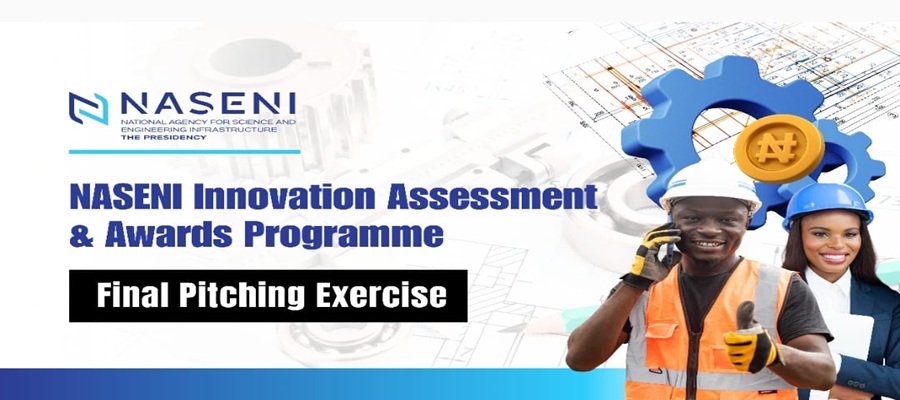
National Agency for Science and Engineering Infrastructure (NASENI) will, on Wednesday, 5th August 2026, host the Final Pitching Exercise of the NASENI Innovation Assessment & Awards Programme (NIAAP), bringing together some of Nigeria’s most promising innovators to compete for top honours in the Agency’s Intra-Agency and Inter-Agency Innovation Competitions.

NASENI
The Final Pitching Exercise marks the culmination of NASENI’s boldest innovation competition yet. From 180 applications submitted across NASENI Development Institutes and 81 applications received from Ministries, Departments and Agencies (MDAs) nationwide, a rigorous assessment process has produced the Top 10 Finalists in both competition categories, who will now present their innovations in live pitches before a distinguished panel of experts.
The event, scheduled to commence at 10:00 a.m. at the Technology Orientation Centre (TOC), NASENI Headquarters, Idu-Industrial Layout, Abuja, represents the final stage of the innovation assessment process and provides a platform for the finalists to present and defend their innovative ideas.
The independent panel of experts will assess each solution based on originality, technical merit, practical application, scalability, and potential socio-economic impact. At the conclusion of the exercise, the panel will select the three best innovations in each category, with the winners to be formally recognized and celebrated during NASENI FEST, the Agency’s flagship innovation celebration.
The Executive Vice Chairman/Chief Executive Officer of NASENI, Mr. Khalil Suleiman Halilu, will officially declare the competition open. His participation reflects NASENI’s steadfast commitment to fostering a thriving innovation ecosystem that supports indigenous technology development, encourages research excellence, and accelerates Nigeria’s industrial transformation.
Held under the theme, “Driving Innovation. Accelerating Industrialization. Transforming Nigeria,” the programme aligns with NASENI’s strategic mandate of leveraging science, technology, and engineering to develop local solutions to national challenges while strengthening Nigeria’s industrial competitiveness. It also reinforces the Agency’s commitment to discovering, nurturing, and rewarding innovative ideas capable of driving sustainable industrial growth and economic prosperity.
Beyond recognizing outstanding innovations, the competition serves as a platform for discovering transformative ideas, promoting collaboration among innovators, NASENI institutes, and public institutions, and inspiring a new generation of Nigerian inventors and problem-solvers whose innovations can contribute meaningfully to national development.
The Agency invites policymakers, industry stakeholders, researchers, innovators, and development partners, members of the diplomatic community, the media, and the general public to witness this landmark celebration of Nigerian ingenuity, technological excellence, and homegrown innovation.

SERAP Asks Tinubu to Probe Alleged N6.79Bn Missing Police Funds, Firearms

FCT Court Awards Ex-Customers N15m against Stanbic IBTC over Data Privacy Breach

CBN Exposes over 13,000 BVNs Tied to Fraud as Banks Tighten Security

Atte, Nigerian Develops AI Algorithm for Hair Transplants

Dare Tackles Onaiyekan over Criticism of Tinubu, Says Economic is Working

NRC, Ponzi Scheme Collapses Resulting Loss of Billions of Naira

EFCC Busts NIS Visa Overstay Racket, Uncovers N700m in an Account

From Scarcity to Scale: What Africa Can Learn from India’s Agricultural Transformation

Tokenization, Blockchain Technology will Transform Financial Institutions – IMF

BON Establishes Six Ad Hoc Committees to Modernize Broadcasting




 Broadcasting2 days ago
Davido Shares Past Suicidal Thoughts, Drops Oriadé Album

 E-Business2 days ago
How Temu Helped a Madagascan Vanilla Family Business Sell Direct to Consumers Across Europe

 General News2 days ago
MTN Nigeria Posts N707.5bn H1 Profit, Declares N26 Interim Dividend

 General News2 days ago
Gavi Okays $500m for Vaccines, PHCs in Nigeria

 News2 days ago
Cisco Explores AI for Nigeria Farmers

 News2 days ago
AfCFTA Urges Africa to Stop Exporting Raw Materials

 E-Business2 days ago
82% of Organizations Concerned about AI Risks Even as Adoption Accelerates – Survey Reveals

 General News2 days ago
Police Uncover Fake Diplomatic Number Plate Syndicate in Abuja