

Broadcasting
Government of Ghana Slams MultiChoice, Insists on DStv Price Cut

Samuel Nartey George, minister for Communications, Digital Technology and Innovation, Government of Ghana, has accused MultiChoice Ghana of showing disregard for Ghanaians by refusing to reduce its DStv subscription fees despite favourable economic indicators.

In a social media post on Sunday, August 3, the minister said the company’s latest statement vindicates his long-held view that it does not take Ghanaians seriously.
“I have read the release by DStv Ghana and taken full consideration that they vindicate my earlier position that they simply do not take the Ghanaian people serious enough,” he wrote.
The minister had earlier given MultiChoice Ghana a seven-day ultimatum, ending August 7, to review its bouquet prices downward or face the suspension of its operating licence by the National Communications Authority (NCA).
He cited the cedi’s appreciation, dropping inflation, and reduced fuel prices as justification for the directive.
But MultiChoice, in a statement dated August 3 and signed by its Alex Okyere, managing director, said while it acknowledges the recent economic gains, it finds the demand to reduce prices untenable.
“While we appreciate the recent appreciation of the Cedi (which we have never referred to as a ‘fluke’), it is not tenable to reduce the DStv subscription fees in the manner proposed by the Minister,” the statement said.
The company said it had engaged the Ministry and the NCA in good faith and remained committed to resolving the matter through constructive dialogue for the interest of its stakeholders and staff.
Sam George, however, dismissed these claims, noting that the company responded differently when it was faced with similar pressure in Nigeria.
“The same group operating in Nigeria reversed price increases when the Nigerian authorities sued them. The Nigerian House of Representatives took the matter up and ordered a suspension of the increases. They complied,” he said.
He also revealed details of an alternative proposal by the company, which he rejected.
According to him, MultiChoice had suggested maintaining the current prices while halting the transfer of revenue to their headquarters.
“In all honesty, that offer lacks any logic in my estimation. The essence of my action is to see Ghanaians pay a fair price for the services offered. How does this proposal solve the real issue?” he asked.
I have read the release by DStv Ghana and taken full consideration that they vindicate my earlier position that they simply do not take the Ghanaian people serious enough.
The same Group operating in Nigeria reversed price increases in Nigeria when the Nigerian authorities sued them.
The Nigerian House of Representatives took the matter up and ordered a suspension of the increases. They complied.
This year, in April, at a time the Ghanaian cedi had seen a ~10% appreciation against all major currencies, inflation had dropped by over 5% and fuel prices had also dropped, DStv announced and implemented a 15% increase.
I believe in the interest of transparency, I make public the alternate proposal that DStv offered to me that I flatly rejected.
They proposed that I allow them maintain the collection of the exorbitant bouquet prices as they stand but order them not to send the revenue to their headquarters.
In all honesty, that offer lacks any logic in my estimation. The essence of my action is to see Ghanaians pay a fair price for the services offered. How does this proposal solve the real issue?
For far too long, corporations have fleeced the Ghanaian people.
There has been a RESET and it demands a new style of public service that is fiercely protective of the Ghanaian people.
I remain empathetic to the Ghanaian staff of DStv but I believe that they should stand with the rest of us as we demand what is right for us.
I remain open to “constructive engagements” that are centred on PRICE REDUCTION. Anything else is tangential and of no consequence.


MTN Group has begun rolling out MTN One TV, a new entertainment proposition designed to make digital video content more accessible, relevant, and flexible for customers across African markets.

Introduced in line with MTN’s Ambition 2030 strategy, MTN One TV brings together local storytelling, live channels, international programming, and market-specific viewing options tailored to how customers across the continent access and pay for digital entertainment.
The proposition is designed to give customers greater choice in how they watch content, with viewing models that may vary by market and can include free-to-view content, advertising-funded experiences, pay-as-you-watch access, and subscription offerings.
Depending on local availability, customers may also be able to pay through airtime, Mobile Money, and other locally supported payment methods, helping to reduce common barriers to streaming access.
Beyond enhancing customer experiences, MTN One TV creates new opportunities for African creators, broadcasters, advertisers, and ecosystem partners by helping connect content to wider audiences through MTN’s scale across connectivity, payments, and digital services.
By bringing together a broad mix of content experiences under a single proposition, MTN aims to support greater content discovery, broader audience reach, and sustainable growth across Africa’s digital entertainment ecosystem.
Anchored in MTN’s strategic platforms of Connectivity, Fintech, and Digital Infrastructure, MTN One TV forms part of the Group’s broader ambition to build digital experiences that create value for customers while enabling participation and growth across Africa’s digital economy.
“Entertainment is increasingly becoming an important gateway to digital participation,” said Selorm Adadevoh, MTN group chief commercial, strategy and transformation officer.
“Through MTN One TV, we are leveraging the scale of our connectivity, fintech, and digital capabilities to make relevant content more accessible while creating new opportunities for Africa’s creative and digital economies. This is aligned with our ambition to deliver digital solutions for Africa’s progress.”
MTN One TV is being introduced progressively across MTN markets through a phased rollout approach that reflects local market needs, existing services, and partnership opportunities.
Over time, MTN will bring together a combination of video capabilities, content partnerships, and customer experiences under the MTN One TV brand to create a more consistent and scalable entertainment proposition across its footprint.
Through MTN One TV, MTN continues to extend its role beyond connectivity by combining entertainment, payments, and digital services to deliver experiences tailored to the needs of African consumers.
The rollout supports MTN’s Ambition 2030 vision of leading digital solutions for Africa’s progress while expanding access to digital entertainment across the continent.
International Air Transport Association (IATA) has identified Nigeria as one of the most expensive countries in the world for airline operations, citing high taxes, charges and operational costs that continue to weigh heavily on local carriers.

IATA’s Regional Vice President for Africa and the Middle East, Kamil Al-Awadhi, disclosed this during the association’s Annual General Meeting held in Rio de Janeiro.
Al-Awadhi said that although Nigeria’s Minister of Aviation and Aerospace Development, Festus Keyamo, had been pursuing reforms aimed at improving the aviation sector, airlines operating in the country still faced enormous cost pressures.
According to him, the high-cost operating environment has continued to affect the profitability and competitiveness of Nigerian airlines, making it difficult for the industry to realise its full potential.
He noted that excessive taxes, regulatory charges and other operating expenses remained major obstacles to airline growth across the region, with Nigeria ranking among the most challenging markets from a cost perspective.
Al-Awadhi urged member states of the Economic Community of West African States to adopt a proposed 25 per cent reduction in aviation taxes and charges to ease the burden on airlines and passengers.
According to him, lowering taxes and charges would reduce airfares, stimulate passenger traffic and strengthen the competitiveness of carriers operating within West Africa.
He stressed that a more supportive policy environment was critical to unlocking the economic benefits of aviation, including increased trade, tourism and regional integration.
Industry stakeholders have consistently advocated lower taxes and regulatory fees, arguing that the current cost structure makes air travel less affordable and limits the growth of the sector.
IATA’s latest remarks add to calls for governments in West Africa to implement policies that will promote a more sustainable and competitive aviation industry across the region.
Broadcasting
NASENI Trains 50 Women in Kano on Renewable Energy Technologies Under She-Powers Initiative

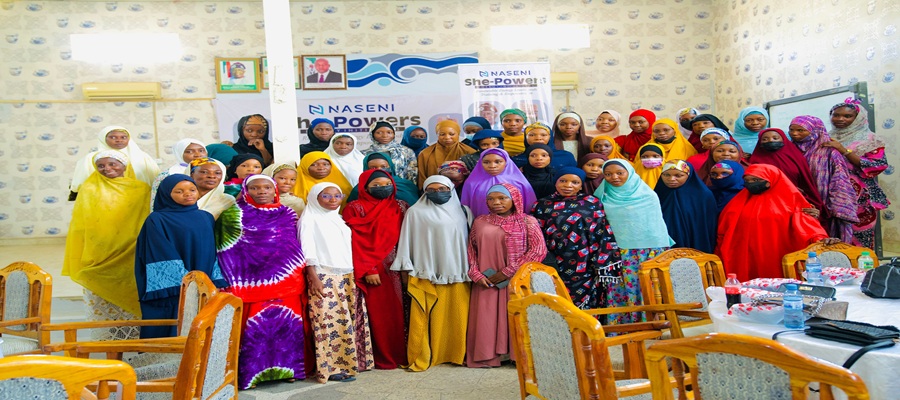
The National Agency for Science and Engineering Infrastructure (NASENI), under the leadership of its Executive Vice Chairman/CEO, Khalil Suleiman Halilu, has trained 50 women in Kano State on inverter and battery technologies through its She-Powers Energy Initiative.

The three-day programme, held at the Technology Incubation Centre, Farm Centre, Kano which ended yesterday, was designed to equip participants with practical renewable energy skills, promote women-led enterprises, and enhance sustainable livelihoods.
The initiative forms part of NASENI’s broader commitment to empowering women, creating economic opportunities, and expanding participation in Nigeria’s growing clean energy sector. It also aligns with the Renewed Hope Agenda of President Bola Ahmed Tinubu by supporting job creation, entrepreneurship, and inclusive economic development.
Through targeted interventions such as the She-Powers Energy Initiative, NASENI continues to demonstrate its commitment to leveraging technology and innovation to improve lives and drive sustainable development across the country.
Photos: Participants at the She-Powers Energy Initiative training organised by the National Agency for Science and Engineering Infrastructure (NASENI) held at the the Technology Incubation Centre, Farm Centre, Kano yesterday.

MTN Launches One TV with Free-to-View, Pay-as-You-Go

Telcos Compensate 75m Subscribers over Poor Network Quality – NCC

IMF Warns Nigeria of Risks in $5Bn Swap Deal with First Abu Dhabi Bank

Senate Moves to Regulate Crypto Sector, Seeks Investor Protection

Kaspersky Report Shows Early 2026 Witnessed an Increase in Cyberattacks on the Manufacturing Sector

CBN Extends PoS Geo-Fencing Enforcement Deadline to August 2026

FG to Launch Nationwide Free Digital TV Platform June 17

MTN, Airtel, Glo Under Pressure as FG Demands Better Service Delivery

Jumia Nigeria Records Strong Q1 2026 Growth as Technology-Led Strategy Drives Market Expansion

Metro Digital, Nigerian Firm Accuses Multichoice Of Refusal to Obey Court Judgements




 E-Financial3 days ago
BOI Wins Dual Honours @ EMEA Finance Awards for Sustainability and Social Impact Leadership

 E-Financial3 days ago
CBN Imposes N100m Penalty on Dealing Bank Inadequate Processing of Forex Documents

 Telecom3 days ago
Price of Data in Nigerian Mobile among Top Four Cheapest Globally – MTN CEO

 E-Business3 days ago
NITDA Okays NiRA’s Annual, Business Report

 Telecom3 days ago
NAIFF Returns for 2026, Expands Focus on AI-Powered Storytelling in Africa

 Telecom2 days ago
FCCPC Refutes Airtime Market Takeover Claims

 General News2 days ago
SSDC Warns Businesses against Cyber, Election-Related Risks

 E-Financial2 days ago
Reps Committee Recovers N521m Unremitted VAT from CBN