

E-Financial
NOVA Bank Deepens Market Presence with New Branches and Regional Focus

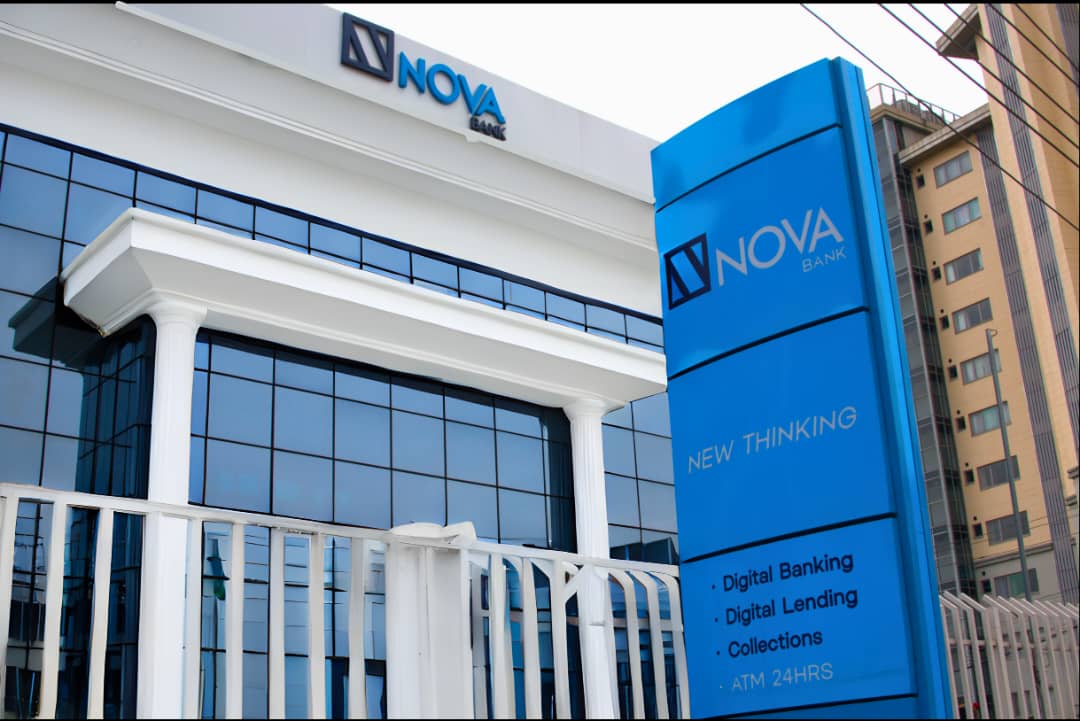
NOVA Bank has announced its intention of a strategic shift in its operating license from a national to a regional authorisation, a move, which according to the Bank is aimed at optimising operational efficiency and deepening its impact within key markets.

The management of the Bank noted that the repositioning aligns with the Bank’s long-term vision to consolidate its strengths, streamline its services, and deploy capital more effectively within targeted regions, without compromising its commitment to innovation, customer satisfaction, and sustainable growth.
To this effect, NOVA has applied to the CBN to recategorize its operating license from a National to a Regional Commercial Banking license.
According to the Bank, NOVA maintains a strong financial position, underpinned by robust capital adequacy, liquidity ratios, and a consistent growth trajectory.
NOVA’s Acting Managing Director/Chief Executive Officer, Mrs. Chinwe Iloghalu, explained that following the Central Bank of Nigeria’s (CBN) revised recapitalisation directive in March 2024, NOVA reviewed its growth trajectory and capital utilisation strategy.
“Given the Bank’s current stage of growth, we have chosen the prudent route to optimise what we need, grow efficiently, and scale sustainably. This is a major strategic positioning that will ensure continued efficiency in the deployment of assets and resources,” she said
Mrs. Iloghalu further stated “Indeed, our shareholders have shown strong commitment to ensuring full capitalisation through rights issue by injection of additional 24 billion before end of 2025 to exceed the prescribed capital for regional Banks well ahead of the 2026 CBN deadline”.
In a further affirmation of its strength and stability, Global Credit Rating (GCR) recently reaffirmed NOVA Bank’s BBB rating with a Stable Outlook, citing the Bank’s healthy liquidity profile, improving earnings, and sound asset quality.
The Bank’s audited 2024 financials validate the effectiveness of its growth strategy, recording over 200% year-on-year growth in profit before tax (PBT), alongside improvements across all key financial indicators.
NOVA is set to launch three new branches in the coming weeks, including Owerri, Port Harcourt, and Abuja, to enhance physical access and customer service, while strengthening its digital banking infrastructure to ensure customers continue to enjoy secure, seamless, and convenient banking experiences, anywhere, anytime.
The Chairman of the Board, Mr. Phillips Oduoza, noted that NOVA remains committed to its vision and is thankful for the continued trust of its customers, shareholders, and regulators.
“Every decision we make is deliberate and strategic, guided by sound governance and market insight. Transitioning to a regional license is a recalibration, giving us room to grow optimally, build capacity, and position ourselves for a full national rollout in the next 36 months.” Said Oduoza



United Bank for Africa (UBA) Plc, Africa’s Global Bank, has rewarded thousands of customers with over ₦400 million in anniversary bonuses under its flagship UBA Bumper Account, reaffirming the Bank’s unwavering commitment to rewarding customer loyalty and promoting a strong savings culture.

The payout, one of the largest loyalty rewards under the Bumper Account initiative since its launch, saw qualifying customers receive anniversary bonuses directly into their accounts, demonstrating UBA’s resolve to create lasting value for customers who consistently save with the Bank.
The UBA Bumper Account is a unique savings product that rewards customers simply for maintaining and growing their savings. Every year an eligible account reaches its anniversary, customers receive a cash bonus, making disciplined saving both rewarding and beneficial over time.
Speaking on the milestone, UBA’s Head, Retail Products, Tomiwa Sotiloye, said the Bank remains committed to ensuring that customers benefit directly from their relationship with UBA.
“At UBA, we believe customer loyalty deserves meaningful recognition. Every bonus paid is our way of saying ‘thank you’ to customers who continue to trust us with their financial aspirations. Surpassing the ₦400 million milestone reflects our commitment to creating products that not only help customers save but also reward them in tangible ways. It is another demonstration that when our customers grow, we grow with them.”
He added that both new and existing customers can open a UBA Bumper Account seamlessly through https://on.ubagroup.com/bumper-tc, any any UBA branch, the UBA Mobile Banking App, by dialing *919#, or online, positioning themselves to qualify for future anniversary rewards.
Also speaking, UBA’s Group Head, Brands, Marketing and Corporate Communications, Alero Ladipo, said the Bank’s customer-centric philosophy continues to shape its product offerings.
“The UBA Bumper Account reflects our unwavering commitment to putting customers first. We deliberately design products that reward responsible financial behaviour while delivering real value. Crediting over ₦400 million directly into customers’ accounts is not just a payout; it is evidence of our promise to make banking more rewarding and to continually appreciate the confidence our customers repose in us.”
The UBA Bumper Account remains one of the Bank’s flagship retail savings products, combining competitive savings benefits, digital convenience and attractive loyalty rewards. It forms part of UBA’s broader strategy to deepen financial inclusion by encouraging sustainable savings habits while delivering exceptional customer experiences.
United Bank for Africa Plc is Africa’s Global Bank, serving over 45 million customers across 20 African countries, as well as the United Kingdom, the United States, France and the United Arab Emirates. Through innovative technology and customer-focused solutions, UBA provides retail, commercial and institutional banking services while driving financial inclusion across the continent.

The Bank of Industry (BOI), the Implementing Agency for the Investment in Digital and Creative Enterprises (iDICE) Programme of the Federal Government of Nigeria, has announced the appointment of Kuramo Capital Management as Fund Manager of the DICE Fund of Funds.

The contract signing ceremony, held in Abuja between BOI’s Managing Director and the Chief Executive of Kuramo Capital, marks a pivotal milestone in Nigeria’s accelerating commitment to empowering its technology and creative entrepreneurs.
The DICE Fund of Funds is structured to achieve a minimum total capitalisation of $170.6 million, with the Federal Government contributing an anchor commitment of $85.3 million through the iDICE Programme. Kuramo Capital is mandated to raise matching private-sector capital on a dollar-for-dollar basis. This represents one of the largest dedicated government investments in technology and creative sector startups in African history.
An Ambitious Innovation Investment Programme
The iDICE Programme represents the Federal Government of Nigeria’s most ambitious intervention in the digital economy and creative sectors. Co-financed by the African Development Bank (AfDB), Agence Française de Développement (AFD), and the Islamic Development Bank (IsDB).
The programme was designed with a clear mandate: to promote entrepreneurship, drive innovation, create jobs at scale, and position Nigeria as Africa’s leading hub for the knowledge economy.
iDICE is implementing its investment mandate through a suite of complementary funds. In November 2025, the Programme achieved a landmark first milestone when it made Nigeria’s inaugural direct government investment into a private venture capital fund — a cornerstone commitment to Ventures Platform’s VP Pan-African Fund II, which closed at $64 million with co-investors including the International Finance Corporation (IFC), British International Investment (BII), Standard Bank of South Africa, and Proparco.
The signing of the DICE Fund of Funds contract with Kuramo Capital is the latest in a series of significant milestones being delivered across the iDICE Programme. As of June 2026, implementation is well advanced on all three programme pillars — skills and enterprise development, access to finance, and ecosystem enablement — with activities running in all six geopolitical zones.
Specifically, on skills & enterprise development, iDICE launched the iDICE Startup Bridge three months ago, with the first cohort of 185 founders well advanced in the week four of training.
Applications for Cohort 2 opened on the 24th of June 2026, and applications for the growth lab, the post-MVP track, expected to open in July 2026, offering growth-stage tech startups access to potential equity funding of up to $100,000.
The programme has commenced the setup and revamp of digital and creative hubs in 66 institutions (36 universities and 30 polytechnics) across the country in collaboration with NUC and NBTE. Hence working with the academia to link research and project outcomes to industry.
As part of the programme’s access to finance component, BOI has also rolled out the BOI/iDICE Debt Fund and & IsDB Murabaha Debt Fund. Both debt products have set aside a combined financing of $110 million for start-ups in the technology and creative sectors
The Dice Fund of Funds: Reaching Every Corner of Nigeria
The DICE Fund of Funds will invest across Nigeria’s 36 states and the Federal Capital Territory. It will deploy capital through indirect investments in selected closed-end venture capital and micro-venture capital funds focused on technology and creative sector businesses.
The Fund has a geographic mandate that ensures that capital reaches founders in the entire country, breaking the historical concentration of venture investment in a handful of urban centres.
The Fund targets a net Internal Rate of Return (IRR) of 20% and a net money multiple of 2.4x, structured with the government’s commitment as a junior tranche acting as 30% first-loss capital — a deliberate risk architecture designed to de-risk the fund structure, improve the risk-return profile for co-investors, and crowd in additional private capital.
Speaking on the Fund, Dr Olasupo Olusi, MD/CEO of the Bank of Industry had this to say – “By investing in Ventures Platform’s Fund II, and now by establishing the DICE Fund of Funds with Kuramo Capital, we are deepening the Federal Government’s objective of upscaling Nigeria’s technology and creative sectors by catalysing strategic investments in high-growth, technology-enabled enterprises.
The Bank of Industry is proud to be the executing agency driving this historic investment into the hands of Nigeria’s innovators.”.
Wale Adeosun, CEO of Kuramo Capital Management said “The DICE Fund of Funds represents a landmark moment for Africa’s venture capital ecosystem. Nigeria is demonstrating that a government can be both a serious anchor investor and a credible market-builder.
“We are honoured to be entrusted with this mandate and committed to deploying every resource at our disposal to raise the matching capital, invest wisely, and deliver returns that justify this historic confidence”.
While congratulating BOI & Kuramo Capital for this milestone on the iDICE Programme, Nigeria’s Vice President Kashim Shettima stated that “the commencement of investing by iDICE is an exciting milestone and a leap forward in the determined efforts of the Government of Nigeria, under the leadership of His Excellency President Bola Ahmed Tinubu, to deliver on our vision of unleashing the full potential of Nigeria’s young people, in line with the Renewed Hope agenda”.
Benefits for Nigeria’s Start-up Founders
For Nigeria’s technology and creative entrepreneurs, the establishment of the DICE Fund of Funds — combined with iDICE’s earlier investment in Ventures Platform $64 million Fund — represents a structural shift in the availability of early-stage capital.
The days when a Nigerian founder had to depend almost entirely on foreign venture capital, or navigate a landscape with few domestic institutional investors, are changing.
By deploying capital through both direct startup investments and established venture capital fund managers, the Fund creates multiple access pathways for founders across the entire country.

Federal Government has confirmed that it has accessed the first $1.5 billion from its $5 billion financing facility with First Abu Dhabi Bank (FAB), marking the initial drawdown from the arrangement.

The Minister of Finance and Coordinating Minister of the Economy, Mr Taiwo Oyedele, disclosed this on Monday while speaking with journalists after the Federal Executive Council (FEC) meeting in Abuja.
Oyedele said the financing package, which had previously received approval from the National Assembly, is structured to support debt refinancing, infrastructure development and budget implementation.
“The approval for that loan went to the National Assembly, so everybody is aware of it. It’s for refinancing of expensive debts, financing of infrastructure, as well as budgets,” he said.
The minister explained that the government would not be issuing separate public statements for each drawdown, noting that the arrangement is a standard financing structure.
“We don’t want to start making press releases each time we do a drawdown. It is not different from any other loan,” he added.
According to him, the facility is designed as a phased drawdown arrangement, allowing the government to access funds as needed rather than receiving the full amount at once.
He said the structure helps reduce borrowing costs, as interest is paid only on funds that have been utilised.
“The loan is meant to be a drawdown in tranches, and one of the advantages is that if you need $5 billion and take everything at once, you start paying interest even though you’re not spending all of it immediately,” Oyedele said.
He added that the approach aligns with the government’s broader debt management strategy aimed at improving efficiency in borrowing, lowering financing costs, and ensuring funds are deployed for priority projects and budgetary needs.
Reports had earlier indicated that Nigeria had begun accessing the facility through a structured financial arrangement involving First Abu Dhabi Bank.
The Federal Government said the phased utilisation would continue in line with project funding requirements and fiscal planning objectives.

UBA Surprises Thousands of Customers with Over ₦400 Million Cash Bonus

Lebara Nigeria Becomes Member of GSMA Network

FG to Abolish JSS-SSS Separation Policy after 20m Pupils Drop Out

Vitel Wireless Warns Public, Says it Not Running any Investment Scheme

Army Says Terrorists Now Recruiting, Raising Funds Online

Mobile Internet Gender Gap Widest in Africa – GSMA

London Strengthens Global Investment Ties with Africa @ First Ever London-Africa Business Summit

FG Targets Alleged N3tn Capital Flight, Opens Airtime Credit Market to Nigerian Fintechs

Japan, UNESCO Boost Digital Learning in 15 CoEs with Donation of ICT Equipment

Good News for DStv Users: Watch over 160 Channels Without Paying Extra




 E-Business2 days ago
LG Showcases AI-Powered Smart Living Innovations @ Africa Technology Expo 2026

 Telecom2 days ago
OADC Reaffirms Abundant Capacity in Data Centres in Nigeria to Host Financial Data

 E-Financial2 days ago
UBA mobilises employees across Africa for environmental clean-up, wellness campaign

 General News2 days ago
LASTMA Launches 3367 Toll-Free Hotline for Emergency Response, Traffic Management

 E-Financial2 days ago
PalmPay Calls for Trust, Infrastructure and Responsible AI to Drive Payment Ecosystem Innovation

 E-Business2 days ago
Want a Business Loan Without Interest? SMEDAN Launches N500m Fund

 Telecom2 days ago
ALTON Backs NCC’s Local Smartphone Manufacturing Drive to Widen Digital Access

 E-Financial2 days ago
ngCERT Raises Alarm over Surge in Banks’ ATM Cyberattacks