

E-Business
Timely, Effective Threat Intelligence is a Priority for IT Professionals


Cybersecurity teams today face increasingly sophisticated attacks powered by artificial intelligence (AI), automation, and advanced persistent threats (APTs), making traditional reactive security measures insufficient.

To effectively counter these evolving dangers, organisations must adopt a proactive approach that leverages threat intelligence (TI). By anticipating potential threats, detecting malicious activities early, and mitigating risks before they escalate, businesses can strengthen their defenses and maintain resilience in a rapidly changing environment. This shift from reactive to proactive security strategies is essential for staying ahead of cybercriminals and safeguarding critical assets.
In its recent study, Kaspersky surveyed IT professionals across industries and regions to understand how businesses use threat intelligence to bolster their defenses. The findings reveal that while an overwhelming majority (81%) of organisations in the Middle East, Turkiye, and Africa (META) region and 80% in South Africa, are satisfied with their available threat intelligence, there is still significant room for improvement – particularly in integration, speed, and relevance.
The critical role of threat intelligence
Threat intelligence goes beyond data collection, it provides actionable insights into adversary tactics, techniques and procedures (TTPs). By studying attacker behaviour, security teams can detect threats earlier, refine defensive strategies and respond more effectively both during and after incidents.
The study highlights that 37% of companies in the META region and 35% in South Africa rely on specialised TI vendors for curated intelligence, while close to a third (31% and 28% respectively) engage in threat data exchanges with other organisations. Another 30% in the META region and 35% in South Africa gather intelligence from open sources, demonstrating the widespread recognition of TI’s value.
The importance of TI in cybersecurity cannot be overstated, as it helps organisations stay ahead of evolving threats and adapt their defenses accordingly. It enables proactive risk management and enhances the ability to anticipate potential attacks before they occur.
The most effective threat intelligence must be timely, reflecting the latest threats, a priority for 40% of respondents in the META region. It must also be actionable, seamlessly integrating into security workflows, which is a key concern for 40% of professionals in the META region.
Additionally, 36% of respondents emphasised the need for better analysis, including prioritisation and de-duplication, to make intelligence truly usable in real-world scenarios.
Key areas for improvement
While most organisations already benefit from TI, experts have identified several areas where enhancements could make a substantial difference. The single most pressing need, cited by 24% of respondents in the META region, is easier integration into existing processes, which would allow threat intelligence to be more seamlessly incorporated into daily security operations. 12% highlighted the importance of better analysis to improve accessibility, meaning that intelligence should be easier to interpret and act upon for security teams.
Meanwhile, 8% called for more robust comparative threat analysis across different systems, enabling organisations to better understand the context and relationships between various threats. Speed is another critical factor, with 12% emphasising the need for faster intelligence delivery to ensure timely responses to emerging threats.
Beyond these integration and usability concerns, professionals also prioritise quality and accuracy. 32% surveyed in the META region stress the importance of high-quality intelligence, which is precise, relevant, and reliable, to avoid false positives and missed threats.
Additionally, 32% seek more comprehensive coverage to ensure no critical threats slip through the cracks, emphasising the need for a broader scope of intelligence sources and insights to maintain a strong security posture.
Navigating today’s threat landscape demands reliable, expert-curated intelligence. While many organisations recognise its value and are satisfied with their current capabilities, they are searching for significant opportunities for improvement – particularly in areas such as integration, speed, and relevance.
By investing in these key areas, organisations can enhance their ability to respond swiftly and accurately to emerging threats, ultimately reducing risk and strengthening their security posture. Partnering with trusted providers like Kaspersky, which offers expert-curated insights and real-time intelligence, empowers businesses to navigate today’s challenging threat landscape with confidence.
To enable your InfoSec professionals to gain in-depth visibility into cyber threats targeting your organisation, use Kaspersky Threat Intelligence, which provides rich and meaningful context across the entire incident management cycle and helps identify cyber risks in a timely manner.


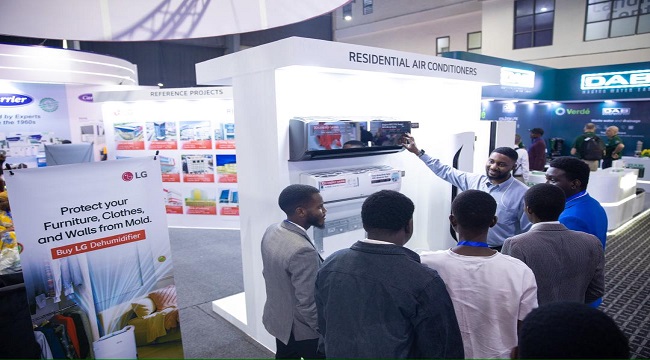
LG Electronics reaffirmed its position as a leading innovator in climate control and energy-efficient air conditioning solutions with its participation at Mega Clima Nigeria 2026, the 9th International Air Conditioning and Refrigeration Exhibition recognized as the largest HVAC+R sector show in West Africa.

Held at the Landmark Centre, Lagos, the three-day exhibition brought together global manufacturers, distributors, contractors, engineers, and industry stakeholders to explore the future of heating, ventilation, air conditioning, and refrigeration technologies across the region.
As one of the featured exhibitors at the event, LG leveraged the platform to showcase a range of advanced HVAC solutions designed to address the growing demand for smarter, more energy-efficient, and scalable cooling systems across residential, commercial, and industrial environments.
With West Africa’s HVAC sector continuing to evolve alongside rapid urbanisation, infrastructure growth, and increasing attention to sustainability, Mega Clima has become a strategic meeting point for conversations around innovation, efficiency, and climate-responsive technologies. The 2026 edition featured over 100 global brands, thousands of professional visitors, technical workshops, and networking opportunities, further positioning the exhibition as a key industry platform within the region.
Showcasing Smart Climate Solutions for Residential and Industrial Needs
At the LG exhibition booth, visitors and stakeholders engaged directly with a range of the company’s advanced HVAC technologies, including the LG Multi V.5 and Multi VS systems, both designed to deliver high-performance cooling while optimising energy consumption.
Speaking during the exhibition, Business Development Manager, LG Electronics Nigeria, Ifeoluwa Babarinsa, highlighted the adaptability and efficiency of the showcased systems, particularly their ability to support multiple indoor units while maintaining low energy consumption.
According to him, the LG Multi V.5 system is designed primarily for industrial and large-scale commercial applications, while the Multi VS system is tailored toward residential use cases, providing flexible solutions for varying environmental and operational demands.
A major highlight of the systems is their scalability, with both solutions capable of connecting to as many as 64 indoor units, offering increased operational flexibility across different building types and installation requirements.
The exhibition also featured several indoor HVAC solutions compatible with the VRF systems, including the Round Cassette, Ceiling Concealed Type Units, and Four-Way Cassette Units.
Particular attention was drawn to the Round Cassette unit, which was presented as an innovative cooling solution suitable for spaces without conventional ceiling structures. The unit also demonstrated enhanced airflow performance through its round-flow air distribution system and faster cooling capabilities.
Through live demonstrations and product engagement sessions, LG provided visitors with practical insight into how modern HVAC technologies can improve comfort, operational efficiency, and energy management across residential and commercial spaces.
Reinforcing LG’s Commitment to Energy Efficiency and Innovation
LG’s participation at Mega Clima Nigeria 2026 reflects the company’s broader commitment to delivering technologies that align with evolving consumer and industry needs, particularly in markets where energy efficiency and sustainable infrastructure are becoming increasingly important.
As conversations around environmental sustainability and smart infrastructure continue to shape the future of the HVAC industry, the exhibition provided an opportunity for LG to reinforce the role of intelligent climate solutions in supporting long-term energy optimisation and building performance.
The company’s showcased systems emphasised not only cooling performance, but also operational efficiency, adaptability, and user-focused design, qualities that continue to define LG’s approach to innovation across both consumer and commercial categories.
“This year, we showcased our inverter product range alongside advanced HVAC solutions that reflect LG’s continued commitment to innovation, energy efficiency, and smarter climate control technologies. One of the key highlights was our AI-powered VRF solution, the Multi V i, which represents the next phase of intelligent cooling systems we are introducing into the Nigerian market. As the headquarters of LG Electronics West Africa, Nigeria remains a strategic hub for us, and we remain committed to expanding access to innovative solutions that meet the evolving needs of customers and businesses across the region.”
LG’s presence at the exhibition also reflected its continued investment in engaging industry professionals, technical experts, and business stakeholders through platforms that encourage collaboration, knowledge exchange, and technological advancement within the HVAC sector.
Positioning Technology as a Driver of Smarter Living and Infrastructure
Beyond product displays, Mega Clima Nigeria 2026 created a broader conversation around the future of climate control technologies within rapidly developing urban environments. From commercial buildings and hospitality spaces to residential infrastructure, the demand for efficient and intelligent cooling systems continues to grow across the region.
By participating in one of West Africa’s most influential HVAC exhibitions, LG demonstrated its readiness to support this growth through solutions that combine advanced engineering, smart functionality, and energy-conscious performance.
The exhibition further reinforced LG’s philosophy of creating technologies that improve everyday experiences while supporting the broader goals of efficiency, sustainability, and modern living.
As the HVAC industry continues to evolve across Africa, LG remains committed to delivering solutions that not only respond to present demands, but also anticipate the future needs of businesses, homes, and infrastructure across the continent.
Kaspersky experts explain which online offers travellers should be cautious of when planning their trip, to avoid spoiling their experience ahead of the upcoming games.

Thousands of fans are expected to attend the World Cup 2026, and many are already handling their travel logistics, purchasing their flights and other transport tickets, booking accommodation, and arranging everything they need to reach the host cities. As interest grows, so does the number of fraudulent schemes that exploit the fact that fans are actively preparing for their upcoming journey.
In late April 2026, Kaspersky experts detected a campaign exploiting the branding of a well-known transport app, targeting users in Mexico. The interface of a fake Spanish-language website, impersonating one of the services, prompts users to enter their phone number and password in order to “claim prizes.” In reality, the attackers are mimicking a trusted brand and attempting to steal users’ credentials from those lured by the promise of a reward.
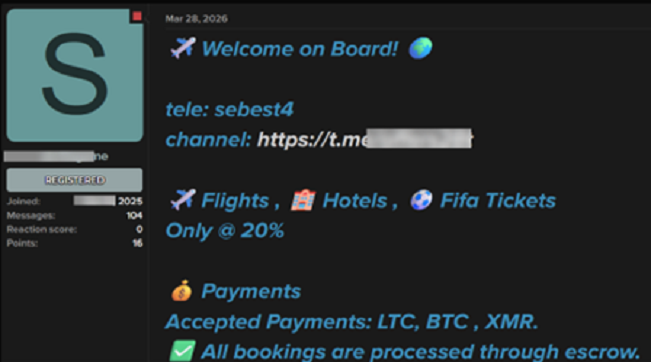
Some cybercriminals go “a level lower” and post their offers on the dark web. Kaspersky Digital Footprint Intelligence experts discovered a thread advertising such services, published on a shadow forum in March 2026.
The listings included offers for discounted airline tickets, hotel bookings, and match tickets, allegedly at 20% off the original price. These offers are designed to lure users and can be highly dangerous, ultimately resulting in victims losing both their money and any services they expected to receive.
Entrepreneurs and property owners also in the crosshairs
Cybercriminals are also targeting businesses and entrepreneurs at the intersection of the travel industry, which is also involved in the event. Given the high demand for short-term rentals during the tournament, property owners have become an attractive target for scams.
For example, a fake website was discovered requesting account credentials for a well-known platform. In this way, scammers attempt to gain access to property owner accounts, potentially resulting in unauthorised withdrawals and financial losses.
Another common scheme involves fraudsters attempting to extract money from organisations by posing as representatives of well-known airlines and offering fictitious business partnerships. In these emails, they claim to be launching new projects or business expansion initiatives and state that they are actively seeking suppliers or contractors.
If a company representative responds to such an offer, the scammers typically escalate the deception in a subsequent stage. To enhance credibility, they send forged documents for completion and signature, including supplier registration forms and non-disclosure agreements.
The ultimate objective of the fraudsters in this scheme is to induce the organisation to pay a so-called “deposit,” ostensibly required to secure a priority position in a partner selection list.
According to the claims made in the fraudulent communications, this payment would later be fully refunded once the partnership is formally established. In reality, this promise is entirely deceptive. The perpetrators simply appropriate the funds, and no reimbursement is ever made to the victim organisation.
“The travel sector, particularly when it intersects with major events, is a persistent target for a wide range of scams and fraudulent schemes. For end users, it is often difficult to distinguish at first sight between a legitimate website and a spoofed one, or between genuine marketing communications from a reputable service and scam emails.
“We therefore advise treating overly attractive offers with a high degree of caution in order to protect your personal data and financial resources,” says Anna Lazaricheva, senior spam analyst at Kaspersky.


Meta’s family of platforms, including Facebook, Instagram and WhatsApp, contributed an estimated 820 million dollars in annual economic value to Nigeria in 2025, according to a new report released on Wednesday.

Meta
The report titled “Nigeria’s Digital Economy” was conducted by independent research firm, Public First, and commissioned by Meta.
It stated that 14 million Nigerian small and medium-scale enterprises (SMEs) used Meta platforms in 2025 to start, run and grow their businesses.
According to the report, the platforms contributed about two billion dollars to Nigeria’s Gross Domestic Product (GDP) while generating an estimated 640 million dollars in productivity gains through instant messaging services.
The report noted that 81 per cent of Nigerian businesses surveyed said Meta platforms had helped them expand their customer base beyond their local areas.
It added that the digital tools had reduced customer acquisition costs and enabled businesses in different parts of the country to access wider markets.
The report also highlighted the growing role of artificial intelligence (AI) in Nigeria’s economy, projecting that AI could contribute 22 billion dollars to the country’s GDP by 2035 under favourable conditions.
It stated that 87 per cent of online Nigerians surveyed believed AI products developed within Africa would play an important role in the continent’s economic growth.
Speaking on the findings, Meta’s Director of Public Policy for Sub-Saharan Africa, Balkissa Ide Siddo, described Nigeria as one of the world’s most entrepreneurial and digitally engaged markets.
According to her, Meta platforms are helping to remove traditional barriers to business growth and enabling entrepreneurs to access broader economic opportunities.
“From a tailor in Lagos reaching customers across the country through Instagram, to a small business owner in Kano taking orders on WhatsApp, to a creator in Abuja building a global audience on Facebook, Meta’s platforms are unlocking real economic opportunity,” she said.
Siddo noted that WhatsApp had become a major gateway for AI adoption in Nigeria and across Sub-Saharan Africa.
She added that 93 per cent of Meta AI prompts in the region were made through WhatsApp, indicating that many users were engaging with AI technologies through platforms they already use daily.
The report further stated that 93 per cent of online Nigerian adults surveyed said they felt more connected to wider communities through Meta’s applications.
Also speaking, Alison Neyle, Director at Public First, said the findings reflected the increasing role of digital platforms in supporting entrepreneurship and participation in Nigeria’s growing digital economy.
“Nigeria’s digital transformation is creating new opportunities for businesses, creators and consumers alike.
“With the right combination of infrastructure, platform access and open-source AI, the upside for Nigeria is significant,” Neyle said.
The report projected that Meta’s contribution to Nigeria’s economy could rise to two billion dollars annually as digital adoption deepens and internet access improves across the country.

LG Electronics Showcases Advanced HVAC Solutions at Mega Clima Nigeria 2026

FG Unveils AI Public Services Platform

Australian Court Upholds Fine Against X Over Child Safety Compliance Failures

MTN Nigeria Tops Gender Equality Rankings After Major Workplace Transformation, IFC Report Reveals

Microsoft, Partners Launch ‘LINGUA Initiative’ to Save African Languages From Digital Extinction

MTN, VDT, Zoracom, Digital Realty Back 2026 Girls in ICT Campaign

Vitel Wireless Partners Fintechs to Expand Access to Services

Kaspersky Discovers Vulnerability in Qualcomm Snapdragon Chips that can Lead to Data Loss & Device Compromise

Bank Customers to Pay N1,500 for ATM Card Issuance, Replacement – CBN

FG Okays 112 as Toll-Free National Emergency Response Number




 News3 days ago
Systems, Not Skin Colour, Hold the Key to Africa’s Development, Says Evans Woherem

 Telecom2 days ago
Google unveils Gemini-powered advertising, commerce tools at Marketing Live 2026

 E-Financial2 days ago
Griffin Capital Group Launches Integrated Financial Services Group Positioned to Strengthen Capital Formation in Nigeria, Africa

 Telecom2 days ago
Nigeria gets AI-ready Lagos data centre

 E-Business2 days ago
Kaspersky Detected More than 92,000 Malware Attacks Disguised as AI Services in Four Months

 E-Financial2 days ago
CBN to Simplify Bank Alerts over Rising Customer Complaints

 Telecom2 days ago
Telcos in Nigeria, other Emerging Markets Squeezed by Diesel Crisis

 Telecom2 days ago
ipNX Seeks Coordinated Action on Fibre Deployment @ National Dig-Once Forum