

News
Imo State Hosts ESPN Star Chiney Ogwumike, Unveils Foundation for Girls in Sports


The Imo State Governor, Senator Hope Uzodimma, on Monday, warmly received Imo-born American basketball player and ESPN host, Chiney Ogwumike, who visited the State to launch her foundation dedicated to empowering the girl-child through sports.

L-R: Commissioner for Youths and Talent Hunt, Hon. Emeka Ukaegbu; Deputy Governor, Her Excellency Lady Chinyere Ihuoma Ekomaru, PhD; Chiney Ogwumike; and Commissioner for Sports Development, Hon. Obinna Onyeocha.
On behalf of the Governor, the Deputy Governor, Her Excellency Lady Chinyere Ihuoma Ekomaru, PhD, warmly welcomed the American superstar to the State, describing her as a shining example of the excellence of Imo women in sports and other sectors.
She reiterated the State Government’s commitment to talent hunt and sports development, recalling how the Governor recently hosted the triumphant Super Falcons of Imo state extraction and rewarded them handsomely for their commendable roles in the successful outing of the Super Falcons at the Women’s Africa Cup of Nations (WAFCON) in Morocco.
The Deputy Governor commended Ms. Ogwumike for her vision to inspire and support young girls in the state, pursuing their dreams through basketball and other sports. She noted that her remarkable gesture aligns with Governor Uzodimma’s broader vision of creating opportunities for youths across Imo State. She assured her of the government’s readiness to partner with well-meaning Imolites and Nigerians to bring positive development to the State.
Chiney Ogwumike is not only a celebrated WNBA athlete but also a global trailblazer whose achievements resonate deeply. In 2020, she became the first Black woman and the first WNBA player to host a national radio show for ESPN, and one of the youngest commentators ever named as an NBA analyst.
By 2016, she was elected vice-president of the WNBA Players Association, and in October 2023, she made history again as the youngest woman on the White House’s inaugural Advisory Council on African Diaspora Engagement in the United States. Recognized globally, she is a 2021 Forbes 30 Under 30 honouree and an Executive Producer of the ESPN Films documentary 144, which chronicled the 2020 WNBA season.
In her address, Ms. Ogwumike expressed her commitment to helping young girls in Imo pursue their career in sports, especially, basketball. She credited her Igbo heritage for instilling in her the resilience and drive that propelled her to global success, pledging to use her platform to inspire the next generation of talents.
Also speaking at the event, the Commissioner for Sports Development, Hon. Obinna Onyeocha and the Commissioner for Youths and Talent Hunt, Hon. Emeka Ukaegbu, praised Ms. Ogwumike for being a true ambassador of Imo State. They pledged that the Government would support her foundation in achieving its objectives.
Also present at the event were her father, Nze Peter Ogwumike, senior government officials, and stakeholders in sports and youth development.



Legend Internet Plc has announced the full and timely repayment of its Series 1 Commercial Paper under its N10bn multi-layered issuance programme, marking a key milestone in the company’s engagement with Nigeria’s debt capital market.

Aisha Abdulaziz, chief executive officer, Legend Internet Plc,
The repayment, completed on schedule and in full, underscores the company’s financial discipline and its continued commitment to maintaining strong investor relations in a tightening funding environment.
The Series 1 issuance had earlier attracted significant demand, recording a 119.7 per cent oversubscription at launch, reflecting strong investor appetite and confidence in the company’s credit profile, operational performance, and long-term expansion strategy.
Speaking on the repayment, Aisha Abdulaziz, chief executive officer, Legend Internet Plc, said the outcome reinforces the company’s credibility and operational strength.
“The successful repayment of our Series 1 Commercial Paper demonstrates Legend Internet’s unwavering commitment to meeting its financial obligations and maintaining the trust of the investment community.
This milestone further reinforces the strength of our business model, operational discipline, and long-term vision for building resilient digital infrastructure across Nigeria,” she said.
She added that investor confidence has remained central to the company’s funding strategy, saying, “We remain deeply appreciative of the confidence shown by our investors, advisers, issuing houses, and market partners during the issuance and throughout the tenor of the programme. Their support continues to position Legend Internet for sustainable growth and expansion.”
The Commercial Paper programme forms part of Legend Internet Plc’s broader capital strategy aimed at supporting broadband infrastructure expansion, strengthening working capital efficiency, and accelerating investment in Nigeria’s digital connectivity.
Legend Internet Plc operates as a digital infrastructure and broadband services provider, with a focus on fibre connectivity, enterprise solutions, and next-generation digital services designed to expand access and support economic inclusion across Nigeria


Federal government has launched GovGuideNigeria, an artificial intelligence (AI)-powered digital platform designed to streamline access to public service information through WhatsApp and the web.

The platform consolidates information from more than 35 federal ministries and over 60 government agencies, marking a significant step in Nigeria’s drive to expand AI-enabled public infrastructure and digital government services.
According to Bosun Tijani, Nigeria’s minister of communications, innovation and digital economy, the initiative aims to simplify interactions with government services, particularly for underserved communities that often face challenges navigating complex public-sector systems.
Developed in collaboration with the National Centre for Artificial Intelligence and Robotics, Meta, and Publica AI, GovGuideNigeria uses conversational AI to provide real-time responses via WhatsApp and a web interface in English, Hausa, Igbo and Yoruba.
Sade Dada, head of public policy at Meta, said the multilingual rollout highlights the growing use of natural language processing within African public institutions to improve digital inclusion and broaden access to services.
Ignatius Willie, chief executive of Publica AI, said the platform demonstrates how Africa’s next generation of digital public infrastructure can be developed locally using African languages.
GovGuideNigeria is intended to address longstanding challenges in Nigeria’s public information system, where citizens often struggle to access reliable guidance because of fragmented government websites, poor communication channels and the expense of travelling to physical offices.
Through AI-driven automation, users can obtain information on immigration procedures, documentation requirements, public programmes and agency-specific services through chat-based interactions.
The launch also reflects Nigeria’s broader ambition to integrate AI into digital governance, while strengthening partnerships between government agencies, global technology companies and local AI startups to modernise public service delivery.
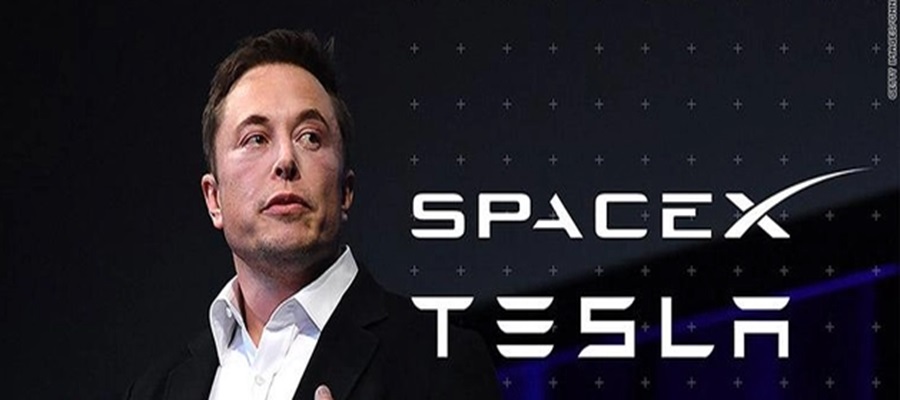
Elon Musk is poised to become the world’s first trillionaire after SpaceX, his company, confirmed plans to go public.

Elon Musk
Because Musk owns the majority of the shares, it could push his net worth over the trillion dollar mark.
The entrepreneur is known for his leadership of Tesla, SpaceX, X, and xAI.
Musk has been the wealthiest person in the world since 2025; as of May 2026, Forbes estimates his net worth to be $788 billion.
SpaceX has filed for a blockbuster public listing in the United States, paving the way for what could become the largest stock market debut in Wall Street history.
The company, formally known as Space Exploration Technologies, announced plans to begin trading under the ticker symbol “SPCX” as early as next month.
The listing values SpaceX at about $1.25 trillion, with Musk’s majority ownership potentially worth more than $600 billion alone.
Combined with his existing holdings in companies including Tesla, the IPO could push Musk’s personal wealth above the $1 trillion mark.
The long-awaited filing also offered investors a rare look into SpaceX’s finances.
The company reported $18.6 billion in revenue last year but recorded a net loss of $4.9 billion. In the first quarter of this year, SpaceX generated $4.7 billion in sales while posting a $4.3 billion net loss.
Financial disclosures showed the company holds $102 billion in assets, including rockets, launch infrastructure and satellite systems, while carrying debts totalling $60.5 billion.
Despite the losses, analysts suggested investors were unlikely to be deterred given SpaceX’s dominance in commercial space launches and satellite internet services.
Ruth Foxe-Blader, managing partner at Citrine Venture Partners, described the planned flotation as “extremely exciting.”
“SpaceX is just an absolutely sprawling, enormous project with so many different selling points, and so many points that really point to the future,” she said.
SpaceX operates the Starlink satellite internet network and also owns Musk’s artificial intelligence company, xAI.
The IPO filing revealed that xAI recently reached a major commercial agreement with rival AI company Anthropic, maker of the Claude chatbot.
Under the arrangement, Anthropic will reportedly pay $15 billion annually to access data centre infrastructure linked to xAI operations in the American South.
The filing also disclosed that SpaceX expects to incur more than half a billion dollars in legal costs from multiple ongoing lawsuits and regulatory disputes.
Among the cases listed were claims alleging that xAI’s chatbot Grok had been used to create sexualised deepfakes of women and girls, alongside patent infringement disputes, music copyright claims, data breach allegations and investigations into compliance with European Union content moderation rules.
Musk has previously said he plans to dissolve xAI as a standalone company and pursue his AI ambitions directly under SpaceX.
The filing came shortly after Musk lost a high-profile legal battle against OpenAI and its chief executive Sam Altman.
Musk had accused OpenAI of abandoning its non-profit mission after shifting towards a commercial model, but a jury dismissed the lawsuit, ruling that he had waited too long to bring the claims.

Court Orders FG to Reveal Identity of Local Contractors in $460m Abuja CCTV Project

NCAA Suspends Services to Air Peace, Others over Debts

Legend Internet Repays N10Bn Commercial Paper

FG Classifies Ebola Importation into Nigeria as High Risk

Transfers Fail as Banks Suffer USSD Glitches

MTN, VDT, Zoracom, Digital Realty Back 2026 Girls in ICT Campaign

Vitel Wireless Partners Fintechs to Expand Access to Services

FG Okays 112 as Toll-Free National Emergency Response Number

Opay Plans IPO in US, Targets $4Bn in Valuation

Elon Musk Launches XChat with Video Calling to Take on WhatsApp, Messenger




 Telecom3 days ago
NCC Drafts New Rules for Virtual Mobile Operators

 Telecom3 days ago
Airtel Africa Launches $110m Share Buyback Programme for Capital Efficiency
 General News3 days ago
WHO Says Ebola Risk Now at Highest Level

 Telecom3 days ago
MTN Nigeria Tops Gender Equality Rankings After Major Workplace Transformation, IFC Report Reveals

 E-Business3 days ago
LG Electronics Showcases Advanced HVAC Solutions at Mega Clima Nigeria 2026

 News3 days ago
FG Unveils AI Public Services Platform

 Telecom3 days ago
Microsoft, Partners Launch ‘LINGUA Initiative’ to Save African Languages From Digital Extinction

 Telecom3 days ago
Australian Court Upholds Fine Against X Over Child Safety Compliance Failures