

General News
Nigeria, Other African Nations Eye Sin Taxes, Debt Restructuring to Replace Lost Funding


Cash-strapped African nations are looking at imposing sin taxes, restructuring debt and even trying to take a cut of diaspora remittances to replace lost aid funding and prop up their health systems.

So called sin tax, is an excise tax specifically levied on certain goods deemed harmful to society and individuals, such as alcohol, tobacco, drugs, candy, soft drinks, fast foods, coffee, sugar, gambling, vaping, cannabis and pornography.
According to the Telegraph, ten months after Donald Trump slashed America’s lavish overseas aid, former recipients are scrambling for new ways to fill the gaps, said one of the continent’s leading public health experts.
International health aid is projected to drop by two-fifths in 2025 compared with 2023, according to new World Health Organization figures.
A WHO survey has found cuts have reduced critical services such as maternal care, vaccination and disease surveillance – by up to 70 per cent in some countries.
Nations have acknowledged Mr Trump is not going to change his mind, and similar cuts from the UK and others mean global aid funding is not going to return to levels of recent years.
Prof Helen Rees, a world renowned HIV and global health researcher, said: “We are seeing just a real change in the way that people are thinking about the way we are going to finance.
“Because that is the reality and this is not going to come back to any of those levels that we have seen.”
Prof Rees, who heads the Wits RHI research institute at Johannesburg’s University of the Witwatersrand, said there was also an acknowledgement in many countries that they had become too dependent on aid.
She said: “Many African health ministers have now said we shouldn’t have done this, we shouldn’t have had this level of dependency, so that when it was withdrawn, we all suddenly reeled backwards and said oh my goodness, we hadn’t planned for this.”
African health leaders have also admitted that the previous international largesse had been inefficient and often wasted, doing too little to build up lasting health systems that could stand alone.
Dr Jean Kaseya, director-general of the Africa Centres for Disease Control and Prevention, recently estimated that 60 per cent of traditional foreign health aid to Africa was effectively wasted.
He said: “Let me also shock you: We don’t need more than 40 per cent of [the] money we were receiving before.”
As aid cuts have bitten, Kenya, Nigeria and South Africa have all allocated budget increases to health, and are trying to get the increases approved by their parliaments.
Prof Rees said countries were looking at how they could increase taxation to make up for the lost money.
Some were looking at so-called sin taxes, including targeting a boom in online gambling.
Ghana earlier this year put a 20 per cent increase on taxes for alcohol, tobacco products and sugary drinks, in part to raise money for its health service.
Crypto currency could be another target for taxation, Prof Rees said.
Another area being investigated is money sent from abroad.
She said: “If you imagine some of the big countries that have got a big diaspora, remittances are a hugely important part of the foreign exchange income.
“So is there a way that diaspora remittances can be looked at?”
Countries were also looking at pooling procurement to get better bargaining power on vaccine and drug deals, following an example set by the Pan American Health Organisation, which has had a similar scheme since the 1970s.
As countries fund themselves with more of their own money, they will have to make their own prioritisations about what healthcare they want.
Prof Rees said: “Actually some of these health products that we really need are expensive. Countries are going to have to say, if I buy that vaccine, I can’t buy that drug, or I can put money into health services.”
The financial squeeze is not confined to countries. She said global health agencies such as those run by the United Nations, or bodies such as the Global Fund and the GAVI vaccine alliance were also looking at how to cut costs, pool resources and streamline.
She said: “At every level, people are starting to say it can’t be business as usual and we have to rethink at every single level how we do our business.”
International aid will not disappear, but she said increasingly Washington was doing country-to-country deals, rather than backing big global agencies and programmes.
African nations were also going to have to be better at making the case for support, she suggested.
While there was a clear humanitarian case for health aid, she said there was also a case that it had security and stability benefits for richer countries, including a reduction in migration.
She said: “There’s also a very real case about stabilising poor countries.
“Investment in development and investment in health is a stabiliser for countries. If countries can’t afford to do it adequately themselves, you are going to get destabilisation of economies and therefore of political stability.
“Are countries just going to close borders, or do you say that investment actually builds stability and therefore the need for immigration diminishes? Development aid and stability are incredibly important.”
The WHO this week launched new advice for countries dealing with the aid cuts.
Dr Tedros Adhanom Ghebreyesus, the director general, said: “Sudden and unplanned cuts to aid have hit many countries hard, costing lives and jeopardising hard-won health gains.
According to the African Energy Chamber’s 2025 report, African oil and gas firms face growing “off-field risks,” including regulatory uncertainty, security vulnerabilities, and tighter financial conditions—factors that complicate efforts to raise capital or pursue stock listings.


General News
Fiona Ahimie Launches LEADHER Mentorship Session to Inspire the Next Generation of Female Leaders

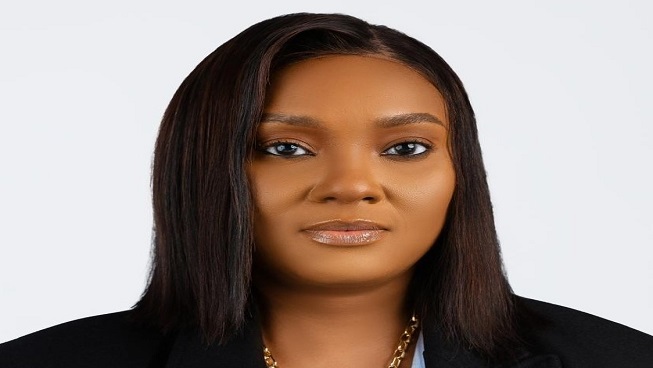
As part of activities leading up to her investiture as the 14th President of the Chartered Institute of Stockbrokers (CIS) and the first female President in the Institute’s history, Dr. Fiona Ahmed Ahimie, Managing Director of First Securities Brokers Limited, hosted the inaugural LeadHER Mentorship Session last week.

The session, themed “Leading with Purpose, Breaking Barriers, Building Legacy,” brought together emerging female professionals and aspiring leaders from across various industries for an engaging afternoon of mentorship, learning, and empowerment.
The LeadHER Mentorship Session was designed to provide participants with practical insights into leadership, career advancement, personal development, and navigating challenges in the traditionally male-dominated sectors.
Through candid conversations and shared experiences, attendees gained valuable perspectives on building successful careers while creating lasting impact within their organizations and communities.
Speaking at the event, Dr. Ahimie noted that leadership is not merely about achieving personal success but about creating pathways for others to thrive.
“Throughout my professional journey, I have benefited from the guidance, support, and encouragement of remarkable mentors. The LeadHER Mentorship Session is an opportunity to pay that forward by equipping and inspiring the next generation of women to pursue excellence, embrace leadership opportunities, and break barriers with confidence,” she said.
The mentorship session forms part of a broader commitment to advancing female participation and leadership within Nigeria’s financial services industry and the wider corporate ecosystem. It also reflects Dr. Ahimie’s longstanding dedication to talent development, professional excellence, and inclusive leadership.
The event provided a platform for meaningful dialogue, networking, and knowledge sharing.
Dr. Ahimie’s investiture as President of the Chartered Institute of Stockbrokers marks a historic milestone for the Institute and the Nigerian capital market, underscoring the growing role of women in shaping the future of the financial services industry.


Ventures Platform and the Yemisi Shyllon Museum of Art (YSMA), Pan-Atlantic University, are pleased to announce Haneefah Adam as the winner of the inaugural Ventures Platform–YSMA Futures Art Award, a pioneering public art commission established to support artistic innovation and future-focused cultural expression in Nigeria.

L-R: Kola Aina, Founding Partner, Ventures Platform; Dotun Olowoporokun, Managing Partner, Ventures Platform; Haneefah Adam, Artist and winner of the Futures Art Award; and Jess Castellote, Director, Yemisi Shyllon Museum of Art, Pan-Atlantic University during the Presentation of the Ventures Platform-YSMA Futures Art Award at Ventures Platform’s 10th Anniversary Dinner in Lagos on June 19, 2026.
The announcement was made during the 10th Anniversary Dinner of Ventures Platform in Lagos, where Haneefah was formally recognized following a competitive national selection process that attracted submissions from artists and art collectives across Nigeria.
As the winner of the Award, Haneefah will be commissioned to create a 12-foot public sculpture titled Bloom in Unexpected Places, which will be permanently installed within the YSMA and Pan-Atlantic University environment.
Selected through a rigorous jury process involving leading artists, curators, scholars, and cultural professionals, the proposal distinguished itself through its originality, conceptual strength, artistic ambition, and thoughtful engagement with the Award’s central theme: Reimagine the future and build into form through art.
The work explores themes of growth, resilience, innovation, and possibility, inviting audiences to reflect on how creativity and human ingenuity can flourish in unexpected circumstances and environments. Through its scale and public presence, the installation is intended to spark conversations about the future while enriching the cultural landscape of the University and the wider community.
The Award represents a landmark moment in Haneefah Adam’s artistic journey. While she has earned recognition for her innovative and socially engaged practice, this commission marks her first institutional award, her first major public art commission, and the largest public artwork of her career to date.
Speaking on behalf of YSMA, Museum Director, Jess Castellote described the Award as an important investment in both artists and public culture.
“At YSMA, we believe museums have a responsibility not only to preserve cultural heritage but also to support the creation of new cultural futures. Haneefah’s proposal impressed the Jury with its clarity, imagination, and relevance to contemporary conversations about innovation and possibility.
“We are delighted to support the realization of this ambitious work and to welcome it into the Museum’s growing public art programme.
“The Ventures Platform–YSMA Futures Art Award demonstrates what is possible when cultural institutions and private-sector partners work together to invest in creativity and public engagement.”
For Ventures Platform, the Award forms part of its broader vision of supporting the systems, ideas, and people shaping Africa’s future.
According to Kola Aina, Founder and General Partner of Ventures Platform: “As we celebrate ten years of backing visionary founders across Africa, we wanted to create something that reflects our belief that innovation is not confined to technology or business alone.
“The future is also imagined through culture, creativity, and the stories we tell about ourselves. This Award represents an investment in imagination itself.
“Haneefah’s proposal captures that spirit beautifully, and we are excited to see it come to life as a public artwork that inspires curiosity, reflection, and optimism.”
The Award is one component of a broader three-year collaboration between Ventures Platform and YSMA, which also includes entrepreneurship-focused masterclasses, guest lectures, and student engagement initiatives within the Pan-Atlantic University ecosystem.
Supporting the long-term legacy of the programme is Atsur Technologies Ltd, the exclusive Provenance Infrastructure and Physical-Digital Documentation Partner for the Ventures Platform–YSMA Futures Art Award. Through this partnership, every commissioned artwork produced under the Award will be professionally digitized, authenticated, and recorded using Artsur’s provenance and collection management technology, ensuring robust documentation of the artist’s creative process, the artwork’s history, and its enduring place within Nigeria’s cultural record. This partnership reflects a shared commitment to strengthening transparency, documentation standards, and the long-term preservation of contemporary African artistic production using innovative technologies.
Commenting on her selection, Haneefah Adam expressed gratitude for the opportunity and excitement about the journey ahead.
“I am deeply honoured to be the inaugural recipient of the Ventures Platform–YSMA Futures Art Award. To have my work selected from among so many strong submissions is both humbling and encouraging. Bloom in Unexpected Places is rooted in the belief that creativity, hope, and transformation can emerge even in the most unlikely circumstances. I look forward to working with YSMA and Ventures Platform to bring this vision into the public realm and create a work that invites people to think differently about the future.”
Beyond the commissioning of a single artwork, the Ventures Platform–YSMA Futures Art Award seeks to establish a new model for collaboration between the cultural and innovation sectors. By positioning artists as active participants in conversations about technology, entrepreneurship, and societal transformation, the Award expands the ways in which the future can be imagined, questioned, and made visible.
As work begins on Bloom in Unexpected Places, the project signals a bold commitment by both Ventures Platform and YSMA to nurturing creative talent, supporting public art, and fostering interdisciplinary approaches to shaping the future.
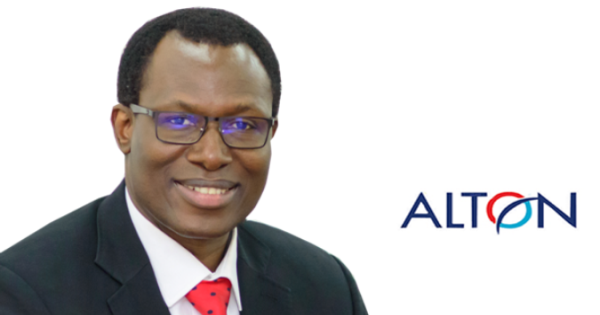
Association of Licensed Telecommunications Operators of Nigeria (ALTON), official industry body and advocacy group for major telecommunications providers in Nigeria, has backed the Central Bank of Nigeria’s (CBN) directive requiring banks and fintechs to host payment transaction data locally.

Gbenga Adebayo, chairman, ALTON
Gbenga Adebayo, chairman, ALTON, said this in an interview with the News Agency of Nigeria (NAN) in Lagosat the weekend.
His position follows a recent CBN directive mandating that banks, fintechs, and other payment service providers store payment transaction data generated in Nigeria on local servers from January 1, 2027.
The directive forms part of measures aimed at strengthening oversight of the country’s rapidly growing digital payments ecosystem.
Adebayo said data sovereignty required countries to take responsibility for their entire data value chain.
According to him, this covers data collection, management, storage, and integrity assurance.
“We cannot continue to outsource that to other jurisdictions.
“The more we host our data locally, the better for us,” he said.
Adebayo said local hosting would enable Nigeria to manage data end-to-end and guarantee the integrity of critical information.
He noted that hosting payment data outside the country increased communication requirements, latency, and retrieval costs.
“For every transaction involving data hosted outside our shores, communication has to take place from your location to the host and back.
“It increases latency and also increases the cost of data retrieval,” he said.
The ALTON chairman described the directive as an important first step toward achieving national data sovereignty.
He also dismissed concerns about infrastructure readiness, saying Nigeria already had significant data center capacity.
According to him, several Nigerian-owned facilities currently host data for organisations operating from other jurisdictions.
“I’m happy to say that we have a lot of data centres owned and managed by Nigerians that are hosting data from other jurisdictions.
“If people overseas can host their data here, why can’t we host our own data here?” he queried.
Adebayo argued that local hosting would reduce dependence on foreign infrastructure while improving national control over data security.
He said concerns about security and reliability should not justify continued reliance on foreign hosting providers.
“No one can protect your house better than yourself.
“You have more at stake in terms of security and safety than somebody else hosting your data,” he said.
The telecom industry leader also highlighted the cost implications of local hosting.
He said organisations that host data locally would pay in local currency rather than foreign currency.
According to him, this would help reduce exposure to exchange rate pressures and lower long-term operating costs.
Adebayo said Nigeria currently had about six Tier III data centres, with additional facilities under development.
He, however, stressed that capacity was more important than the number of facilities.
“It’s not just about the numbers; it’s about the capacity of what they can host.
“So far, we can,” he said.
He urged stakeholders to accelerate efforts toward domestic data hosting and management.
“The earlier we begin to domesticate our data hosting and data management, the better for us,” Adebayo added.

CredibleVoteNG Opens Free Access to all Polling Units in Nigeria after INEC Demanded N1.Bn for Register

NESREA Defends Plastic Waste Rules, Says Policy Targets Pollution

FG Engages Banks on RevOp, New Digital Platform for Revenue Generation

Kaspersky Discovered a Malware Campaign Targeting Steam Users Through Infected Wallpaper

Fiona Ahimie Launches LEADHER Mentorship Session to Inspire the Next Generation of Female Leaders

CBN Extends PoS Geo-Fencing Enforcement Deadline to August 2026

London Strengthens Global Investment Ties with Africa @ First Ever London-Africa Business Summit

FG Targets Alleged N3tn Capital Flight, Opens Airtime Credit Market to Nigerian Fintechs

Japan, UNESCO Boost Digital Learning in 15 CoEs with Donation of ICT Equipment

Mobile Internet Gender Gap Widest in Africa – GSMA




 Telecom1 day ago
MTN Nigeria Commits to Ethical Conduct with IFRS S1, S2 Compliance

 E-Financial1 day ago
FG Moves to End Double Taxation

 General News1 day ago
ALTON Backs CBN on Local Data Hosting Rule for Banks, Fintechs

 News1 day ago
BoI’s EIB-Backed Financing Accelerates Fidson’s Pharmaceutical Manufacturing Growth

 E-Business1 day ago
NDPC to Review Data Law to Address AI, Privacy Concerns

 Telecom1 day ago
NCC, CAC Move to Block Unapproved Ownership Changes in Telecom Sector

 E-Business1 day ago
Galaxy Backbone @ 20, Unveils New Identity

 General News1 day ago
Nwanegbo Bags Africa Digital Award in Applied Artificial Intelligence and Data Science