

News
DPLAN Threatens NDPC with Legal Action for Setting aside $32.8m Meta Fine


The pre-action notice was signed by Emmanuel Okpara, Esq., Litigation and Compliance Director, and Mus’ab Awwal Mu’az, Esq., secretary of the Association’s Steering Committee.
The dispute stemmed from a consent judgment delivered on November 3, 2025, by Justice J.K. Omotosho of the Federal High Court, Abuja, in Suit No: FHC/ABJ/CC/355/2025 between Meta Platforms, Inc. and the NDPC.
Following investigations conducted under the Nigeria Data Protection Act (NDPA), 2023, the NDPC had issued a Final Order against Meta Platforms, Inc., finding “widespread violations of the data protection and privacy rights of approximately 61 million Nigerians,” and imposing a remedial fine of USD 32,800,000.
The pre-action notice was signed by Emmanuel Okpara, Esq., Litigation and Compliance Director, and Mus’ab Awwal Mu’az, Esq., Secretary of the Association’s Steering Committee.
The dispute stemmed from a consent judgment delivered on November 3, 2025, by Justice J.K. Omotosho of the Federal High Court, Abuja, in Suit No: FHC/ABJ/CC/355/2025 between Meta Platforms, Inc. and the NDPC.
Following investigations conducted under the Nigeria Data Protection Act (NDPA), 2023, the NDPC had issued a Final Order against Meta Platforms, Inc., finding “widespread violations of the data protection and privacy rights of approximately 61 million Nigerians,” and imposing a remedial fine of USD 32,800,000.
The NDPC investigation stemmed from a petition filed at the commission on August 14, 2023, against Meta Platforms Inc. by the convener of Personal Data Protection Awareness Initiative, Ozoemena Nwogbo, regarding violation of the Nigeria Data Protection Act.
After its investigation, NDPC found Meta Platforms Inc. wanting and, on February 18, 2025, issued nine Final Orders against Meta Platforms Inc.
NDPC’s Order
The NDPC’s order nine reads, “Meta shall pay the naira equivalent of 32,800,000 USD (Thirty-two million, eight-hundred thousand United States Dollars) as a remedial fee. The naira equivalent shall be at the rate determined by the Central Bank of Nigeria.
“The details of the account for payment of the remedial fee are as follows: Account Name: Nigeria Data Protection Commission Fund Account. Account Number: 0020331265048 (300131267). Use RTGS for payment.”
The NDPC added, “Note that Meta has a right to seek a judicial review of this decision. The Commission will closely monitor Meta’s remediation process and its impact on data subjects for upwards of six months.”
However, the Final Order was subsequently set aside through Terms of Settlement, which were adopted by the court as a consent judgment on November 3, 2025, following a suit marked FHC/ABJ/CS/355/2025, filed by Meta Platforms Inc. against the NDPC.
Part of the Terms of Settlement entered between NDPC and Meta Platforms Inc. reads, “The applicant (Meta Platforms Inc.) and the respondent (NDPC) have come to a mutual settlement agreement that resolves the dispute underlying the applicant’s originating Summons.
“Pursuant to this agreement: (I) the applicant has agreed to provide specific remedial consideration to the respondent in support of protecting the rights of data subjects in Nigeria; and (II) the respondent has inter alia agreed to set aside and waive any rights to enforce or take steps to enforce the Final Orders against the applicant.”
The settlement terms specifically read, “In the light of the foregoing: The applicant wholly and completely terminates, abandons, withdraws, and discontinues the Originating Summons as well as any and all claims against the respondent connected to or arising from the matters or the subject matter thereof, except as the parties have otherwise agreed.
“The respondent: (I) sets aside the Final Orders against Meta; and (II) save and except as the parties have otherwise agreed, fully and firmly releases and discharges Meta from any and all claims, demands, actions, causes of action, contracts, obligations, suits, debts, costs, liabilities, which the respondent ever had, may now have, or May hereafter claim to have against Meta in respect of the matters.”
Association Alleges Illegality In Settlement
But the Data Privacy Lawyers Association contended that the consent judgment was entered into unlawfully, arguing that it was done without lawful statutory authority, in violation of the Nigeria Data Protection Act, 2023, and in derogation of the constitutional right to privacy guaranteed under Section 37 of the Constitution of the Federal Republic of Nigeria, 1999 (as amended).
The Association further said the action was taken “to the grave prejudice of millions of affected Nigerians and the public interest, as well as the Federal Government of Nigeria.”
In the notice, the Association warned that unless the issues raised are urgently addressed within the statutory notice period, it would approach the Federal High Court to seek multiple reliefs.
These include an order setting aside, vacating, and nullifying the consent judgment on grounds of fraud, collusion, material non-disclosure, lack of statutory authority, and violation of the NDPA, 2023.
It is also seeking a declaration that the consent judgment is “null, void, unconstitutional, and of no legal effect,” as well as a declaration that the NDPC lacks statutory authority to waive, compro
Other reliefs sought include an order restoring and reviving the Final Order against Meta Platforms, including the $32.8 million fine, and an order restraining any further reliance on or enforcement of the consent judgment.
The Association also asked the court for other orders the Court may deem fit in the interest of justice, public accountability, and the protection of constitutional rights.
In the interest of transparency and accountability, the Association urged the NDPC to provide a written explanation of the legal basis for entering into the Terms of Settlement, clarify the statutory authority relied upon to waive the remedial fine and set aside the Final Order, and take steps to remedy the issues raised.
The letter, the Association said, constitutes the requisite pre-action notice under applicable law.
It warned that unless the concerns are satisfactorily addressed within 30 days of receipt of the notice, it will proceed to institute legal proceedings without further recourse.
mise, or extinguish liabilities, sanctions, or remedial fines arising from established violations of the Act.



Legend Internet Plc has announced the full and timely repayment of its Series 1 Commercial Paper under its N10bn multi-layered issuance programme, marking a key milestone in the company’s engagement with Nigeria’s debt capital market.

Aisha Abdulaziz, chief executive officer, Legend Internet Plc,
The repayment, completed on schedule and in full, underscores the company’s financial discipline and its continued commitment to maintaining strong investor relations in a tightening funding environment.
The Series 1 issuance had earlier attracted significant demand, recording a 119.7 per cent oversubscription at launch, reflecting strong investor appetite and confidence in the company’s credit profile, operational performance, and long-term expansion strategy.
Speaking on the repayment, Aisha Abdulaziz, chief executive officer, Legend Internet Plc, said the outcome reinforces the company’s credibility and operational strength.
“The successful repayment of our Series 1 Commercial Paper demonstrates Legend Internet’s unwavering commitment to meeting its financial obligations and maintaining the trust of the investment community.
This milestone further reinforces the strength of our business model, operational discipline, and long-term vision for building resilient digital infrastructure across Nigeria,” she said.
She added that investor confidence has remained central to the company’s funding strategy, saying, “We remain deeply appreciative of the confidence shown by our investors, advisers, issuing houses, and market partners during the issuance and throughout the tenor of the programme. Their support continues to position Legend Internet for sustainable growth and expansion.”
The Commercial Paper programme forms part of Legend Internet Plc’s broader capital strategy aimed at supporting broadband infrastructure expansion, strengthening working capital efficiency, and accelerating investment in Nigeria’s digital connectivity.
Legend Internet Plc operates as a digital infrastructure and broadband services provider, with a focus on fibre connectivity, enterprise solutions, and next-generation digital services designed to expand access and support economic inclusion across Nigeria


Federal government has launched GovGuideNigeria, an artificial intelligence (AI)-powered digital platform designed to streamline access to public service information through WhatsApp and the web.

The platform consolidates information from more than 35 federal ministries and over 60 government agencies, marking a significant step in Nigeria’s drive to expand AI-enabled public infrastructure and digital government services.
According to Bosun Tijani, Nigeria’s minister of communications, innovation and digital economy, the initiative aims to simplify interactions with government services, particularly for underserved communities that often face challenges navigating complex public-sector systems.
Developed in collaboration with the National Centre for Artificial Intelligence and Robotics, Meta, and Publica AI, GovGuideNigeria uses conversational AI to provide real-time responses via WhatsApp and a web interface in English, Hausa, Igbo and Yoruba.
Sade Dada, head of public policy at Meta, said the multilingual rollout highlights the growing use of natural language processing within African public institutions to improve digital inclusion and broaden access to services.
Ignatius Willie, chief executive of Publica AI, said the platform demonstrates how Africa’s next generation of digital public infrastructure can be developed locally using African languages.
GovGuideNigeria is intended to address longstanding challenges in Nigeria’s public information system, where citizens often struggle to access reliable guidance because of fragmented government websites, poor communication channels and the expense of travelling to physical offices.
Through AI-driven automation, users can obtain information on immigration procedures, documentation requirements, public programmes and agency-specific services through chat-based interactions.
The launch also reflects Nigeria’s broader ambition to integrate AI into digital governance, while strengthening partnerships between government agencies, global technology companies and local AI startups to modernise public service delivery.
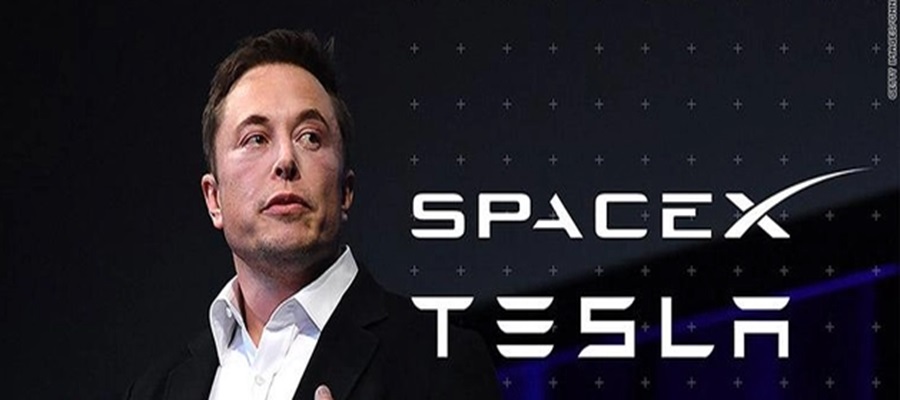
Elon Musk is poised to become the world’s first trillionaire after SpaceX, his company, confirmed plans to go public.

Elon Musk
Because Musk owns the majority of the shares, it could push his net worth over the trillion dollar mark.
The entrepreneur is known for his leadership of Tesla, SpaceX, X, and xAI.
Musk has been the wealthiest person in the world since 2025; as of May 2026, Forbes estimates his net worth to be $788 billion.
SpaceX has filed for a blockbuster public listing in the United States, paving the way for what could become the largest stock market debut in Wall Street history.
The company, formally known as Space Exploration Technologies, announced plans to begin trading under the ticker symbol “SPCX” as early as next month.
The listing values SpaceX at about $1.25 trillion, with Musk’s majority ownership potentially worth more than $600 billion alone.
Combined with his existing holdings in companies including Tesla, the IPO could push Musk’s personal wealth above the $1 trillion mark.
The long-awaited filing also offered investors a rare look into SpaceX’s finances.
The company reported $18.6 billion in revenue last year but recorded a net loss of $4.9 billion. In the first quarter of this year, SpaceX generated $4.7 billion in sales while posting a $4.3 billion net loss.
Financial disclosures showed the company holds $102 billion in assets, including rockets, launch infrastructure and satellite systems, while carrying debts totalling $60.5 billion.
Despite the losses, analysts suggested investors were unlikely to be deterred given SpaceX’s dominance in commercial space launches and satellite internet services.
Ruth Foxe-Blader, managing partner at Citrine Venture Partners, described the planned flotation as “extremely exciting.”
“SpaceX is just an absolutely sprawling, enormous project with so many different selling points, and so many points that really point to the future,” she said.
SpaceX operates the Starlink satellite internet network and also owns Musk’s artificial intelligence company, xAI.
The IPO filing revealed that xAI recently reached a major commercial agreement with rival AI company Anthropic, maker of the Claude chatbot.
Under the arrangement, Anthropic will reportedly pay $15 billion annually to access data centre infrastructure linked to xAI operations in the American South.
The filing also disclosed that SpaceX expects to incur more than half a billion dollars in legal costs from multiple ongoing lawsuits and regulatory disputes.
Among the cases listed were claims alleging that xAI’s chatbot Grok had been used to create sexualised deepfakes of women and girls, alongside patent infringement disputes, music copyright claims, data breach allegations and investigations into compliance with European Union content moderation rules.
Musk has previously said he plans to dissolve xAI as a standalone company and pursue his AI ambitions directly under SpaceX.
The filing came shortly after Musk lost a high-profile legal battle against OpenAI and its chief executive Sam Altman.
Musk had accused OpenAI of abandoning its non-profit mission after shifting towards a commercial model, but a jury dismissed the lawsuit, ruling that he had waited too long to bring the claims.

Court Orders FG to Reveal Identity of Local Contractors in $460m Abuja CCTV Project

NCAA Suspends Services to Air Peace, Others over Debts

Legend Internet Repays N10Bn Commercial Paper

FG Classifies Ebola Importation into Nigeria as High Risk

Transfers Fail as Banks Suffer USSD Glitches

MTN, VDT, Zoracom, Digital Realty Back 2026 Girls in ICT Campaign

Vitel Wireless Partners Fintechs to Expand Access to Services

FG Okays 112 as Toll-Free National Emergency Response Number

Opay Plans IPO in US, Targets $4Bn in Valuation

Elon Musk Launches XChat with Video Calling to Take on WhatsApp, Messenger




 Telecom2 days ago
NCC Drafts New Rules for Virtual Mobile Operators

 Telecom2 days ago
Airtel Africa Launches $110m Share Buyback Programme for Capital Efficiency
 General News2 days ago
WHO Says Ebola Risk Now at Highest Level

 E-Business2 days ago
LG Electronics Showcases Advanced HVAC Solutions at Mega Clima Nigeria 2026

 Telecom2 days ago
MTN Nigeria Tops Gender Equality Rankings After Major Workplace Transformation, IFC Report Reveals

 News2 days ago
FG Unveils AI Public Services Platform

 Telecom2 days ago
Microsoft, Partners Launch ‘LINGUA Initiative’ to Save African Languages From Digital Extinction

 Telecom2 days ago
Australian Court Upholds Fine Against X Over Child Safety Compliance Failures