

E-Financial
Why 2026 Must Be the Year Nigeria’s Economy Works for All

By Blaise Udunze
As the new economic year begins in Nigeria, statements and policies emanating from government officials’ corridors project cautious optimism. One of the official narratives that expresses renewal of hope and confidence is the projection from the Central Bank of Nigeria (CBN) that the economy is expected to continue expanding, with GDP growth at 4.49 percent, and headline inflation is projected to moderate to 12.9 percent. Despite grappling with shrinking oil revenues, rising public debt, and widening fiscal deficits as a nation, it is further projected that the foreign reserves are anticipated to exceed $50 billion. Policymakers presented these figures as evidence that the economy is stabilising and consolidating, irrespective of the clear evidence of years of turbulence.

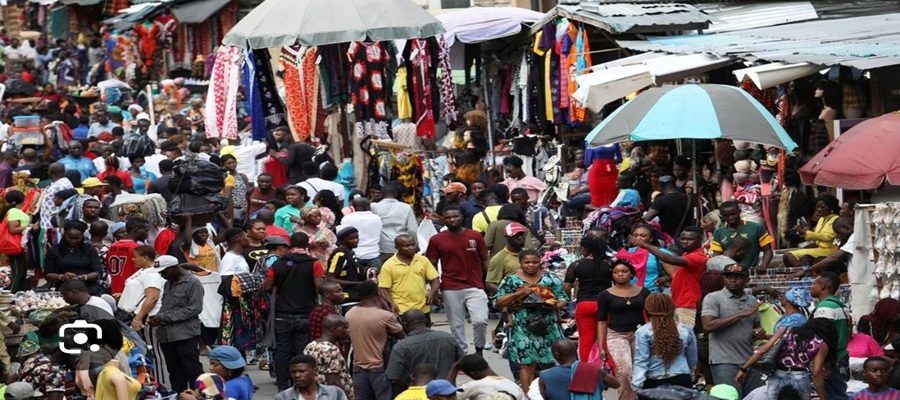
Yet the concern for experts is that beyond the polished macroeconomic indicators lies a widening disconnect between statistical recovery and lived reality. While increasingly warning that stability is necessary, the views across academia, civil society, labour groups, and the private sector, experts clearly stated that it is not synonymous with sustainable growth, nor does it automatically improve living standards for millions of Nigerians grappling with unemployment, rising prices, and fragile livelihoods.
This development signals the economic debate entering 2026, as evident in the previous years, the argument that the year must not become another chapter in which rhetoric outpaces results. To them, it must place productivity, inclusion, and welfare at the heart of reform as all this must be informed via a decisive shift toward holistic, people-centered economic renewal.
The Numbers and the Narrative

There is no denying that certain macroeconomic indicators have improved. Tighter monetary policy in 2025, foreign exchange market unification, and efforts to rein in deficit financing have contributed to relative stability in inflation dynamics and exchange rate volatility.
However, economists interviewed by major national dailies argue that many of these gains remain largely “on paper.” They clearly stated that growth figures have not translated into broad-based job creation, rising real incomes, or improved business conditions for small enterprises. It is regrettable that households whose spending is dominated by food, transport, and energy, whilst inflation. However, easing remains painfully high relative to income, and this disconnect underscores a deeper flaw in economic communication and design, showing that headline indicators often mask structural weaknesses. GDP growth does not automatically reflect productivity expansion, employment quality, or resilience. Foreign reserves alone do not guarantee the affordability of necessities. When policy emphasis centres on aggregates rather than outcomes, reform risks losing social legitimacy.
When Stability Isn’t Enough
The inflation debate illustrates this dilemma clearly, and projections suggest moderation in 2026, yet prices of essential goods remain high. Low-income households, especially those outside formal wage employment, bear a disproportionate burden. For them, “disinflation” offers little relief when purchasing power has already been eroded. In like manner, exchange rate unification, though economically rational, imposed short-term shocks on import-dependent businesses and consumers. The fact remains that without a simultaneous and aggressive push to strengthen domestic production, the nation’s currency reforms risk transferring adjustment costs to households rather than building long-term competitiveness. These debates reveal two competing visions of economic management:
– One that prioritises macroeconomic order and investor confidence
– Another that insists stability must be matched by visible improvements in welfare, productivity, and opportunity.
The fact is that a holistic renewal agenda must reconcile both.
Macroeconomic Stability as Foundation, Not Destination
To be clear, stability matters, and it must be treated as a foundation, not the finish line. One will conclude that this is what it is meant to be because economic planning becomes impossible without disciplined fiscal management, credible monetary policy, and sustainable debt dynamics. Experts caution against celebrating stabilisation while growth remains modest.
The International Monetary Fund projects Nigeria’s growth to slow toward three per cent, with further moderation in 2026 due largely to weaker global demand and declining oil prices. Crude oil’s fall below Nigeria’s budget benchmark reinforces the urgency of diversification. Moderate growth, without deep structural reform, cannot absorb Nigeria’s rapidly expanding labour force. This is because as a young, fast-growing population requires productivity-led growth, not cyclical rebounds tied to commodity prices.
Infrastructure as the Productivity Multiplier
Infrastructure remains one of Nigeria’s most binding constraints, commonly associated with the lingering erratic power supply, congested transport corridors, inefficient ports, and weak digital connectivity, which impose high costs on businesses and households alike.
Consistently, it is argued by experts that fragmented projects are insufficient by objectively looking at the trend of things; what is required is integrated infrastructure planning that links energy reform with transport logistics, industrial clusters, rural access roads, and digital platforms. Some of the key grey areas that the electricity reform must address are not just generation but transmission losses, distribution inefficiencies, and tariff credibility. Without much ado, transport investments should prioritise economic corridors and channels that connect farms to markets and factories to ports. Digital infrastructure, broadband access, data systems, and digital public services must be recognised as essential economic infrastructure, not optional upgrades.
Human Capital and the Missing Engine of Growth
No economy can sustainably outgrow the quality of its people. Yet education and healthcare often remain peripheral in reform discourse.
Today, we noticed that Nigeria’s education system struggles with skill mismatches, while healthcare costs push millions into poverty.
Economic growth, no matter how well-measured, will remain shallow, as experts have maintained in their arguments that this will remain a constant factor without human capital reform. In the same manner, education, which is a key instrument for building human capital, must be in alignment with labour-market needs, while reflecting technical skills, digital literacy, and adaptability, knowing quite well that vocational and technical are critical and should be elevated as engines of productivity, not treated as second-tier options. Human capital is not social expenditure; it is economic investment, so for this reason, healthcare investment, like others, must prioritise preventive care, insurance coverage, and workforce retention.
Private Sector and MSMEs, From Constraint to Catalyst
Small and medium-sized enterprises are already struggling to survive in Nigeria’s high-cost economy, despite being the nation’s largest employer of labour, as informed by high interest rates, limited credit access, regulatory uncertainty, and infrastructure bottlenecks.
Access to affordable finance, regulatory simplicity, predictable tax policy, and contract enforcement are critical since experts repeatedly stress that reform must shift from controlling enterprise to enabling it.
Without deliberate support for small businesses, growth remains concentrated, informal employment persists, and inequality deepens. For these reasons, MSMEs require not just credit, but stable operating environments.
Industrialisation, Local Production, and Value Addition
One of the strongest expert warnings ahead of 2026 concerns Nigeria’s continued reliance on imports and raw commodity exports. This structure leaves the economy exposed to external shocks and foreign exchange volatility. For this reason, we have continued to witness economists and industry leaders advocating aggressive support for local production, agro-processing, and manufacturing value chains. Strengthening domestic capacity reduces import dependence, stabilises foreign exchange demand, and creates jobs.
Industrial policy must practically focus on sectors where Nigeria has a comparative advantage, supported by infrastructure, skills, and finance. This is to say that import substitution without competitiveness risks inefficiency, and value addition with productivity creates resilience.
Fiscal Reform and Social Justice
Fiscal reform is very important, and experts have argued that to make sure that fiscal reform is done in a fair way, it must be equitable. The tax officials must ensure that extending the tax base, it does not translate into overburdening small businesses or low-income earners. Also, one would have noticed that the removal of fuel subsidies freed fiscal space, but without strong social safety nets, it also made life very tough for a lot of people because they did not have any help when they needed it. Critics argue that reform savings must be visibly social investments like education, healthcare, transport, and targeted welfare. Social protection is not charity; it is economic stabilisation, preventing reform shocks from eroding social cohesion.
Governance, Institutions, and Policy Credibility
Unique to the Nigerian system, we have witnessed economic reforms fail where institutions are weak. This is because trust and investment have been undermined due to Policy reversals, regulatory inconsistency, and the lack of transparent decision-making.
Beyond rhetoric to enforcement, experts emphasise the need for policy coherence, institutional professionalism, and transparent communication. Anti-corruption efforts must extend. Prolonged Judicial judgement, particularly in commercial dispute resolution, has adversely impeded the smooth running of society as it questions the credibility of the system. Good governance is not abstract morality, rather it is a growth multiplier.
Agriculture, Food Security, and Rural Stability
Food inflation remains a major driver of hardship and has been one of Nigeria’s most stubborn. Though trade liberalisation has occasionally eased prices, experts argue that without boosting domestic agricultural productivity, food security will remain fragile.
Mechanisation, storage infrastructure, rural roads, insurance, and access to finance are essential. Equally critical is addressing rural insecurity, which disrupts production and inflates food prices.
Agriculture links economic growth directly to poverty reduction and social stability.
Digital Economy and Innovation
Technology is no longer a sector; it is a layer across all sectors. One can argue that Nigeria’s fintech success demonstrates what is possible, but looking at it intently, a broader digital transformation requires investment in connectivity, data protection, and cybersecurity. Regulation must be enabling, must be able to change when necessary, and forward-looking to achieve a thriving digital economy that can generate jobs, improve service delivery, and connect local firms to global markets.
The Productivity Challenge in Decline
Across expert critiques, one theme recurs: stability without productivity is stagnation.
An economy can be stable yet unproductive, grow slowly, create little or no jobs, and remain vulnerable to shocks. Productivity growth transforms stability into prosperity. It requires investment in people, infrastructure, innovation, and institutions.
Without productivity, growth becomes cyclical, driven by oil prices, not by domestic capacity.
From Rhetoric to Resonance: Closing the Credibility Gap
As Nigeria enters 2026, it has to choose to either settle for modest stability and make progress or pursue bold, people-centred strategies that generate shared prosperity.
The signs of stabilisation are real. But so is the urgency for deeper reforms that trickles down to the daily lives of those at the lower rung. Growth must be measured not only in GDP figures, inflation rates, or reserves, but in the number of jobs that are being created, the people who are earning money, and the businesses that are still running, with hope restored. It is expected that a true economic renewal in 2026 will not be announced; it will be felt.
Blaise, a journalist and PR professional, writes from Lagos and can be reached via: [email protected]



When people and businesses gain genuine access to financial services, they gain the ability to transact securely, build savings, and access credit. That access creates the conditions for progress: more stable revenues, better business decisions, and the capacity to grow. Progress, sustained over time, is what produces financial happiness. This framework is how Moniepoint measures its impact.

According to Moniepoint 2025 Impact Report, titled creating financial happiness; “Financial happiness is the feeling of confidence and ease that comes with financial freedom and well-being. It is a condition that develops over time and requires a specific set of enablers to take hold.
For millions of people and businesses across Nigeria, those enablers, like tools and solutions to manage their finances, have historically been out of reach. Moniepoint was built to change that, and this change, for us, begins with inclusion”.
Across the world, access to digital tools is a key driver of financial inclusion. The World Bank’s Global Findex 2025 report finds that more than 60% of adults in low- and middle income economies now make or receive digital payments. In Nigeria, this figure is around 54%. Moniepoint has been a key driver in expanding this access with its POS terminals. “Our terminals also drive financial inclusion for individuals.
The report stated that, in 2025, Moniepoint enabled 100 million people to make payments via their POS terminals across the country. For customers in communities where bank branches are scarce or non-existent, a Moniepoint terminal at their local shop, market stall, or fuel station provides reliable access to digital financial services.
They can make purchases, withdraw cash, and manage their money without travelling long distances or depending solely on physical currency. Critically, customers without cards can complete transactions through direct bank transfers to the terminal’s account.
Beyond practical benefits, Moniepoint terminals have also introduced a new layer of trust to everyday commerce. “When network issues make it unclear if a payment went through, the Moniepoint terminal’s loud beep provides instant confirmation for everyone, building trust in digital payments with every transaction”.
Moniepoint POS terminals operate across all 774 local governments in Nigeria, ensuring that small sellers and large stores can accept payments reliably, regardless of location.
In 2025, millions of Nigerians, businesses and individuals alike, accessed Moniepoint services through its mobile app. Top among them are groups like women and low-income earners, who have historically been excluded from formal banking. Inclusion of women is particularly important, as they typically manage household spending and informal savings but are frequently left out of structured financial systems. “Through our app, they are gaining financial independence and greater control over their economic decisions,” the report added.
For millions of Nigerians, debit cards represent a move away from the limits of cash transactions. They enable safer, more reliable everyday payments, particularly as more local businesses begin to accept digital payments.
Moniepoint debit cards are designed to meet this need. In 2025, Moniepoint customers completed over 300 million card transactions at physical locations, largely driven by essential, food-related purchases. Most of this spending took place at neighbourhood provision shops where households buy everyday items such as rice, cooking oil, and soap.
“We’ve made access to our cards intentionally simple. Customers can get a Moniepoint debit card by requesting it within their mobile app or from neighbourhood agents, without lengthy paperwork or waiting periods. By lowering these barriers, more people are able to access financial tools and participate in the formal financial system.
“Our cards also safeguard our customers’ financial information. They don’t carry special markings or any identifiers that could expose our customers or put their financial security at risk. In the event of loss, this reduces the likelihood of targeted fraud or misuse.
“When people can pay with their debit cards at their neighbourhood stores, they can manage their spending, reduce cash handling, and transact more securely. Merchants also benefit, recording higher transaction volumes and more consistent customer activity.
“Moniepoint helps millions of businesses and individuals across Nigeria access seamless payments and banking, every day. The widespread adoption of our tools and services, as highlighted, demonstrates our critical role in expanding financial access, supporting everyday commerce, and enabling more Nigerians to participate safely and consistently in the digital economy,” the report noted.


ChatPay has launched Africa’s conversational banking platform, enabling individuals and businesses to access financial services through WhatsApp.

The Lagos-based fintech startup, is in controlled rollout, connecting WhatsApp to linked-bank management, airtime and supported electricity payments through simple conversations.
The company said the platform is designed to enable users to send money, pay bills, buy airtime and manage business transactions within WhatsApp conversations, subject to the completion of regulatory approvals and integration with licensed banking partners.
According to ChatPay, the platform is operated by CP Technology Limited and is currently undergoing a phased rollout ahead of its planned public launch.
The company said the initiative is intended to simplify access to financial services by leveraging WhatsApp, which it estimates is used by more than 50 million Nigerians monthly.
Speaking on the idea behind the platform, Adeoluwasubomi Odebunmi, product lead and co-founder, said the concept emerged while she was studying Software Engineering at Babcock University.
“I saw the gap while I was still in school—how much friction there was just to move money. I didn’t want to just study the problem. I wanted to help fix it,” she said.
Odebunmi said she had previously worked on software solutions spanning e-commerce, real estate management, school administration and artificial intelligence applications before co-founding ChatPay.
Aseoluwa Siyanbola, growth lead and co-founder, said his experience managing Nigerian bank accounts while studying abroad highlighted some of the challenges users face with digital banking services.
According to him, difficulties such as one-time password (OTP) failures and inconsistent banking applications inspired the team to explore conversational banking solutions.
“We each encountered similar challenges and came together to build a solution that simplifies everyday financial transactions,” he said.
cAbraham William, tech lead and co-founder, said the company is focused on improving access to financial services through a platform that many Nigerians already use daily.
“We want to make financial services easier to access by allowing people to carry out transactions through a familiar messaging platform,” he said.
William said he oversees the company’s engineering, technology strategy and system architecture.
ChatPay said its services will be introduced in phases as regulatory requirements are met and integrations with banking partners are completed.
The company added that its newly launched “Founding 2,500” programme will enable selected early users to test features, provide feedback and participate in product development before the platform’s wider rollout.
According to the company, interested users can register for the waitlist and the Founding 2,500 programme through its website.
Founded by Odebunmi, Siyanbola and William, ChatPay said its long-term goal is to expand conversational banking services beyond Nigeria into other African markets after its domestic rollout.

United Bank for Africa (UBA) Plc has been named Nigeria’s Best Bank for Retail Banking and Best Bank for Sustainability Leadership (ESG) at the 2026 Euromoney Awards for Excellence, reinforcing its position as one of Africa’s leading financial institutions.

The awards were presented on July 17 at The Peninsula London in the United Kingdom, recognising financial institutions that have demonstrated outstanding performance, innovation, customer impact and sustainable banking practices.
The double recognition highlights UBA’s growing influence in retail banking and its commitment to advancing environmental, social and governance (ESG) principles across its operations.
According to Euromoney, UBA distinguished itself through a series of sustainability initiatives, including the introduction of a Green Financing Facility designed to support households and businesses transitioning to renewable energy.
The publication also cited the bank’s ₦5 billion financing programme, implemented in partnership with the Bank of Industry (BOI), to provide funding for women-owned businesses.
Euromoney further recognised UBA’s commitment to achieving net-zero carbon emissions by 2050, describing it as a demonstration of the bank’s long-term sustainability strategy.
The publication also highlighted the bank’s efforts to integrate sustainability into its operations through the deployment of solar-powered energy solutions across 50 branches and comprehensive ESG capacity-building programmes that have trained more than 16,000 employees across the UBA Group.
In the retail banking category, Euromoney noted that UBA continued to consolidate its position as one of Africa’s largest retail banking institutions.
According to the publication, the bank expanded its customer base to more than 37 million by the end of 2025, while retail banking revenue increased more than fourfold to ₦429.5 billion.
The awards also recognised UBA’s continued investment in digital banking innovation, particularly enhancements to its artificial intelligence-powered chatbot, LEO.
Euromoney noted that LEO became Africa’s first AI-powered banking platform to facilitate cross-border money transfers in local currencies through the Pan-African Payment and Settlement System (PAPSS).
Commenting on the awards, UBA’s Group Managing Director and Chief Executive Officer, Mr Oliver Alawuba, described the recognition as a validation of the bank’s commitment to delivering value to customers while promoting sustainable development across Africa.
“To be recognised as Nigeria’s Best Bank for both ESG and Retail Banking in the same year sends a powerful message that sustainable banking and commercial success are mutually reinforcing.
“At UBA, we are committed to financing Africa’s future, supporting businesses and communities, promoting financial inclusion, and delivering innovative banking solutions that improve lives.
“These awards belong to our customers for their confidence in us and to every member of the UBA family whose dedication continues to make our vision a reality,” he said.
Also speaking, UBA’s Group Head, Marketing, Brand and Corporate Communications, Mrs Alero Ladipo, said the awards reflected the bank’s unwavering commitment to putting customers at the centre of its operations.
According to her, every innovation, investment and banking solution introduced by UBA is aimed at creating exceptional value for customers while expanding access to financial services.
“These awards are a powerful affirmation of our Customer First philosophy.
“Whether it is supporting entrepreneurs with access to finance, enabling seamless digital payments, advancing clean energy financing or expanding financial inclusion across Africa, UBA remains focused on delivering meaningful impact.
“We are honoured that one of the world’s most respected financial publications has recognised these efforts,” she said.
UBA currently operates in 20 African countries, as well as the United Kingdom, United States, France and the United Arab Emirates, serving more than 45 million customers through a combination of digital banking platforms and physical branch networks.
The bank said it remains committed to strengthening financial inclusion, driving innovation and supporting sustainable economic development across Africa and beyond.

HURIWA, CLO Protests Bill Asking Social Media Firms’ to Open Shops Nigeria

Anambra Govt Bans Graduation Ceremonies in Anambra Schools

Airtel Secures Another 10-year Spectrum Renewal in Nigeria

Moniepoint as a Key Driver in Expanding Financial Access for Businesses in Nigeria

Nigeria, Israel Strengthen Research, Technology Collaboration

NRC, Ponzi Scheme Collapses Resulting Loss of Billions of Naira

EFCC Busts NIS Visa Overstay Racket, Uncovers N700m in an Account

Tokenization, Blockchain Technology will Transform Financial Institutions – IMF

From Scarcity to Scale: What Africa Can Learn from India’s Agricultural Transformation

Spotify partners Afro Nation Portugal to expand African music experience




 E-Business3 days ago
Kaspersky Warns Mobile‑data Buyers about Scammers Posing as Telecoms Operators

 General News3 days ago
Three Entrepreneurs Secure ₦5 Million at The Gathering on 100 Pitchathon

 E-Financial3 days ago
ChatPay Unveils Public Waitlist for WhatsApp-Based Banking Platform

 News3 days ago
African Judges Pledge Support for AfCFTA’s Success

 Telecom3 days ago
Airtel Africa Backs London Listing

 Telecom2 days ago
GSMA Supports Abuja Declaration on Meaningful Connectivity for Africa, Joins Partners to Launch ATLAS Umoja

 Telecom3 days ago
GSMA Says High Smartphone Costs Threatens Africa’s AI Future

 News3 days ago
How 21 Former Almajiri Children Learned to Build Computers and Drones in Months