

News
Trump Threatens More Strikes in Nigeria

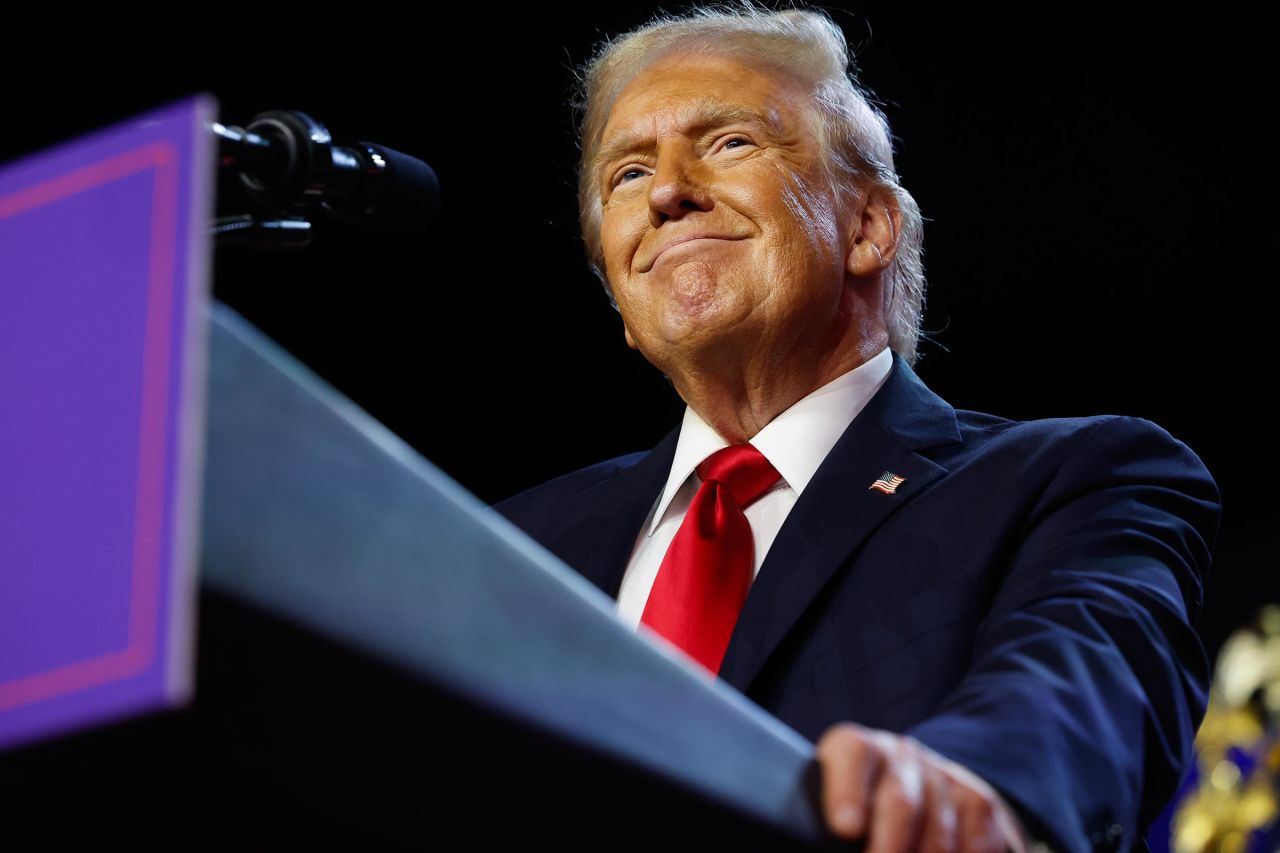
President Donald Trump has warned that the United States could carry out further military strikes in Nigeria if Christians continue to be killed, reigniting a sensitive debate over religious violence and foreign intervention in Africa’s most populous nation.

President Donald Trump
Trump made the remarks in an interview with The New York Times, published on Thursday, while responding to questions about a US military strike carried out in Nigeria on Christmas Day.
At the time, the US military said the operation targeted Islamic State militants in north-west Nigeria and was conducted at the request of the Nigerian government.
Nigeria, however, described the operation as a joint counterterrorism effort, stressing that it was aimed at armed groups designated as terrorists and “had nothing to do with a particular religion”.
“I’d love to make it a one-time strike,” Trump was quoted as saying. “But if they continue to kill Christians, it will be a many-time strike.”
Pressed on comments by his own Africa adviser that extremist groups such as Islamic State and Boko Haram have killed more Muslims than Christians in Nigeria, Trump acknowledged that Muslims were also victims but insisted that Christians were being targeted disproportionately.

“I think that Muslims are being killed also in Nigeria. But it’s mostly Christians,” he said.
Trump has repeatedly raised alarms about the safety of Christians in Nigeria, beginning in late October when he warned that Christianity faced what he described as an “existential threat” in the country. He has accused Nigerian authorities of failing to adequately protect Christian communities and has openly threatened US military intervention if the violence continues.
Nigeria has firmly rejected claims of systematic persecution of Christians. The government maintains that the country’s security challenges are complex and largely driven by insurgency, banditry and criminal violence rather than religious targeting.
With a population of more than 230 million people, Nigeria is almost evenly divided between Christians, who are concentrated mainly in the south, and Muslims, who predominate in the north. Islamist insurgencies, particularly Boko Haram and its offshoots, have plagued parts of northern Nigeria for more than a decade, killing thousands and displacing millions.
Nigerian authorities have repeatedly pointed out that militant attacks have claimed the lives of both Muslims and Christians, arguing that framing the violence along religious lines oversimplifies the crisis and risks inflaming tensions.
Following Trump’s earlier threats, the Nigerian government said it was willing to continue cooperating with Washington in combating terrorism but rejected language suggesting that Christians alone were under threat.
The latest comments are likely to strain diplomatic relations further, as Nigeria balances its partnership with the United States against concerns over sovereignty, security cooperation and the portrayal of its internal conflicts on the global stage.


Nigeria Civil Aviation Authority (NCAA) has announced plans to introduce Radio Frequency Identification (RFID) baggage tracking technology across domestic and international airport terminals to tackle the growing problem of delayed, misrouted and missing luggages

Michael Achimugu, director, Public Affairs and Consumer Protection, NCAA, disclosed this at a stakeholder engagement forum in Lagos.
Achimugu said the RFID-enabled system would replace the traditional barcode-based baggage tracking framework and provide airlines and passengers with real-time visibility of checked luggage from check-in to final collection.
According to him, the technology would improve baggage traceability, reduce mishandling and strengthen accountability across the baggage-handling chain.
Unlike conventional barcode systems, RFID technology allows baggage to be automatically scanned at multiple points without requiring direct line of sight, enabling real-time tracking of luggage throughout its journey.
Achimugu said issues involving short-landed, missing, lost or damaged baggage had remained among the major complaints from air travellers, alongside flight delays.
He said the introduction of RFID technology was therefore aimed at improving baggage-handling standards and restoring passenger confidence in the aviation sector.
The NCAA said the initiative also aligns with IATA Resolution 753, which requires airlines to track baggage at key points during the passenger journey.
The authority expects the technology to provide more accurate information on the location of luggage, facilitate quicker resolution of baggage-related complaints and improve the overall passenger experience.
The NCAA said the initiative would also strengthen accountability among airlines and other stakeholders involved in baggage handling at Nigerian airports.


eTranzact International Plc has called for increased adoption of digital payment solutions among micro, small and medium enterprises (MSMEs), saying access to technology is critical to improving business efficiency, financial inclusion and growth.

The company also said it was deepening its partnership with the Small and Medium Enterprises Development Agency of Nigeria (SMEDAN) to expand digital access and financial literacy among small businesses across the country.
In a statement, the Divisional Head, Merchant Services, eTranzact, Mrs. Abimbola Reis, stated this at the SMEDAN/eTranzact Town Hall Engagement in Lagos recently, themed, “Financial Literacy and Inclusion for MSMEs Leveraging on Fintech Innovation.”
Reis described MSMEs as the backbone of Nigeria’s economy, noting that the sector comprises almost 40 million businesses and contributes significantly to economic growth and job creation.
However, she said many businesses continue to face challenges including limited access to finance, inefficient payment systems, weak financial reporting, cash-flow constraints and inadequate access to digital platforms.
She added that trust concerns also affect businesses’ ability to access finance, while heavy reliance on cash increases exposure to theft and makes payment reconciliation more difficult.
Representing the Director-General of SMEDAN, Prof. Yinka Fisher said the town hall was aimed at generating practical ideas and solutions that would support the growth and expansion of MSMEs.
“The essence of this engagement is to share ideas and concepts that will help MSMEs thrive and expand. Our partnership with eTranzact is about expanding the frontiers of MSMEs and ensuring they continue to grow,” he said.
Also speaking, representative of the Director-General of the Nigerian Association of Chambers of Commerce, Industry, Mines and Agriculture (NACCIMA), Dr. Praise Adedigba said businesses could no longer depend solely on hard work to remain competitive.

As the world marks International Youth Day, attention once again turns to the opportunities and challenges facing young people as they prepare for work, financial independence, and adulthood.

In Nigeria, the urgency is clear. According to UNICEF, about 7% of young people aged 15–24 possess basic ICT skills, highlighting a wider gap in the skills required to participate effectively in an increasingly digital economy.
At the same time, the Federal Government, through the Federal Ministry of Youth Development, continues to prioritize skills development, job creation, entrepreneurship and social inclusion.
For PalmPay, youth empowerment goes beyond corporate social responsibility. It is an investment in the people who will shape Nigeria’s workforce, businesses and economy.
This belief is reflected in initiatives focused on financial literacy, employability, digital skills and access to opportunities.
Through its Graduate Trainee Programme, PalmPay provides young graduates with opportunities to gain workplace experience, develop professional skills and build careers in a fast-evolving industry.
The investment also extends to financial education. Through its NYSC Financial Literacy Programme, PalmPay brings practical financial education to young Nigerians at an important transition point, helping Corps members develop better habits around saving, spending, budgeting and protecting their money.
For young women, Purple Woman provides another pathway to economic empowerment, creating opportunities for internships, learning and professional development while supporting greater female participation in the technology sector.
Speaking on the importance of youth empowerment, Chika Nwosu, Managing Director of PalmPay Nigeria, said: “Nigeria’s young population is one of its greatest assets, but unlocking its potential requires access to the right skills, knowledge and opportunities. At PalmPay, we are committed to equipping young Nigerians to learn, earn and thrive in an increasingly digital economy. We believe that investing in young people today is an investment in a stronger, more inclusive Nigeria.”
These initiatives reflect a broader belief that youth empowerment is most meaningful when young people are given the knowledge, exposure and opportunities to apply what they learn.
A graduate given workplace exposure today can become tomorrow’s business leader. A Corps member who develops sound financial habits can carry those lessons into their career and personal life. A young woman given access to professional opportunities can gain the confidence, experience, and networks to create opportunities for others.
Investing in young people is a great strategy for building a stronger, more productive, and more inclusive economy.
This International Youth Day, PalmPay reaffirms its commitment to investing in young Nigerians and contributing to a broader national ambition where the young population is not just counted, but equipped, employed, empowered, and positioned to lead.

Nigeria Not Making Progress in Fiscal Transparency –US

NCAA to Introduce RFID Technology to Tackle Missing Luggages

SEC Directs Operators to Subscribe to NigSac Alerts, Freeze Terrorists-Linked Funds

Davido Bets $1m in Hit-for-Hit Battle with Colleagues

GSMA Industry Services Unveils Circularity Services to Help Operators Reduce E-Waste and Unlock Value

EFCC Busts NIS Visa Overstay Racket, Uncovers N700m in an Account

Fact-Check: Elon Musk’s “Tesla Pi Phone” is Internet Rumor

NBC Tasks Broadcasting Stations over 2028 DSO Global Deadline

NBC Scraps Annual Digital Access Fee on DSO

Glo Sponsored African Voices to Feature Netflix’s “The Polygamist” Stars




 Telecom2 days ago
ipNX Joins Calls for Innovation-Friendly Ecosystem and Stronger Local Opportunities at Regenesys AI Summit

 E-Business2 days ago
NDPC Probes UNILAG, Lotus Bank, Hackerbella over Alleged Students’ Data Misuse

 News2 days ago
PalmPay Reinforces Commitment to Youth Empowerment on International Youth Day

 Telecom2 days ago
NCC Reports over 5,000 Fibre Cuts in 6 Months

 E-Financial2 days ago
KudiWave Asks for Clarification over N750m Transfer from PalmPay Account

 Telecom2 days ago
Google Selects Six Nigerian News Creators for Emerging Voices Growth Lab

 E-Financial2 days ago
Nigerians Borrow More to Buy Homes as Mortgage Demand Climbs – CBN

 General News2 days ago
NUPRC Warns of Counterfeit, AI-Generated Appointment Letters