

Telecom
Galaxy Backbone Marks Two Decades of Powering Nigeria’s Digital Evolution


Galaxy Backbone Limited (GBB), the Federal Government’s leading ICT infrastructure and shared services provider, will mark its 20th anniversary in June 2026 with a grand celebration that reflects two decades of innovation, resilience, and national impact.

Since its inception in 2006, Galaxy Backbone has been at the heart of Nigeria’s digital transformation journey; building the technological foundation that supports modern government operations and public service delivery. What began as a bold vision to connect government has grown into a critical national platform that drives efficiency, transparency, collaboration and innovation across the public sector.
Over the last 20 years, GBB has helped redefine how government works. By providing secure connectivity, enterprise-grade data centre services, cloud platforms, and digital collaboration tools, Galaxy Backbone has enabled Ministries, Departments and Agencies (MDAs) to move from fragmented, paper-based processes to more integrated, technology-driven systems.
This transformation has improved government-to-government coordination, strengthened engagement with businesses, and enhanced the delivery of services to citizens. Today, the digital infrastructure powered by Galaxy Backbone supports thousands of government users, hundreds of institutions, and critical national platforms that Nigerians rely on daily.
A key part of this journey has been the Federal Government of Nigeria’s investment, managed by GBB in robust national infrastructure, high-capacity and world class data centres, fibre-optic connectivity across multiple states, secure hosting services, and shared platforms that have helped government operate more efficiently and responsively. These contributions have played a pivotal role in Nigeria’s progress toward a more digital, agile and citizen-centered public service.
Galaxy Backbone’s impact has earned both national and global recognition. In 2025, the organisation was ranked first overall in the Federal Government Website Performance Scorecard, reflecting its commitment to excellence in digital service delivery. Internationally, GBB, a couple of years ago, received the prestigious United Nations Public Service Award, a testament to its leadership in promoting a whole-of-government approach to digital transformation.
As GBB celebrates two decades of service, this milestone is more than an organisational anniversary; it is a celebration of Nigeria’s digital evolution. It is an opportunity to appreciate how collaboration between government, industry partners, technology providers, and dedicated public servants has helped build a stronger, more connected nation.
The June 2026 anniversary celebration will bring together stakeholders from across the public and private sectors to reflect on the journey so far, acknowledge the partnerships that have shaped this success, and chart an ambitious course for the future. It will highlight how collective effort, shared vision, and innovation have positioned Galaxy Backbone as a strategic national asset.
Looking ahead, Galaxy Backbone remains committed to deepening digital transformation across the country; expanding infrastructure, strengthening cybersecurity, enhancing service delivery, and supporting the Federal Government’s drive for a smarter, more efficient and digitally empowered Nigeria.
At 20 years, Galaxy Backbone stands proud of its past, confident in its present, and inspired by the limitless possibilities ahead.


Telecom
UniCloud Africa, Open Access Data Centres Announce Strategic Partnership to Strengthen Digital Sovereignty Across Africa
UniCloud Africa (UCA), the premier pan-African sovereign cloud platform, and Open Access Data Centres (OADC), one of the leading data centre companies in Africa, and Africa’s fastest-growing data centre company, are pleased to announce a strategic partnership to accelerate Africa’s digital transformation and independence.

Under this partnership, UniCloud Africa will host its enterprise-grade sovereign cloud and Artificial Intelligence (AI) infrastructure within OADC’s world-class, carrier-neutral facilities in Nigeria, the Democratic Republic of Congo and South Africa. This collaboration establishes a robust, localised foundation for governments and enterprises to modernise their operations while ensuring absolute data residency and regulatory compliance.
Advancing the “One Cloud, One Africa” Vision
The partnership aligns with UniCloud Africa’s “One Cloud, One Africa” strategy, which seeks to eliminate the high-latency and compliance risks associated with offshore cloud providers. By utilizing OADC’s Tier-III certified infrastructure, UniCloud Africa provides a high-performance environment for mission-critical workloads, supported by a contractual Tier-III certified uptime SLA.
“Our mission is to provide the definitive foundation for Africa’s digital and economic independence,” said Dr. Krish Ranganath, CEO of UniCloud Africa. “By hosting our sovereign infrastructure within OADC’s world-class facilities, we are ensuring that African data remains on African soil. This partnership empowers our clients with low-latency access, local currency billing, and the security of ISO-certified, in-country data management that is tailor-made for the continent’s unique requirements.”
A Multi-Market Digital Backbone
OADC’s extensive footprint provides UniCloud Africa with the scale needed to serve key economic hubs:
- Nigeria: Leveraging OADC Lagos’s campus to support the country’s booming fintech and enterprise sectors
- DRC: Providing much-needed local cloud capacity in Kinshasa to drive the nation’s digital acceleration
- South Africa: Utilising OADC’s expanded national footprint and distributed scale to deliver resilient, geographically separated primary and disaster recovery solutions
“We firmly believe that fully localised cloud infrastructure is critical for economic growth and Africa’s digital future,” added Dr Ayotunde Coker, CEO of OADC. “OADC is committed to providing the essential building blocks for a truly unified African digital ecosystem. Partnering with UniCloud Africa allows us to support a platform that is driving the next wave of innovation, from AI acceleration to cost-predictability.”
Empowering the Next Wave of Innovation
Beyond standard infrastructure, the partnership will support the deployment of UniCloud’s GPU-as-a-Service (GPUaaS), enabling local organisations to harness the power of AI, Machine Learning, and Big Data at scale. With zero data egress fees and billing in local currencies, the collaboration removes the financial barriers often posed by global cloud giants.
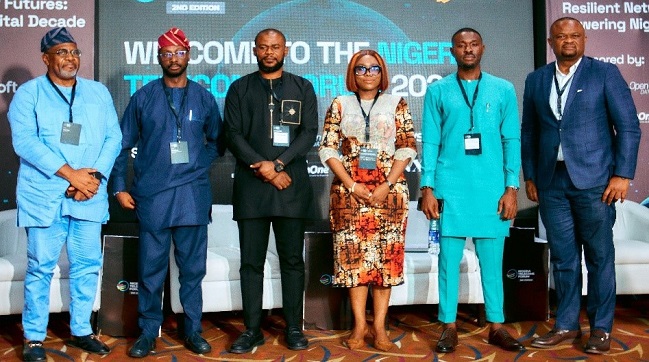
ipNX, has once again emphasized the need for stronger collaboration among telecommunications operators, enhanced government support, and critical infrastructure reforms to drive sustainable growth in Nigeria’s telecom sector.

This call was made by ipNX’s Divisional CEO, IpNX Business, Oluseyi Lala, at the recently concluded Nigeria Telecoms Forum held on Thursday, April 9, 2026, at the Four Points by Sheraton Hotel in Victoria Island, Lagos. The forum brought together senior telecom executives, infrastructure providers, operators, investors, telco associations, and industry professionals.
Speaking during a panel session titled “Securing the Digital Backbone: Cyber Resilience and Data Protection in the Age of 5G and Cloud,” Lala highlighted the growing importance of cybersecurity in Nigeria’s rapidly evolving telecom landscape. As the industry embraces advanced technologies such as 5G and cloud computing, he stressed that safeguarding digital infrastructure must remain a top priority.
He emphasized that cybersecurity is a shared responsibility across the ecosystem, warning against the common assumption that vendors or infrastructure providers have already guaranteed system-wide protection. According to him, this mindset creates vulnerabilities, as effective security depends on coordinated vigilance and accountability from all stakeholders.
“Cybersecurity is no longer optional, it is fundamental to the sustainability of our industry. A unified and coordinated approach to threat detection and response will significantly enhance our ability to protect critical telecom infrastructure,” Lala said.
He further noted that collaboration among operators, regulators, and security agencies is essential to effectively mitigate risks and ensure service continuity. Lala also commended the Federal Government, particularly through the National Information Technology Development Agency (NITDA), for establishing a committee dedicated to responding to cyber threats within the sector.
Beyond cybersecurity, discussions at the forum highlighted a pressing structural challenge: power supply. Industry stakeholders called for a state of emergency on power, describing it as a critical enabler for telecom growth. Reliable electricity remains fundamental to network expansion, service quality, and cost efficiency, with operators continuing to bear the heavy burden of self-generation.
The forum also explored the financial realities facing telecom operators, particularly in light of recent currency devaluation. Participants stressed the need for companies to adopt more robust and transparent business models to attract long-term capital. The volatility of the naira has made multilateral institutions, including organizations such as the Africa Finance Corporation (AFC), more cautious about extending long-term financing to the sector.
To address this, stakeholders pointed to Environmental, Social, and Governance (ESG) strategies as a critical lever. Embracing ESG principles was identified as a “winning play” for telecom companies, not only enhancing brand credibility but also improving access to green funds and attracting foreign investment increasingly tied to sustainability benchmarks.
Jamiu Ijaodola, convener of the Nigeria Telecoms Forum, underscored the importance of collaboration in tackling these multifaceted challenges.
“The telecom sector is at a pivotal point where collaboration is no longer a choice but a necessity. Forums like this provide an opportunity for stakeholders to align priorities, share insights, and collectively build a more secure, resilient, and future-ready digital ecosystem for Nigeria,” he said.
In addition, discussions reinforced the need for an enabling regulatory environment that supports infrastructure investment, innovation, and long-term sector stability, in alignment with Nigeria’s broader digital transformation goals.
ipNX reaffirmed its commitment to driving industry collaboration and advocating for policies that support sustainable growth. With stronger partnerships between operators, investors, and government institutions—and urgent attention to power, capital access, and cybersecurity, Nigeria’s telecom sector is well-positioned to achieve greater resilience, improved service delivery, and expanded digital access nationwide.

United Kingdom’s communications regulator, Ofcom, has opened an investigation into Telegram over concerns relating to the spread of child sexual abuse material on the platform.

Ofcom said it had reviewed available evidence and would assess whether Telegram has failed, or is failing, to meet its legal obligations on illegal content under the Online Safety Act 2023.
The regulator noted that the law requires online platforms to minimise risks associated with illegal content and take swift action when such material is identified. It added that companies must demonstrate compliance with these responsibilities or face enforcement measures.
The investigation comes amid growing scrutiny of online platforms operating in the UK, as authorities push for stronger protections for children in digital spaces.
In response, Telegram denied the allegations, stating it “categorically” rejects the claims. The company said it has, since 2018, “virtually eliminated” the public spread of such material through the use of detection algorithms.
Telegram also expressed concern over the probe, suggesting it could be part of broader pressure on platforms that prioritise privacy and freedom of expression.
Ofcom has also launched separate investigations into Teen Chat and Chat Avenue, saying it is not satisfied that both platforms are doing enough to protect children from grooming risks.
Ms Suzanne Cater, Ofcom’s Director of Enforcement, said firms must strengthen safeguards or face serious consequences under the law.
“These firms must do more to protect children, or face serious consequences under the Online Safety Act,” she said.
The probe comes as the government of Keir Starmer intensifies efforts to enforce stricter online safety standards, particularly for younger users.
Nigeria CommunicationsWeek reports that Telegram has faced similar regulatory action in other jurisdictions. In February, Australia’s online safety regulator fined the company over delays in responding to inquiries regarding measures against child abuse and extremist content.
The Online Safety Act 2023 is widely regarded as one of the most stringent internet safety frameworks globally, placing direct responsibility on digital platforms to address illegal and harmful content or risk sanctions.

Breaking News…Hackers Allegedly Expose EFCC Data, Operatives’ Identities

Leo Stan Ekeh Foundation to Open Portal for 1,000 University Tech Scholarships on Monday

Karex, World’s Top Condom Maker to Hike Prices due to Iran war

US Library Blames Hackers for Viral Posts Urging Violence in Nigeria

IshowSpeed’s African Tour was ‘Spy Job,’ for Elon Musk- Seun Kuti

NBC Boss Urges Content Ceators to Participate in DSO

NITDA Takes Over National Digital Architecture System

DLM SPV PLC Lists ₦9.00bn AAA-Rated Medium-Term Notes on FMDQ Exchange, Sets Benchmark in Corporate Bond Market

FG Shifting Focus to “Meaningful Connectivity” to Drive Inclusion – Minister

Jury Finds Meta, Google Liable for Woman’s Social Media Addiction




 E-Business3 days ago
Lagos Unveils Cybersecurity Guidelines to Tackle Rising Digital Threats

 Telecom3 days ago
NBC Warns Broadcasters Against Bullying Guests, Passing Opinions as Facts

 News3 days ago
FG Borrows N100Bn from Unclaimed Dividends, Dormant Bank Accounts

 Telecom3 days ago
WATRA Secretary sees Resilience as a Critical Link in West Africa’s Digital Economy

 E-Financial3 days ago
CitiTrust Heads to Appeal Court over Alleged Ponzi Scheme

 Telecom3 days ago
Why Nigeria Must Embrace .ng Now – NiRA Reveals Five Critical Steps

 Telecom3 days ago
Tech Shake-Up: Snap Cuts Hundreds as AI Drives Efficiency Push

 E-Business3 days ago
Laundry Without Interruptions: Why LG Auto Restart Washing Machines Are Perfect for Nigerian Homes