

Broadcasting
World Cup Broadcasters Target 10.7Bn Screens, Connected Devices- Ovum


This summer’s football World Cup is proving to be the most accessible in the tournament’s history, with broadcast and streaming services available on up to 5.9 billion screens globally.
This is according to Ovum, which reveals that PCs, tablets, and smartphones are providing alternatives to conventional TV viewing, accounting for 57% of all screens.
However, with football fans keen to watch the matches on the biggest screen and in the highest resolution possible, Ovum stresses that the importance of traditional broadcasting – via terrestrial, cable, satellite, or IPTV – for attracting the largest audiences and generating the most value for World Cup rights holders.
Connected devices are playing a crucial role in evolving viewing habits for big-event TV, though. “Devices capable of streaming live and on-demand video – of which there now 4.7 billion – are providing additional viewing opportunities outside the appointment viewing taking place in people’s living rooms,” said Ted Hall, senior analyst at Ovum. “With the likes of tablets providing the convenience and flexibility to consume content whenever and wherever, fans are able to watch more of the tournament than ever before.”
The reliability of online streams compared with traditional broadcasts remains a concern, however. “For broadcasters and operators providing multiplatform World Cup services, supplying demand with minimal technical hiccups should be of paramount concern,” said Hall.
“Having set consumer expectations for TV Everywhere, providers must now deliver on the promise of their offerings, as failure to do so can result in bad press and, more importantly, frustrated fans. While viewing live events online is improving, there is some way to go before it can compare with the reliability traditional TV distribution offers for the largest audiences,” he added.
Significant innovation of the viewing experience for this World Cup is somewhat lacking, in Ovum’s view.
The tournament will not, for instance, provide the launch pad for the much-vaunted 4K Ultra high-definition format – though FIFA and technology partner Sony are capturing three matches in 4K, very few people see them in this resolution, with screenings limited to public venues in Rio de Janeiro.
“4K technology is far from ready for home viewing, with holes in the transmission part of the ecosystem meaning that it will be some time before audiences of any significant scale will be watching UHDTV content in their living rooms,” explained Hall.
“And with FIFA abandoning its support of 3DTV for Brazil 2014 – in light of the format’s spectacular failure to capture the public’s imagination – the less-glamorous HDTV will be the preferred format of many World Cup viewers, with up to 260 million homes watching matches in high-definition.”
Ovum will be shortly publishing a new report on World Cup broadcasting strategies, analysing how broadcasters and pay-TV operators can innovate and effectively monetize big-event TV.
Ovum provides clients with independent and objective analysis that enables them to make better business and technology decisions.
Its research draws upon over 400,000 interviews each year with business and technology, telecoms and sourcing decision-makers, giving Ovum and its client’s unparalleled insight, not only into business requirements but also the technology that organizations must support.


Broadcasting
Obi, NDC Presidential Candidate Faces N50Bn Defamation Claim over Alleged Podcast Remark

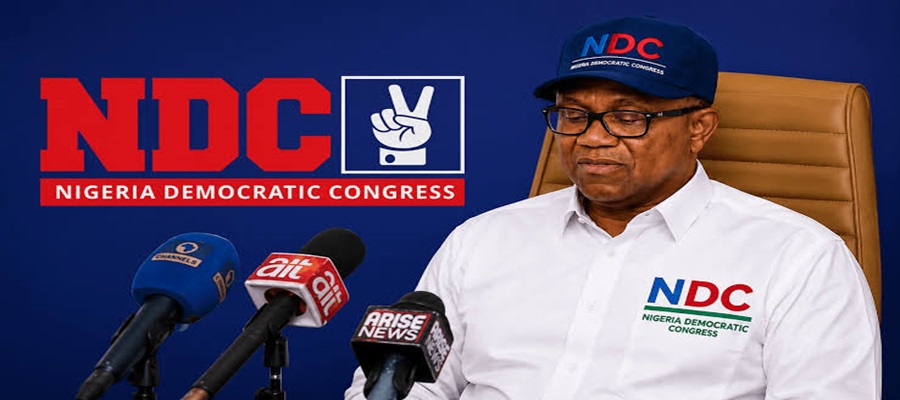
Abayomi Arabambi, national vice chairman (South-West) of the Labour Party, has demanded a public apology, a retraction, and N50 billion in damages from Peter Obi, presidential candidate of the Nigeria Democratic Congress (NDC), over an alleged defamatory statement made during a podcast interview.

The demand was contained in a letter issued by the law firm Neplus Ultra Attorneys and signed by Anderson U. Asemota, Peter O. Asimegbe, and Stanley C. Eziefulle on behalf of Arabambi.
According to the letter, the legal dispute arose from comments allegedly made by Obi during the interview, where he reportedly stated that Arabambi “does not have an address.”
Arabambi’s legal team described the statement as false, malicious, and defamatory, arguing that it portrayed their client as a faceless individual without legitimacy, credibility, or standing in public life.
The lawyers further claimed that the interview was widely circulated on television stations and digital platforms, exposing Arabambi to public ridicule and damaging his reputation.
“Our client has had a known residential and business address, maintains professional and political affiliations within Nigeria, and has never been a person whose whereabouts or identity were unknown,” the letter stated.
The legal team maintained that the alleged publication caused embarrassment and harmed Arabambi’s public image and political standing.
As part of their demands, the lawyers called for an unreserved public apology to be aired on national television, published on Obi’s verified social media platforms, and carried as full-page apologies in national newspapers.
They also demanded the payment of N50 billion as compensation for the alleged injury to Arabambi’s reputation, dignity, political standing, and public image.
Broadcasting
Why We’re Partnering With NIHOTOUR To Bring Nigerians In South Africa Home – Steve Babaeko


When Nigerians began arriving back home on emergency flights following an ultimatum from anti-migrant groups in South Africa, Steve Babaeko, alongside The Nigerian Institute of Hospitality and Tourism (NIHOTOUR), saw an opportunity to step up for his fellow citizens.

Steve Babaeko
The CEO of X3M Ideas explains that he saw a deep obligation, one that had nothing to do with advertising and everything to do with hospitality. For Babaeko, it was a reminder that an agency owes a duty of care to the community it exists within.
That conviction shaped the creative agency’s partnership with the Nigerian Institute of Hospitality and Tourism (NIHOTOUR) for the newly launched ‘Welcome Home’ pilot programme at Murtala Muhammed International Airport (MMIA) in Lagos. Rather than simply crafting a messaging campaign around the crisis, X3M Ideas helped design a tangible, physical system.
“This wasn’t built as a campaign about a crisis,” Babaeko said. “It was a hospitality agency deciding what it owes its own citizens the moment they land.”
For Babaeko, what X3M has built is infrastructure, something returnees can physically walk through, use, and benefit from the instant they clear the arrival gate.
With the MMIA pilot now officially running, NIHOTOUR directs returnees to immediate support services and issues them a Returnee Card. This card grants individuals a free first night at partner hotels, immediate transport assistance from the airport, and fast-tracked business registration support.
Furthermore, the initiative features a dedicated Restart Desk to assist returnee entrepreneurs and tradespeople with job placement referrals and business registration. This operates alongside a public Homecoming counter that tracks the cumulative number of returnees welcomed, businesses restarted, and jobs facilitated.

Spotify has announced a partnership with Afro Nation Portugal as the festival’s official sponsor and exclusive streaming partner for the 2026 edition, in a move aimed at bringing African music and festival experiences to a wider global audience.

The collaboration will provide fans with a dedicated Afro Nation destination on Spotify, featuring official festival playlists, participating artists and selected performance videos after the event.
The 2026 edition of Afro Nation Portugal is scheduled to hold from July 3 to July 5 in Portimão, Portugal.
Spotify said the partnership would enable fans to engage with the festival before, during and after the live event, regardless of their location.
The streaming platform noted that the initiative aligns with its continued investment in promoting African music and supporting its growing international audience.
Speaking on the partnership, Spotify’s Content Marketing Manager for Sub-Saharan Africa, Mr Rifumo Mdaka, described Afro Nation as a global showcase for African music and culture.
“Afro Nation is more than a festival; it is a global expression of African music, fan culture and creative influence.
“Our partnership is about helping that moment travel further through our first collaboration with Afro Nation of this nature.
“By bringing the festival to Spotify, we are giving fans a place to connect with the artists, performances and stories that define the festival long after the final set,” he said.
According to Spotify, the collaboration will also include exclusive festival content, artist discovery features, curated playlists and fan-focused storytelling.
The company said it would document the journey of a selected fan travelling to the festival as part of efforts to showcase the growing global appeal of African music.
Also speaking, Director of Global Partnerships at The Malachite Group and Afro Nation, Ms Clémence Blum, said the partnership represented a major step in expanding the festival’s global reach.
“Afro Nation has always been more than a festival. It is a platform built to celebrate African music, support artist breakthroughs and connect a global community through culture.
“Our partnership with Spotify reflects the shared role we both play in helping artists reach new audiences and giving fans deeper ways to engage with the music they love,” she said.
Spotify said selected live performances from the festival would be made available on the platform after the event, allowing fans around the world to relive the performances on demand.
The company added that the partnership reinforces its commitment to promoting African music, supporting artists and strengthening connections between creators and audiences across the globe.

DSS Spyware Acquisition Enables Illegal Wiretaps, Detentions – The ICIR

Microsoft to Lay Off 4,800 Workers

Access Bank, Fifth Chukker and UNICEF Renew Commitment to Expanding Educational Opportunities for Nigeria’s Most Vulnerable Children

IHS Nigeria, FCT-HSES Concludes Clean Cooking Energy Campaign “Project Breathe Clean Air” in Abuja

Kaspersky Transforms Threat Intelligence Reporting into an Interactive Content Hub

Mobile Internet Gender Gap Widest in Africa – GSMA

Nigeria Launches FreeTV Nationwide

NASENI Moves to Digitize CCB’s 5m Assets Declaration and Operations

CANAL+ Partners Samsung to Pre-Load DStv Stream on New Samsung TVs In Nigeria, Other African Countries

UK, Nigeria Launch £15m Growth Programme to Accelerate Economic Transformation




 General News1 day ago
NIS Deploys Advanced Surveillance Masts, other Critical Infrastructure to Boost Border Security

 E-Financial1 day ago
Tokenization, Blockchain Technology will Transform Financial Institutions – IMF

 Broadcasting1 day ago
Obi, NDC Presidential Candidate Faces N50Bn Defamation Claim over Alleged Podcast Remark

 E-Business1 day ago
Weebly Websites to Shut Down for Nigeria, 66 Other Countries from September

 Telecom1 day ago
No Plans for Fresh Tariff Hike – MTN

 E-Financial1 day ago
FG Denies N8 Trillion ‘Shadow Budget’, Says IMF Quoted out of Context

 General News1 day ago
PufferPay CEO to Keynote Business Journal Fintech & Financial Inclusion Roundtable 2026

 Telecom1 day ago
Airtel Africa Foundation Equips 200 Young Women with Digital Skills to Drive Nigeria’s Tech Economy