

E-Financial
NGX Gives Securties Firm 10 Days to Resolve Theft, Forgery Allegations


NGX Regulation Limited has given a 10 working-day ultimatum to Global Assets Management Limited, a securities company, to resolve the allegations of alleged forgery, theft, diversion of proceeds, and possibly money laundering leveled against it by Mr Kolawole Oladapo Adesina, a complainant.

Adesina had alleged that shares belonging to him and Emmanuel Olanipekun Adesina, his late father, from different companies were stolen and proceeds diverted to unknown persons.
In the same vein, the Securities and Exchange Commission (SEC) also launched investigations into the same complaints against the same securities company.
NGX Regulation, is a wholly owned subsidiary of Nigerian Exchange Group (NGX group) committed to promoting just and equitable principles of trade and sound business practices in the Nigerian capital market by strictly enforcing clients’ listing and trading rules in accordance with global best practices.
Its activities seek to promote the integrity, transparency and efficiency of our market, ensuring that the standards set are effective in maintaining a fair and orderly market where investors are adequately protected.
In a letter with reference number NGXRECO/MRIVG/7160/1/26, signed by Chinedu Akamaka, Head, Market Regulation, the regulatory body acknowledged the petition of the complainant and stated that “In line with rule 5(4) of the Securities and Exchange Commission’s (SEC) rules on Complaints Management Framework of the Nigerian Capital Market 2015, your firm is required to solve this complaint within ten(10) working days and forward a report on resolution or non resolution. Your report should reach NGX Regco not later than 30 January 2026”.
SEC, in its own letter dated January 7, 2026 and signed by Mr John Abel Briggs, the Head, Lagos Zonal Office stated that while acknowledging Adesina’s petition, it has commenced investigations into the matter.
“Please be informed that we have commenced investigations by seeking Global Assets Management Limited, CSCS, and NGX to investigate the allegations in line with the Complaint Management Framework of the Nigerian Capital Market (NCM).
The company in the eyes of the storm, Global Assets, has however denied any wrongdoing in its reply addressed to NGX Regulation and signed by Sir Babatunde Sobamowo, managing director, saying the allegations were unfounded.
Adesina, still smarting from the shocking revelation that his father, Prince Emmanuel Olanipekun Adesina, a late Banker with the United Bank of Africa (UBA) who allegedly died intestate did not, but has a will.
He’s currently battling to have the will read at the Probate Registry of the High Court of Lagos State, Ikeja Judicial Division.
In the many shocking revelations while going through his parents’ documents, he discovered many shares his father had bought for him since the time of his youth.
Most of these shares, and that of his father, has disappeared without a trace, only relying on the father’s documentation to trace them.
In a 15 paragraph affidavit he deposed to and filed at the registry of the Ikeja High Court, which formed his petition before SEC, the complainant narrated his ordeal this:
“I am the beneficial owner of securities and investments held with Global Asset Management Limited under account number 23278460(old account number A0457245) and Clearing House No C4928105AN. I have held the investments registered in my name since my childhood, acquired and maintained by my late father for my benefit.
My late father, whose particulars I can provide on request, purchased shareholdings in my name up to and including the date of his death on February 21, 2006.
I did not authorize any sale of the Securities held in my account and have never knowingly sold any holdings in that account;
“On or about August 25,2022 when I attended the offices of Global Assets Management to effect a sale of certain securities to raise funds, I was provided with documentation and account records indicating that a substantial (and in some cases total) portion of my securities had already been sold and the sale proceeds diverted.
“No such sale had been authorized by me and no proceeds of such alleged sale were paid to me or credited to the account records held by Global Assets in my name;
“Upon inspection of the physical file and documents in my possession and in the custody of Global Assets Management, I discovered numerous stock transfers, notes on sale and other documents bearing my signature which I did not sign. I verily believe that the said signatures are forged”.
With this discovery, Adesina directed his lawyers, Pich Solicitors, to write a letter of demand to the company requesting production of all documents and materials relating to his account from February 21, 2006 till date. The company however failed to comply. He therefore urges SEC to compel the company to produce the documents and other materials requested. He fears if it’s not compelled, the company may alter, delete, or otherwise fail to preserve records relevant to the matters that are subject of his complaint.
Adesina exhibited over 10 documents to support his complaint which include copies of his account statements, copies of stock transfers bearing alleged forged signatures, CSCS certificate/ deposit forms relating to his holdings, sales contract notes and transaction confirmations, CSCS printout on stocks held in his name, dividend statements and dividend warrants in his name, copies of his share certificates in Berger Paints Nigeria Plc, Nigerian Bottling Company Plc, Grammac Industries Plc, and West African Portland Cement Plc. “I unequivocally and verily believe that the exhibits listed are materials relevant to the issues raised in this application and that they substantiate the allegations of unauthorized sales, forged signatures,and diversion of sales proceeds”, he averred.
Adesina’s petition was copied to the Chairman of Global Assets Management, Dr S.T.V Adegbite and all other directors of the company. It’s also copied to DG SEC, CEO, Nigerian Exchange Group, MD, Central Securities Clearing System Plc(CSCS), The Chairman, Economic and Financial Crimes Commission (EFCC), Director, Nigerian Financial Intelligence Unit(NFIU), and Commissioner of Police, Force CID(Financial Crimes Unit).
In its response addressed to NGX Regulation, Global Assets Management Limited described all the allegations as unfounded. “In compliance with our regulatory obligations, we have carefully reviewed the allegations contained in the petition and hereby provide our response, addressing each issue raised by the petitioner sequentially and supported by relevant documentation”, the response stated.
The company explained that their real client was the petitioner’s mother, late Mrs Frances Omorolaun Adesina. “Our professional relationship with her spanned several years during which she conducted securities transactions through our firm until her demise. At no time prior to her death did the petitioner operate the relevant account independently or maintain a separate trading mandate with GAM”, it stated.
GAM maintained that its first formal interaction with the petitioner occured through his lawyer, Pich Solicitors, requesting information relating to the state of the petitioner’s father. Subsequently the petitioner personally visited and was availed with a CSCS statement relating to his account and a KYC update form which the petitioner never returned.
The company stated further: “According to records obtained directly from CSCS, the only securities credited to the petitioner’s account were deposited on September 15, 2009, three years after the death of his father in 2006. We are unable, and not required to determine whether the shares were purchased by his late father or late mother. However the records show that no securities were deposited into the petitioner’s account in 2006 or earlier. Only three securities were deposited through GAM”.
The company also listed as exhibits documents which includes a duly executed sale order form dated April 4, 2014, Statement of account of the late mother, copy of cheque, letter of authority dated January 11, 2014 signed by the petitioner and his sister authorizing their late mother to transact on matters relating to their father’s estate, and GAM bank statement confirming payment of the proceeds to the named beneficiary.
However, there seems to be discrepancies in the signature tendered by both parties as they did not correspond. SEC will therefore determine which one is genuine and having regard to the power of a parent to trade on an adult child securities without proper consent.
Credit… The Nation


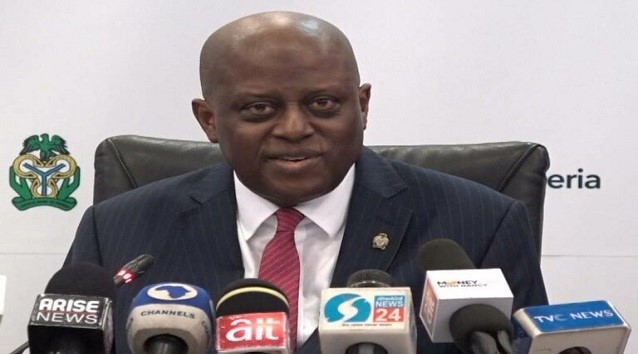
The Central Bank of Nigeria has directed banks, fintech firms, and other payment service providers to store payment transaction data generated within the country on local servers from January 1, 2027, as part of new measures to strengthen oversight of the fast-growing digital payments ecosystem.

The directive was contained in a circular issued by the Payments System Supervision Department of the CBN on Monday and addressed to deposit money banks, microfinance banks, mobile money operators, switching and processing companies, payment terminal service providers, payment solution service providers, super agents and other licensed operators in the payments industry.
The circular, signed by the Director of the Payments System Supervision Department, Rakiya Yusuf, also introduced new market structure rules, beneficial ownership disclosure requirements and systemic oversight measures for payment service operators.
According to the apex bank, the reforms became necessary following the rapid expansion of electronic payments and digital financial services across the country.
The CBN said it had observed “significant structural developments within the Nigerian Payments ecosystem, characterised by rapid growth in electronic payments, increasing adoption of digital financial services, and the emergence of operators with substantial market presence across key payment activities.”
It noted that while the growth had improved innovation, efficiency and financial inclusion, it had also created concerns around market concentration, operational dependence, ownership transparency and the storage of critical payments data.
To address these concerns, the regulator ordered all financial institutions facilitating payments in Nigeria to ensure that transaction data generated within the country are stored domestically.
The circular stated, “All Financial Institutions and participants facilitating payments within Nigeria shall ensure that payments transaction data generated within Nigeria are stored and managed in Nigeria in accordance with data protection laws and regulations applicable in Nigeria.”
It added that “all affected Financial Institutions shall fully comply with this requirement effective January 1, 2027.”
The move is expected to strengthen regulatory oversight, enhance data sovereignty and ensure that sensitive payment information remains within Nigeria’s jurisdiction.
It also aligns with broader efforts by regulators globally to localise critical financial data and reduce reliance on offshore infrastructure.
Beyond data localisation, the CBN ordered banks, payment service providers and other financial institutions with digital payment operations to disclose the ultimate beneficial ownership of significant shareholders.
According to the circular, institutions must maintain accurate and up-to-date records of their ultimate beneficial owners and make such information available to the apex bank upon request.
The regulator said the disclosure requirement must comply with existing anti-money laundering, counter-terrorism financing and counter-proliferation financing regulations.
The directive builds on previous CBN efforts to strengthen beneficial ownership transparency as part of wider measures to combat money laundering and illicit financial flows in the financial system.
The central bank also introduced fresh competition rules aimed at limiting excessive market dominance in the payments industry.
Under the new framework, any financial institution that controls more than 25 per cent of the card-issuing market in a rolling 12-month period will not be allowed to hold more than 15 per cent of the merchant-acquiring market during the same period.
Similarly, operators with more than 25 per cent market share in merchant acquiring activities will be restricted to a maximum of 15 per cent market share in card issuing activities.
Merchant acquiring refers to processing card payments on behalf of merchants, while card issuing involves providing payment cards to customers.
The CBN said all regulated entities would be required to submit monthly market share returns based on prescribed templates and timelines.
It further directed affected institutions to take the necessary measures to achieve full compliance with the market structure requirements by December 31, 2026.
The apex bank said the new measures were designed to “improve transparency through beneficial ownership disclosure, address concentration risk, promote a fair, competitive, and resilient payments ecosystem.”
According to the regulator, the reforms are also intended to “safeguard the integrity of the Nigerian payments system and ensure the localisation of payments transaction data within Nigeria.”
The CBN warned that it would closely monitor compliance and impose sanctions where necessary.
“The CBN shall monitor compliance with the provisions of this Circular and may, where necessary, impose supervisory sanctions in accordance with applicable laws, regulations, and guidelines,” the circular stated.
The latest directive comes amid a rapid expansion of Nigeria’s digital payments industry, with electronic transactions reaching record levels and regulators increasing oversight of banks, fintech firms and other payment operators to address operational, cybersecurity and systemic risks.


Foreign exchange markets are entering a phase where how traders are positioned may matter as much as the economic fundamentals driving those positions, according to a new market analysis from JustMarkets.

JustMarkets
The brokerage’s latest commentary points to a build-up in trades tied to the US dollar and to carry strategies, bets that exploit interest rate differentials between currencies, as a growing source of risk heading into the coming weeks.
The dollar has been supported by elevated US interest rates and pushed-back expectations for rate cuts, conditions that have encouraged more traders to pile into similar carry positions. While the macro case behind these trades remains intact for now, JustMarkets cautions that when positioning becomes this lopsided, even sound trades can become vulnerable to sudden, sharp reversals.
A “crowded trade” isn’t inherently a red flag, the analysis notes, it can simply reflect a widely shared, fundamentally sound view. The danger emerges when too many participants are leaning the same way and conditions shift: traders rush to exit together, stop-loss orders cluster around similar price levels, and liquidity can evaporate just as prices move fastest. The combination, JustMarkets says, often produces a cascade effect that accelerates price moves in the opposite direction.
Notably, the analysis argues that reversals in crowded trades rarely require a major shock. Instead, minor developments, a softer-than-expected economic print, a subtle shift in central bank language, or fresh geopolitical headlines, can be enough to make traders question whether their positions still make sense. Once that doubt spreads, unwinding tends to happen in unison, amplifying both the speed and scale of the move.
Carry trades are singled out as particularly exposed in this environment. They tend to perform well during calmer periods but can unravel quickly once markets shift from “risk-on” to “risk-off,” triggering rapid liquidations and sharp corrections in carry positions.
JustMarkets argues that the current backdrop, marked by elevated geopolitical tension, persistent inflation, and lingering uncertainty over the path of monetary policy, leaves markets more exposed to positioning-driven swings than in previous cycles. Trader sentiment, the analysis suggests, is playing an outsized role alongside the usual response to economic data and headlines.
With crowded conditions raising the odds of fast, disorderly moves, the quality of trade execution becomes more consequential, the analysis notes, citing slippage, wider spreads, and order delays as factors that can compound losses during volatile swings.
On managing risk, JustMarkets’ analysts recommend that traders: Avoid overexposure to the dominant macro narrative of the moment, pay closer attention to positioning and sentiment indicators, maintain disciplined stop-loss orders ahead of potential downturn and pPrepare for higher volatility and faster price action than usual.
Markets become crowded periodically, and when they do, the risk of a sharp, sudden reversal rises with them. For now, JustMarkets’ broader message to traders is one of caution: with positioning levels elevated across USD and carry trades, vigilance on execution and risk management will likely matter more than usual in the weeks ahead.

Association of Corporate Communication and Marketing Professionals in Banks (ACAMB) on the 11th of June kicked off activities, marking its 30th anniversary celebration with a tree-planting exercise on Providence Street, Lekki Phase 1, Lagos.

L-R: President, Association of Corporate Communication and Marketing Professionals in Banks (ACAMB), Jide Sipe; Representative of Wema Bank, Precious Akpan; Vice President 2, Morolake Onifade, Representative of Alpha Morgan, Tolu Onipede and General Secretary, ACAMB, Olugbenga Owotoomo during a tree planting initiative, put together to flag-off the 30th anniversary celebration of ACAMB, held at Providence Street, Lekki Phase 1, Lagos
Held in Lagos recently, the initiative, the initiative was part of the associations efforts aimed at promoting environmental sustainability while commemorating 3 decades of advancing corporate communications and marketing excellence within Nigeria’s banking industry.
The well attended exercise, led by President of ACAMB, Jide Sipe and the Registrar/Chief Executive Officer of the Chartered Institute of Bankers of Nigeria (CIBN), Akin Morakinyo, in the company of Vice President 1, Chinwe Bode Akinwande; Vice President 2, Morolake Onifade; Executive committee Members, both past and present, alongside, Group Heads of marketing and Corporate communications, and Heads of Departments across banks waded through the heavy downpour, planting trees in the rain in a display of commitment that set the tone for the milestone celebration.
A tree was planted, by representatives of banks in the country and named after each bank.
ACAMB President, Jide Sipe, who welcomed members and dignitaries to the exercise, reaffirmed the Association’s commitment to the reputation and growth of the banking industry.
“Thirty years ago, a handful of professionals chose to put the reputation of the banking industry above rivalry. We are standing today on the foundation they laid, and every tree we plant here is a promise to keep building and most importantly deepen credibility by proactively addressing issues which directly improve our collective brand image and customer loyalty,” he said.
“What ACAMB is doing also coincides with our 30th anniversary celebration. One of the best ways to celebrate this milestone is to contribute to the environment by the planting of trees that will on the long run be environmentally and economically impactful to the society at large.
“We are planting trees in honour of banks in the country and each of the trees will be named after them.
Outlining the anniversary programme, Sipe announced a series of activities running through September 2026, including a Golf and Networking Experience on June 27, 2026, at Ikoyi Club, Lagos, with the celebration culminating in a grand Gala Night on September 30, 2026.
“We are marking three decades the way they should be marked, with substance and with joy,” he said.
The Registrar and Chief Executive Officer of the Chartered Institute of Bankers of Nigeria (CIBN), Akin Morakinyo, HCIB, unveiled the Association’s 30th anniversary logo and commended ACAMB for its longstanding collaboration with the Institute.
“This anniversary is dedicated to the glory of God and the service of humanity,” he said. “I charge every member to hold firmly to professionalism and ethics in the discharge of their duties.”
A founding member of the association, Dr Nkechi Ali Balogun, offered a historical reflection on its formation. ACAMB was established in 1996 by representatives of five institutions: IBWA (later Afribank), Union Bank, NEXIM Bank, First Bank, and the Central Bank of Nigeria (CBN).
“The late Mr. Dangogo of the CBN gathered us at Kuramo Lodge with a simple idea, that banks could compete and still respect one another,” she said.
Member of the Association’s Board of Trustees, Ogie Eboigbe, traced the formation to concerns over banks de-marketing one another.
“Banks were winning customers by tearing down their rivals, and it was hurting public confidence in all of us,” he explained.
The tree-planting exercise reflects ACAMB’s commitment to environmental sustainability and stands as a fitting symbol of the Association’s growth and impact over the past three decades.

Galaxy Backbone @ 20, Pledges Nationwide Connectivity, Data Sovereignty

KidsCook Showdown 2.0 Set to Empower Public School Pupils with Culinary, Life Skills

CBN Orders Banks, Fintechs to Host Payment Data Locally

PalmPay Joins Industry Leaders @ Digital Pay Expo 2026

UK Bans TikTok, Instagram, Facebook for Under-16s in Landmark Crackdown

CBN Extends PoS Geo-Fencing Enforcement Deadline to August 2026

NCC Drafts New Rules for Virtual Mobile Operators

TD Africa, HPE Drive Conversations on the Future of Intelligent Networking

London Strengthens Global Investment Ties with Africa @ First Ever London-Africa Business Summit

Easybuy Partners WAWUAfrica to Upskill 10 Million Youths and Women, Boosting Nigeria’s Economic and Financial Inclusion




 E-Business2 days ago
AI-Powered Cyber Threats Put Nigerian Banks on Alert

 E-Business2 days ago
CSOs Raise Alarm over Nigeria’s Data Protection Crisis

 General News2 days ago
₦5m up for Grabs as 10 Startups Clash at the Gathering on 100 Pitchathon Aba

 E-Financial2 days ago
CBN to Expand eNaira for Salaries, Pensions and Welfare Payments

 General News2 days ago
CBN Moves to Stop Banks From Using Customers’ Money for Fintech Subsidiaries

 E-Financial2 days ago
CBN to Bar HoldCos from Influencing Banks’ Lending Decisions

 Telecom2 days ago
NITDA Reveals Why AI Could Be Nigeria’s Biggest Wealth Creator, Not Oil

 Telecom2 days ago
NASENI Unveils Ambitious Plan to Produce 600 Million Diagnostic Kits Annually