

News
Lagos to Establish West Africa’s Premier International Financial Centre


TheCityUK, in partnership with the UK Government, Lagos State Government, Lagos International Financial Centre Council (LIFCC), and EnterpriseNGR, have unveiled a landmark report, “Establishing an International Financial Centre in Lagos (LIFC), Nigeria”, outlining a strategic roadmap to transform Lagos into the West African hub for international investment capital driving innovation, and sustainable growth across the country and the wider region.

The LIFC initiative aligns with Nigeria’s Agenda 2050 and the Lagos State Development Plan 2052, to deliver long-term economic prosperity, deepen financial markets, and attract productive global investment. The project showcases the power of public-private partnership, bringing visionary leadership from the government together with private sector companies seeking to tap into Nigeria’s young, dynamic market to deliver economic growth.
The report was launched at an event at State House Marina with guests including Lagos State Governor, Babajide Sanwo-Olu, British Deputy High Commissioner Jonny Baxter, and EnterpriseNGR Board Chairman and CEO, Aigboje Aig-Imoukhuede and Obi Ibekwe.
Key Highlights from the Report:
- Strategic Vision: The LIFC will support Nigeria’s ambition to become an upper-middle-income country by 2050, driving inclusive growth, reducing poverty, and creating high-value jobs, especially for Nigeria’s talented youth.
- International Collaboration: The report highlights the benefit of strong UK-Nigerian co-operation, building on best practices and global benchmarks to align the LIFC with international standards.
- Model Recommendation: The report recommends the development of an independent IFC model for Lagos, and the steps to achieve this. An IFCwill deliver, regulatory clarity, simplified tax and policy settings and offer greater investor confidence and economic benefits for the wider Nigerian economy.
- Unique Selling Points: The LIFC should focus on areas which can deliver the greatest economic benefits matched to investor interest. Consultations have suggested three areas for its initial focus: Green and Sustainable Finance, FinTech & Innovation, and Commodities Trading & Capital Markets. These sectors are identified as key drivers for Nigeria’s future competitiveness and growth.
- Governance and Legal Reform: The report calls for robust legal and regulatory frameworks, an independent governance framework, and strong collaboration between Lagos State, Federal Government, and private sector stakeholders to drive the implementation of the IFC.
- Talent and Human Capital: A focus on developing domestic talent, easing visa regimes for international professionals, and building a pipeline of skilled workers will underpin the LIFC’s success.
- Tax and Incentives: Recommendations include competitive tax regimes, tailored incentives for investment that aligns to the national vision, and streamlined business processes to attract global capital.
On the report, Babajide Sanwo-Olu, Lagos State Governor, said, “Lagos is fully committed to the birth of the International Financial Centre. We know that it is a veritable means of supporting seamless trading and to enhance competitiveness of financial markets.
As Nigeria’s largest economic and financial centre, Lagos plays a critical role in driving the nation’s capital markets. We need to create an ecosystem that will help to facilitate investment flows, enhance market liquidity, and promote financial literacy.

“The LIFC initiative will not only strengthen our market infrastructure but also unlock new opportunities for public-private partnerships in technology and capital market development. It will support seamless trading, attract foreign investment and enhance competitiveness of financial markets.”
Jonny Baxter, British Deputy High Commissioner, commented; “The launch of the Lagos International Financial Centre report reflects the deepening of UK-Nigeria partnership, combining Lagos’s comparative strengths with UK expertise.
Anchored in clear, evidence‑based analysis and launched at a pivotal moment in Nigeria’s reform journey, the LIFC has the potential to unlock major domestic and international investment, deepen capital markets, create jobs, and drive sustainable economic growth across the country, not just in Lagos State.”
Nicola Watkinson, Managing Director, International, TheCityUK, said, “Nigeria is a high-growth, dynamic and large market and the Lagos International Financial Centre could be vital to its future.
By building a modern, integrated business and regulatory environment and financial ecosystem, the LIFC will support the attraction of global and domestic capital, deepen domestic markets, facilitate innovation in FinTech and green finance, and create high‑value jobs for Nigeria’s youth.
“Supporting the development of Lagos as an international financial centre is a clear example of how the UK and Nigeria are deepening their strategic partnership.”



A new case study by Moniepoint Inc., Africa’s all-in-one financial ecosystem platform for individuals, businesses and their customers, traces four decades of Nigeria’s food service industry and reveals how the sector’s most persistent payment problems, that include settlement delays, unreliable confirmation, unchecked theft and inaccessible credit have been resolved by real-time digital infrastructure, turning food commerce into an $11.09 billion market in 2025.

The sector has undergone a massive structural shift marked by food-delivery super-apps, as well as a new generation of cloud kitchens operating without a single dining chair, with the food service industry poised to experience unprecedented growth as the Nigerian market is projected to reach $19.31 billion by 2030, growing at 11.73% annually.
The study traces the industry’s roots from the UAC-owned Kingsway Rendezvous of 1973 and the 1986 launch of Mr Bigg’s, through the rise of Chicken Republic and other quick-service chains, to the present day, where food and drinks form the second-largest merchant sector on Moniepoint’s platform, trailing only retail.
Tosin Eniolorunda, group CEO of Moniepoint Inc., noted that “Moniepoint believes financial inclusion is not just about access. It’s about dignity, about enabling people to transact on their terms. What’s happening in the food service sector today is significant. The real competitive question today is how deeply that payment infrastructure is woven into the way the business actually runs day to day.
“Moniepoint is sitting right at the centre of that shift. We are ensuring that payments are connected to inventory, inventory to recipes, recipes to procurement, procurement to credit, and credit to growth plans. By building out tools like Moniebook and Orda that match the operational reality of these culinary entrepreneurs, who act as mini-factories converting perishable raw materials into time-sensitive output, we are providing the digital operating system that drives sustainable scale for Nigeria’s socio-economic development.”
The report finds that for most of that history, Nigerian food businesses ran almost entirely on cash, with multi-location operators managing cash across a dozen or more outlets, facing constant exposure to loss, theft and human error. The rise of bank transfers in the 2010s introduced a new pain point around confirming that the payment had actually landed before releasing an order. At peak hours, the study notes, this manual verification could add two to five minutes to every transaction, with digital infrastructure most likely to falter precisely when demand and stakes were highest, especially during Christmas, New Year’s and Eid celebrations.
The study also documents how disconnected payment and inventory systems enabled operational leakage that was structurally difficult to detect, from unaccounted stock in the kitchen to under-ringing at the till and how Nigeria’s collateral-based lending system routinely locked thriving food businesses out of credit.
The International Finance Corporation estimates that the country’s unmet MSME credit demand was $32.2 billion in 2022, a gap that falls disproportionately on women, who, the report shows, own 86.8% of businesses in the accommodation and food services sector, the most female-dominated sector in the Nigerian economy.
To address these bottlenecks, Moniepoint introduced three structural interventions that reshaped the industry’s economics. Moving away from the traditional $T+1$ bank settlement cycle, it provided instant, same-day access to funds, allowing operators to finance the next morning’s inventory directly from the previous day’s sales.
This was paired with automated transfer confirmation at the terminal to eliminate manual verification queues and an embedded lending model that used verified transaction history instead of property collateral to unlock bulk purchasing power ahead of seasonal surges. Driven by these updates and the tightening of the cashless policy, Moniepoint witnessed a 2,823% surge in QSR terminal usage.
Beyond payments, a unified business banking dashboard replaced month-end spreadsheets with real-time, role-based visibility to curb financial misconduct across multiple branches. With Moniepoint’s launch of Moniebook and the acquisition of Orda, analysts say that the business is transitioning from a payment provider to a complete operating system, in line with its ecosystem ambition.
This integration allows culinary businesses to track ingredient depletion against precise recipes to expose hidden theft or portioning errors, while simultaneously consolidating fragmented orders from delivery apps, social media, and walk-ins into a single inventory ledger.
Some other insights from the study:
- Transaction volume across the industry peaks at lunch, between 1 pm and 2 pm, with a second evening peak at 7 pm reaching 10 to 15 times its level at 7 am – except online food delivery, which peaks and remains strong past 10 pm.
- Card payment activity records its biggest month-on-month jump of the year between November and December, while April is the industry’s quietest month for payment activity, running 46.3% below December’s.
This food service case study joins Moniepoint’s expanding pool of definitive thought leadership materials curated for the benefit of stakeholders, including regulators, investors, and the general public, aimed at enhancing their understanding of how digital payment ecosystems are transforming Nigeria’s commercial landscape across diverse sectors and market structures.

Flutterwave has secured a strategic investment from Circle Ventures, the venture capital arm of Circle Internet Group, to accelerate the expansion of its USDC payments and settlement infrastructure across Africa.

This comes as demand for faster and more efficient cross-border transactions grows.
The investment strengthens Flutterwave’s ambition to integrate USDC settlement into its existing payment ecosystem, allowing businesses to receive payments in local currencies while settling in the dollar-backed stablecoin.
The company said the move would reduce settlement delays and transaction costs while enabling near-instant settlements beyond traditional banking hours.
The announcement comes after Flutterwave participated in the launch of the Circle Payments Network in 2025, marking a deeper collaboration between the two companies in advancing digital payment infrastructure across the continent.
Flutterwave said the investment aligns with its strategy of positioning stablecoins as a key component of Africa’s financial infrastructure, while ensuring blockchain-based payment services operate within existing regulatory and compliance frameworks.
Commenting on the development, Flutterwave Founder and Chief Executive Officer, Olugbenga Agboola, said the investment would help build the infrastructure required for the next phase of global money movement from Africa.
According to him, stablecoins have evolved beyond experimentation into core financial infrastructure capable of transforming how businesses move money across borders.
“This support from Circle Ventures is about backing the rails that will power the next era of global money movement from Africa. Stablecoins like USDC are no longer an experiment; they are becoming core financial infrastructure.
“By embedding USDC settlement into our current payments infrastructure, we are building a system that lets businesses move money at the speed of the internet. This fundamentally changes how payments from Africa connect to the world, and it positions Flutterwave as the default stablecoin gateway for the continent,” Agboola said.

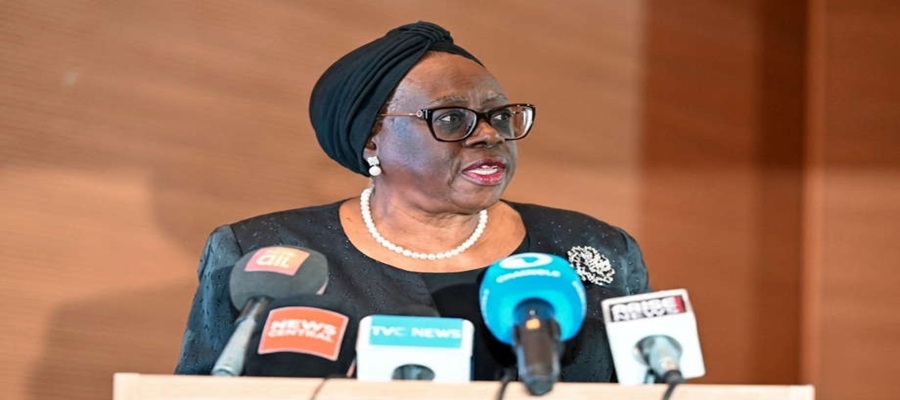
Justice Kudirat Kekere-Ekun, Chief Justice of Nigeria (CJN), has cautioned newly appointed judges of the lower courts against accepting unsolicited gifts, warning that such actions could expose them to petitions and erode public confidence in the judiciary.

The CJN gave the warning at the opening of an induction course for newly appointed judges in Abuja on Tuesday.
Represented by the Administrator of the National Judicial Institute (NJI), Justice Babatunde Adejumo, Kekere-Ekun urged the judges to uphold the highest standards of integrity and ensure the speedy and fair dispensation of justice.
She said judicial officers must remain above reproach in both their official and personal conduct.
“Most importantly, do not allow unsolicited gifts. You must equally avoid throwing unnecessary birthday parties. People will seize the opportunity to bring unsolicited gifts that can lead to petitions,” she said.
The CJN also advised the judges to work harmoniously with court officials, including registrars and exhibit keepers, while maintaining professionalism in the discharge of their duties.
She urged them to familiarise themselves with court rules to avoid being misled by legal practitioners and cautioned against the excessive use of contempt powers.
“You must work harmoniously with all the officials under you and ensure that you manage them diplomatically and technically. Read the rules of court so that lawyers will not take you for a ride,” she said.
Kekere-Ekun stressed that prompt and fair determination of cases was essential to sustaining public trust in the nation’s judicial system.
In his remarks, Justice Adejumo congratulated the new judges on their appointments, describing their elevation to the Bench as a significant responsibility in upholding constitutional supremacy, the rule of law and access to justice.
He said the induction programme was designed to equip participants with knowledge of judicial ethics, courtroom management, substantive and procedural law, and the practical skills required for effective adjudication.
Adejumo noted that the lower courts remain the first point of contact for most Nigerians seeking justice and play a critical role in the effective administration of the country’s judicial system.
He urged the judges to make the most of the training as they prepare to assume their responsibilities on the Bench.

Court Adjourns Alleged Binance Tax Evasion Case over Settlement Talks

Fixed Wired Internet Market Lags as Mobile Gains Ground

Xenophobic Attacks: OYC Threatens to Picket MTN Nigeria Offices

New NIMC Act Strengthens Data Protection, Privacy – Director

BON Establishes Six Ad Hoc Committees to Modernize Broadcasting

NASENI Moves to Digitize CCB’s 5m Assets Declaration and Operations

Mobile Internet Gender Gap Widest in Africa – GSMA

Nigeria Launches FreeTV Nationwide

CANAL+ Partners Samsung to Pre-Load DStv Stream on New Samsung TVs In Nigeria, Other African Countries

Lebara Nigeria Launches Lebara Play, Africa’s First Telecom-Owned Micro-Drama Platform




 News2 days ago
NRC, Ponzi Scheme Collapses Resulting Loss of Billions of Naira

 News2 days ago
NSITF Partners South African Insurer on Digital Transformation

 General News2 days ago
KPMG Urges Africa’s Most Innovative Tech Entrepreneurs to Enter the Global Tech Innovator 2026 Competition

 E-Financial2 days ago
FCT-IRS Unveils New Digital Platform, Taxporta

 E-Business2 days ago
FG Suspends New Internet Regulations to Prevent Overlapping Rules
 E-Business2 days ago
NIN Enrollment Hits over 136m as New ID Law Takes Effect

 E-Business2 days ago
Plateau PCC Collects Nigerians’ Data without Privacy Policy – FIJ

 Telecom1 day ago
NCC Seeks Cost-Based Pricing Framework for Ducts