

General News
Leo Stan Ekeh Foundation, Zinox Group To Invest 10B on 1000 University Tech Scholarships for Indigent Nigeria Wiz-kids

By Eunice Omokaro
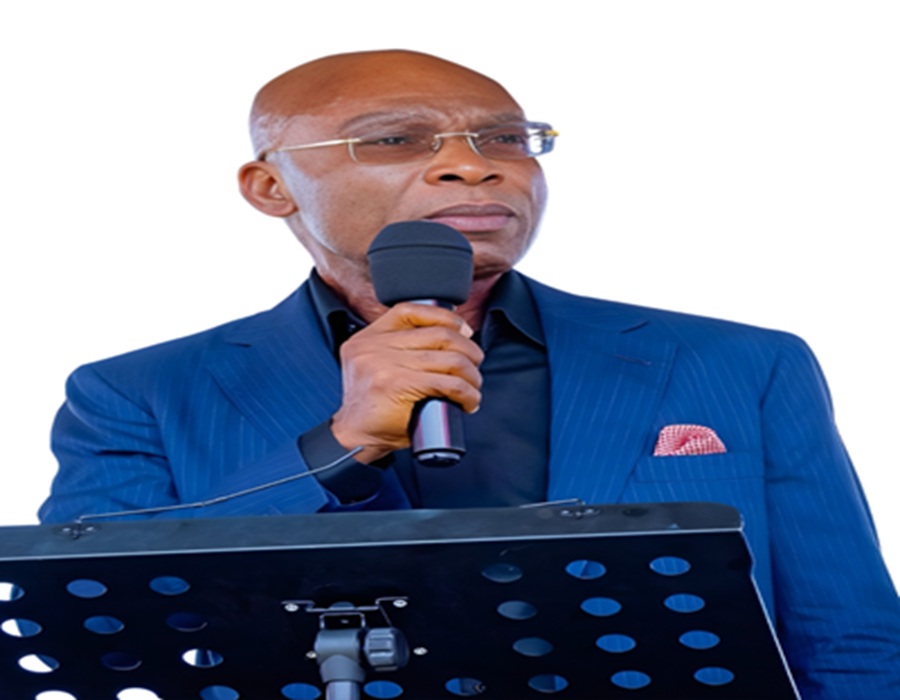
Africa’s foremost tech icon and Chairman of Zinox Group, Leo Stan Ekeh, who turns 70 on February 22, this year, has explained why he is not celebrating his 70th birthday with a mega party, preferring to offer University scholarships to additional 1000 Nigerian indigent wiz-kids to study Computer Science in Federal Universities so that the country’s private and public sectors could have a new generation of tech wiz-kids to support the growth of the economy.

Leo Stan Ekeh
He anticipates that these students who will not be bonded, shall disrupt global wealth equation in favour of Nigeria and defend our tech independence. Selection shall be based on a minimum Intelligent Quotient and age nationwide, and they shall be schooled and exposed beyond tech to become global Tech Citizens.
Speaking on phone, Ekeh said “Each shall have a tech mentor from year one, as I plan a partnership with Computer Society of Nigeria and every vocation they shall be engaged resourcefully. Beneficiaries shall be from poor homes and those with parents who earn below Government Level 10 and its equivalent in the private sector. The first batch starts this September, and I expect each to earn first class degree. This is my Group of companies’ and my little way of appreciating my country, individuals and corporates that gave us the opportunities in the last 40 years and still patronizing our Tech Group – Task Systems, TD Africa, Zinox Technologies, Konga etc. If we are successful with this spiritual mandate, I can then celebrate my 100 years on earth with a bang. With God and AI, I am aiming to make 120 years,” he said.
Ekeh, a largely humble and private person not known for celebrating birthday milestones, explained that rather than throwing a lavish birthday party befitting his newly attained septuagenarian age, he has chosen with his Group’s Management to provide world-class tech human capital to support growth of the nation’s economy.
“We need quality and tech-savvy wiz-kids who can drive the future of government and e-governance and those who will become change-makers in the private sector.
“I have been blessed and bruised in this country and I thank God. Frankly, I don’t see enough Nigerian tech wiz-kids who can defend the massive development anticipated in the next 5 – 10 years in the oil and gas, banking, agriculture, manufacturing, mining, entertainment, etcetera, and public sectors. We are becoming slaves in our own country in a knowledge century which is unfortunate. We are all arrogantly living just for today, forgetting that only four God-anointed tech wiz-kids can alter the GDP of this country in five years. The man who controls your tech resources decides your profit level and how far your country and corporations can grow in this second quarter of the 21st Century and in future,” he said.
Ekeh, who was once decorated by President Olusegun Obasanjo as ‘Icon of Hope’ on Nigerian Independence Day in 2003, for his tech-driven transformative impact on Nigerian economy and the youths, said Nigeria must begin to plan for the disruptions coming.
“The future is here but very fragile and disruptive, it’s either you are something or nothing at all. No middle ground. We need to alter the digital trajectories of our people. Technology is realistically the only profession in the world today that can alter the destiny of brilliant and humble kids from poor families and position them as huge wealth creators and sustainers. Though I am not really from a very poor family, but I am a testimony and shall tell the whole story in my book that shall be published last quarter of 2027. It shall be most revealing.
“This is my additional contribution amongst others to appreciate Nigerians, the Federal Government, sub- nationals and corporations that have been supporting my tech commitments and innovations on this side of the Atlantic,“ the soon-to-be septuagenarian said.
When asked how much it will cost to undertake such gigantic project, he said: “It is a spirit-driven project to thank those who supported and are still supporting companies within the Zinox Group. It has an annual cost that shall run into billions of Naira and my group is committed to it amongst other social responsibility projects like TD Africa Project to produce 10,000 female tech experts out of which 400 have graduated and are fully employed in different corporates in Nigeria. This is a 10-year project with other perks. The full package shall be revealed online on April 22, 2026,” he said.
However, beyond his birthday and the scholarship initiative, Ekeh in the last 40 years has been a worthy role model for philanthropy and a living exemplar of what it means to live for public good. He has been decorated with a lot of local and international awards. His group has trained and retrained over 3000 Nigerians and donated tech centres to over 25 institutions nationwide just to mention a few.
Ekeh was a former mass servant and chorister in his local community Catholic Church at Ubomiri, a sprawling community on the fringes of Owerri, Imo State.
One of his favourite pastimes is to seek out the poor and help them come up the ladder of life. He is an entrepreneur who draws a distinct line between capitalism and welfarism? He believes that capitalism must wear a human face; that profit must not take the place of empathy as no one came with and shall leave this earth with cash.
His philanthropy is not limited by geography. From south to the north, his imprints of charity dot many educational institutions. A couple of years ago, he built a church complete with rectory in his Ubomiri community, the same church where he was once a mass servant.
At the dedication of the church, he recalled in an emotion-laden voice: “My grandfather produced a Reverend Father who was ordained same day with Rev Canon Tansi. My father as a past time was a soloist in this church, and he served God with all his might; I was a mass servant and a member of this choir (pointing to the horde of choristers robed in red outfit). I have never tasted alcohol or smoked since I was born and I don’t know why. It was something that never appealed to me or fascinated me. I believe our good God decided to save me from birth.
“I come from a lineage of people who served God dedicatedly. I think I am a miracle child and was clear who I wanted to be from the day I launched out as a tech entrepreneur. I saw myself as an only Child even though I have siblings and, as an orphan even though my parents were alive and a bit civilized because no person around me even though educated, had tech knowledge to advise me, so I decided to take the pain before pleasure alone.
“I love God and will never hesitate to do anything in the service of God and humanity. I built this church as a mark of God’s special love and mercy towards me. I have the best wife any man would wish to have. She is a super star. She is intelligent, beautiful and unlike some women, she is not expensive and more importantly, we operate on the same tech wavelength. If for any reason I get stuck, she is the one to figure out the solution for me. God blessed me with brilliant and responsible children too. I am grateful to God because He has seen me through the valleys and mountains of life. As a mark of God’s mercy to me, I pay corporate tithes for all my companies. I didn’t read it in the Bible but I do it”, he told the audience.
“God is the architect of my success. As an entrepreneur, I have strategised, stayed up late, made projections but if there was no mercy of God and His grace to help me implement these, there will be no success. God has done me well; even for me to be alive, to come from the family I come from, the village, town, region and country I come from. Most importantly, God has managed me because He gave me a proactive personality, removing all the holes in my life. The temptations are there, you can imagine them. Maybe if I was taking alcohol, I would have been a mental guy. I work an average of 20 hours a day and near zero holidays and I have no health challenges,” he once told some journalists.
For Ekeh, the Forbes Best of Africa Leading Tech Icon, the scholarship for 1,000 Nigerian students remains a tiny drop in the ocean of multitude of philanthropies he has extended to persons and institutions across the continent quietly. Through his Leo Stan Ekeh Foundation (LSEF), his family’s non-profit, and the various companies under the Zinox Group, he has impacted humanity and institutions both in cash and kind, especially human-capital development, upskilling the hitherto unskilled in tech-techniques, institutionalising entrepreneurship in select universities and awarded countless local and overseas scholarships to Nigerians of all tribes and tongues to advance their quest for knowledge.
In the last two years alone, the Foundation launched three entrepreneurship centres at St. Augustine University in Epe, Lagos, Federal University, Birnin Kebbi, Kebbi State, Imo State University (IMSU) etc. The centres had been upskilling young men and women turning them to wealth and job creators, rather than job-seekers. At the IMSU centre, it was a moment of joy for about 200 young Nigerians who were the first set of beneficiaries of a 3-month entrepreneurship boost programme.
They were taught the fundamentals of entrepreneurship by the best coaches and experts drawn from Nigeria, United States and United Kingdom. Not only were they tutored by the best whizzes in diverse fields of human endeavour, they were also kept on a stipend throughout the duration of the programme to augment their weekly commute to the centre. In addition, each trainee was gifted a brand-new Z-pad tablet to aid their learning and upskilling process. Some also received interest free loans to launch their businesses.
What’s unique about Ekeh and his philanthropy is that he does them behind the scene. No cameras flashing. No media buzz. Just humane acts of a man fated for greatness and encased in God’s grace.


General News
86% of Those who Use AI for Travel Planning have Data Security Concerns, Kaspersky Survey Shows

According to Kaspersky’s latest findings, AI is highly appreciated among travellers for saving time, finding personalised recommendations and budget-saving offers. However, data security risks awareness is also high, which security experts call a good sign.

Kaspersky global research* revealed what drives active AI users to charge chatbots and AI-powered tools with the important responsibility of travel planning and how they estimate the security of such services. The survey shows that the primary motivation for turning to AI in travel planning is to save time and simplify preparation, with 73% of users globally pointing out these benefits.
Other important advantages of AI in traveling, named by 65% of respondents, are the search for information about the main attractions in the chosen location and personalised recommendations tailored to individual preferences. Additionally, 63% leverage AI to find the most favourable offers, while 61% trust it to uncover information that would otherwise be hard to find.
In fact, nowadays with the help of AI, an individual travel itinerary, matching all the requests and budget of a particular traveller, can be created in just a few clicks.
However, information provided by chatbots always needs to be double checked. There have already been several instances where tourists encountered issues because they trusted AI too much and did not conduct their own research for the trip.
What is more, not only the information, but even links provided by AI need to be checked, as there may be malicious and phishing links among them. Before clicking on a link from an AI chatbot it is recommended to check it with a cybersecurity solution, such as Kaspersky Premium, empowered with phishing detection.
AI and security
Apart from setting a route and searching for information, AI in travel planning in many cases is also responsible for booking hotels and even tickets, which inevitably requires sharing personal data. The Kaspersky global survey revealed that not all travellers are ready to entrust AI with their personal information.
Almost half (48%) of global respondents see security risks in AI usage and try not to share any sensitive data with it. Together with those, 37% who do not have many security concerns about AI still try to be careful while working with it.
86% of those who use AI for travel planning think about data security while working with these tools. Only 14% of travellers are confident that sharing any data with AI is totally secure.
According to the survey, travellers in Spain, the United Kingdom, Indonesia, Malaysia, and South Africa express the greater concerns about AI-related risks, while those in China, the United Arab Emirates, and Saudi Arabia in contrast display higher confidence in the security of AI systems.
“The survey highlights a noteworthy level of caution among travellers who use AI, which is a promising sign. A rational attitude is crucial for any type of online interactions, especially when we talk about personal data sharing. After all, your ‘private’ conversations with AI can still be exposed to cyber threats, or a favourable offer discovered by a chatbot may turn out to be nothing more than a scam.
This doesn’t mean you should abandon these digital tools altogether. Instead, stay mindful, avoid oversharing personal information, and think carefully while choosing which task you can assign to the AI. By doing so, AI-powered services can evolve into reliable assistants that help you tackle a wide range of challenges safely and effectively,” comments Vladislav Tushkanov, Group Manager at Kaspersky AI Technology Research Center.

Justice Yellim Bogoro of the Federal High Court in Lagos has declared the N60 billion fine imposed by the Advertising Regulatory Council of Nigeria (ARCON) on Facebook Nigeria Operations Limited Illegal.

Justice Bogoro stated that ARCON regulator exceeded its legal authority and breached the company’s constitutional right to a fair hearing.
He, who made the declaration while delivering judgment in Suit marked, FHC/L/CS/2205/2024, declared ARCON’s Notice of Violation/Demand for Compliance dated 21 October 2024, unconstitutional, unlawful, null, and void, and barred the agency from taking further steps to enforce it.
The judge also held that ARCON lacked the statutory power to impose fines for alleged criminal violations under the Advertising Regulatory Council of Nigeria Act, 2022, without first obtaining a conviction from a court or other competent tribunal.
The dispute arose from ARCON’s claim that Facebook Nigeria displayed advertisements on Facebook and Instagram to Nigerian audiences without prior approval from the Advertising Standards Panel, contrary to provisions of the ARCON Act and the Nigerian Code of Advertising.
Following these alleged breaches, the regulator ordered the company to cease displaying the advertisements and imposed an N60 billion penalty.
Apparently dissatisfied with the development, Facebook Nigeria, through Mofesomo Tayo-Oyetibo (SAN), its lawyer, challenged the action, arguing that ARCON lacked the legal authority to determine criminal liability or impose punitive sanctions via an administrative notice without allowing the company to defend itself.
The company also argued that it does not own or operate Facebook or Instagram, claiming both platforms are owned and controlled by Meta Platforms Inc., a separate foreign entity.
But ARCON, represented by Akinlolu Kehinde (SAN), contended that Facebook Nigeria acts as Meta’s operation in Nigeria and should therefore be held responsible for regulatory violations related to advertisements on the platforms.
The regulator further argued that the notice was simply a compliance directive, allowing the company the option to comply, pay the specified violation fee, or face prosecution.
However, Justice Bogoro dismissed the regulator’s arguments.
The judge stated that Facebook Nigeria is a distinct legal entity from Meta Platforms Inc. and that ARCON failed to present credible evidence showing that the Nigerian company owns, operates, or controls Facebook or Instagram.
The court maintained that the argument that Facebook Nigeria represents Meta’s interests in Nigeria was insufficient to establish liability for the alleged advertising infractions.
Regarding fair hearing, the court ruled that ARCON violated Section 36 of the Constitution by accusing the company of misconduct and imposing a N60 billion fine without first hearing its defence.
Justice Bogoro also held that Section 57(4) of the ARCON Act explicitly requires the regulator to provide a fair hearing before imposing any penalty.
The court further found that the alleged violations were criminal because Section 34 of the ARCON Act designates the unlawful exposure of advertisements as an offence.
The judge also held that, since the Act stated that punishment can only be imposed “upon conviction,” ARCON had no authority to impose the N60 billion fine through an administrative process.
He insisted that, regardless of what ARCON called it, the demand was a fine that could only be imposed by a court following proper judicial procedures.
As a result, the court invalidated the Notice of Violation/Demand for Compliance.
It declared ARCON lacked authority to impose fines for breaches of Sections 34(3), 54, or other criminal provisions of the ARCON Act.
Justice Bogoro also issued a perpetual injunction preventing ARCON, its officers, agents, and associates from enforcing the October 21, 2024 notice against Facebook Nigeria.
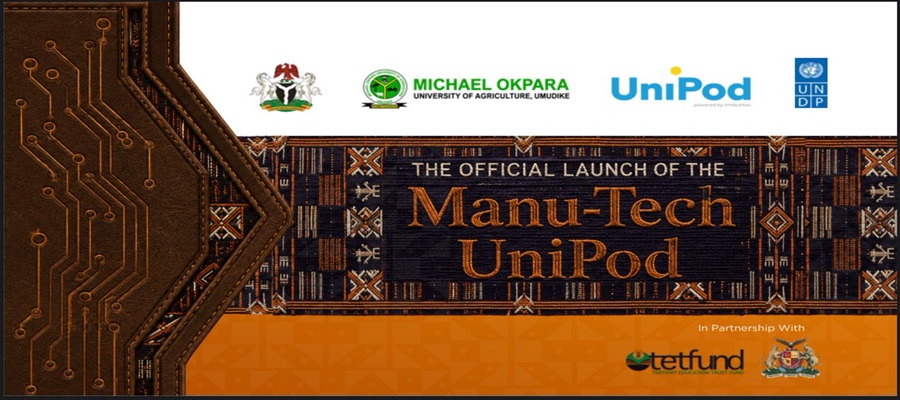
Abia State has inaugurated of the country’s first Manufacturing Technology University Innovation Pod (Manu-Tech UniPod) at the Michael Okpara University of Agriculture, Umudike (MOUAU).

Dr. Maruf Olatunji Alausa, minister of Education and Governor Alex Chioma Otti at the event
The inauguration marks a significant milestone in efforts to promote innovation, research commercialisation, and industrial development.
The landmark facility, established through a partnership between the federal government of Nigeria, the United Nations Development Programme (UNDP), the Tertiary Education Trust Fund (TETFund) and the Abia State Government under the National Innovation and Digital Transformation Partnership Programme (NIDTPP), is designed to transform academic research into commercially viable products, foster entrepreneurship, promote industrial competitiveness and create sustainable jobs.
Representing Senator Kashim Shettima, Vice President, Dr. Maruf Olatunji Alausa, minister of Education, described the project as a strategic investment in Nigeria’s future, saying it reinforces the Federal Government’s commitment to repositioning higher education as a catalyst for innovation, research commercialisation, entrepreneurship and job creation.
He stressed that Nigerian universities must evolve beyond conventional teaching and research to become centres for enterprise development, technology transfer and industrial competitiveness.
Speaking at the inauguration, Governor Alex Chioma Otti, declared that Abia is entering a new era where science, innovation and enterprise will power economic prosperity and position the state as Nigeria’s leading hub for manufacturing and technological advancement.
Delivering his keynote address titled “Science Meets Enterprise,” Governor Otti described the UniPod as a transformational investment that bridges the gap between academia and industry, noting that development flourishes through purposeful partnerships.
He said the decision of the Federal Government and the UNDP to site Nigeria’s first Manu-Tech UniPod in Abia reflects the confidence they have in the state’s enormous economic potential.
“The siting of the Manu-Tech UniPod in Abia speaks eloquently to the institutional faith the UNDP and the Federal Government of Nigeria have reposed in our dear State and the potential it holds as an engine of growth and economic prosperity in the region,” the Governor stated.
Governor Otti explained that the innovation facility will accelerate product development, industrial-scale manufacturing, renewable energy integration and entrepreneurship while equipping more than 500,000 students and researchers with technological and innovation skills over the coming years.
He expressed optimism that the project would unlock unprecedented opportunities for Aba’s renowned manufacturing ecosystem by improving product quality, branding, competitiveness and access to regional and global markets.
According to him, the UniPod will redirect research in tertiary institutions from theoretical publications to practical solutions capable of addressing everyday challenges in agriculture, healthcare, manufacturing and other productive sectors.
“The expectation is that research efforts henceforth will be directed at answering questions with practical, everyday applications,”
Governor Otti said, adding that improved research outcomes would reduce the mortality rate of Micro, Small and Medium Enterprises (MSMEs), strengthen investor confidence and stimulate sustainable economic growth across Abia and the South-East.
The Governor reaffirmed his administration’s commitment to innovation-driven development, stating that government fully supported the project because it aligns perfectly with its economic transformation agenda built on quality infrastructure, security, skilled manpower and strategic partnerships.
He also announced that the operationalisation of the UniPod would accelerate the implementation of other joint initiatives with the UNDP, including the expansion of the Jubilee Fellows Programme, the Aba Export Growth Lab, energy investment initiatives, industrial competitiveness programmes and the establishment of community innovation centres across the state.
Highlighting the opportunities presented by the African Continental Free Trade Area (AfCFTA), Governor Otti noted that businesses in Abia now have access to a market of over 1.4 billion consumers across Africa.
“The hour of big dreams and great ambitions has arrived. If we fully harness the potential of this Manu-Tech University Innovation Pod, our challenge will no longer be finding markets but building the capacity to serve customers across Africa and the world,” he declared.
In her remarks, Ms. Ahunna Eziakonwa, United Nations assistant secretary-general and UNDP regional director for Africa, commenced her official mission to Nigeria with the inauguration of the facility, underscoring the importance of strategic partnerships in driving inclusive and sustainable development.
Also speaking, Ms. Elsie Attafuah, UNDP resident representative in Nigeria, described the UniPod as part of a broader national innovation ecosystem designed to connect education, research, enterprise and manufacturing while enabling universities to become drivers of economic growth and global competitiveness.
She commended President Bola Ahmed Tinubu, Vice President Kashim Shettima, the Federal Ministry of Education, TETFund and the Abia State Government for their commitment to innovation-led development, while particularly praising Governor Otti for his vision of transforming Abia into Nigeria’s foremost manufacturing and industrial innovation hub.
Earlier, Professor Ursula Ngozi Akanwa, vice-chancellor of Michael Okpara University of Agriculture, Umudike, described the inauguration as a defining moment in the institution’s history, saying the project fulfils the University’s mandate of deploying science, technology and innovation to advance agriculture, manufacturing and enterprise.
She expressed appreciation to the Federal Government, the Federal Ministry of Education, UNDP, TETFund and the Abia State Government for selecting MOUAU to host Nigeria’s first Manufacturing Technology University Innovation Pod.
The inauguration attracted top government officials, development partners, academia and industry stakeholders, including: Dr. Emmanuel Meribeole, secretary to the State Government; Pastor Caleb Ajagba, chief of Staff to the Governor, members of the State Executive Council, traditional rulers and other dignitaries.
The Manu-Tech UniPod is expected to provide students, researchers and entrepreneurs with access to advanced manufacturing technologies, prototyping facilities, business incubation support and industry mentorship, enabling innovative ideas to be transformed into market-ready products and positioning Abia at the forefront of Nigeria’s industrial revolution.

CBN Warns against Rejection of N100 Banknotes

Data Protection Industry Hits N16.3Bn in 3 Years- NDPC

NCC Seeks Cost-Based Pricing Framework for Ducts

Flutterwave Secures Circle Ventures Investment to Deepen USDC Payment

GCR Upgrades FCMB Asset Mgt Rating on Disciplined Liquidity, Consistent Earnings

NASENI Moves to Digitize CCB’s 5m Assets Declaration and Operations

Mobile Internet Gender Gap Widest in Africa – GSMA

Nigeria Launches FreeTV Nationwide

CANAL+ Partners Samsung to Pre-Load DStv Stream on New Samsung TVs In Nigeria, Other African Countries

CredibleVoteNG Opens Free Access to all Polling Units in Nigeria after INEC Demanded N1.Bn for Register




 General News2 days ago
IHS Nigeria, FCT-HSES Concludes Clean Cooking Energy Campaign “Project Breathe Clean Air” in Abuja

 News1 day ago
NRC, Ponzi Scheme Collapses Resulting Loss of Billions of Naira

 E-Business2 days ago
Kaspersky Transforms Threat Intelligence Reporting into an Interactive Content Hub

 News2 days ago
Microsoft to Lay Off 4,800 Workers

 Telecom2 days ago
Airtel Africa Cuts Diesel Dependence by 9.1m Litres

 Telecom2 days ago
A New Blueprint – How Strategic Collaboration is Rewriting the Narrative on Youth Drug Abuse

 Broadcasting2 days ago
NELFUND Investigates 34 Universities Over Students’ Missing Tuition Refunds

 News2 days ago
Access Bank, Fifth Chukker and UNICEF Renew Commitment to Expanding Educational Opportunities for Nigeria’s Most Vulnerable Children