

Telecom
NCC Mulls Sanction on Road Contractors Destroying Metro Fibre of Telcos


Nigerian Communications Commission (NCC) is considering imposing sanction on any road contractor that destroys telecommunications metro fibre across the country.

Idris Olorunnimbe, chairman, Board of Commissioners, NCC, stated this at congratulatory visit to the Chairman by members of Association of Licensed Telecommunications Operators of Nigeria (ALTON) in Lagos yesterday.
According to him, “I think what we need to do to address the damage of metro fibre by government contractors is simply. He who cuts It must fix it, and we’ll take this message to our state governments.
If any contractor knows that if they damage that critical national infrastructure, their work is going to stop and they are going to be the ones to fix it, they will not destroy it.
Responding, Engr. Gbenga Adebayo, chairman, Association of Licensed Telecommunications Operators of Nigeria (ALTON), said up until now, there are no consequences for those infractions, and if there are no consequences, the tendency to continue to do bad is very high.
“Contractors of government carrying out roadworks, whether road maintenance or road expansion, and their machines destroy communications super highway at will, if there are consequences, or if there were consequences some of those actions will not have escalated to the level that we are in.
“What the chairman has said today is very important, if you destroy it you fix it. What we are expecting now is that the consequence of managing those problems will be a lot more, and there will be legal deterrent for people from destroying operators’ fibre. I must emphasize the communication super highway. That’s the highway by which all the signals are carried.
“When this highway is broken, it’s like you have a major bridge that’s broken. You can’t reach east, neither can you reach west. And until we take it as the major super communications highway and so protective, we will continue to be where we are.
“That’s actually what it is. When this highway is broken, we are all affected. So, it’s no longer an infrastructure that is for operators, but it belongs to all of us. If I don’t have service on my phone, some of these are the consequence of this violation that we are seeing.
Earlier in his welcome address, Engr. Adebayo highlighted some of the key challenges in the sector which includes: Daily fibre cuts — often caused by federal and state road construction contractors — are creating enormous economic losses.
- Nationwide service disruptions
- Destruction of critical digital infrastructure
- Loss of assets without compensation
- Banking, education, and security interruptions
There is currently insufficient institutional recourse for operators when these damages occur. A structured pre-construction fibre mapping and mandatory coordination framework is urgently required.
Key Regulatory Priorities for Sector Stability
- Independence of the Regulator
He said regulatory independence ensures:
- Credible oversight
- Investor confidence
- Transparent decision-making
- Long-term sector stability
Independence must not only exist in law — it must be visible in practice.
“We recommend: Legislative reinforcement explicitly affirming NCC independence
- Clear codification of interaction boundaries between the regulator and supervising authorities
- Operational safeguards insulating regulatory processes from undue influence
Multiple Regulation
Overlapping regulatory interventions by various MDAs on matters already within NCC jurisdiction create:
- Duplicative investigations
- Conflicting directives
- Increased compliance costs
- Regulatory uncertainty
“We recommend structured inter-agency coordination frameworks and legislative clarification reaffirming NCC’s exclusive jurisdiction over telecommunications matters.
Multiple Taxation
Adebayo stated that operators continue to face excessive sub-national taxes and levies.
Enforcement tactics such as site shutdowns directly affect Quality of Service and national connectivity.
A harmonized national telecom taxation framework is essential for broadband expansion and digital inclusion.



Flutterwave has announced a company-wide employee support package that includes promotions for about 25 per cent of its global workforce, a one-off economic relief payment and enhanced support measures for employees in Nigeria.

The fintech company said more than 100 employees across its global operations had been promoted as part of efforts to reward performance and strengthen employee welfare.
In addition, all staff worldwide will receive a one-time economic relief payment, while employees in Nigeria will benefit from additional tax support and cost-of-living adjustments following recent regulatory changes affecting take-home pay.
The company said the initiative was introduced in response to rising living costs across key markets, particularly in Nigeria, where inflation and increased transportation expenses have placed pressure on household incomes.
Speaking on the development, Olugbenga Agboola, founder and Chief Executive Officer of Flutterwave, described employees as the driving force behind the company’s growth and innovation.
“I often say our people are our secret sauce. They are the ultimate engine behind everything we build, giving us the capacity to create solutions that power businesses, unlock opportunities and move money seamlessly across Africa and beyond,” he said.
According to the company, the support measures form part of its broader strategy to improve staff welfare, retain talent and create an environment where employees can focus on their work without undue financial pressure.
Also speaking, Annette Akpolo said the initiative reflects a balance between rewarding individual performance and addressing the collective needs of employees.
“Our goal has always been to build an environment where our people can focus on doing their best work, rather than being weighed down by economic anxiety.
“Pairing merit-based individual growth with supporting the collective needs of the whole team are both essential parts of how we build a company culture where people genuinely want to stay and grow over the long term,” she said.
Founded in 2016, Flutterwave is marking its 10th anniversary in 2026.
The company disclosed that it has processed more than one billion transactions and facilitated over 40 billion dollars in total payment value globally since inception.
Flutterwave also reported strong growth across its payment channels, including a 289 per cent increase in wallet-based collections by transaction volume and a 184 per cent rise in bank transfer value over the past year.
The company attributed the growth to increasing adoption of local payment methods across its operating markets.
Industry observers note that the latest employee support package comes amid increasing competition for skilled talent in Nigeria’s fintech sector, where firms are adjusting compensation and benefits to retain workers in the face of rising living costs.
Agboola said future growth opportunities within the company would continue to be based on performance, leadership and meaningful contributions to its mission.
“At Flutterwave, growth is earned through meaningful contributions to the business and to the mission we are building together.
“As we continue to grow, the people who will shape our future are those who consistently step up, solve hard problems, support others and move the company forward,” he said.
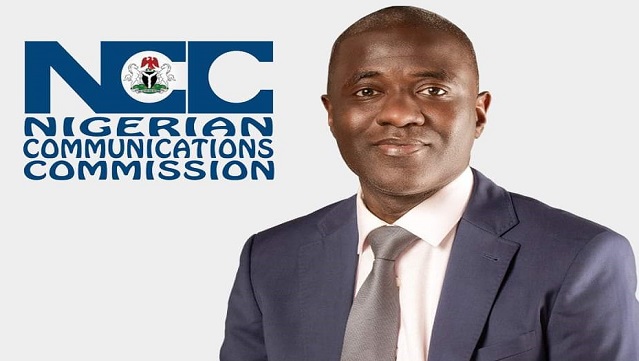
Nigerian Communications Commission (NCC) has identified Artificial Intelligence (AI) and the Internet of Things (IoT) as critical technologies for improving business efficiency, accelerating innovation and supporting Nigeria’s ambition to build a $1 trillion digital economy.

Aminu Maida, Executive Vice Chairman and Chief Executive Officer of the NCC, made this known at the 17th edition of Nigeria Communications Week and Africa’s Beacon of ICT Merit and Leadership Award held in Lagos.
Represented by Toluwalase Modele Rufai, Acting Controller of the NCC Lagos Office, Maida said AI and IoT had evolved from emerging technologies into powerful tools driving productivity, reducing operational costs and creating competitive advantages across multiple sectors.
Speaking on the theme, “Impact of AI and IoT on Business Operational Efficiency,” he described the technologies as indispensable to Nigeria’s economic transformation agenda.
“This year’s theme is not only timely but profoundly important. As Nigeria accelerates its journey toward a $1 trillion digital economy, Artificial Intelligence and the Internet of Things have moved from futuristic concepts to present-day drivers of productivity, cost optimisation and competitive advantage across every sector,” he said.
According to him, AI-powered predictive analytics is helping manufacturers anticipate equipment failures before they occur, reducing downtime and maintenance costs, while IoT-enabled sensors are improving agricultural productivity through real-time monitoring of soil conditions.
He added that connected technologies are transforming logistics and supply chain management by improving visibility, reducing delays, lowering operational costs and enhancing customer satisfaction.
“Across banking, healthcare, smart cities, manufacturing and governance, these technologies are streamlining operations, automating routine tasks and unlocking data-driven decision-making that was unimaginable just a decade ago,” he said.
Maida, however, stressed that the successful deployment of AI and IoT depends largely on the availability of resilient and high-capacity telecommunications infrastructure.
“At the heart of every AI and IoT deployment lies one critical enabler: resilient, high-capacity connectivity. Without secure, scalable broadband networks, the full promise of real-time data exchange, seamless device interoperability and intelligent automation remains unfulfilled,” he said.
The NCC boss said the commission was reviewing the Nigerian National Broadband Plan (NNBP) 2020–2025 to improve efficiency and sustainability within the telecommunications sector.
He disclosed that the commission was also engaging state governments to reduce Right-of-Way charges and administrative bottlenecks in order to accelerate fibre-optic infrastructure deployment nationwide.
According to him, the NCC has made harmonised spectrum resources available to support mobile broadband, fixed wireless access and IoT services, while the 2026–2030 Spectrum Roadmap is expected to create additional opportunities for broadband expansion and emerging technologies.
“With broadband penetration exceeding 52 per cent and growing 4G and 5G adoption, these efforts enhance efficient spectrum management, drive innovation, provide regulatory certainty and position Nigeria in line with global best practices,” he said.
Maida also highlighted the commission’s recently introduced General Authorisation Framework, which provides a regulatory sandbox for innovators to test AI, IoT, blockchain and other emerging technologies in a controlled environment.
He noted that the NCC had strengthened cybersecurity and consumer protection through initiatives such as the designation of telecommunications infrastructure as Critical National Information Infrastructure (CNII), adoption of a Zero-Trust cybersecurity framework and implementation of guidelines for secure AI and IoT deployment.
The NCC chief emphasised the need for collaboration among government agencies, regulators, operators, technology providers, academia and investors to address challenges such as inadequate power supply, skills shortages, data privacy concerns and consumer protection issues.
“The NCC remains fully committed to creating an enabling, predictable regulatory environment that attracts investment, spurs innovation and delivers inclusive growth,” he said.
Maida urged stakeholders to work collectively towards building a digitally empowered nation where AI and IoT technologies not only improve business efficiency but also transform lives, strengthen the economy and position Nigeria as a leader in Africa’s digital future.
The event brought together regulators, industry leaders, innovators and other stakeholders to discuss emerging trends, policy directions and technological innovations shaping Nigeria’s digital economy.
MultiChoice Nigeria has launched a month-long promotional campaign tagged “Open Time”, offering eligible DStv subscribers access to higher viewing packages at no additional cost.

The promotion, which runs from June 1 to June 30, 2026, is aimed at rewarding existing customers, reconnecting subscribers and attracting new users across Nigeria.
Under the initiative, active subscribers on selected lower-tier packages, including Compact and Compact+, will automatically be upgraded to higher viewing tiers, with some customers gaining temporary access to Premium content during the promotional period.
According to the company, eligible subscribers will not be required to register or manually activate the offer, as upgrades will be applied automatically once subscription payments are confirmed.
In a statement announcing the campaign, MultiChoice said the initiative was designed to provide customers with access to a wider range of entertainment content and enhance viewing experiences.
“The Open Time initiative is a simple way for our customers to enjoy more of the stories they love and discover new content across genres, as long as their accounts remain active during the period,” the company stated.
The DStv Premium package, which currently costs N44,500 per month, offers access to more than 160 channels, including sports, movies, documentaries, children’s programming, news and lifestyle content.
MultiChoice said the offer applies to subscribers who maintain active accounts throughout the campaign period.
The company added that the promotion forms part of efforts to enhance customer value by providing broader access to entertainment content, including drama, sports, action and children’s programmes.
To participate, subscribers are required to make payments through approved channels such as the official DStv website, the MyDStv mobile application, USSD banking platforms and authorised payment agents.
The company clarified that all promotional upgrades would automatically expire at the end of June, after which subscribers would revert to their original subscription packages.
Industry analysts say the campaign comes amid increasing competition within Nigeria’s pay television and streaming market, where service providers are introducing incentives and value-added offerings to attract and retain customers.
MultiChoice said the initiative reflects its commitment to delivering quality entertainment and ensuring subscribers enjoy greater value from their subscriptions.

Easybuy Partners WAWUAfrica to Upskill 10 Million Youths and Women, Boosting Nigeria’s Economic and Financial Inclusion

Quest Merchant Bank Reports Strong FY2025 Performance @ 11TH AGM

Kaspersky Reports on the Aspects of SOC Effectiveness to Consider for Blind Spot

Engr. Nnamani Honoured with First Patron of Igbo Canadian Community Association in Toronto

Fidelity Bank Sees Technology as a Strategic Enabler of Efficiency, Growth

MTN, VDT, Zoracom, Digital Realty Back 2026 Girls in ICT Campaign

Vitel Wireless Partners Fintechs to Expand Access to Services

CPN Begins Crackdown on Quack IT Professionals, Vows Tougher Action against Cybercrime

Nigeria Hit by 24.1m Data Breaches – Surfshark

Kaspersky Identifies Ongoing Supply Chain Attack on Official Daemon Tools Website Distributing Backdoor Malware




 E-Financial3 days ago
CBN Extends PoS Geo-Fencing Enforcement Deadline to August 2026

 Telecom1 day ago
NCC Retains Rudman as Chair of Newly Inaugurated IPv6 Council Board, Urges Advancement of Nigeria’s Digital Migration

 E-Financial1 day ago
POS Operators Threaten to Suspend Services over Exclusivity Practice

 E-Financial1 day ago
Nigerian Banks Under Pressure as Bad Loans Hit 8.03% After CBN Policy Shift

 Telecom1 day ago
MTN, ALTON, Upperlink, NiRA back 2026 Nigeria DigitalSENSE forum, awards

 E-Financial21 hours ago
Banks Lending to FG Hit N15.66 Trillion in One Year– CBN

 News21 hours ago
Amuchie, ED Fidelity Bank Named “Outstanding Banker of the Year” @ ABoICT 2026

 General News21 hours ago
AfDB Says 70 Percent of Nigerian Firms Depend on Generators