

General News
More 14m Farmers to Benefit from AfDB-backed Initiative

Additional 14 million farmers in 37 low-income and vulnerable countries served by the African Development Fund, the Bank Group’s concessional financing window, are set to benefit from a technology initiative targeted at scaling up climate-resilient food production across the continent.

This comes after the African Development Bank Group (AfDB) and the International Institute of Tropical Agriculture (IITA) signed a $16.61 million grant agreement to launch the third phase of the Technologies for African Agricultural Transformation Programme (TAAT-III)
TAAT-III, funded by the African Development Fund, is expected to consolidate earlier gains benefiting 14 million more farmers while introducing a more sustainable, private sector-driven delivery approach.
AfDB said the initiative aims to reinforce seed and technology distribution systems, deepen partnerships with governments and agribusinesses, and expand the digital tools, including its technology e-catalogues and real-time monitoring platforms, to speed up deployment of high‑impact solutions.
Simeon Ehui, director general of IITA, commented: “TAAT-III allows us to deepen the delivery of science‑based solutions that improve farmers’ yields and livelihoods. Working with the Bank and our partners, we are scaling technologies that make Africa’s food systems more resilient and competitive.”

Since its launch in 2018, TAAT has become one of Africa’s most effective and transformative platforms for agricultural innovation, reaching nearly 25 million farmers and boosting productivity across major staples.
The initiative has expanded climate-resilient agricultural practices across over 35 million hectares.
In a statement, the AfDB said working closely with the Consultative Group of International Agricultural Research Centres and national and regional partners, TAAT has increased crop yields up to 69% and generated more than $4 billion in additional agricultural value.
Countries including Sudan, Ethiopia, Zambia, Zimbabwe, and Nigeria have recorded notable gains in staple crop productivity and resilience to climate shocks.
Nigeria has been a key beneficiary of TAAT initiatives. Under its Wheat Compact, farmers adopting improved heat-tolerant varieties more than doubled yields from 1.7 tons per hectare to 3.5 tons per hectare.
Programme supported seed system assessments also helped inform national reforms to expand access to certified, climate-resilient seeds.
Speaking at the signing ceremony, Abdul Kamara, director general of the Bank Group’s Nigeria Country Department, said the new phase will focus on scaling innovation more rapidly
Kamara said: “TAAT-III underscores the Bank’s commitment to ensuring that proven, climate-resilient agricultural technologies reach farmers faster and at scale. This phase strengthens the systems that deliver innovation, helping countries boost productivity, enhance resilience, and align agricultural transformation efforts with the Bank’s four new areas of emphasis, dubbed the Four Cardinal Points.”


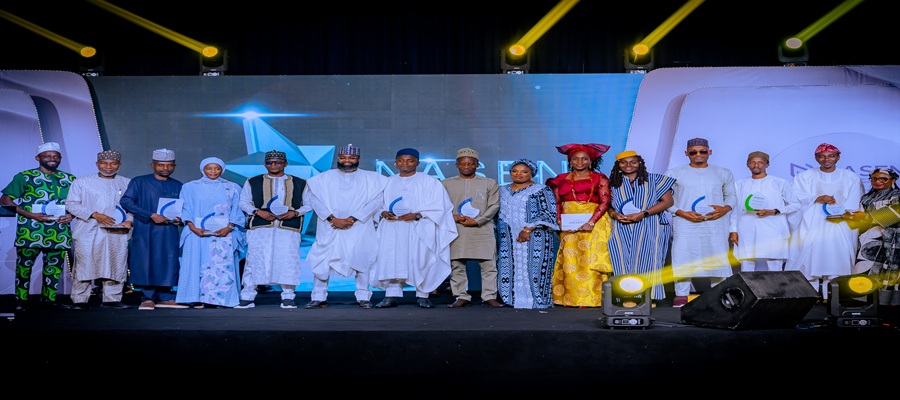
Mr. Khalil Suleiman Halilu, Executive Vice Chairman, National Agency for Science and Engineering Infrastructure (NASENI), has reaffirmed that the Agency’s remarkable transformation is powered by the dedication, innovation and professionalism of its workforce.

L-R: Best Staff, Manufacturing Services Dept, Engr. Odii Emmanuel; Best Staff, Audit Dept, Mr. Abbas Suleiman; Best Staff, Natural & Physical Science Dept, Mr. Usman Ahmadu (represented by Engr Yunusa Jubrin Sulieiman); Overall Staff of the Year, Barr. Hussaina Shehu; Driver of the Year, Mr. Abdullah Mohammed; Staff Choice Award Winner, EVC of NASENI, Mr. Khalil Suleiman Halilu; Best Staff, Accounts & Finance Dept, Mr. Salisu Mohammed; Best Staff, Technology Business Development Dept, Engr. Dr. Abayomi Okeshola; Best Staff, Planning & Policy Dept, Mrs. Ahmed Bilkisu; Best Staff, Technical Services- Engr. Mrs. Ugochi Chimaduruaku; Best Staff, EVC’s Office, Barr. Lilian O. Utaka; Best Staff, Civil & Environmental Engineering Dept, Engr. Aliyu Tahir Ahmed; Best Staff, PICTT, Mr. Umar Muhammad Bashir; Best Staff, Admin & HR, Shakir Owodunni; Best Staff, Research & Development Dept, Miss. Anita Egga during the 2025 NASENI Staff Motivation and Reward Event held in Abuja on Saturday, July 18, 2026.
Speaking at the 2025 NASENI Staff Motivation and Reward Event held in Abuja, he described the ceremony as more than an award presentation, saying it was a celebration of the people whose commitment continues to drive Nigeria’s industrial and technological advancement.
Halilu noted that although the event came later than scheduled, excellence remains worthy of recognition at any time. “Tonight is more than an award ceremony. It is a celebration of the people behind NASENI’s transformation.
“Behind every innovation, every partnership and every achievement are dedicated staff whose commitment has made our progress possible.”
The NASENI boss said the Agency has undergone a fundamental transformation under the Renewed Hope Agenda of President Bola Ahmed Tinubu, repositioning itself as a performance-driven institution focused on Creation, Collaboration and Commercialization (3Cs).
According to him, the (3Cs) principle continue to guide NASENI’s mission of developing homegrown technologies, building strategic partnerships and commercialising innovations that improve the lives of Nigerians.
Highlighting the Agency’s achievements in 2025, Halilu disclosed that NASENI has developed more than 44 commercially viable Made-in-Nigeria products, ranging from laptops and smartphones to solar irrigation pumps and electric tricycles.
The EVC also revealed the ongoing construction of the 40-hectare NASENI Solar Industrial Park in Gora, Nasarawa State, which will become Africa’s largest clean energy manufacturing hub while noting that through the Developing Engineering Leaders Through Her (DELT-Her) initiative, NASENI awarded over ₦229 million in grants to female engineers to promote innovation and expand opportunities for women.
He added that the Agency’s Irrigate Nigeria Programme and Agricultural Machinery Institutes have contributed to the creation of more than 30,000 direct and indirect jobs, while the Agency’s Zero Carbon Project and electric mobility initiatives continue to support Nigeria’s transition towards cleaner and more sustainable technologies.
He congratulated the award recipients while equally commended members of staff who were not recognised this year, assuring them that every contribution matters to the Agency’s success.
Best Staff of the year winners from each department are: Finance & Accounts, Mr. Salisu Mohammed; Technology Business Development, Engr. Dr. Abayomi Okeshola; Admin & HR, Shakir Owodunni; Information, Mr. Asake Michael; Manufacturing Services, Engr. Odii Emmanuel; Technical Services- Engr. Mrs. Ugochi Chimaduruaku; Environmental Engineering, Engr. Aliyu Tahir Ahmed; Natural & Physical Science, Mr. Usman Ahmadu; Nano Science, Dr. Mrs. Sherifat Adeleye; Research & Laboratory, Miss. Anita Egar.
The rest include: Procurement- Mr. Christopher Okpanachi; Planning & Policy, Mrs. Ahmed Bilkisu; EVC’s Office, Barr. Lilian O. Utaka; and Audit, Mr. Abbas Suleiman. Other winners include Driver of the year- Mr. Abdullah Mohammed; Overall Staff of the Year, Barr. Hussaina Shehu; and Staff Choice Award Winner, Mr. Khalil Suleiman Halilu.
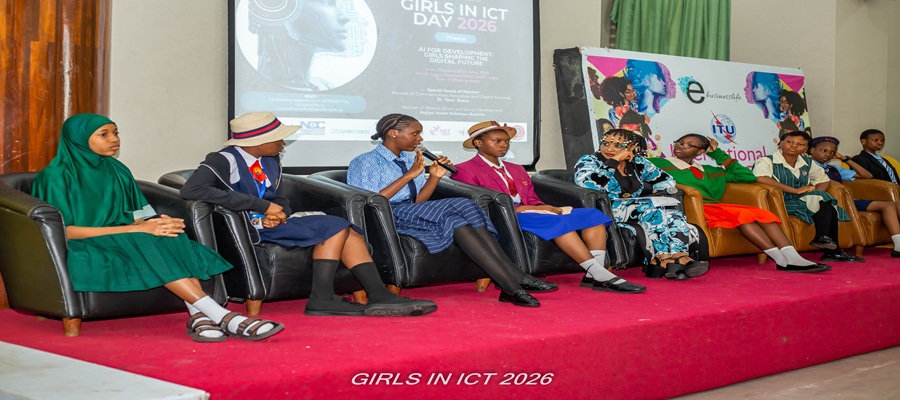
Young girls aspiring to delve into ICT careers have been advised to take advantage of the current versatility in the industry to create a niche for themselves. This was the view of participants at the just-concluded International Girls in ICT Day celebration organised by eBusinessLife Communication Limited, in Lagos.

The event, an initiative of the International Telecommunications Union (ITU), seeks to encourage young girls to take up tech careers that will see them balance the gender disparity in the industry.
In a panel session moderated by Tech Life Media CEO and organiser of Women Entrepreneurs & Executives in Technology Summit (WEETS), Ugochi Emmanuel, top female tech executives narrated their foray into technology careers and advised the young girls on requirements and need to start early in the quest to make global impact in ICT.
Narrating her experience into a tech career, Chief Administrative Officer, Digital Realty, Nigeria, Dr. Nkechi Newton Denila noted that the difficulties of the past have been lightened up and more women have opportunities to excel in the field.
“Today, the landscape is vastly different. Governments, international organizations and private institutions across the globe are intentionally creating opportunities for girls in Science, Technology, Engineering and Mathematics (STEM). The reason we are gathered here is part of that global commitment to ensuring that more women participate in ICT and related fields.
This presents a unique advantage for young girls. Many organizations now deliberately promote gender inclusion and equal opportunities in technology. Therefore, if you discover an area within ICT that excites you, pursue it wholeheartedly. This window of opportunity may not remain open forever. Do not wait for others to decide your future for you. Identify your passion, chart your course, and remain committed to achieving your goals.”
Associate Consultant and Information Security Analyst, Digital Encode, Itunuola Aderemi, advised the young girls to begin researching various technology disciplines, including Cybersecurity, Data Analytics and Data Science for areas that align fully with their interests and strengths. And to explore and discover any field that perfectly matched my aspirations.
While admitting the existence of such challenges as persistent stereotype against the female gender, Team Lead, Retails, New Horizons Nigeria, Glory Omole, noted that fortunately, organisations such as New Horizons are actively working to change that narrative. “Our leadership recognizes the urgent need to increase female participation in ICT. Considering that women still constitute a relatively small percentage of the global technology workforce, there is a deliberate effort to encourage more girls and women to enter the field.”
She however cautioned the young girls not to see this campaign as a competition between men and women, rather, it should be seen as a partnership where everyone is given equal opportunities to contribute and excel. “We want to see more women leading innovations, conducting research, developing applications and creating solutions that address societal challenges,” she enthused.
Speaking on the need for mentorship, Asst. Manager, Product & Services, Zoracom, Mistura Salaudeen, noted that stereotypes and confidence-related challenges still exist, but one effective way to overcome them is by drawing inspiration from women who have succeeded. She observed that across government, technology, finance, healthcare and other sectors, women are increasingly occupying leadership positions, serving as Chief Technology Officers, board members and executives.
“While challenges persist, I believe our focus should shift towards opportunities rather than obstacles. Artificial Intelligence, for example, has significantly lowered barriers to entry. AI enables individuals to develop business proposals, prepare presentations and execute ideas much faster than before. Therefore, instead of being discouraged by challenges, girls should leverage available technologies and communities to accelerate their growth and maximize emerging opportunities,” she advised.
Glory Omole also noted that technology is broad and offers diverse opportunities.
“There are numerous digital skills available today, but the choice of skill should depend largely on individual interests and career aspirations.
Fields such as Data Analytics, Data Science, Cybersecurity, Web Development and User Interface/User Experience (UI/UX) Design are among the high-demand skills available today. Each serves a distinct purpose.”
Corroborating this claim, Dr. Newton-Denila said: “It is important to understand that ICT now permeates virtually every profession. Whether in medicine, law, engineering, agriculture or business, technology has become an indispensable component of professional practice.
In medicine, for example, Artificial Intelligence is increasingly being used in diagnostics, telemedicine and robotic surgery. Similarly, in law, digital applications now support legal research, documentation and case management.”
The event has its theme as “AI for Development: Girls Shaping the Digital Future”.
General News
Franklyn Ginger-Eke CEO The Rainbow Strategy Honoured with PR Power List 2026 Rising Voices Award


Dr Franklyn Ginger-Eke, Founder and Chief Strategist of The Rainbow Strategy, has been honoured with the PR Power List 2026 Award in recognition of his contributions to strategic communications and public relations in Nigeria.

Franklyn Ginger-Eke, CEO The Rainbow Strategy
Ginger-Eke received the award in the Rising Voices category during the fifth edition of the PR Power List organised by GLG Communications as part of activities marking the 2026 World Public Relations Day.
The award ceremony, held at the Mike Adenuga Centre in Ikoyi, Lagos, attracted leading professionals and stakeholders in Nigeria’s public relations industry.
Among those in attendance were the President and Chairman of Council of the Nigerian Institute of Public Relations (NIPR), Dr Ike Neliaku; the Chief Executive Officer of the Public Relations Consultants Association of Nigeria (PRCAN), Dr Nkechi Ali-Balogun; former President of the African Public Relations Association (APRA) and Chief Executive Officer of CMC Connect LLP, Chief Yomi Badejo-Okusanya; and Executive Director of THOP and Adviser, Edelman Africa, Mr Kwame Senou.
According to the organisers, the PR Power List recognises public relations and communications professionals whose work has made significant contributions to organisations, influenced public discourse and advanced the communications profession over the past year.
Reacting to the recognition, Ginger-Eke described the award as both humbling and motivating.
“I am deeply honoured to receive this recognition for the modest contribution we are making in shaping the public relations and communications ecosystem.
“I see it as a testament to the dedication, creativity and excellence of our team at The Rainbow Strategy.
“This is a call to do more in delivering strategic communication solutions that create impact, build trust and contribute to the continued growth of the public relations profession in Nigeria,” he said.
He dedicated the award to young and aspiring communication professionals, encouraging them to embrace innovation, professionalism and ethical practice in their careers.
Ginger-Eke also reaffirmed The Rainbow Strategy’s commitment to promoting excellence in strategic communications, reputation management, stakeholder engagement, data protection compliance and value-driven public relations campaigns across the public and private sectors.
A Fellow of the Nigerian Institute of Public Relations (NIPR), Ginger-Eke is recognised for his work in public affairs, strategic communication and data protection compliance through his Abuja-based consultancy, The Rainbow Strategy.

NASENI Honours Outstanding Staff, Says Workforce Driving Agency’s Transformation

UN Raises Alarm Over Terrorists’ Use of Drones and Cryptocurrencies in Northern Nigeria

Adebutu, PDP Chieftain Accuses Nigerian Governors of Embezzling LG Allocations

ICPC Secures Final Forfeiture of N941m Linked to IPPIS Fraud

NDIC Urges Youths to Shun Ponzi Schemes, Embrace Savings

NRC, Ponzi Scheme Collapses Resulting Loss of Billions of Naira

NASENI Moves to Digitize CCB’s 5m Assets Declaration and Operations

Lebara Nigeria Launches Lebara Play, Africa’s First Telecom-Owned Micro-Drama Platform

CANAL+ Partners Samsung to Pre-Load DStv Stream on New Samsung TVs In Nigeria, Other African Countries

Tokenization, Blockchain Technology will Transform Financial Institutions – IMF




 News3 days ago
EFCC Busts NIS Visa Overstay Racket, Uncovers N700m in an Account

 News3 days ago
NCC, NDLEA Partner to Fight Piracy and Drug Trafficking

 General News3 days ago
Dangote Refinery’s Private Placement Reportedly Hits $2.5Bn

 Telecom3 days ago
NCC Leads Tecno, Hyperspace, Digital Realty To NITRA Forum On Scientific Innovation

 E-Financial3 days ago
CBN to Monitor Every Dollar with FXBT, Forex Tracker

 E-Financial3 days ago
FG Moves to Crack Down on Crypto Fraud with Virtual Assets Executive Order

 Broadcasting3 days ago
NBC Tasks Broadcasting Stations over 2028 DSO Global Deadline

 General News3 days ago
FG, UNODC Plan National Strategy against Organized Crime