

General News
Newmark Webinar Explores How AI Could Transform Healthcare in Africa


A recent webinar hosted by the Newmark Group examined how Artificial Intelligence AI is changing healthcare across Africa, highlighting both its promise and its risks.

Newmark
The session, titled “AI in Healthcare: Opportunities and Challenges,” brought together healthcare and communications experts who agreed that AI can help fix long-standing problems in Africa’s health systems — but only if it is used carefully and responsibly.
Gilbert Manirakiza, CEO of Newmark Group in his opening speech said that AI is already helping speed up decision-making. He said AI tools can quickly analyse patient feedback, monitor conversations online, personalise health messages for different audiences and reduce delays in approvals.
He noted that many patients now turn to AI tools like ChatGPT to ask about symptoms and treatments. Because of this, he said health communicators must take responsibility for ensuring accurate information is available.
“If AI makes mistakes in healthcare, the consequences affect real lives,” he said.
Manirakiza stressed that Africa’s healthcare environment is unique. Many communities rely on mobile phones, speak different local languages and trust religious or community leaders. He warned that AI systems built mainly with Western data may misunderstand African realities.

He summarised his position simply: AI should help speed up work, but humans must ensure accuracy.
Daniel Marfo spoke about how AI is already being used in practical ways. Insurance companies now use AI systems to process thousands of claims daily. In hospitals, electronic medical records can suggest possible diagnoses and help doctors decide which patients need urgent attention.
He also said AI tools are helping detect problems in X-rays and MRI scans faster, especially in places where there are few radiologists. This reduces waiting time for patients.
At a national level, countries such as Rwanda, Sierra Leone and Ghana are building health data centres powered by AI to help governments track diseases and plan better responses.
However, Marfo warned that AI tools must be built using local medical guidelines to gain doctors’ trust. He emphasised that AI should support doctors, not replace them.
Dr. Afriyie Bempah focused on how AI can help countries prepare for health crises before they happen. He said resilience is not just about recovering from shocks, but about predicting them early.
He cited examples such as Kenya using AI to track mosquito patterns to predict malaria outbreaks, and Ghana using digital tools to improve disease reporting. In South Africa, digital health systems have been adapted to manage patients with chronic illnesses remotely.
He explained that linking clinics, pharmacies and supply chains through data sharing can help detect disease trends early and prevent large outbreaks.
During the question session, speakers discussed challenges such as data privacy, incorrect AI outputs, biased systems, and resistance from some healthcare workers.
They recommended clear rules for AI use, fact-checking AI-generated information, and creating internal review teams to monitor its application.
In their closing remarks, the panel encouraged healthcare professionals to learn how to work with AI tools to improve efficiency. They also urged young Africans to see healthcare technology as a major opportunity for innovation and investment.
The webinar concluded that AI is here to stay in healthcare. But its success in Africa will depend on strong regulation, local adaptation and continued human oversight — especially in a sector where mistakes can cost lives.



Federal government has launched Credit for Laptops, Internet, Connectivity and Knowledge Digital Devices (C.L.I.C.K.D.), a new consumer credit initiative, to provide affordable financing for locally assembled laptops and other digital devices.

L-R: Mr Uzoma Nwagba, managing director and chief executive officer, CREDICORP, and Dr Bosun Tijani, minister of Communications, Innovation and Digital Economy, at the launch
The initiative by the Nigerian Consumer Credit Corporation (CREDICORP) and the Federal Ministry of Communications, Innovation and Digital Economy, is aimed at equipping Nigerians with the tools needed to participate in the country’s growing digital economy.
During the launch, Dr Bosun Tijani, minister of Communications, Innovation and Digital Economy, described access to credit as critical to improving productivity and driving economic growth.
Dr Tijani said no nation could achieve sustainable development without a strong credit system that enables individuals and businesses to access resources needed to become more productive.
He noted that in today’s digital age, technology has become indispensable for education, innovation and wealth creation.
The minister explained that many talented young Nigerians possess the skills required to succeed in the digital economy but remain constrained by their inability to own computers and other digital tools.
Drawing from his personal experience, Dr Tijani recalled how his first laptop as a student in the university opened doors to international opportunities and eventually inspired him to establish one of Nigeria’s pioneering technology hubs.
He said the new programme would ensure that more young Nigerians are not denied similar opportunities because of financial barriers.
According to him, the initiative aligns with President Bola Tinubu’s vision of building a one-trillion-dollar economy by expanding access to technology, boosting productivity and supporting local manufacturing.
Mr Uzoma Nwagba, managing director and chief executive officer, CREDICORP, described the programme as a strategic investment in Nigeria’s future workforce and digital transformation.
Mr Nwagba said that while improvements in internet connectivity and digital skills training have positioned Nigeria for the Fourth Industrial Revolution, access to devices remains a major challenge preventing many young people from fully participating in the digital economy.
He explained that C.L.I.C.K.D. would bridge that gap by providing affordable consumer credit that enables beneficiaries to acquire laptops and other internet-enabled devices while they develop in-demand digital skills
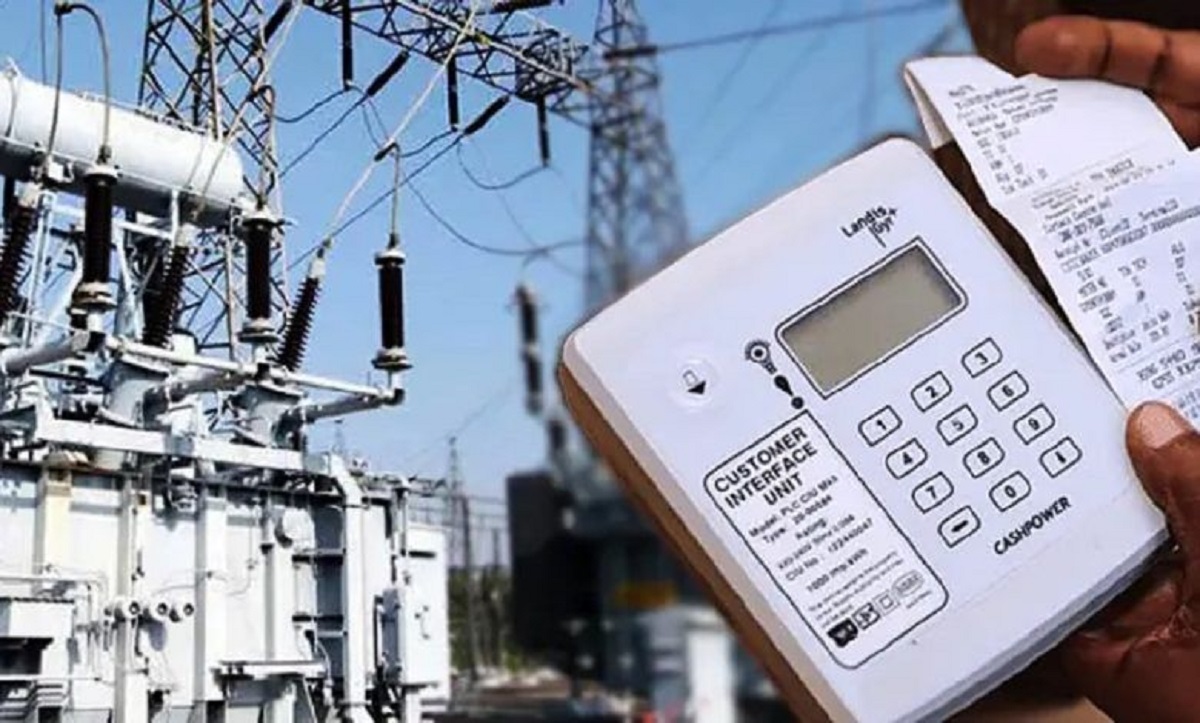
Federal Government has announced the disbursement of about N333 billion to eight electricity generation companies (GenCos) as part of measures to resolve outstanding debts in the power sector.

The government also disclosed the issuance of a second bond valued at N729 billion to settle verified legacy obligations and improve liquidity within the Nigerian Electricity Supply Industry (NESI).
The disclosures were made on Tuesday at an investors’ forum organised by the Nigerian Bulk Electricity Trading (NBET) Plc in Abuja.
Government representatives said the latest bond issuance marked the completion of the initial phase of the Presidential Power Sector Debt Reduction Programme, which was designed to address verified liabilities and attract private sector investment across the electricity value chain.
The Special Adviser to the President on Energy, Mrs Olu Verheijen, said the implementation of the first series of the programme demonstrated the administration’s commitment to meeting its financial obligations and improving investor confidence.
Verheijen disclosed that the Federal Government in February 2026 allocated about N501 billion under the first tranche of the programme, comprising N300 billion in cash and N201 billion in non-cash bond instruments to offset verified debts owed to power producers.
She said N333 billion had so far been disbursed to eight participating GenCos operating 17 power plants.
According to her, the government also paid the first coupon of about N63.5 billion on the seven-year bond in full on July 14, 2026.
She explained that the payments had enabled generation companies to meet critical obligations to gas suppliers, lenders and operations and maintenance contractors, thereby improving their operational capacity.
“Markets do not reward promises; they reward performance. Capital follows credibility,” Verheijen said.
She added that the second bond series would further strengthen liquidity in the electricity market and create a more stable financial environment capable of attracting long-term private investment.
The Presidential Power Sector Debt Reduction Programme is part of broader Federal Government efforts to address challenges affecting electricity generation, distribution and investment in Nigeria’s power sector.
Federal government has launched a N482.4 million investment fund to support 12 tech-enabled Nigerian startups.

The initiative under the federal government of Nigeria’s Investment in Digital and Creative Enterprises (iDICE) Programme was implemented by the Bank of Industry (BoI).
The initiative in a statement said applications have been opened for Growth Lab, a 12-week acceleration programme that will select the 12 tech-enabled Nigerian startups, from the six geopolitical zones, for intensive growth support, investment readiness training, and access to up to $350,000 in funding.
According to Ife Adebayo, national coordinator of the Programme, growth lab was designed to support startups that have achieved early traction and are seeking the expertise, networks, and investment required to scale following the implementation of Founders Lab.
“Growth Lab is the Startup Bridge accelerator programme, designed for startups that have developed an MVP and require structured support to scale. The programme focuses on strengthening venture fundamentals and preparing companies for external investment.
“The programme targets startup founders who are seeking the support, networks, expertise, and investment readiness required to accelerate growth and strengthen their position within the Nigerian innovation ecosystem,” he said.
He added that selected founders will gain access to structured growth support, investment readiness preparation, access to industry experts, market expansion pathways, a $100,000 cash investment (or Naira equivalent) for 7.5% equity upon entering the programme (terms and conditions apply), and up to $250,000 in potential follow-on investment should certain growth conditions be met.
“Eligible startups must be at the post-MVP stage, demonstrate evidence of market validation through users, customers, pilots, partnerships, waitlists or any other demand signals, and be willing to participate fully in the hybrid programme,” he said.
The programme will run as an intensive 12-week hybrid experience, including virtual engagements and two physical weeks in Lagos focused on collaboration, learning, and business growth.
The statement said applications opened on July 15, 2026, and will close on August 19, 2026.
According to him, female founders are strongly encouraged to apply. Selection will be conducted through a clearly defined, merit-based evaluation process aligned with published criteria.
iDICE is a $618 million federal government initiative backed by international lenders to boost the technology and creative sectors.
It provides young entrepreneurs with business skills training, mentorship, and access to capital through funds and accelerator programs like the iDICE Startup Bridge.

NPC Opens Nationwide Digital Birth, Death Registration Platform

FG Launches C.L.I.C.K.D., Consumer Credit Scheme for Tech Devices

Airtel Nigeria Expands Retail Footprint to Strengthen Customer Access Nationwide

Ovaloop Technologies Unveils Digital Tools to Formalize SMEs Operations Across Africa

Kaspersky Survey Highlights the Need for Smartphone Security

NRC, Ponzi Scheme Collapses Resulting Loss of Billions of Naira

NASENI Moves to Digitize CCB’s 5m Assets Declaration and Operations

Lebara Nigeria Launches Lebara Play, Africa’s First Telecom-Owned Micro-Drama Platform

CANAL+ Partners Samsung to Pre-Load DStv Stream on New Samsung TVs In Nigeria, Other African Countries

Tokenization, Blockchain Technology will Transform Financial Institutions – IMF




 News3 days ago
Adebutu, PDP Chieftain Accuses Nigerian Governors of Embezzling LG Allocations

 E-Financial3 days ago
Access Holdings Sells 7.44% Stake in Ghana Unit

 E-Financial3 days ago
NDIC Urges Youths to Shun Ponzi Schemes, Embrace Savings

 News3 days ago
NIMASA Unveils Accelerator Scheme to Drive Innovation, Sustainable Growth

 E-Financial3 days ago
NRS Issues July 31 Deadline for e-Invoicing Compliance

 E-Business3 days ago
SERAP to Sue NASS over Bill Empowering NDPC to Regulate Social Media

 News3 days ago
ICPC Secures Final Forfeiture of N941m Linked to IPPIS Fraud

 News3 days ago
eBusinessLife Advocates Greater Support for Girls in ICT as Students Showcase AI Innovations