

General News
PIAFo Drives Urgent Call for National Dig-Once Policy to Boost Nigeria’s 125,000km Fibre Network

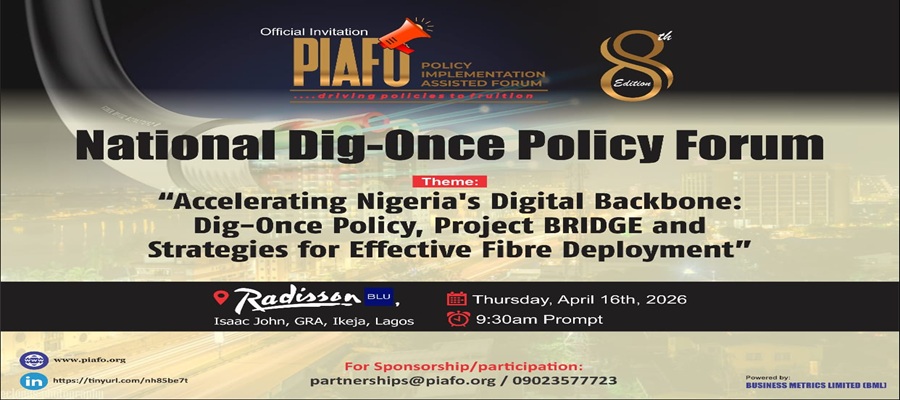
Key players across Nigeria’s digital economy, telecommunications, and infrastructure ecosystem are set for the National Dig-Once Policy Forum to champion a new course towards increasing Nigeria’s digital backbone network to 125,000km of fibre-optic infrastructure.

PIAFo
The event, which marks the 8th edition of Policy Implementation Assisted Forum (PIAFo), is a high-level industry dialogue aimed at accelerating the formulation and adoption of a National Dig-Once Policy as a critical enabler of safe, coordinated and cost-effective fibre infrastructure deployment in the country.
The forum, themed “Accelerating Nigeria’s Digital Backbone: Dig Once Policy, Project BRIDGE and Strategies for Effective Fibre Deployment,” is slated for Thursday April 16, 2026 at Radisson Blu Hotel, Ikeja GRA, Lagos.
According to the organisers, Business Metrics Limited (BML), the introduction of $2 billion Project BRIDGE initiative by the Federal Government to expand fibre infrastructure by additional 90,000km from 35,000km to 125,000km by 2030 requires some new measures to ensure successful implementation of the ambitious target and avoid mistakes of the past.
Industry stakeholders have identified that the success of a national connectivity backbone rollout depends largely on institutionalising a Dig Once Policy framework, which encourages the installation of fibre ducts and conduits whenever roads, railways, and other major public infrastructure are being constructed or rehabilitated.
According to industry data shared by the Nigerian Communications Commission, lack of such a framework is taking a toll on the telecoms sector and broadband drive as operators recorded over 50,000 fibre cut incidents across the country in 2024, with more than 60 per cent occurring during road construction and rehabilitation activities. These disruptions have resulted in billions of naira in repair costs, network outages, and service degradation.

Telecom operators in Lagos State alone said they spent over N5 billion in 2024 to repair and replace damaged fibre infrastructure in the state, while lamenting that the development continues to slow down network upgrade and expansion drive.
Beyond infrastructure damage, telecom operators also face challenges such as high Right of Way (RoW) charges, uncoordinated civil works, and repeated excavation of roads for fibre deployment.
PIAFo 8.0 aims to address these challenges by fostering collaboration among stakeholders responsible for planning, financing, constructing, and maintaining Nigeria’s digital infrastructure.
Specifically, the forum seeks to align federal, state, and local infrastructure planning around a unified Dig-Once framework; strengthen collaboration between telecom operators, infrastructure companies, and public works authorities; translate policy intentions into actionable guidelines and implementation timelines; and build stakeholder support for Project BRIDGE and complementary national fibre initiatives.
Speaking about the event, Team Lead at Business Metrics Limited, Omobayo Azeez, said Nigeria is being denied access to robust connectivity it should derive from up to eight high-capacity undersea cable networks landed on its shores because of difficulties around terrestrial fibre infrastructure expansion.
“The Project BRIDGE initiative should excite everyone because of ambitious targets. But for those who understand the operating terrain, and why it took the industry over 20 years to achieve around 35,000km of fibre network that the country currently operates for broadband connectivity, the project calls for a major shift in execution approach with the adoption of a National Dig-Once Policy as the starting point.
“PIAFo, now in its 8th edition, is again serving as the viable platform for representatives from government ministries and agencies, senior telecom executives, infrastructure companies, data centre operators, equipment manufacturers, state governments, and industry associations to chart the way forward.”
The forum will feature keynote addresses, expert panel discussions, and strategic networking sessions designed to drive pragmatic outcomes that will accelerate Nigeria’s journey toward a resilient and inclusive digital economy.


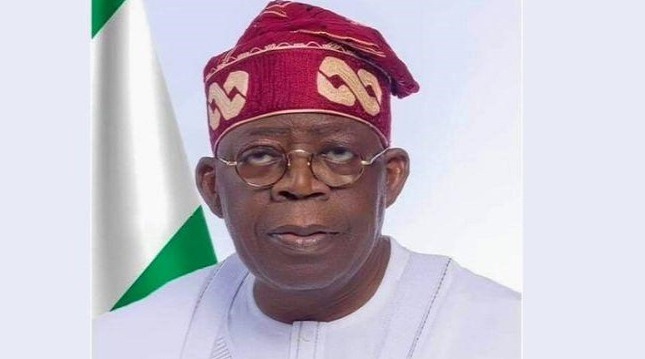
United States Government has said that Nigeria is not making significant progress in fiscal transparency, referencing gaps in the country’s budget disclosure, expenditure reporting, public procurement transparency and audit processes.

The assessment is contained in a report by the United States Department of State, which reviewed Nigeria’s fiscal transparency practices in its 2026 fiscal transparency report for countries published on Tuesday.
The report noted that the US government stated that Nigeria made some key fiscal documents available to the public, significant shortcomings remained in the disclosure of budgetary information and the management of public finances.
The report noted that “the government made its enacted budget and end-of-year report widely and easily accessible to the public, including online, but did not publish its executive budget proposal within a reasonable period.”
It also stated that while the Nigerian government had made information concerning the country’s debt obligations publicly available, its budget documents failed to provide a comprehensive picture of government revenues and expenditures.
“The government made information on debt obligations, including major state-owned enterprise debt, publicly available, but budget documents did not provide a substantially complete picture of the government’s revenues and expenditures, or break down expenditures to support executive offices in the budget,” the report stated.
The US government further raised concerns about discrepancies between Nigeria’s approved budget and the actual revenues and expenditures recorded during implementation.
It said, “Actual revenues and expenditures did not reasonably correspond to those in the enacted budget.”
The report also criticised the country’s supreme audit institution, stating that it did not meet international standards of independence and did not publish substantive reports, although it had access to the entire executed budget.
“The supreme audit institution did not meet international standards of independence or publish substantive reports but did have access to the entire executed budget,” it stated.
The assessment, however, acknowledged that Nigeria’s sovereign wealth fund had an adequate legal framework and disclosed information about its funding and the general approach to withdrawals.History
“The sovereign wealth fund had a sound legal framework and disclosed its source of funding and general approach to withdrawals,” the US government said.

The World Bank Group is supporting the expansion of Africa’s digital commerce infrastructure to help small businesses reach new markets, create jobs, and strengthen economic opportunities across the continent.

Through Jumia, Africa’s leading e-commerce platform, the investment is expected to enable approximately 60,000 local annual active sellers to participate more fully in the digital economy, support around 1,800 direct jobs, and create income-generating opportunities for more than 100,000 independent sales agents.
As digital commerce continues to grow across Africa, reliable access to online marketplaces, logistics networks, and digital payments are becoming increasingly important for entrepreneurs and small businesses seeking to expand beyond local markets. Strengthening this infrastructure can help firms increase sales, improve productivity, and connect consumers with a wider range of affordable goods and services.
To support this effort, the International Finance Corporation (IFC), the private sector arm of the World Bank Group, is investing US$25 million in equity in Jumia Technologies AG (Jumia), Africa’s largest public e-commerce platform. The investment will support Jumia’s next phase of growth across its core African markets, strengthening its integrated marketplace and logistics network.
By expanding access to digital commerce tools and services, the investment will help businesses grow, improve price transparency, and contribute to more inclusive and resilient private sector development across Africa.
“The support of the World Bank Group is a milestone for Jumia and for African e-commerce more broadly. It validates both the discipline we have brought to our business in recent years and the tangible impact our platform has on small businesses, jobs, and consumers across our eight markets. With partners like the IFC, we can accelerate the digital commerce infrastructure Africa needs” said Francis Dufay, CEO of Jumia.
“Jumia demonstrates how pan-African e-commerce platforms can expand economic opportunity at scale. Our investment supports the company’s next phase of growth while contributing to create jobs, digitizing supply chains and distributions channels and mobilizing private investment” said Farid Fezoua, Director for Equity, Funds, and Venture Capital at the International Finance Corporation, World Bank Group.

Nigerian Upstream Petroleum Regulatory Commission (NUPRC) has cautioned the public against fake recruitment offers and fraudulent employment letters circulating in the agency’s name.

Eniola Akinkuotu, head of Media and Corporate Communications of the Commission, stated that NUPRC has received reports of counterfeit and AI-generated appointment letters bearing names not known to the regulator.
The Commission also said fraudsters have been extorting money from jobseekers by promising placement within the agency.
NUPRC has reported the incidents to law enforcement and said investigations are underway.
The regulator reiterated that there is no ongoing recruitment exercise and warned members of the public not to make any payments for supposed job offers.
“Whenever the Commission decides to recruit, the process will be conducted strictly in accordance with extant laws and government regulations,” the statement said.
The Commission urged jobseekers to verify any purported offer and to rely only on official NUPRC communications for recruitment information.
The warning follows growing concerns about the misuse of digital tools, including artificial intelligence, to fabricate apparently authentic documents that can deceive the public.

Nigeria Not Making Progress in Fiscal Transparency –US

NCAA to Introduce RFID Technology to Tackle Missing Luggages

SEC Directs Operators to Subscribe to NigSac Alerts, Freeze Terrorists-Linked Funds

Davido Bets $1m in Hit-for-Hit Battle with Colleagues

GSMA Industry Services Unveils Circularity Services to Help Operators Reduce E-Waste and Unlock Value

EFCC Busts NIS Visa Overstay Racket, Uncovers N700m in an Account

Fact-Check: Elon Musk’s “Tesla Pi Phone” is Internet Rumor

NBC Tasks Broadcasting Stations over 2028 DSO Global Deadline

NBC Scraps Annual Digital Access Fee on DSO

Glo Sponsored African Voices to Feature Netflix’s “The Polygamist” Stars




 News2 days ago
Moove Achieves Unicorn Status With $250m Funding

 Telecom2 days ago
MTN Nigeria Clocks 25, Connects over 90m People

 E-Financial2 days ago
FG Suspends NAICOM’s N680m Insurance Recapitalisation Fees

 E-Business2 days ago
Microsoft to Unveil Next-generation AI Chip in September

 Telecom2 days ago
Subscribers to Seek Legal Redress if Poor Quality of Service Continue in September

 Broadcasting2 days ago
Affordable, Flexible Streaming Platforms May Kill PAYtv – Report

 E-Financial2 days ago
SEC Moves to Recover Unclaimed Dividends, Inherited Investments Nationwide

 Telecom2 days ago
ipNX Collaborates with ICT Stakeholders on the Future of Fibre-to-the-Home in Nigeria @ ATCON Forum