

General News
PowerLabs to Scale Intelligent Energy Orchestration Across Africa with New Funding


PowerLabs aims to expand its platform into Nigeria’s most energy-intensive sectors with the new funding. Providing hospitals and industrial hubs with the intelligent, automated control required to ensure continuous power and operational resilience.

PowerLabs, a Nigerian energy and climate-tech startup, announced the successful close of its pre-seed funding round led by Breega, with participation from Catalyst Fund, Mercy Corps Ventures, and Kaleo Ventures.
This strategic investment will accelerate the rollout of Pai Enterprise, the company’s flagship AI-enabled energy orchestration platform across commercial and industrial enterprises in Nigeria and lay the foundation for expansion into key West African markets
For decades, Nigerian energy management has centered on basic monitoring and tracking of energy consumption. Yet for the millions of businesses dealing with unreliable power grids, diesel generators, rooftop solar, inverters, and battery banks working together to keep operations running, visibility alone delivers no real value unless it leads to resilience and continuity.
The manufacturing sector alone spent ₦1.11 trillion on alternative energy sources in 2024, which is a 42% increase from the year before. A small factory changes its work hours based on when it can get generator fuel. To keep critical care going, a hospital coordinates backup systems.

Every day, the facility team of a commercial building has to make dozens of decisions about reactive energy. Monitoring tools already in use tell you what went wrong, but they do not provide solutions or preventive measures to address the issues identified.
Pai Enterprise changes that equation. Unlike conventional dashboards, Pai Enterprise does not simply observe; it senses, communicates, and actuates across multiple distributed energy sources in real time. By continuously modelling supply, demand, and operational constraints, the platform enables organizations to run their own intelligent microgrid. As a result, the platform transforms energy from a reactive problem into a proactive, strategic resource.
This vision of a self-optimizing energy ecosystem was recently highlighted in a feature that explored how PowerLabs wants to make Nigeria’s grid think by shifting the paradigm from passive consumption to active, intelligent orchestration.
The measurable impact spans Nigeria’s most critical sectors:
- Hospitals: With intelligent monitoring across critical circuits, teams are instantly notified when there are fluctuations in supply, voltage drops, or automatic transitions to backup systems. This real-time visibility ensures that departments like intensive care, laboratories, and operating theatres remain protected, enabling faster response, reduced risk of disruption, and continued patient care.
- Data Centres: By providing continuous insight into the performance of energy assets such as solar systems and generators, operators can track efficiency, optimize usage, and reduce emissions without compromising uptime. The result is a more sustainable infrastructure that still meets the uncompromising reliability standards required for digital operations.
- Factories: Factories require more than just stable power, they need actionable intelligence to drive performance and profitability. Through detailed energy analytics, operators can identify inefficiencies, understand consumption patterns across production lines, and make informed decisions that reduce costs while maintaining output. This transforms energy from a fixed expense into a controllable lever for operational efficiency.
- Retail outlets: By analyzing consumption trends and usage behavior, retail outlets can right-size their energy assets, avoiding overinvestment while ensuring sufficient supply during peak periods. This leads to lower operating costs and improved energy efficiency across single or multi-site retail operations.
- Critical facilities: For critical facilities such as telecom towers, banks, schools etc, uninterrupted operations depend on anticipating issues before they occur. Continuous real-time monitoring enables early detection of anomalies and supports predictive maintenance strategies, reducing downtime and extending asset lifespan.
Tobe, CEO & Co-Founder, PowerLabs said: “Distributed energy resources are often seen as fragmented and chaotic, a clutter of devices that don’t speak the same language. At PowerLabs, we believe decentralization doesn’t have to mean disorder. We’re building the intelligence layer that will prove that distributed energy resources can operate as a unified source while leveraging its disaggregation to offer flexibility, cost efficiency, carbon neutrality and redundancy … more than a centralised energy system ever could. “
PowerLabs will strategically deploy the raised capital to accelerate the rollout of its flagship Pai Enterprise platform, improve its cutting-edge predictive load-management algorithms, and broaden seamless integration with distributed energy assets ranging from rooftop solar and battery storage systems to traditional grid infrastructure.
This funding round brings together a mix of global and Africa-focused investment partners with deep commitment to climate-tech and a proven track record of scaling innovation in emerging markets, all aligned on PowerLabs’ mission to solve energy resilience.
Breega is an international fund investing in digital, climatech, and deeptech companies across Europe and Africa. Mercy Corps Ventures backs market-systems solutions in fragile and frontier markets; Catalyst Fund, a leading climate-tech investor backing solutions for climate adaptation and resilience in Africa. Kaleo Ventures specializes in early-stage technology companies across high-growth African markets. With their support, PowerLabs is now positioned to scale its intelligent energy solutions, expand Pai Enterprise across sectors and geographies, and demonstrate that the era of traditional energy management is over. Personalized, decentralized, resilient, and intelligent systems are the future, and for millions of people and organizations, that future is already here.
Tosin Faniro-Dada, Partner, Breega, stated that: “We backed PowerLabs at the pre-seed stage because we believe intelligent orchestration will be essential to solving Africa’s energy reliability challenge. The team is building the software and hardware layer that enables businesses to coordinate multiple distributed energy sources in real time. We’re excited to support them as they prove the impact of this model across critical sectors over the next 12–18 months.
The closing of this investment round is therefore more than a financial milestone: it is a signal that investors, businesses recognize the need for energy systems that do not merely report, but act; that do not assume stability, but adapt in real time; and that view energy not as a static commodity, but as a platform for growth, resilience, and human potential.
“Globally, more and more businesses and critical services like data centers operate in complex energy environments where a mix of energy sources must work together. The energy users typically have to toggle between cost, quality of supply and carbon footprint. PowerLabs is starting in Africa to build the intelligence to orchestrate these systems seamlessly without sacrificing any of these critical factors.” Olúwátóyìn Emmanuel-Olúbákè, Chief Investment Officer, Catalyst Fund
Energy management alone is not enough, and for millions of users who have long struggled with outages, unreliable grids, and fragmented infrastructure, the promise of intelligent energy is not merely convenience; it is the key to unlocking their full potential and powering a new era of human progress.



Socio-Economic Rights and Accountability Project (SERAP) has called on President Bola Tinubu to direct, Lateef Fagbemi (SAN), attorney general of the federation and minister of Justice; Olatunji Rilwan Disu, inspector-general of Police, and relevant anti-corruption agencies to investigate allegations that more than ₦6.79 billion in public funds were missing, diverted or misapplied within the Nigeria Police Force and the Federal Ministry of Police Affairs.

The allegations are contained in the Auditor-General of the Federation’s 2022 Annual Report, published on September 9, 2025.
In a letter dated August 1, 2026, and signed by Kolawole Oluwadare, deputy director, SERAP, the organisation urged the government to ensure that anyone implicated in the report is prosecuted and that all missing public funds, firearms and ammunition are recovered.
“Anyone suspected to be responsible—including contractors, companies and public officials implicated in the report—should be promptly prosecuted, while all missing public funds, firearms and ammunition should be fully recovered, secured and properly accounted for.”
SERAP described the Auditor-General’s findings as a serious breach of public trust.
“The Auditor-General’s findings suggest a grave betrayal of the public trust and raise serious concerns about corruption and the management of public funds, police exhibits, firearms and ammunition.”
The organisation also expressed concern over allegations involving missing firearms, unauthorised use and release of police exhibits, and poor storage of weapons.
“The report also raises serious concerns over missing firearms and ammunition, the unauthorised use and release of police exhibits, failures to properly account for exhibits, and the insecure storage of firearms, creating significant risks to public safety and national security.”
According to SERAP, the alleged diversion of funds meant for policing and the reported irregularities have weakened the operational effectiveness of the Nigeria Police Force.
“The diversion of funds meant for policing, abandoned security projects, missing firearms and ammunition, and the misuse of police exhibits undermine the operational effectiveness of the Nigeria Police Force, weaken public confidence and may contribute to Nigeria’s worsening insecurity.”
The organisation said the Auditor-General’s report documented several alleged financial irregularities, including payments for projects that were never executed, abandoned contracts, inflated contract costs, irregular procurement, unretired cash advances, unsettled insurance claims and payments for services allegedly not rendered.
“The report documented numerous alleged financial irregularities within the Nigeria Police Force and the Federal Ministry of Police Affairs, including payments for projects that were never executed, abandoned contracts, inflated contract costs, and irregular procurement.”
“The report also documented unretired cash advances, unsettled insurance claims, payments for services allegedly not rendered, and other suspected diversion and misapplication of public funds amounting to over ₦6.79 billion.”SERAP further cited allegations of missing firearms and ammunition, failures to properly account for recovered weapons and exhibits, and insecure storage of firearms.
“The allegations also include missing firearms and ammunition, the unauthorised use and release of police exhibits, failures to properly account for recovered firearms and other exhibits, and the insecure storage of firearms, posing serious risks to public safety and national security.”
The organisation gave the Federal Government seven days to act on its demands, warning that it would pursue legal action if no response is received.
“We would be grateful if the recommended measures are taken within seven days of the receipt and/or publication of this letter. If we have not heard from you by then, SERAP shall consider appropriate legal action to compel your government to comply with our request in the public interest.”
SERAP also argued that the allegations, if left unaddressed, would violate constitutional provisions requiring the government to combat corruption and safeguard the welfare and security of Nigerians.
Among the specific findings cited from the Auditor-General’s report were allegations of payments for abandoned and unexecuted police projects worth hundreds of millions of naira, inflated contract values, unretired cash advances, irregular procurement processes, unsettled insurance claims exceeding ₦681 million, over ₦1 billion in uncleared insurance policy liabilities, missing firearms and ammunition, unauthorised release of police exhibits, and contracts allegedly awarded without due diligence by the Federal Ministry of Police Affairs.
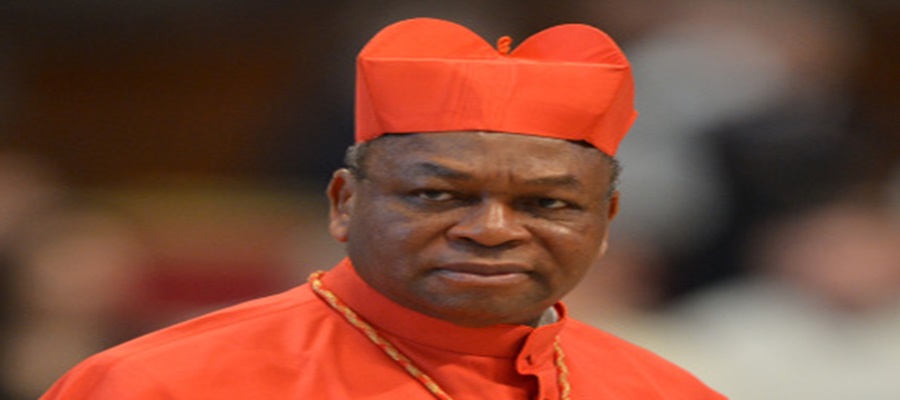
Sunday Dare, special adviser to the President on Media and Public Communication, has faulted the criticism directed at President Bola Tinubu and his economic policies by John Cardinal Onaiyekan, Archbishop Emeritus and the Catholic Bishops’ Conference of Nigeria (CBCN).

Sunday Dare, special adviser to the President on Media and Public Communication,
During an interview with Arise TV, Onaiyekan, who had led Catholic Bishops on a visit to the President, revealed details of their discussion.
“When the nation is bleeding, you cannot expect a polite meeting with the Head of State. We told him the economy is not helping our poor people; he told us the economy is doing fine. Frankly speaking, he told us quite clearly that he did not agree with us,” Onaiyekan said.
He added, “We didn’t expect him to agree with us. We have done our duty, we have delivered our message, and we have a feeling that somehow, along the line, somebody will show him a few of the things we said.”
Reacting, Dare stated that while Onaiyekan and his cohort choose the easy path of populist lamentation, the facts of President Tinubu’s administration reveal a relentless, methodical restoration of the Nigerian state. He said that by courageously removing the petrol subsidy and unifying the foreign exchange windows within his first days in office, President Tinubu ended decades of economic illusion.
“State and local governments now receive record-breaking monthly allocations from the Federation Account Allocation Committee (FAAC), enabling governors—including those in the Catholic heartlands—to pay salaries, fund local infrastructure, and service pensions promptly. The debt service-to-revenue ratio has been dramatically slashed to under 65%, pulling Nigeria back from the edge of default and restoring international credit rating confidence, he said..
According to Dare, the administration did not merely reform numbers; it invested in human dignity. He noted that through the landmark establishment of the Nigerian Education Loan Fund (NELFUND), millions of indigent students across tertiary institutions now access interest-free loans for tuition and stipends. “Academic calendar stability has been restored, ending the agony of prolonged university strikes that once paralysed national development,” he said.
The presidential spokesperson revealed that to counter global inflation and local supply shocks, the Tinubu administration deployed emergency agricultural interventions that involve direct distribution of hundreds of thousands of metric tons of grains and fertilisers to smallholder farmers nationwide, the multi-billion naira investments in dry-season farming, mechanisation hubs, and irrigation infrastructure aimed at achieving permanent food self-sufficiency.
He said to understand the weight of President Tinubu’s achievements, one must first measure the abyss Nigeria faced on the eve of his inauguration. He recalled that in May 2023, the Nigerian nation was hovering on the precipice of total economic collapse and structural paralysis.
“The unsustainable petrol subsidy regime was draining trillion-naira holes into the national treasury monthly, enriching a parasitic cabal of smugglers and middlemen while starving sub-national governments of basic infrastructure funding. A fraudulent multi-tiered foreign exchange system had turned the Central Bank of Nigeria into an arbitrage engine, crippling legitimate manufacturing, scaring off foreign direct investment, and burning through scarce external reserves.
“The nation’s debt service-to-revenue ratio had spiralled to an unsustainable 97 per cent, meaning Nigeria was literally borrowing money to pay interest on past loans while operational governance ran on fiscal fumes. This was the broken, bleeding nation handed over to President Tinubu. It required bold surgery, not diplomatic sedation. Yet, when the President applied the sharp scalpel of structural reform, armchair critics and political opponents decried the incision while ignoring the terminal tumour it removed,” he said.
General News
Lenacapavir, HIV Injectable Drug Offers Pregnant, Lactating Mothers 100 Percent Protection – Study

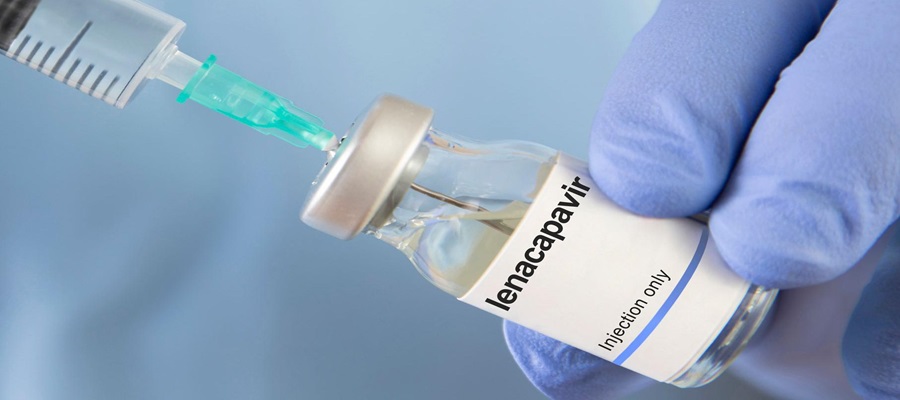
Lenacapavir, injectable HIV prevention drug, has been found to provide 100 percent protection against HIV infection among pregnant and breastfeeding women using it as pre-exposure prophylaxis (PrEP).

This is according to sub-study of the landmark clinical trial evaluating the safety and efficacy of the twice-yearly injectable HIV prevention drug.
The Phase 3 PURPOSE 1 trial results, published in the Lancet Medical Journal last week and presented at the ongoing 2026 International AIDS Conference Rio de Janeiro, Brazil, show the injection to be safe for use in pregnancy.
While Lenacapavir was previously studied and demonstrated high efficacy and safety as PrEP in cisgender women, its use during pregnancy and lactation, when women are disproportionately vulnerable to HIV acquisition, was not described in the initial studies that formed the World Health Organisation’s global recommendation for the drug.
Now, in the latest study, Dr Flavia Matovu Kiweewa, a senior Research Scientist at MUJHU, said they checked for drug traces in breast milk and exposure to an unborn baby and found drug exposure levels across all trimesters and postpartum were comparable to non-pregnant participants, confirming no dose adjustments are needed for this group.
Among 5345 women enrolled between Sept 28, 2021, and Sept 15, 2023, 487 participants, 184 allocated to Lenacapavir and 303 allocated to oral PrEP, had one or more pregnancies, resulting in 509 total pregnancies with 512 pregnancy outcomes, including three sets of twins.
While the study involved women aged between 16 and 26 years in both South Africa and Uganda, 80 percent of all the pregnancies recorded were in Uganda. Results show Lenacapavir was present in breast milk, but exposure in breastfed infants was minimal. Drug concentrations were measured in the blood of the mothers, breast milk, and breastfed infants’ blood.
Kiweewa said thatthese results are a breakthrough as pregnant and postpartum women face elevated vulnerability of HIV acquisition, yet historically they have been excluded from early prevention trials, leading to years-long evidence gaps.
The study compared twice-yearly Lenacapavir with daily oral PrEP in women who were not pregnant at enrollment.
But, unlike previous studies, women who got pregnant while participating in the study were, for the first time, left on their allocated study drug.
Now, because of the new findings, Kiweewa said at one of their study sites in Mityana District Hospital, they have decided to dedicate seventy percent of their drug supplies to women.

SERAP Asks Tinubu to Probe Alleged N6.79Bn Missing Police Funds, Firearms

FCT Court Awards Ex-Customers N15m against Stanbic IBTC over Data Privacy Breach

CBN Exposes over 13,000 BVNs Tied to Fraud as Banks Tighten Security

Atte, Nigerian Develops AI Algorithm for Hair Transplants

Dare Tackles Onaiyekan over Criticism of Tinubu, Says Economic is Working

NRC, Ponzi Scheme Collapses Resulting Loss of Billions of Naira

EFCC Busts NIS Visa Overstay Racket, Uncovers N700m in an Account

From Scarcity to Scale: What Africa Can Learn from India’s Agricultural Transformation

Tokenization, Blockchain Technology will Transform Financial Institutions – IMF

BON Establishes Six Ad Hoc Committees to Modernize Broadcasting




 Broadcasting2 days ago
Davido Shares Past Suicidal Thoughts, Drops Oriadé Album

 E-Business2 days ago
How Temu Helped a Madagascan Vanilla Family Business Sell Direct to Consumers Across Europe

 General News2 days ago
MTN Nigeria Posts N707.5bn H1 Profit, Declares N26 Interim Dividend

 News2 days ago
Cisco Explores AI for Nigeria Farmers

 News2 days ago
AfCFTA Urges Africa to Stop Exporting Raw Materials

 E-Business2 days ago
82% of Organizations Concerned about AI Risks Even as Adoption Accelerates – Survey Reveals

 General News2 days ago
Gavi Okays $500m for Vaccines, PHCs in Nigeria

 General News2 days ago
Police Uncover Fake Diplomatic Number Plate Syndicate in Abuja