

Telecom
Nigerians Lose N12.5bBn to Telecom-Related Financial Crimes – PwC

Nigerians lost about N12.5 billion to telecom-related financial crimes from 2019 to January 2023, underscoring the scale and persistence of this threat to the telecommunications industry, PwC Nigeria has said, citing data from the Nigerian Communications Commission (NCC).

PwC, in its latest report, ‘AI’s Dual Role in Telecom Fraud: Why Artificial Intelligence is Both a Threat and a Shield for Telcos’, said the growing adoption of AI by fraudsters is amplifying the frequency and impact of fraud.
The report said fraud has long been a persistent challenge in the telecoms landscape, leading to substantial financial losses for customers and reputational damages for telecommunication companies (telcos).
PwC’s latest report, ‘AI’s dual role in telecom fraud’, highlights global trends in how AI is reshaping both the threats and defences in telecommunications.
The publication examined what these shifts mean for operators in the local market and how they can stay ahead by adopting proactive, AI driven fraud management strategies.
It offered insights into how AI is enabling more sophisticated fraud schemes, from deepfake social engineering to automated attacks; the emerging role of AI powered detection and monitoring tools in strengthening fraud prevention frameworks.
The report also gave practical steps for telecom operators to balance innovation, resilience, and customer trust in an AI driven fraud ecosystem.
PwC noted that the impact of fraud on telecommunications companies is far-reaching, resulting in financial losses, reputational damage, and compliance issues.
The report said for instance, that in 2023, global telecom fraud was estimated at $38.95 billion.
It, however, stated that in Nigeria, where telecom acts as a key gateway to financial services through Unstructured Supplementary Service Data (USSD) and some are moving into fintech, these evolving risks place added pressure on operators.
The report stated that while operators have developed systems and controls to manage these risks, the sector’s expansion into adjacent domains (such as mobile money and payment service banking) is blurring the traditional boundaries of telecom fraud.
“The result is a more complex and interconnected risk environment, where both the frequency and impact of fraud are escalating. Adding to this complexity is the rapid pace of technological advancement.
For instance, Russian cybersecurity firm F6 reported a rise in SIM swapping incidents, particularly related to the shift to eSIM technology. These fraudsters are hijacking phone numbers and bypassing security measures to access bank accounts,” the report said.
The report, authored by Udochi Muogilim, Partner and Technology, Media and Telecommunications Leader, PwC Nigeria, and Adeola Adekunle, associate director, Forensic Services, however, said as AI continues to mature, it is reshaping the fraud landscape—introducing heightened threats and powerful new tools.
“On one hand, AI can be exploited to scale and automate fraud schemes with unprecedented sophistication. On the other, it equips telcos with advanced capabilities for fraud detection, prevention, and response.
“This dual role—AI as both a tool and a target—underscores the urgent need for Nigerian telecom players to adopt AI thoughtfully and strategically.
“Navigating this evolving landscape requires more than just investment in technology; it demands a deep understanding of what’s happening today in the world of technological disruption, and what’s to come,” the experts stated.
The report reiterated that telecom fraud affects a wide range of stakeholders, from individual consumers facing unauthorised charges to large corporations suffering reputation damage.
“The combination of AI and various fraud types significantly increases the success rate of these schemes.
“Furthermore, the global nature of telecommunications networks allows fraud to swiftly cross borders, complicating efforts to investigate and prosecute offenders, thus presenting a pressing concern for telecom companies and their regulators,” PwC said.
The firm, however, emphasised that AI has the potential to revolutionise how telecom companies and regulators combat fraud while enhancing the quality of service, ultimately fostering greater trust among consumers.
To fully harness this potential, PwC said it is crucial for industry players to stay informed about evolving technology trends and anticipate future challenges.
This awareness, it added, will empower them to leverage AI’s capabilities for more effective fraud prevention and the proactive management of emerging fraud types, all while adhering to responsible AI principles.
“A well-coordinated combination of the right resources and strategic alliances will enable the industry to make a significant impact in the fight against telecom fraud and build a safer, more efficient telecommunications ecosystem,” PwC affirmed.
The firm even went a notch higher by offering to help industry players and stakeholders turn fraud-related friction into forward movement, powered by the right technology.
“We bring trust and transparency to the heart of your decision-making, helping you use AI, data and tech to reduce the risk of fraud, respond swiftly to breaches, and emerge stronger—so you can prepare your business for what’s next,” PwC offered.


Wireless Application Service Providers Association of Nigeria (WASPAN) has dragged Tunji Bello, executive vice chairman, Federal Competition and Consumer Protection Commission (FCCPC), before the Federal High Court in Lagos over alleged disobedience of a subsisting court order in a legal dispute involving telecom-based lending services.

Tunji Bello, EVC, FCCPC
Wireless Application Service Providers Association of Nigeria initiated this in Suit No: FHC/L/CS/760/2026 pending before the court.
According to court documents, Bello was issued a Form 49 Notice to Show Cause, directing him to appear before the court on 22 May 2026 to explain why an order of committal should not be made against him for allegedly failing to comply with interim orders issued by Justice Ambrose Lewis-Allagoa on 15 April 2026.
The court had earlier granted interim injunctions restraining the FCCPC, its officers, agents and privies from enforcing provisions of the Digital, Electronic, Online or Non-Traditional Consumer Lending Regulations 2025 against members of WASPAN, pending the determination of the substantive suit.
The restraining orders specifically barred the commission from interfering with services rendered by WASPAN members, including airtime lending, data advances and other mobile value-added services.
The orders also restrained the FCCPC from imposing sanctions, penalties or directives connected to the disputed regulations.
In the Form 49 notice dated 18 May 2026, WASPAN alleged that despite being aware of the court orders and having been served with Form 48 — the statutory notice warning against disobedience of court orders — the FCCPC and its Executive Vice Chairman allegedly continued actions contrary to the directives of the court.
The notice stated that the alleged contemnor refused to comply with the orders and had continued to deliberately defy the orders of the court.
An affidavit of service filed before the court disclosed that Form 48 was served on Bello at the FCCPC headquarters located at 23 Jimmy Carter Street, Asokoro, Abuja, on 6 May 2026.
The latest development followed earlier proceedings in which Justice Lewis-Allagoa declined an application by the FCCPC seeking to vacate the interim injunction.
The court instead directed that the substantive suit and the commission’s preliminary objection be heard together.
WASPAN is challenging the FCCPC’s authority to regulate telecom-based lending services, arguing that certain provisions of the DEON Regulations encroach on the statutory powers of the Nigerian Communications Commission to regulate telecommunications services in the country.
Wireless Application Service Providers Association of Nigeria, is the primary self-regulatory body and trade association for licensed Value-Added Service (VAS) providers and aggregators in Nigeria’s telecommunications sector
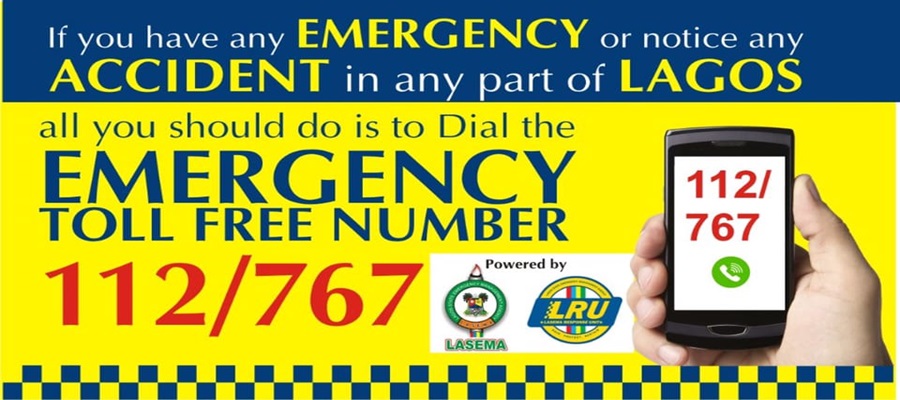
Lagos State government has raised alarm over the growing misuse of its emergency hotlines, and warned that fake calls are delaying response times and putting lives at risk.

According to the state, fake emergency calls or prank calls, account for a massive majority of distress communications—nearly 70 per cent.
This severe misuse dangerously delays response times for real emergencies like fires, crimes, and medical crises, and wastes critical first-responder resources
Olugbenga Oyerinde, commissioner for Special Duties, called the numbers (nearly seven out of every 10 calls made to Lagos emergency hotlines) deeply troubling.
The scale of the disruption has significantly affected emergency response operations, with the government disclosing that 5.47 million incoming calls went unanswered during the period under review.
The abandoned call rate climbed sharply from 9.3 per cent in January 2025 to 37.6 per cent by April 2026, suggesting worsening pressure on operators handling emergency traffic.
Officials warned that if the current trend continues, more than 7.2 million calls could go unanswered before the end of 2026
The Lagos State Command and Control Centre serves as the central coordination hub for emergency response agencies across the state, including the fire service, ambulance services, traffic management authorities and neighbourhood safety operatives.
According to the report, the sheer volume of fake and misdirected calls has forced the system to devote significant operational resources to filtering non-emergency traffic before genuine distress cases can be handled.
To address the growing burden, the ministry said it plans to introduce artificial intelligence-driven call screening technology designed to detect and filter nuisance calls before they reach human operators.
The proposed system, expected to be introduced before the end of 2026, is projected to reduce operator handling time by 35 per cent.
Other reforms outlined in the ministry’s strategic response plan include expanding agent capacity by 40 per cent, deploying automated callback systems for abandoned calls and establishing a real-time analytics dashboard for emergency response monitoring.
Yet one of the most striking figures in the report was not the 16.39 million nuisance calls, but the fact that only 39 calls were officially categorised as hoax calls requiring legal follow-up during the same period.

Google and Blackstone (BX.N), said they will form an artificial intelligence cloud business venture aimed at capitalising on an insatiable demand for AI computing services.

Blackstone, the world’s largest alternative asset manager, will invest an initial $5 billion in equity to help bring 500 megawatts of data centre capacity online in 2027, with further expansion planned over time.
The U.S.-based venture will provide data centre capacity along with Google’s custom AI chips, known as Tensor Processing Units, or TPUs, through a compute-as-a-service model.
The total investment value could reach $25 billion, including leverage, according to Bloomberg News.
Both companies did not immediately respond to a request for comments on the Bloomberg report. Blackstone has appointed Benjamin Sloss, a long-time Google executive, as CEO of the new venture.
Thomas Kurian, chief executive of Google Cloud, said the venture would help address growing demand for TPUs by offering organisations additional ways to access computing capacity.
Analysts and investors have said Google is taking a sizeable share of new AI-driven computing demand, supported by its business tools and custom chips that have attracted customers such as Anthropic.
“This isn’t the biggest headline number we’ve seen. But it’s a high-quality bet on sustainable growth in AI infrastructure,” said Brittain Ladd, AI and supply chain consultant at Florida-based Chang Robotics.
Blackstone has stepped up investments in AI-related infrastructure, including data centres, power generation and transmission assets.
Those investments are valuable as the AI boom pushes operators to secure long-term energy supply deals.
The new partnership reflects rising demand for AI infrastructure and the need for large-scale capital deployment, Blackstone President Jon Gray said.

Maida, EVC NCC to Lead Speakers @ 17th Africa’s BoICT Merit & Leadership Lecture

Court Orders Globus Bank to Pay Firm N256m for Breach of Contract

WASPAN Drags Bello, FCCPB Boss to Court over Alleged Disobedience of Order

Pantami, Ex Minister of Communication Withdraws from Gombe APC Governorship Primaries over Alleged Electoral Violations

Lagos Warns against Fake Emergency Calls, Says Rising Misuse Put Lives at Risk

MTN, VDT, Zoracom, Digital Realty Back 2026 Girls in ICT Campaign

Vitel Wireless Partners Fintechs to Expand Access to Services

Kaspersky Discovers Vulnerability in Qualcomm Snapdragon Chips that can Lead to Data Loss & Device Compromise

Bank Customers to Pay N1,500 for ATM Card Issuance, Replacement – CBN

FCCPC Licenses 5 Firms for Airtime, Data Lending as Telcos Step Aside




 General News2 days ago
Xenophobic Attacks: Anonymous Nigeria Threatens to Leak South African Stolen Data

 Telecom2 days ago
MTN Targets 8m Homes in Fibre Expansion Drive

 E-Financial2 days ago
Chapel Hill Denham Says Banks Lose N2.5 Trillion Annually to High CRR in New Report

 Telecom2 days ago
GBB Says Cross-border Partnerships Key to Africa’s Digital Transformation

 E-Financial2 days ago
Lagos Sanctions 15 Money Lending Firms for Operational Violations

 E-Financial2 days ago
AfDB Approves $200m for BoI to Support MSMEs

 News2 days ago
WHO Says Ebola Outbreak Worse than Reported

 E-Financial2 days ago
FirstBank, Visa Launch Multicurrency Signature, Naira Debit Cards