

Telecom
Anambra ICT Agency Embraces AI Revolution at Strategic Retreat

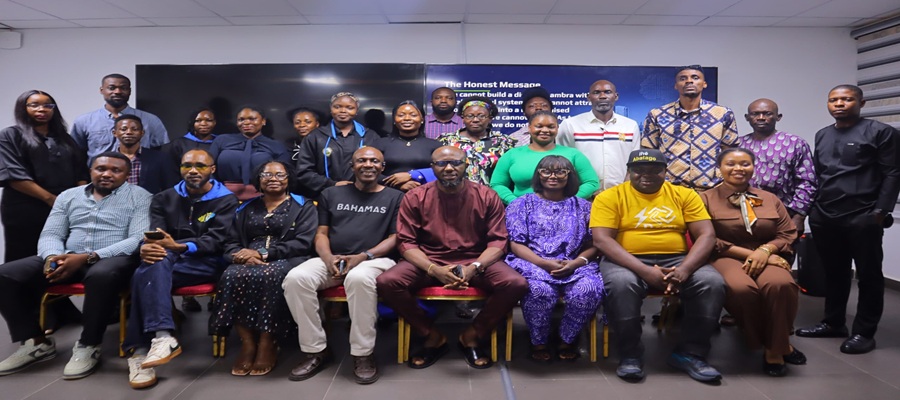
Anambra State ICT Agency has reaffirmed its commitment to advancing Governor Chukwuma Soludo’s vision of a smart and liveable homeland with a renewed focus on Artificial Intelligence-driven governance, digital infrastructure, innovation, and institutional transformation.

Anambra ICT Agency
This formed the core of discussions at the Agency’s Second Tenure Team Retreat 2026 held at the ICT Conference Hall under the theme: “The Next Four Years: Becoming Nigeria’s First AI-Native ICT Agency.
In his opening remarks, the MD/CEO of the Agency, Chukwuemeka Fred Agbata, thanked God for the opportunity to continue serving following his reappointment by Governor Chukwuma Soludo, and charged staff to embrace the changing realities of the digital age.
He stressed that the future of work within the Agency would be heavily driven by Artificial Intelligence, emphasizing that staff members must intentionally develop competence in AI tools and digital systems to remain relevant in a rapidly evolving technology ecosystem.
According to him, the Agency must become more creative, efficient, prudent, and execution-driven in delivering digital solutions for the state.
“We must use AI intelligently, execute with speed, and do things differently,” he charged the team,capable of transforming governance and digital service delivery in Anambra State and beyond.”

Delivering the keynote strategic session titled “The Next Four Years – Becoming Nigeria’s First AI-Native ICT Agency,” the Chief Technology Officer of the Agency, Chinonso Okoye, PhD, highlighted the need for the Agency to evolve into an AI-first institution capable of competing globally.
Drawing lessons from countries such as Singapore, Ireland, and Estonia, he explained how governments across the world are leveraging AI to improve efficiency, automate public services, and drive smarter governance systems.
He noted that the strategic direction of the Agency for the next four years would be built on strengthening internal AI competence while deploying digital solutions capable of transforming public service delivery across the state.
The retreat also featured a four-year retrospective review session where staff reflected on the Agency’s achievements, challenges, lessons, and future opportunities. Discussions centered around institutional culture, broadband penetration efforts, internal operational systems, collaboration gaps, and opportunities for consolidation and growth.
Participants later broke into strategic working groups focused on Smart Government and Infrastructure, Cybersecurity and E-Government, Digital Economy, as well as Human Capital, Institutional Capacity and Governance.
Also speaking during the retreat, the Agency’s Technical Personnel, Rev. Canon Sunday Folayan, reminded participants that every strategic plan must remain SMART; Specific, Measurable, Achievable, Realistic, and Time-bound. He further charged the team to remain aligned and intentional in achieving the state’s digital transformation goals.
In his closing remarks, CFA urged staff to brace up for the task ahead by consolidating on existing gains and giving their best towards advancing Governor Soludo’s vision of a smart and liveable Anambra.
Delivering the vote of thanks, the Acting Director of the Agency, Chinyelu Odigbo appreciated the management and facilitators for providing another opportunity to shape the digital transformation narrative of Anambra State.
The retreat ended with a collective resolution by the Agency team to continue deploying smarter and more innovative approaches in driving the digital agenda of the state, while prioritizing continuous learning and mastery of emerging AI tools.



Wireless Application Service Providers Association of Nigeria (WASPAN) has asked the Court of Appeal to suspend the enforcement of the Federal Competition and Consumer Protection Commission’s (FCCPC) Digital, Electronic, Online or Non-Traditional Consumer Lending Regulations, 2025 (DEON Regulations).

WASPAN warned that the implementation before the determination of its appeal could expose telecom value-added service providers to sanctions and disrupt their operations.
Millions of subscribers across the country rely on borrowed airtime to communicate.
Seun Sofoluwe, an Abeokuta, Ogun State resident, said another interruption would have severe consequences for many Nigerians who depend on airtime and data lending services for their daily communication needs.
“A lot of people depend on the services, and it will be very bad for them, especially those who are so reliant on it that they do debt-to-debt servicing,” he said.
Debt-to-debt servicing refers to the practice of repaying an outstanding airtime loan immediately to qualify for another advance, underscoring the extent to which some subscribers depend on the facility to remain connected.
Sofoluwe’s concerns echo the experience of Lagos-based employee Farouk Rabiu, who recounted the hardship caused by the six-month suspension of airtime lending services before they were restored.
“I was devastated because, after exhausting my data, I was hoping to borrow credit to access my bank account. Instead, it was a major disappointment,” Rabiu had said after the services resumed.
Adding another dimension to the debate, Gbenga Adebayo, chairman of the Association of Licensed Telecommunications Operators of Nigeria (ALTON), said the earlier disruption showed that airtime credit had evolved far beyond a conventional telecommunications offering.
“What this episode demonstrated is that airtime credit is not a financial product in the way regulators initially characterised it. It is economic infrastructure that approximately 40 million people use regularly, with the vast majority of them at the base of the economy,” Adebayo said.
WASPAN, which represents licensed value-added service providers, has asked the Court of Appeal to restrain the FCCPC from enforcing the DEON Regulations pending the hearing of its appeal against the July 20 judgment of the Federal High Court in Lagos.
The association argued that immediate enforcement would expose operators to sanctions, create regulatory uncertainty and disrupt telecom-enabled services, including airtime credit and data advances, used daily by millions of Nigerians.
The FCCPC, however, has defended the resumption of enforcement, insisting the regulations are intended to sanitise the digital lending industry, curb predatory debt recovery practices, protect consumer data and eliminate illegal digital lenders.
The Court of Appeal is expected to determine whether enforcement of the regulations should remain suspended while it considers WASPAN’s appeal, a decision that could shape the future of telecom-based digital lending services and determine whether subscribers continue to enjoy uninterrupted access to airtime and data credit.

Nigerian Communications Commission (NCC) and the Rural Electrification Agency (REA) have entered into a partnership to deploy renewable energy solutions for telecommunications infrastructure in rural and underserved communities, a move expected to reduce operators’ energy costs and improve network availability.

Abraham Oshadami, executive commissioner for Technical Services at the NCC, disclosed this during the signing of a memorandum of understanding (MoU) in Abuja.
According to Oshadami, the NCC-REA Stakeholder Forum and MoU signing ceremony will enable telecom base stations located near mini-grids to access cleaner and more affordable electricity, reducing their reliance on diesel-powered generators.
He said the agreement came at a time when telecom operators are facing rising operational costs due to increased spending on diesel to power network sites amid unreliable electricity supply from the national grid.
The partnership reflects the growing relationship between the power and telecommunications sectors, as both rely on each other to deliver essential services.
Oshadami explained that while telecom infrastructure requires a steady power supply to remain operational, digital connectivity also supports electricity services such as smart metering, electronic payments and remote customer management.
According to him, the collaboration is aimed at improving access to reliable electricity and telecommunications services, particularly in remote communities where inadequate power supply has slowed digital inclusion.
He said both agencies had identified telecom base stations located within one to two kilometres of existing mini-grids, allowing the implementation of the initiative to begin immediately.
“Where mini-grids exist, we are able to identify nearby base stations and connect them to those power sources,” Oshadami said.
He added that future mini-grid projects would be planned with telecommunications infrastructure in mind, ensuring that electricity investments also support the expansion of digital services.
Airtel Nigeria has secured a fresh 10-year renewal of its spectrum licence from the Nigerian Communications Commission (NCC), reinforcing the telecom operator’s long-term commitment to expanding broadband connectivity and improving digital access across the country.

The renewed licence covers Airtel’s spectrum holdings, which are critical to the delivery of voice and high-speed data services, providing regulatory certainty for continued investments in network expansion, capacity upgrades and improved customer experience.
According to the company, the renewal underscores confidence in Nigeria’s telecommunications sector and will support its ongoing efforts to bridge the country’s digital divide by extending quality connectivity to more underserved communities.
Sunil Taldar, chief executive officer, Airtel Africa, said the renewal provides the company with the confidence to continue investing in Nigeria’s digital infrastructure.
He said, “The spectrum renewal reaffirms our long-term commitment to Nigeria, our largest market. It gives us the certainty required to continue investing in network expansion, improve service quality and accelerate digital inclusion for millions of Nigerians.”
Taldar added that Airtel remains focused on expanding broadband access and supporting Nigeria’s digital economy agenda through sustained investments in telecommunications infrastructure.
He further said, “We appreciate the Nigerian Communications Commission and the Federal Government for their continued support in creating an enabling environment for investment. We remain committed to delivering reliable and affordable connectivity while contributing to Nigeria’s socio-economic development.”
Meanwhile, Industry observers said the licence renewal removes regulatory uncertainty and allows Airtel to pursue long-term capital investments, including the expansion of 4G and 5G networks, as demand for mobile data and digital services continues to grow across Nigeria.
The renewal comes as telecom operators continue to invest heavily in broadband infrastructure to meet rising data consumption and support government efforts to achieve Universal digital access.
Furthermore, It also aligns with the NCC’s objective of ensuring efficient spectrum management while encouraging sustained private sector investment in the country’s telecommunications industry.

See Verified 20 Countries Nigerian Passport Holders Can Travel Visa-Free

NPC Opens 131 Births, Deaths Registration Centres in Anambra

Lagos Chamber Opposes 21 Percent Pension Contribution, Warns of Job Losses

Subscribers, Telcos Warn FCCPC over Airtime Lending Enforcement

NCC, REA Partner to Cut Telecom Costs with Renewable Energy

NRC, Ponzi Scheme Collapses Resulting Loss of Billions of Naira

EFCC Busts NIS Visa Overstay Racket, Uncovers N700m in an Account

Tokenization, Blockchain Technology will Transform Financial Institutions – IMF

From Scarcity to Scale: What Africa Can Learn from India’s Agricultural Transformation

Spotify partners Afro Nation Portugal to expand African music experience




 Telecom2 days ago
GSMA Supports Abuja Declaration on Meaningful Connectivity for Africa, Joins Partners to Launch ATLAS Umoja

 Telecom2 days ago
MTN Nigeria Warns Customers Against Fake ‘One Month Free Data’ Promotion

 Telecom2 days ago
Airtel Secures Another 10-year Spectrum Renewal in Nigeria

 News2 days ago
Nigeria, Israel Strengthen Research, Technology Collaboration

 Broadcasting2 days ago
Glo Sponsored African Voices to Feature Netflix’s “The Polygamist” Stars

 E-Business2 days ago
HURIWA, CLO Protests Bill Asking Social Media Firms’ to Open Shops Nigeria

 E-Financial2 days ago
Moniepoint as a Key Driver in Expanding Financial Access for Businesses in Nigeria

 General News2 days ago
Anambra Govt Bans Graduation Ceremonies in Anambra Schools