

Broadcasting
Nigeria Launches FreeTV Nationwide

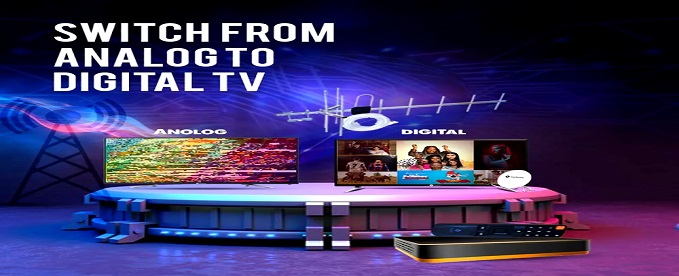
Nigeria has launched FreeTV, a broadcasting platform, designed to provide households across the country with free access to digital broadcasting, improved picture quality, and a wide range of local and international content without subscription fees.

The announcement was made in a post on the official X handle of the Presidency, describing the initiative as part of President Bola Ahmed Tinubu’s Renewed Hope Agenda, which prioritises inclusion, expanded access to opportunities, job creation, support for local enterprise and the use of technology to improve daily life for citizens.
According to the statement, FreeTV forms part of Nigeria’s Digital Switch-Over (DSO) programme and is intended to ensure that no Nigerian is excluded as the country transitions fully from analogue to digital broadcasting.
The platform will offer access to more than 100 national, regional and state-owned channels, covering news, sports, films, music, children’s programming, educational content, as well as dedicated Yoruba, Hausa and Igbo language channels.
The Presidency noted that the service will be accessible through satellite, terrestrial transmission and a dedicated FreeTV mobile application, enabling coverage for users in urban centres, rural communities and previously underserved areas that were not fully captured in earlier DSO pilot phases.

It also clarified that Nigerians will not need to purchase new television sets to access the service. Existing televisions can work with compatible DVB-T2 or DVB-S2 decoders, while users with already compatible free-to-air devices may not require additional equipment.
Speaking ahead of the launch, Charles Ebuebu, director-general, National Broadcasting Commission (NBC), said the initiative reflects the administration’s broader digital inclusion strategy.
“FreeTV speaks directly to President Bola Ahmed Tinubu’s vision of Renewed Hope towards expanding access, creating opportunity and ensuring that every Nigerian, regardless of location or income, can benefit from the digital economy. With FreeTV, families across Nigeria can enjoy quality digital television without a monthly subscription, while our local content producers, technicians and young creatives gain new platforms and new jobs,” he said.
The statement added that the platform will also strengthen Nigeria’s creative and broadcast industry through regional production hubs in Lagos, Abuja, Port Harcourt, Enugu, Kano and Benin, creating employment opportunities for content creators, editors, camera operators, sound engineers and other media professionals.
The Presidency further disclosed that the final analogue switch-off remains scheduled for December 31, 2028, urging Nigerians to begin preparations by confirming decoder compatibility and downloading the FreeTV mobile application ahead of rollout.


Nigeria’s pay-TV industry is facing one of its toughest periods in years as consumers increasingly migrate from conventional antenna and decoder-based television services to cheaper, more flexible and on-demand streaming platforms

The shift is putting pressure on established operators, such as MultiChoice, owners of DStv and GOtv; StarTimes and other traditional pay-TV providers, whose business models have long depended on recurring monthly subscriptions as per report by Business Hallmark.
According to Business Hallmark, the changing consumer behaviour is being driven by a combination of factors, including demographic transition, rising subscription costs, declining household purchasing power, improved internet access and the growing popularity of streaming services that allow viewers to pay for specific content or watch programmes at their convenience.
Streaming platforms are steadily expanding their appeal, offering consumers access to movies, sports (especially football matches and wrestling bouts), local content and international programs through smartphones, smart televisions and other internet-enabled devices.
Also, the proliferation of affordable data packages and connected devices has lowered the barrier to entry, allowing consumers to bypass traditional decoders altogether and consume content directly online.
Three of the major factors behind the changing behaviour of Nigerian television consumers are growing internet access, economic squeeze and changing demography.
Pay-TV subscriptions, once regarded by many households as a relatively affordable source of entertainment, are now competing with several other demands on disposable income.
For instance, entertainment spending are increasingly being subjected to tougher scrutiny with household budgets under pressure from food, tuition, transportation, electricity, housing and other essential costs.
Business Hallmark checks revealed that frequent price reviews by MultiChoice Nigeria’s have pushed the firm’s products beyond the reach of many Nigerians.
One of its products, GOtv, initially designed for average Nigerians, has six packages, namely GOtv Supa Plus, GOtv Supa, Gotv Max, GOtv Jolli, GOtv Jinja and GOtv Smallie.
GOtv Supa Plus with over 85+ channels currently goes for a monthly subscription fee of N16,800; GOtv Supa N11,400; Gotv Max N8,500; GOtv Jolli N5,800; GOtv Jinja N3,900, while GOtv Smallie subscribers choose between the N1,900/monthly, N5,100/quarterly and N15,000/annually options.
Similarly, following multiple tariff reviews, DStv Premium currently goes for N44,500 monthly; DStv Compact Plus N30,000; DStv Compact N19,000; DStv Confam N11,000; DStv Yanga N6,000 and DStv Padi N4,400.
On the other hand, StarTimes, which serves its customers through antenna signal transmission and satellite transmission, has only three bouquets, Nova, Basic, and Classic.
While Classic, the most expensive bouquet on the StarTimes’ shelf currently cost N6,000 monthly, Basic costs N4,000, while Nova costs N2,100.
While speaking to our correspondent on the major shift, some consumers explained that the choice is no longer between different pay-TV providers but between maintaining a television subscription and cancelling it altogether.
Eighty-two Nigerians, representing 68% of the 120 Pay-TV subscribers, who participated in an online survey conducted by Business Hallmark, said they opted for less expensive and more flexible alternatives, including YouTube and a growing range of streaming platforms, using smartphones, laptops, smart televisions and other internet-enabled devices to access entertainment.Geographic Reference
According to the respondents, the shift towards streaming lies partly in its flexibility. Instead of waiting for a program to be broadcast at a scheduled time, viewers now search for specific films, series, sporting events or other contents, which can be watched immediately, or downloaded to be watched or listened to later.
“I now watch contents when I want, across multiple devices, without necessarily being tied to the traditional channel and time-based television experience”, said Tolu Olamiti, an accountant in an audit firm in Lagos.
Another factor that is fueling the exodus from pay-TV model is the growing youth population. Checks revealed that online streaming is particularly attractive to phone-savvy younger viewers, whose television consumption habits are markedly different from those of previous generations.
While underage children watch cartoons and educational programs mostly from their parents or older siblings internet-enabled gadgets, teenagers and adults now watch news, sports programs and films through live streaming or download preferred programs to be watched later.
“With N200 data, I can download several new films to be watched at my convenience, instead of the old films, which providers always repeat on their channels. I also listen to music through out the day without worrying about electricity as my phone can go 2 days after full charge”, said Chukwuemeka Ibe, a student of Lagos State University (LASU).
In the same vein, access to fast and cheap internet plans is helping to drive the streaming surge. For instance, a subscriber can get a daily 1G data plan on the MTN Nigeria platform for just N200. This data plan can be used to download up to 1,000MB movies, or for streaming several hours of music online.
According to official statistics from the Nigerian Communications Commission (NCC), internet consumption in Nigeria reached 13.2 million terabytes in 2025, representing a 35 per cent increase from 2024, while average monthly data usage per active subscriber increased from 3.3 gigabytes in January 2023 to 7.4 gigabytes by May 2025.Geographic Reference
The NCC data indicates growing reliance on mobile internet services and digital platforms across the country with active internet subscriptions rising from 169.3 million in January 2025 to 182.2 million by January 2026.
Also, active internet subscriptions also surpassed 142 million.
Before the advent of internet, traditional pay-TV operators had ruled the television viewing industry largely through channel packages, exclusive content and decoder penetration. However, the rise of streaming has fundamentally altered the competitive landscape of Nigeria’s entertainment industry.
Fueled by the spread of smart devices and improved internet connectivity, streaming companies have been able to compete with traditional TV and radio providers through original programming, on-demand access, convenient timing and increased personalized viewing experiences.
A subscriber, who previously needed a satellite dish or digital terrestrial television decoder to access premium entertainment, can now use a smartphone or smart television and an internet connection.
The proliferation of affordable smartphones has further accelerated the process. Mobile phones have become entertainment devices for millions of Nigerians, particularly younger consumers, who spend more time watching short-form videos, movies and online programs than conventional television.
Also, social media platforms have become important competitors for consumers’ limited attention. YouTube, Facebook, Instagram, TikTok and other digital platforms provide enormous volumes of free or relatively inexpensive video content, forcing traditional broadcasters to compete not only for subscribers but also for viewers’ time.
Several pay-TV subscribers, who spoke to our correspondent on the matter, said providers can no longer justify the traditional model of paying a fixed monthly fee for hundreds of channels they rarely watch.

Awba-Ofemili Development Union (ADU) Health Committee has officially announced the launch of the Awba-Ofemili Health Awareness Campaign 2026, a community-wide initiative designed to promote preventive healthcare, disease awareness, early detection, health education, and healthy living across Awba-Ofemili.

Awba-Ofemili Health Awareness Campaign
The campaign, themed “Beyond Elu-Ulee (Buruli Ulcer): Building a Healthier Awba-Ofemili,” will be held on Thursday, 17 September 2026, at the Civic Centre, Awba-Ofemili, beginning at 9:00 a.m.
The programme builds on the success of the committee’s maiden Elu-Ulee (Buruli Ulcer) Awareness Campaign, which raised awareness on Buruli ulcer and strengthened community engagement on preventive healthcare.
According to the Chairman of the ADU Health Committee, Ogbuefi Remmy Nweke, KSM, the 2026 campaign represents a significant expansion of the committee’s health intervention agenda.
“This campaign is about moving beyond awareness to action. We want to deepen community health education, encourage early detection of preventable diseases, strengthen school health initiatives, promote First Aid awareness, and build sustainable partnerships that will improve the health and well-being of our people,” he said.
The 2026 campaign will feature community health education, free basic health screening, school health support, First Aid awareness programmes, and stakeholder engagement with healthcare professionals, development partners, and community organisations.
The committee has called on sons and daughters of Awba-Ofemili, residents, friends of the community, corporate organisations, philanthropic individuals, NGOs, healthcare institutions, and development partners to support the initiative through financial contributions and strategic partnerships.
To support the implementation of the campaign, the ADU Health Committee has opened a dedicated fundraising channel through Fidelity Bank Plc, with donations payable to Awba-Ofemili Education Volunteers (Account No. 6060490921).
The Committee appealed to all supporters to use “HEALTH FUND” as the transfer narration so that contributions can be properly recorded and accounted for under the ADU Health Committee Health Fund.
Secretary of the ADU Health Committee, Mr. Cornelius Nwakonobi, emphasized that every contribution would make a meaningful impact.
“No donation is too small. Every contribution will support community health education, medical outreach, school health programmes, First Aid support, and preventive healthcare initiatives. Together, we can build a healthier, stronger, and more resilient Awba-Ofemili,” he stated.
The ADU Health Committee reaffirmed its commitment to working with government agencies, healthcare professionals, development organisations, the Nigerian Red Cross, community stakeholders, and the Awba-Ofemili diaspora to advance sustainable health interventions in the community.
For partnership enquiries, sponsorship, or additional information, interested organisations and individuals are encouraged to contact the ADU Health Committee Secretariat.
Broadcasting
NBC Files Fresh Appeal against Judgment Barring it from Imposing Fines on Broadcast Stations
National Broadcasting Commission (NBC) has filed an application seeking the permission of the court of appeal to file a fresh appeal against the judgement of the federal high court in Abuja barring it from imposing fines on erring broadcast stations.

In the application filed at the court of appeal in Abuja by Dapo Akinosun, counsel to the NBC, the commission argued sanity in Nigeria’s broadcasting sector is under threat and that the public interest would be better served if the court grants the application.
On January 17, 2024, Rita Ofili-Ajumogobia, a judge at the federal high court in Abuja, restrained the NBC from imposing a N5 million fine on broadcast stations sanctioned in 2022 over allegations of “undermining Nigeria’s national security by broadcasting documentaries on banditry in Nigeria”.
The affected broadcast stations were Multichoice Nigeria Limited, owners of DSTV; TelCom Satellite Limited (TSTV); Trust-TV Network Limited; and NTA StarTimes Limited.
The suit was filed by Media Rights Agenda (MRA).
Dissatisfied with the ruling, the NBC appealed the judgement filed an appeal at the court of appeal in Abuja.
In June, the court of appeal dismissed the commission’s appeal, holding that it was “fundamentally defective” and incompetent.
Jane Inyang, lead judge of the panel, held that the parties before the lower court were identified as “Incorporated Trustees of Media Rights Agenda (as applicant) and National Broadcasting Commission (as respondent)” but in the notice of appeal the purported appellant was described as the “Nigerian Broadcasting Commission”,
The judge held that the discrepancy was significant and that the court lacked jurisdiction to entertain the commission’s appeal.
In the application, the NBC urged the court to grant it leave to raise and argue a fresh issue on appeal relating to the legal capacity of MRA to institute and maintain the original suit before the lower court.
The commission argued that the defect in the earlier notice of appeal, which resulted in the dismissal of its appeal, arose “solely from an inadvertent misdescription” of its name by its lawyer.
The NBC told the court that the subsisting judgement raises questions on the commission’s statutory powers to regulate broadcasting and enforce compliance with broadcasting standards in Nigeria.
The commission argued that the subsisting judgment is capable of creating uncertainty regarding its regulatory powers if it is allowed to stand.
The NBC also argued that without the pronouncement by the appellate court on the issues raised in the appeal, its regulatory framework would be weakened.
“A weakened regulatory framework may embolden non-compliance with established broadcasting standards, thereby increasing the dissemination of false, misleading and unverified information capable of causing unnecessary public anxiety, panic and social unrest,” the NBC said.
“Absence of effective regulatory oversight may further encourage irresponsible broadcasting practices and the misuse of broadcast and digital media platforms by persons who deliberately publish sensational, inaccurate or inflammatory content to intimidate, harass or unduly influence individuals, institutions and public discourse.”

NUPRC Warns of Counterfeit, AI-Generated Appointment Letters

KudiWave Asks for Clarification over N750m Transfer from PalmPay Account

NCC Reports over 5,000 Fibre Cuts in 6 Months

PalmPay Reinforces Commitment to Youth Empowerment on International Youth Day

ipNX Joins Calls for Innovation-Friendly Ecosystem and Stronger Local Opportunities at Regenesys AI Summit

EFCC Busts NIS Visa Overstay Racket, Uncovers N700m in an Account

Fact-Check: Elon Musk’s “Tesla Pi Phone” is Internet Rumor

NBC Tasks Broadcasting Stations over 2028 DSO Global Deadline

NBC Scraps Annual Digital Access Fee on DSO

Glo Sponsored African Voices to Feature Netflix’s “The Polygamist” Stars




 E-Business2 days ago
X Replaces Revenue Sharing wit New Creator Rewards Programme

 Telecom2 days ago
MTN Alerts Subscribers over Fake 25GB Anniversary MTN Data Giveaway

 E-Financial2 days ago
Interswitch, Temenos Commit to Advancing Nigeria’s Digital Banking Technology

 E-Financial2 days ago
FG Spent N3.1 Trillion on Domestic Debt Servicing in Q1- DMO

 General News2 days ago
Fake Agency: ICPC Indicts NITDA, Others over Inadequate Due Diligence

 General News2 days ago
UNESCO Taps Oguamanam,Nigerian Scholar to Advisory Body on Science, Tech Ethics

 General News2 days ago
Tax Reform Built on Taxing Prosperity, Not Poverty– Adedeji

 Telecom1 day ago
MTN Nigeria Clocks 25, Connects over 90m People